

Ships to you
Ships to you
SKU: HL.50260210
Complete. Composed by Johann Sebastian Bach. Edited by Ferruccio Busoni. Piano Method. Baroque. Collection. With standard notation, fingerings, introductory text and performance notes (does not include words to the songs). 71 pages. G. Schirmer #LB1574. Published by G. Schirmer (HL.50260210).ISBN 9780793549948. UPC: 073999047905. 9x12 inches.
This title has selections that range in difficulty from SMP Level 7-8.
About SMP Level 8 (Early Advanced)

4 and 5-note chords spanning more than an octave. Intricate rhythms and melodies.
|
Colin
August 11, 2018
Bach Inventions
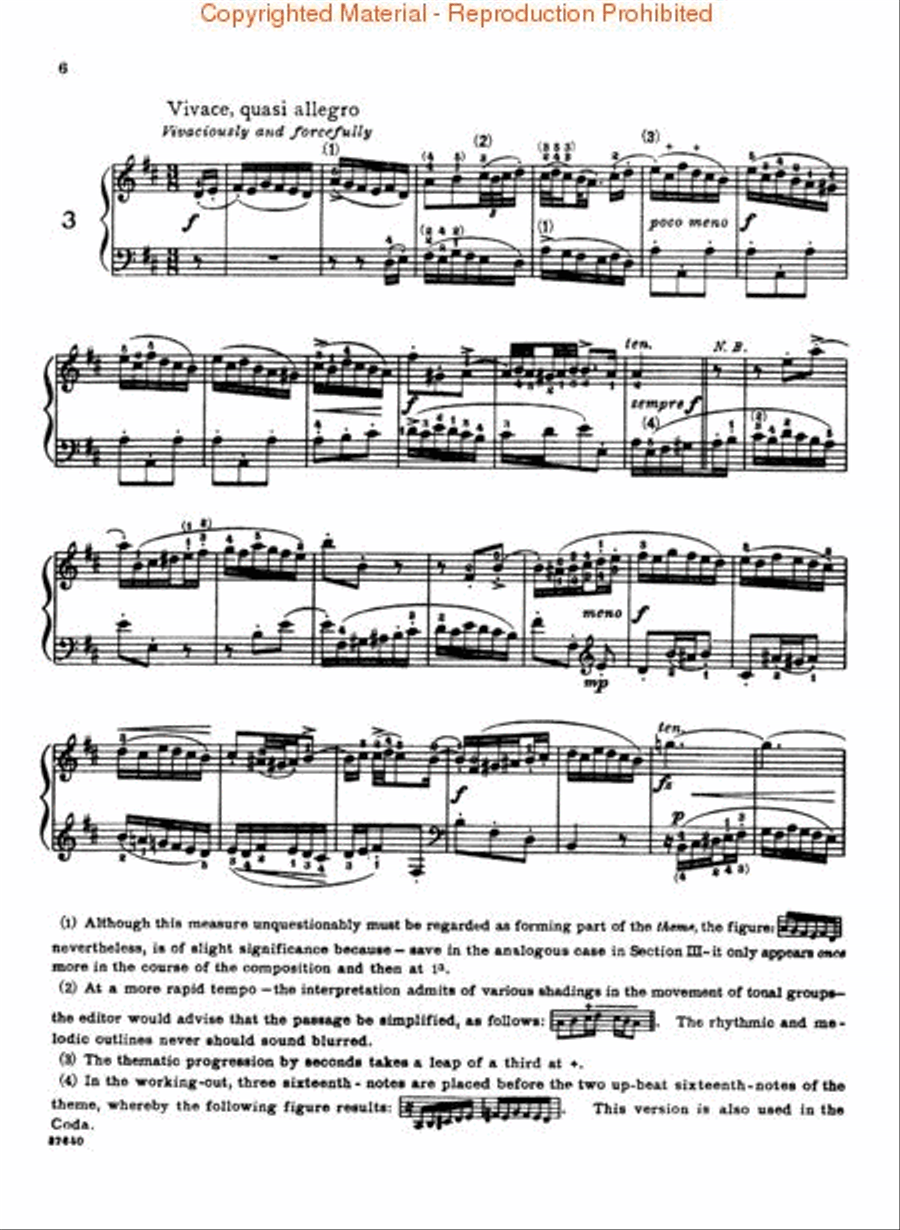
This edition (80 pp and reasonably priced) by Ferruccio Busoni has two brief prefaces and many helpful footnotes. Perhaps in a subsequent edition Schirmers might consider removing the footnotes/comments accompanying each piece to the page(s) next following. This would enable the text to be spread out more thus improving readability. All the ornaments are (I think) written out in full (except for trills) so the student does not have to pause continually and go to a separate page and locate the ornament and its manner of execution. For those who like to have directions as to tempo and expression (Bach denoted very seldom the tempi for his works) Busoni gives plenty of these. Many years ago Beryl Rubinstein said that the Two-Part Inventions once conquered make the path to the more advanced compositions easy. He suggested that the less austere ones in F,d, D, E, a, B flat be given preference.
|
|
|
D K.
March 13, 2014
Find a Beetter Version
It is important to teach Bach according to the practices of Bachs time, and according to Bachs own instructions. It is also important to use an edition that gives you exactly what Bach wrote, not a rewrite that changes everything he wrote. This edition meets none of those objectives. Many note errors exist in the basic score. The realizations of ornaments do not follow Baroque practices, and they do not follow Bachs direct instructions as to how to play his music. Now that good editions exist that do what they're supposed to, it would be a shame to use one that is so far removed from what Bach intended.Better choices: Alfred, edited by Palmer; the Bischoff edition, published by Schirmer or Kalmus; editions from Peters, Henle, Barenreiter, or Vienna Urtext. The Alfred has detailed explanations that make for good teaching. All the ornaments are written out in grey print, making it simple for the student to follow.
|
|
|
Aem
December 12, 2010
romantic take on baroque
This is Busoni's version, not in any sense an urtext of the Bach original. It is therefore to be taken as a particular age's interpretation of this music -- thus, a good introduction to Romantic virtuosity, and a stage in the reception of Baroque. Get a good straight edition too, but if you like Busoni's transcriptions of the organ chorale preludes, you'll like this. For piano, not harpsichord!
|
See Similar Sheet Music and Digital Downloads