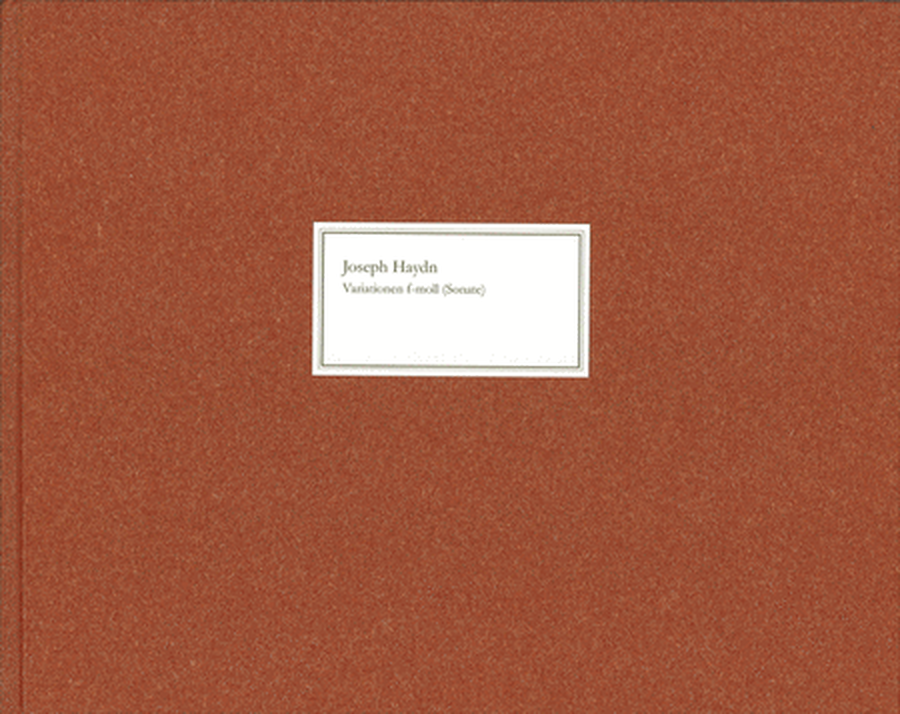
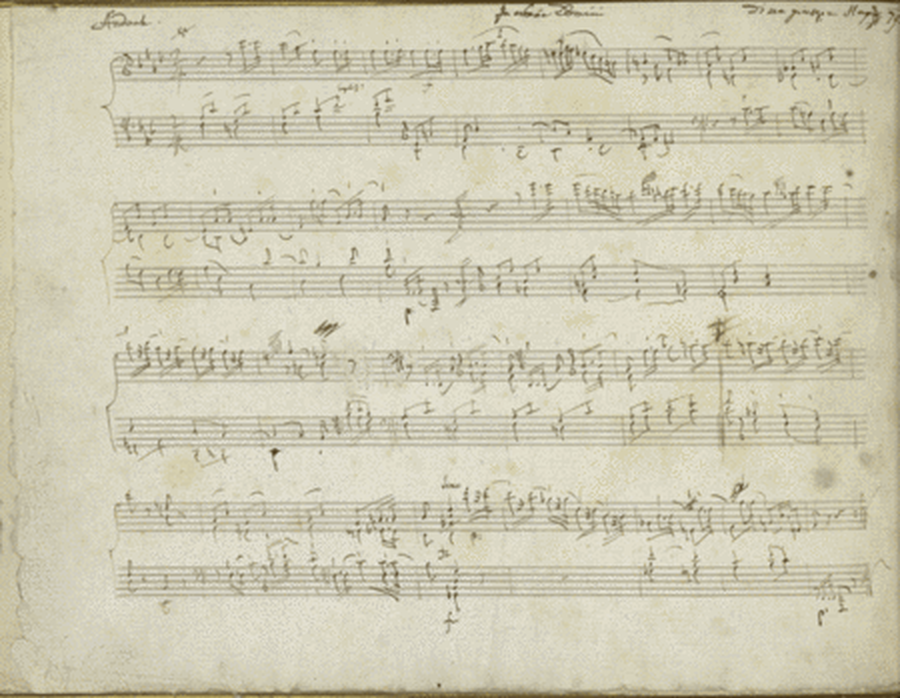
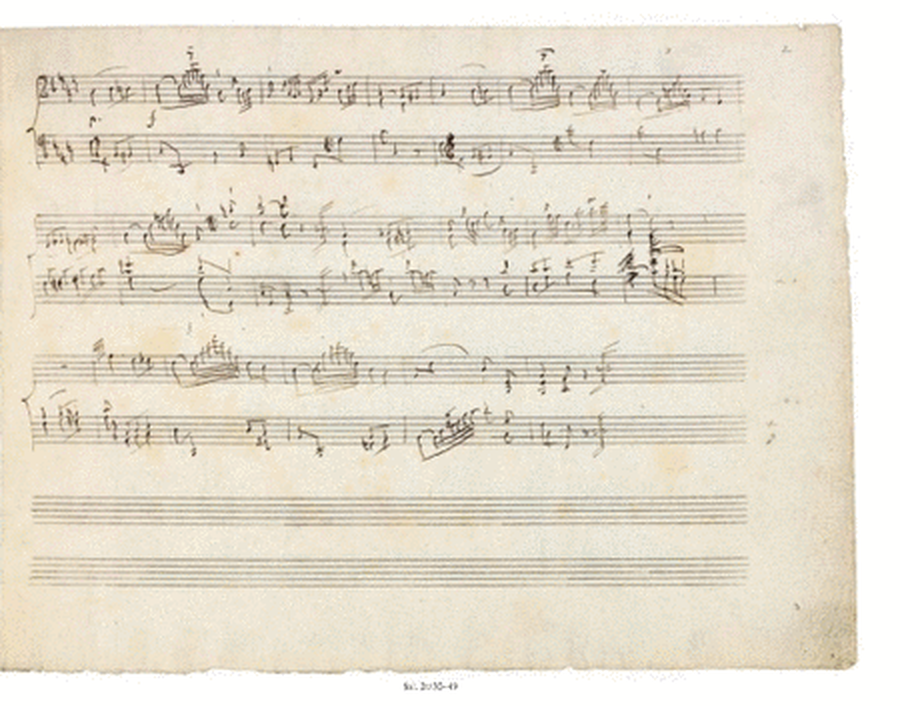
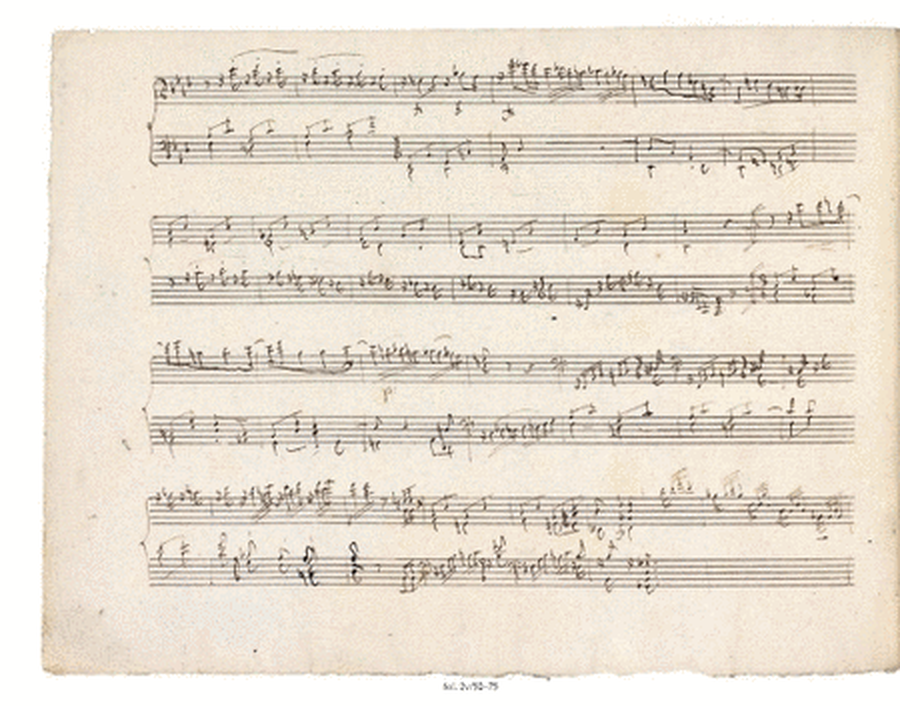
Hardcover Facsimile. Composed by Franz Joseph Haydn. Edited by With an introduction by Armin Raab. Facsimile. Hardcover. Henle Complete Edition. Four-colour facsimile of the autograph in the possession of the music department of the New York Public Library, Christian A. Herter Collection, JOE 72-13. 31 x 23 cm, horizontal format. Classical. Facsimile (hardcover). 28 pages. G. Henle #HN3218. Published by G. Henle (HL.51483218).
ISBN 9790201832180. UPC: 884088403201. 10.5x13.0x0.478 inches. Introduction Armin Raab.
It was by a roundabout route that the autograph score of Haydn's most important piano work ended up in the New York Library. Its four leaves contain a fair copy of the work; two leaves with a sketch-like character follow. Haydn composed the work, at the time still entitled “Sonate,” for “Signora de Ployer” (probably the pianist Barbara Ployer associated with Mozart). The variation movement was apparently intended as the beginning of a sonata with several movements. As can be seen from the second part of the autograph score, Haydn later extended the movement and ended it with an expansive Capriccio Coda. The first print already bears the title “Variations”. The moving masterpiece has been played all over the world under the title “Variations in F minor” ever since.
Hardcover Facsimile. Composed by Franz Joseph Haydn. Edited by With an introduction by Armin Raab. Facsimile. Hardcover. Henle Complete Edition. Four-colour facsimile of the autograph in the possession of the music department of the New York Public Library, Christian A. Herter Collection, JOE 72-13. 31 x 23 cm, horizontal format. Classical. Facsimile (hardcover). 28 pages. G. Henle #HN3218. Published by G. Henle (HL.51483218).
ISBN 9790201832180. UPC: 884088403201. 10.5x13.0x0.478 inches. Introduction Armin Raab.
It was by a roundabout route that the autograph score of Haydn's most important piano work ended up in the New York Library. Its four leaves contain a fair copy of the work; two leaves with a sketch-like character follow. Haydn composed the work, at the time still entitled “Sonate,” for “Signora de Ployer” (probably the pianist Barbara Ployer associated with Mozart). The variation movement was apparently intended as the beginning of a sonata with several movements. As can be seen from the second part of the autograph score, Haydn later extended the movement and ended it with an expansive Capriccio Coda. The first print already bears the title “Variations”. The moving masterpiece has been played all over the world under the title “Variations in F minor” ever since.
Preview: Variations F Minor (Sonata) Hob. xvii: 6
Tell A Friend
Tell a friend (or remind yourself) about this product. We'll instantly send an email containing product info and a link to it. You may also enter a personal message.
We do not use or store email addresses from this form for any other purpose than sending your share email.
After purchase, you can download your MP3 from your Sheet Music Plus Digital Library - no software installation is necessary! You can also listen to your MP3 at any time in your Digital Library.
Learn about Smart Music
After purchase, you can download your Smart Music from your Sheet Music Plus Digital Library - no software installation is necessary! You can also download at any time in your Digital Library.
Learn about Digital Video
After purchase you can download your video from your Digital Library. Your video is in XX format and is playable on most pre-installed video players.