Suppl. 10. By Adrienne Kaczmarczyk_Ágnes Sas. Composed by Franz Liszt. EMB New Listz Edition. Book Hardcover. Composed 2014. 224 pages. Editio Musica Budapest #EMBZ14505A. Published by Editio Musica Budapest (BT.EMBZ14505A).
English-German-Hungarian.
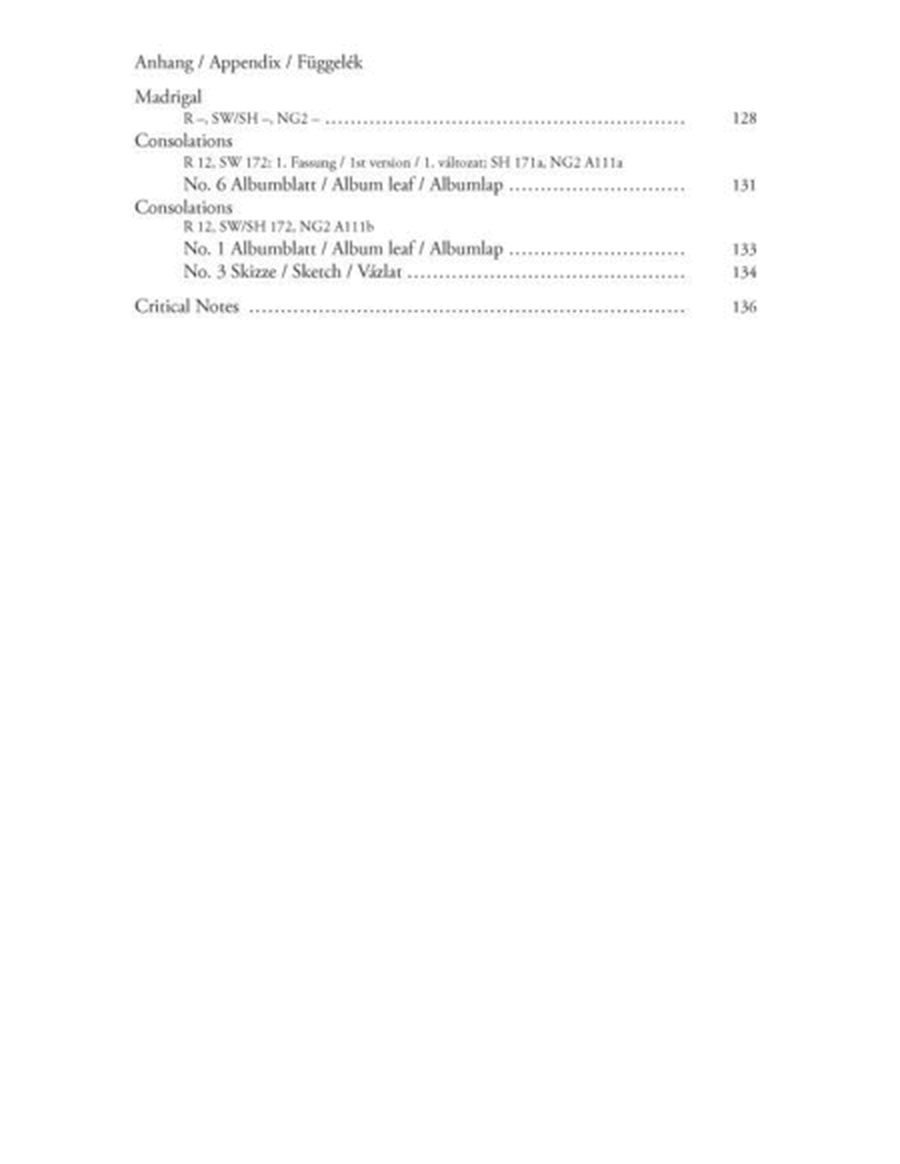
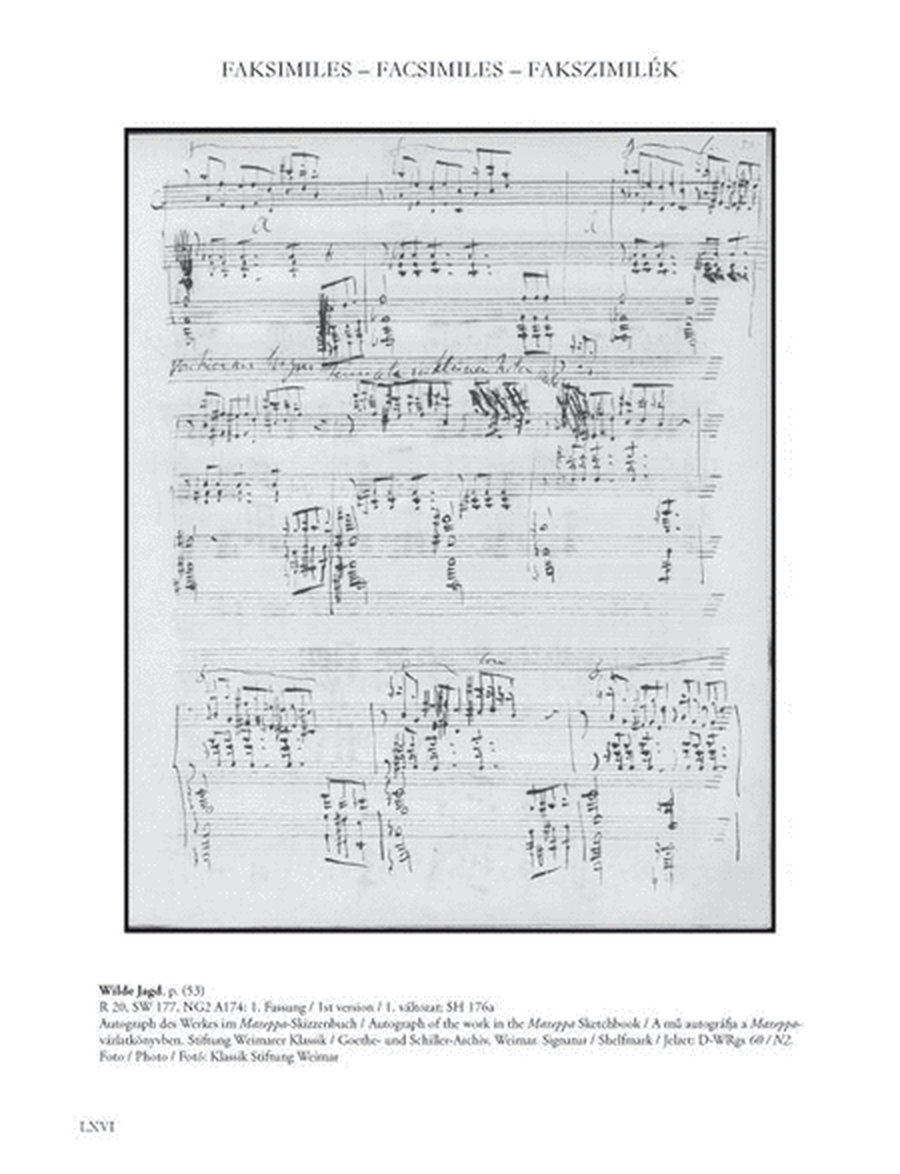
Of the early versions of works included in this volume the first versions of the notably popular Consolations cycle and Grand solo de concert (published in 1850) are of particular interest. In the first version of Consolations the third movement was a style hongrois piece whose thematic material was later used by Liszt in his Hungarian Rhapsody No. 1 (published in 1851). The first version of Grand solo de concert shows that the work did not originally include a slow middle section to be recapitulated towards the end as seen in the final version. This is a characteristically Lisztian feature that would reappear a few years later in his Sonata in B minor. A detailed preface inHungarian, English, and German, including new research results, numerous manuscript facsimiles, and critical notes, makes this volume of the New Liszt Edition an important publication of immense scholarly value. Along with the cloth-bound Complete Edition, a paperback version for practical use has also been published. This edition's contents are identical to those of the hardcover edition with the exception that the critical notes are not included.
Of the early versions of works included in Supplementary Volume 10, particular interest is expected in the first versions of the notably popular Consolations cycle and the monumental Grand solo de concert of 1850. In the first version of Consolationsthe third movement was a style hongrois piece whose thematic material Liszt used again later in the first piece of the Hungarian Rhapsodies published in 1851. The first version of the Grand solo de concert shows that the original concept did notinclude the slow “movement” that would be placed in the middle of the work and recapitulated towards the end in the final version - a characteristically Lisztian feature that would reappear a few years later in the Sonata in B flat minor.A detailed preface in Hungarian, English and German, including new research results, numerous manuscript facsimiles and critical notes make this volume of the New Liszt Edition a specially important publication of scholarly value. Simultaneously withthe Complete Edition volume in colth-bound, its paperback for practical purposes is also published, the contents of which, except for the critical notes, is identical with the Complete Edition volume.
Von den im vorliegenden Band veröffentlichten Werkversionen dürften der außerordentlich populäre Consolations-Zyklus sowie die Erstfassung des 1850 entstandenen Grand solo de concert (Großes Konzertsolo) auf besonderes Interesse stoßen. In der ersten Fassung der Consolations stand an dritter Stelle noch ein Stück im ungarischen Stil, dessen Thematik Liszt später im 1851 herausgegebenen 1. Stück der Ungarischen Rhapsodien verwendete. Die erste Version des Großen Konzertsolos belegt, dass der in der Mitte der Komposition angelegte und kurz vor Ende rekapitulierte langsame Teil, welcher zum typisch Lisztschen Element der endgültigen Fassung des Konzertsolos - und einige Jahre späterauch der H-Moll-Sonate - wird, noch kein Bestandteil der ursprünglichen Konzeption war.
Suppl. 10. By Adrienne Kaczmarczyk_Ágnes Sas. Composed by Franz Liszt. EMB New Listz Edition. Book Hardcover. Composed 2014. 224 pages. Editio Musica Budapest #EMBZ14505A. Published by Editio Musica Budapest (BT.EMBZ14505A).
English-German-Hungarian.
Of the early versions of works included in this volume the first versions of the notably popular Consolations cycle and Grand solo de concert (published in 1850) are of particular interest. In the first version of Consolations the third movement was a style hongrois piece whose thematic material was later used by Liszt in his Hungarian Rhapsody No. 1 (published in 1851). The first version of Grand solo de concert shows that the work did not originally include a slow middle section to be recapitulated towards the end as seen in the final version. This is a characteristically Lisztian feature that would reappear a few years later in his Sonata in B minor. A detailed preface inHungarian, English, and German, including new research results, numerous manuscript facsimiles, and critical notes, makes this volume of the New Liszt Edition an important publication of immense scholarly value. Along with the cloth-bound Complete Edition, a paperback version for practical use has also been published. This edition's contents are identical to those of the hardcover edition with the exception that the critical notes are not included.
Of the early versions of works included in Supplementary Volume 10, particular interest is expected in the first versions of the notably popular Consolations cycle and the monumental Grand solo de concert of 1850. In the first version of Consolationsthe third movement was a style hongrois piece whose thematic material Liszt used again later in the first piece of the Hungarian Rhapsodies published in 1851. The first version of the Grand solo de concert shows that the original concept did notinclude the slow “movement” that would be placed in the middle of the work and recapitulated towards the end in the final version - a characteristically Lisztian feature that would reappear a few years later in the Sonata in B flat minor.A detailed preface in Hungarian, English and German, including new research results, numerous manuscript facsimiles and critical notes make this volume of the New Liszt Edition a specially important publication of scholarly value. Simultaneously withthe Complete Edition volume in colth-bound, its paperback for practical purposes is also published, the contents of which, except for the critical notes, is identical with the Complete Edition volume.
Von den im vorliegenden Band veröffentlichten Werkversionen dürften der außerordentlich populäre Consolations-Zyklus sowie die Erstfassung des 1850 entstandenen Grand solo de concert (Großes Konzertsolo) auf besonderes Interesse stoßen. In der ersten Fassung der Consolations stand an dritter Stelle noch ein Stück im ungarischen Stil, dessen Thematik Liszt später im 1851 herausgegebenen 1. Stück der Ungarischen Rhapsodien verwendete. Die erste Version des Großen Konzertsolos belegt, dass der in der Mitte der Komposition angelegte und kurz vor Ende rekapitulierte langsame Teil, welcher zum typisch Lisztschen Element der endgültigen Fassung des Konzertsolos - und einige Jahre späterauch der H-Moll-Sonate - wird, noch kein Bestandteil der ursprünglichen Konzeption war.
La Romanesca. Mlodie du 16e siecle, R 91, SW 252a, NG2 A14: 1st version SH 252i
Canzone napolitana. Notturno, R 92, SW 248, NG2 A85 1st version SH 248i
Preview: Consolations, Grand solo de concert and Other Work
Tell A Friend
Tell a friend (or remind yourself) about this product. We'll instantly send an email containing product info and a link to it. You may also enter a personal message.
We do not use or store email addresses from this form for any other purpose than sending your share email.
After purchase, you can download your MP3 from your Sheet Music Plus Digital Library - no software installation is necessary! You can also listen to your MP3 at any time in your Digital Library.
Learn about Smart Music
After purchase, you can download your Smart Music from your Sheet Music Plus Digital Library - no software installation is necessary! You can also download at any time in your Digital Library.
Learn about Digital Video
After purchase you can download your video from your Digital Library. Your video is in XX format and is playable on most pre-installed video players.