18455527
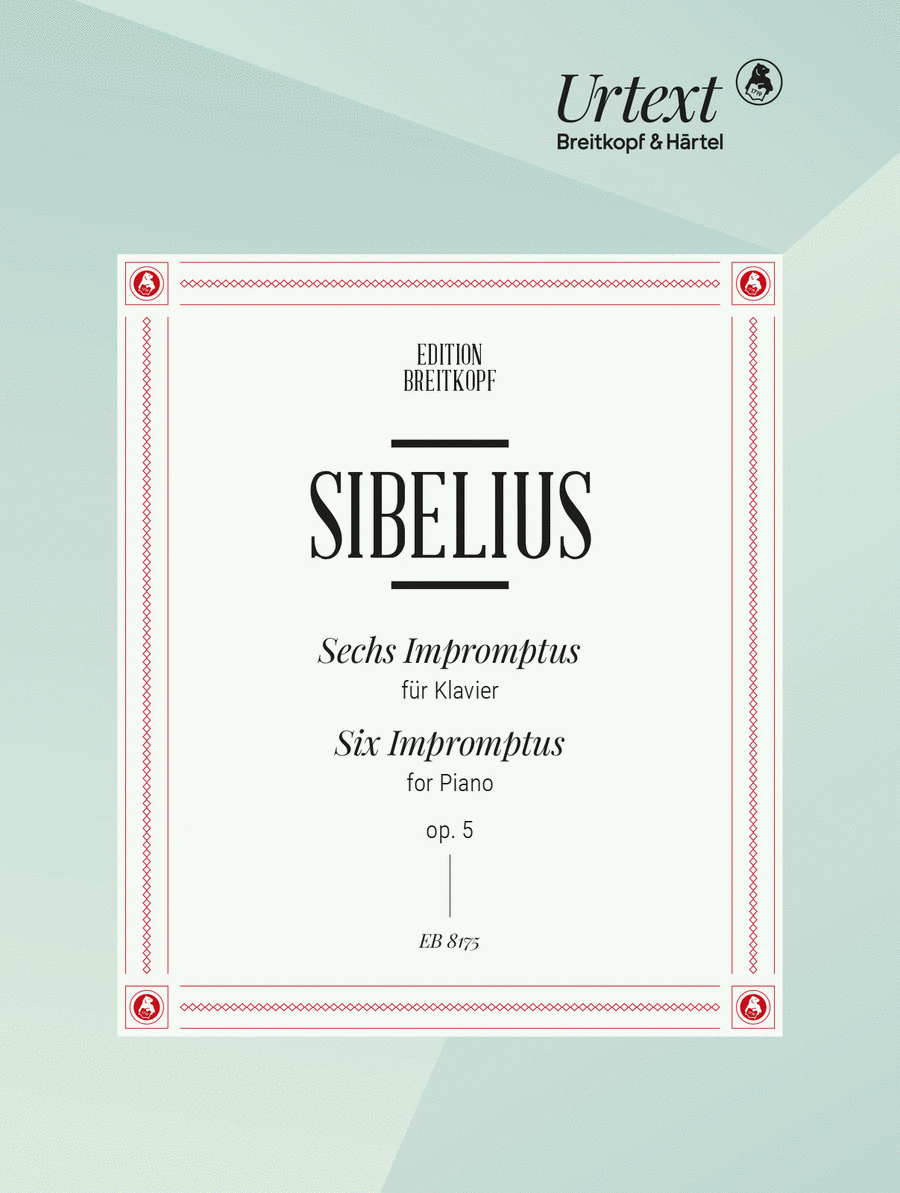
6 Impromptus Op. 5
18455527
18455527
18455527
Copyright Material for Preview Only - Sheet Music Plus
Piano
SKU: BR.EB-8175
Urtext based on the Complete Edition “Jean Sibelius Works” (JSW). Composed by Jean Sibelius. Edited by Kari Kilpelainen. Solo instruments; stapled. Edition Breitkopf.
Sibelius' first piano cycle in Urtext
Early modern; Late-romantic. Score. 24 pages. Breitkopf and Haertel #EB 8175. Published by Breitkopf and Haertel (BR.EB-8175).
ISBN 9790004182796. 9 x 12 inches.
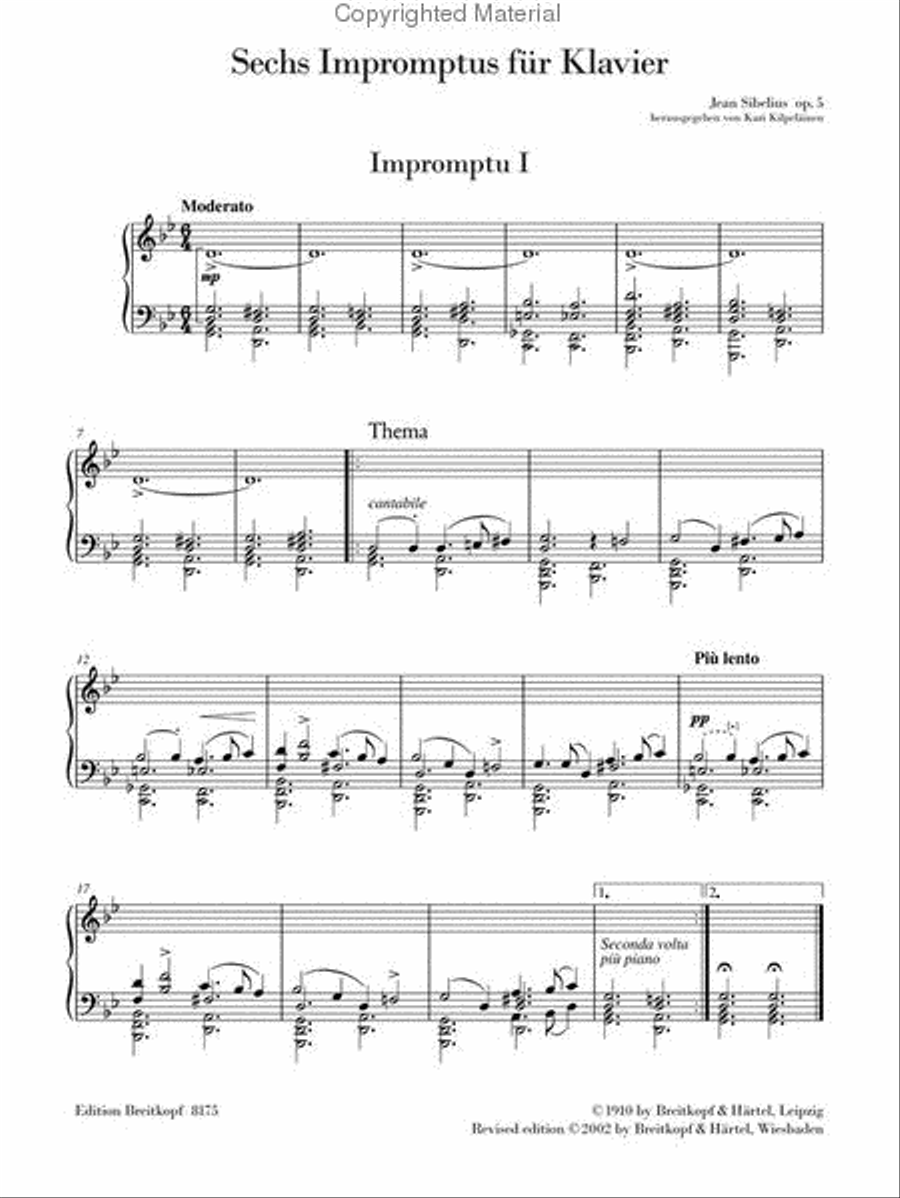
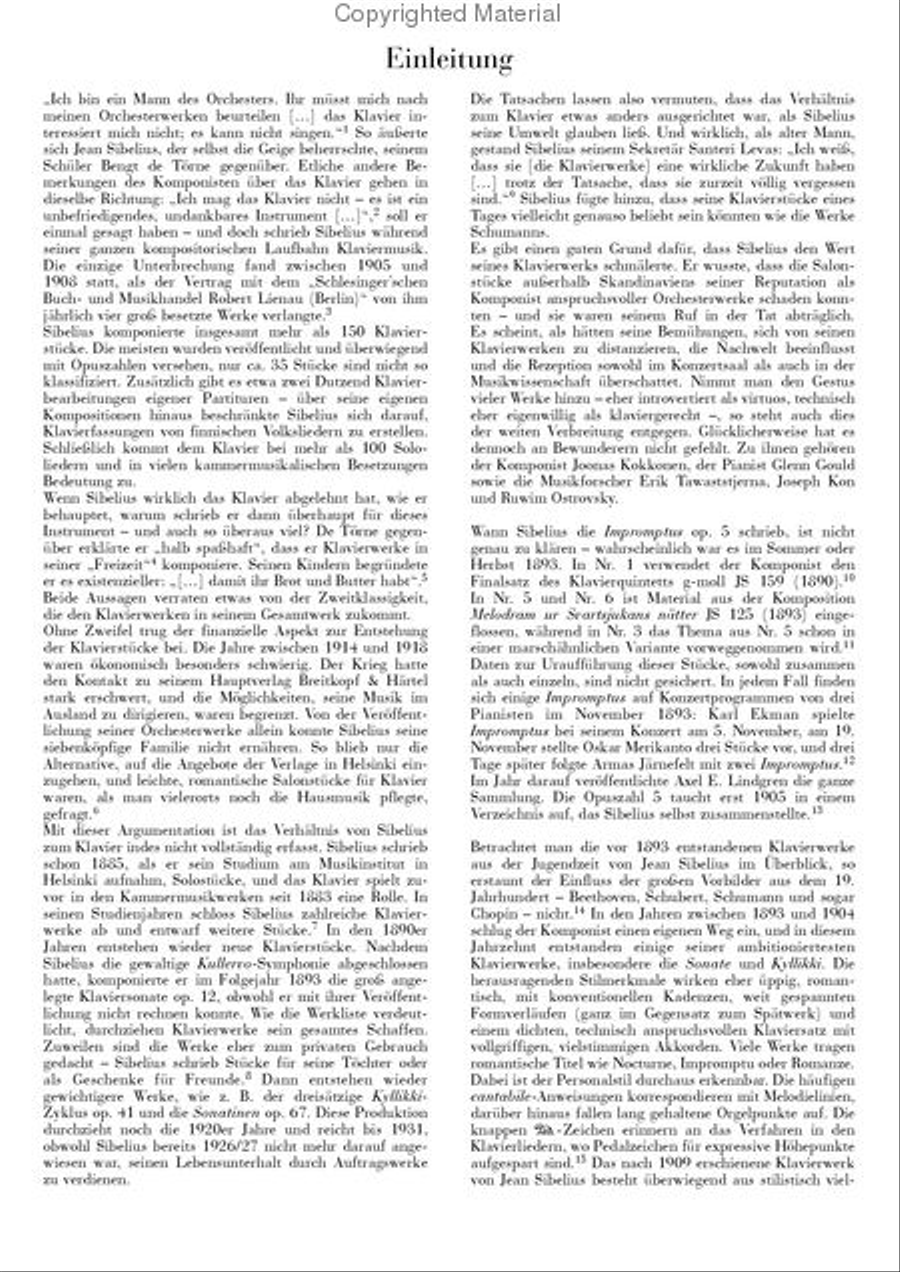
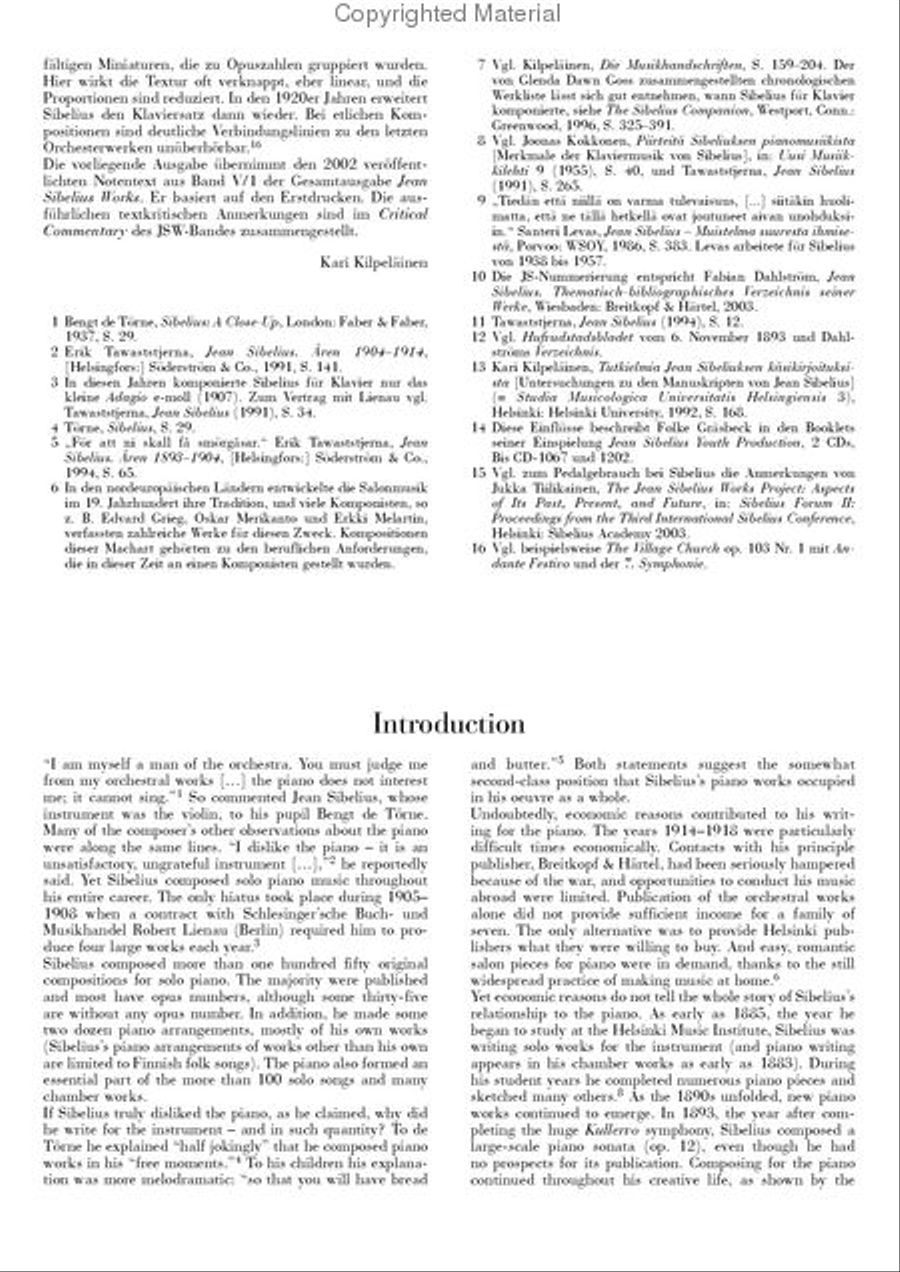
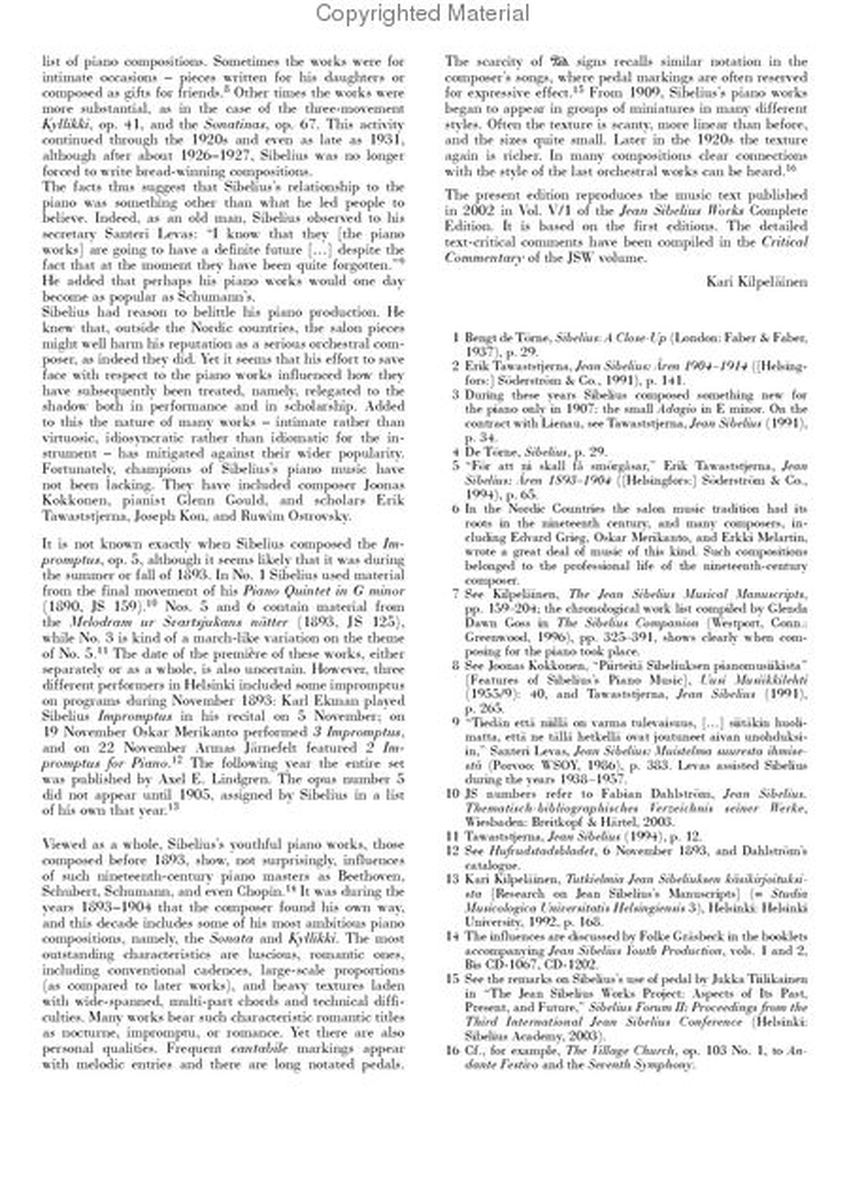
The piano runs through Jean Sibelius's oeuvre like a red thread. After some first student pieces, he composed the Sonata op. 12 (EB 8142) in 1893, and his first cycle of piano pieces, the Six Impromptus op. 5. Here the Finnish composer self-assuredly takes up a great romantic genre significantly shaped by Schubert and Chopin. Sibelius draws inspiration from some of his own early works in this composition, yet he also uses the last two pieces from opus 5 as the groundwork for an autonomous "Impromptu" for string orchestra which he put together shortly after completing the piano pieces. "You must judge me on the basis of my orchestral works. The piano does not interest me. It cannot sing," said Sibelius. Yet how seriously can we take this famous quote when considering how masterfully he crossed the boundaries with his Impromptus? Pianists such as Ralf Gothoni, Glenn Gould and Olli Mustonen have not let themselves be deterred by the composer's harsh self-criticism, and, with their interpretations, have provided compelling proof of the opposite.
Sibelius' first piano cycle in Urtext.
Piano
SKU: BR.EB-8175
Urtext based on the Complete Edition “Jean Sibelius Works” (JSW). Composed by Jean Sibelius. Edited by Kari Kilpelainen. Solo instruments; stapled. Edition Breitkopf.
Sibelius' first piano cycle in Urtext
Early modern; Late-romantic. Score. 24 pages. Breitkopf and Haertel #EB 8175. Published by Breitkopf and Haertel (BR.EB-8175).
ISBN 9790004182796. 9 x 12 inches.
The piano runs through Jean Sibelius's oeuvre like a red thread. After some first student pieces, he composed the Sonata op. 12 (EB 8142) in 1893, and his first cycle of piano pieces, the Six Impromptus op. 5. Here the Finnish composer self-assuredly takes up a great romantic genre significantly shaped by Schubert and Chopin. Sibelius draws inspiration from some of his own early works in this composition, yet he also uses the last two pieces from opus 5 as the groundwork for an autonomous "Impromptu" for string orchestra which he put together shortly after completing the piano pieces. "You must judge me on the basis of my orchestral works. The piano does not interest me. It cannot sing," said Sibelius. Yet how seriously can we take this famous quote when considering how masterfully he crossed the boundaries with his Impromptus? Pianists such as Ralf Gothoni, Glenn Gould and Olli Mustonen have not let themselves be deterred by the composer's harsh self-criticism, and, with their interpretations, have provided compelling proof of the opposite.
Sibelius' first piano cycle in Urtext.
Tell a friend (or remind yourself) about this product. We'll instantly send an email containing product info and a link to it. You may also enter a personal message.
We do not use or store email addresses from this form for any other purpose than sending your share email.
Read our Privacy Policy.
After purchase, you can download your MP3 from your Sheet Music Plus Digital Library - no software installation is necessary! You can also listen to your MP3 at any time in your Digital Library.
After purchase, you can download your Smart Music from your Sheet Music Plus Digital Library - no software installation is necessary! You can also download at any time in your Digital Library.
After purchase you can download your video from your Digital Library. Your video is in XX format and is playable on most pre-installed video players.