
Ships to you
Ships to you
SKU: CF.CAS10
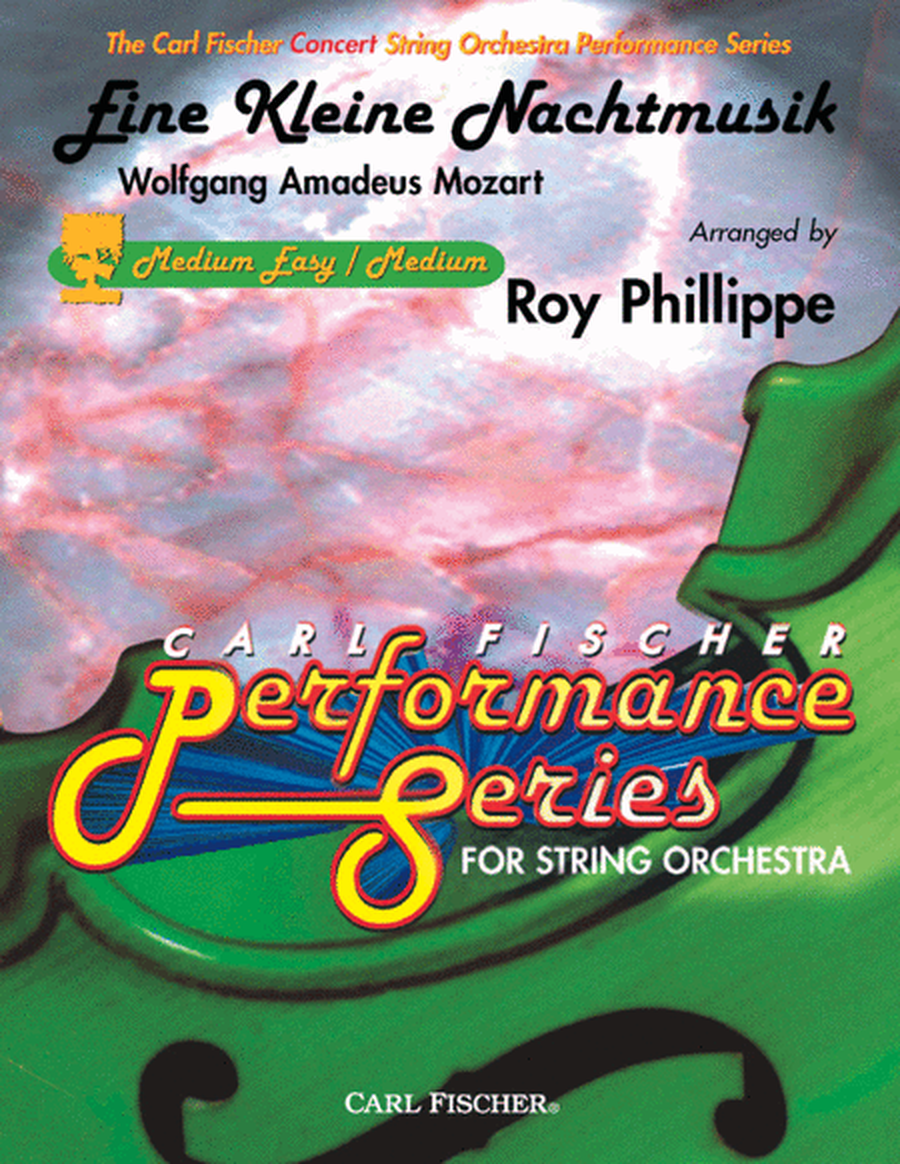
Full Score and Parts. Composed by Wolfgang Amadeus Mozart. Edited by Amy Rosen. Arranged by Roy Phillippe. Folio. Carl Fischer Concert String Orchestra Series. Score and Parts. With Standard notation. K 525. 115 pages. Carl Fischer Music #CAS10. Published by Carl Fischer Music (CF.CAS10).ISBN 9780825847615. UPC: 798408047610. 8.5 x 11 inches. Key: G major.
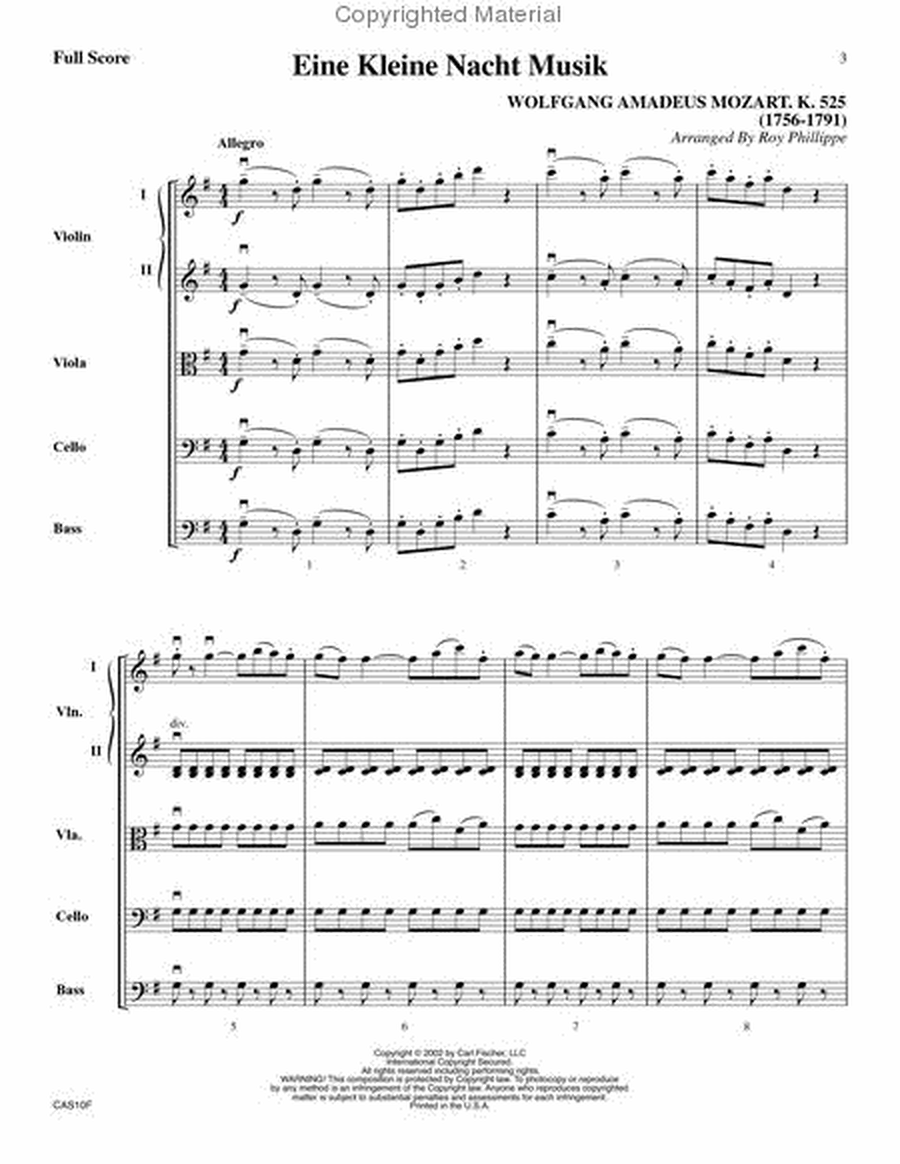
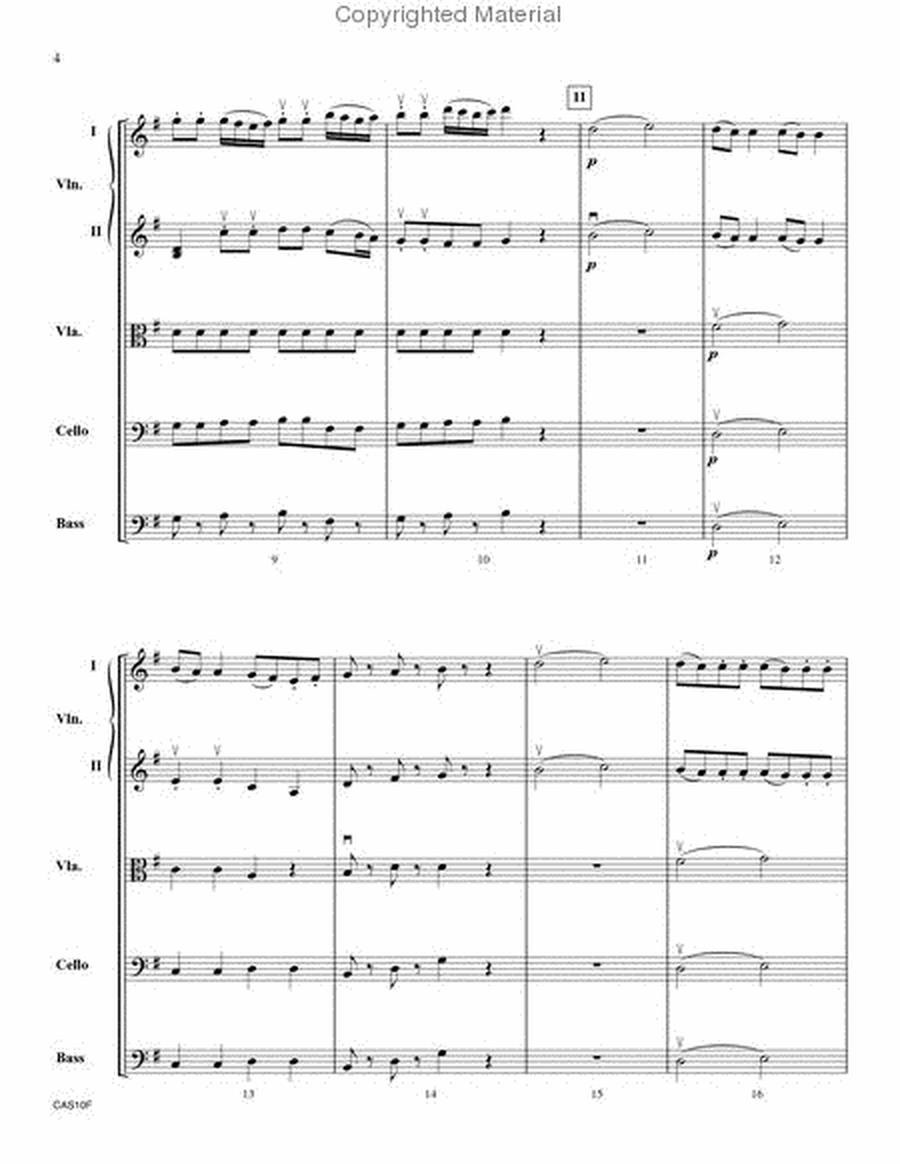
With this arrangement, my goal is to maintain the integrity of the original work, while making it accessible to the younger orchestra. An important aspect of the successful performance of this piece is maintaining an energetic tempo. The repeated eighth notes in the accompaniment should be played cleanly and crisply to maintain momentum. There are many places where abrupt changes in dynamics occur. For example, m. 1 begins with a string unison forte, which suddenly drops to piano at m. 11. Accents, staccatos, and other articulations should be carefully observed. To be effective, crescendos should begin at a reasonable volume, so they have somewhere to go dynamically. I hope you and the orchestra enjoy this arrangement.
With this arrangement, my goal is to maintain the integrity of the original work, while making it accessible to the younger orchestra. An important aspect of the successful performance of this piece is maintaining an energetic tempo. The repeated eighth notes in the accompaniment should be played cleanly and crisply to maintain momentum. There are many places where abrupt changes in dynamics occur. For example, m. 1 begins with a string unisonA forte, which suddenly drops toA piano at m. 11. Accents, staccatos, and other articulations should be carefully observed. To be effective, crescendos should begin at a reasonable volume, so they have somewhere to go dynamically. I hope you and the orchestra enjoy this arrangement.
With this arrangement, my goal is to maintain the integrity of the original work, while making it accessible to the younger orchestra. An important aspect of the successful performance of this piece is maintaining an energetic tempo. The repeated eighth notes in the accompaniment should be played cleanly and crisply to maintain momentum. There are many places where abrupt changes in dynamics occur. For example, m. 1 begins with a string unison forte, which suddenly drops to piano at m. 11. Accents, staccatos, and other articulations should be carefully observed. To be effective, crescendos should begin at a reasonable volume, so they have somewhere to go dynamically. I hope you and the orchestra enjoy this arrangement.
With this arrangement, my goal is to maintain the integrity of the original work, while making it accessible to the younger orchestra. An important aspect of the successful performance of this piece is maintaining an energetic tempo. The repeated eighth notes in the accompaniment should be played cleanly and crisply to maintain momentum. There are many places where abrupt changes in dynamics occur. For example, m. 1 begins with a string unison forte, which suddenly drops to piano at m. 11. Accents, staccatos, and other articulations should be carefully observed. To be effective, crescendos should begin at a reasonable volume, so they have somewhere to go dynamically. I hope you and the orchestra enjoy this arrangement.
With this arrangement, my goal is to maintain the integrity of the original work, while making it accessible to the younger orchestra. An important aspect of the successful performance of this piece is maintaining an energetic tempo. The repeated eighth notes in the accompaniment should be played cleanly and crisply to maintain momentum. There are many places where abrupt changes in dynamics occur. For example, m. 1 begins with a string unisonxa0forte, which suddenly drops toxa0piano at m. 11. Accents, staccatos, and other articulations should be carefully observed. To be effective, crescendos should begin at a reasonable volume, so they have somewhere to go dynamically. I hope you and the orchestra enjoy this arrangement.
About Carl Fischer Concert String Orchestra Series
This series of pieces (Grade 3 and higher) is designed for advancing ensembles. The pieces in this series are characterized by:
See Similar Sheet Music and Digital Downloads