Order two or more copies of the same title and we'll automatically give you 5% off list price on that title.
To get 2+ Pricing , just add two or more copies of a title to your shopping cart. Your discount will be immediately applied to your order.
Sale titles, hymnals, and ShowKits (MTI's Broadway Junior Collection, Getting to Know... Collection (G2K) and MTI's Kids Collection) do not qualify for 2+ Pricing
If you have any questions or comments regarding 2+ Pricing , please visit our Help Center to find more information or chat with our support team
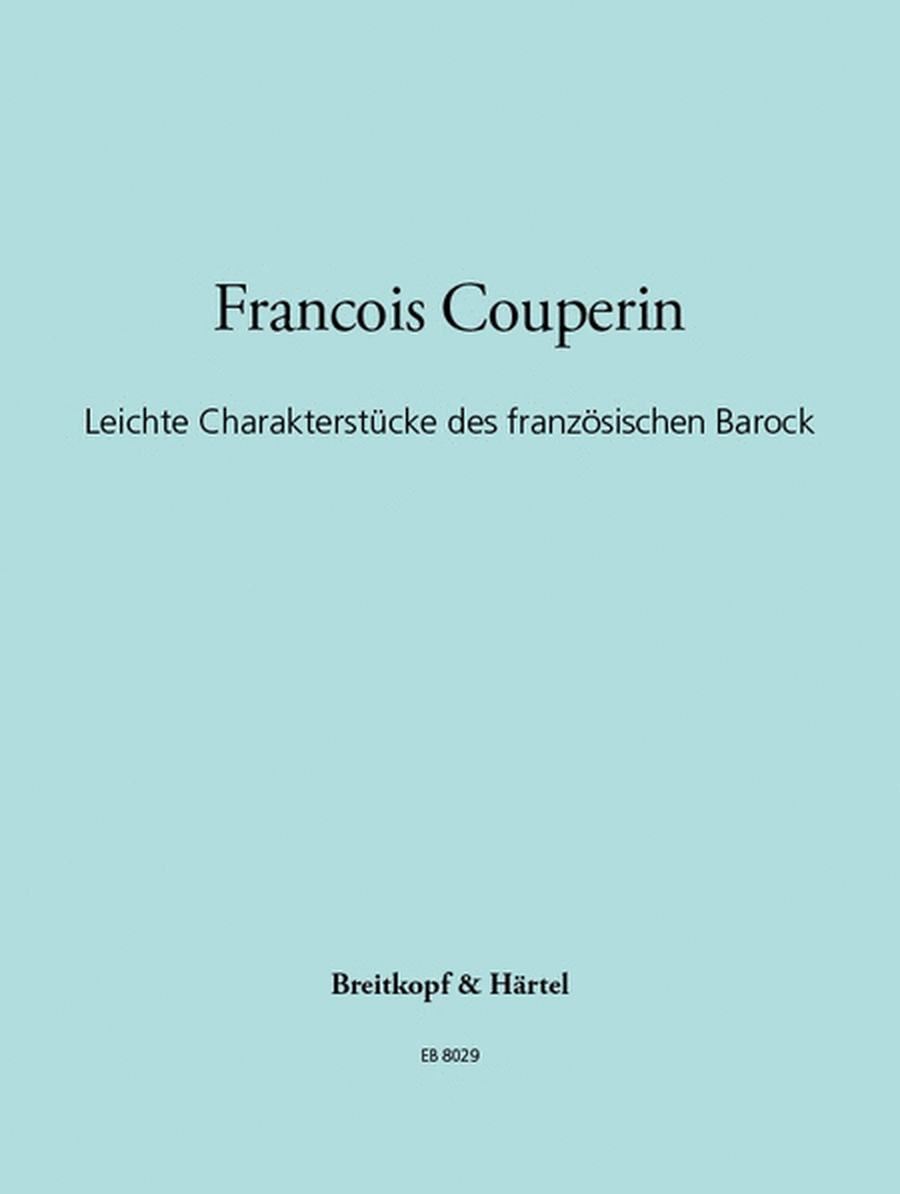
Piano Lessons by François Couperin. Composed by Francois Couperin. Edited by Heinz Walter. Solo instruments; Softcover. Edition Breitkopf. Baroque period. Score. 20 pages. Breitkopf and Haertel #EB 8029. Published by Breitkopf and Haertel (BR.EB-8029).
ISBN 9790004174326. 9 x 12 inches.
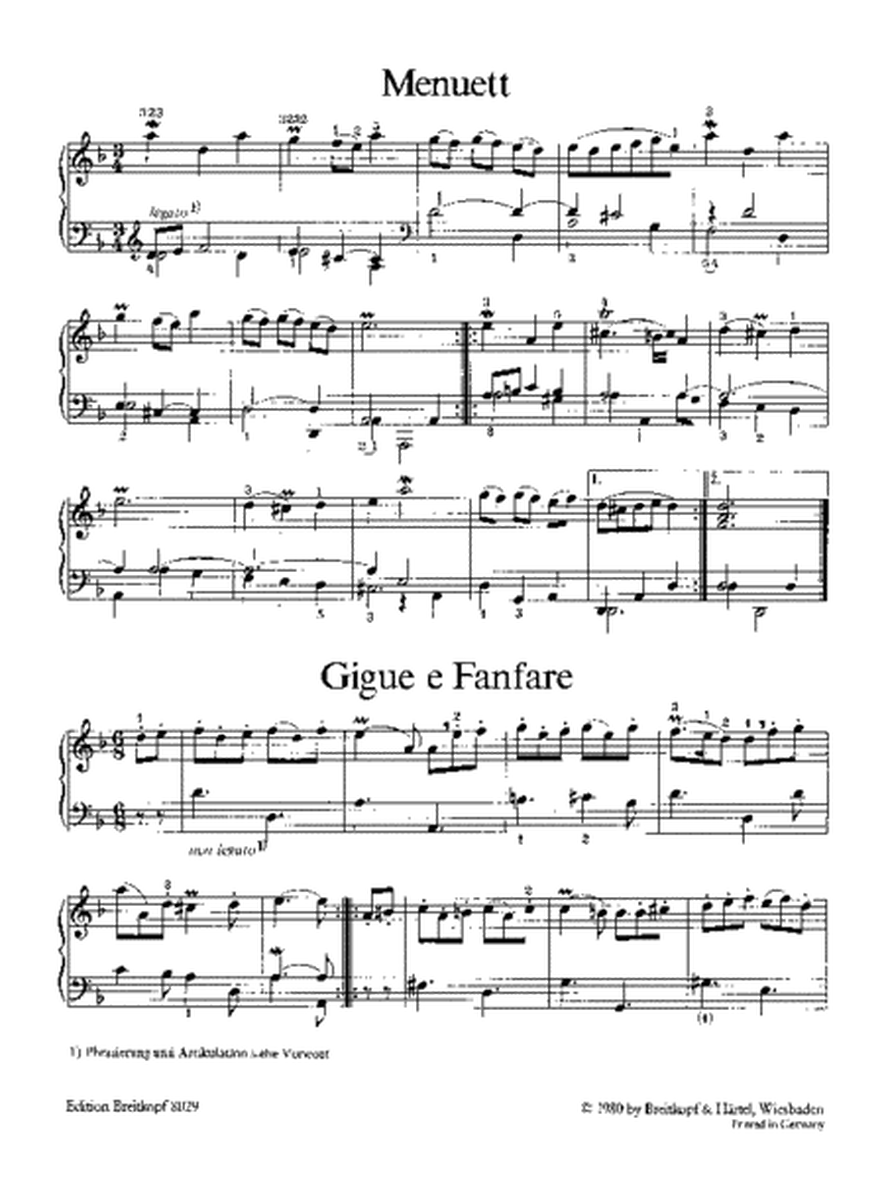
This series of easy piano music for teaching purposes presents pupils in the lower and lower middle grades with a carefully chosen selection of well-known and lesser-known compositions by important masters. The volumes are deliberately kept small in extent, since it is more stimulating for children to change the teaching material frequently. There are four existing harpsichord books with a total of 226 compositions by Francois Couperin "le Grand" (1668 -1733). His works are as unknown to pianists as they are famous among harpsichord players. The grace and imaginativeness of his works lend themselves especially well to the sound of the harpsichord, which is why the piano interpretation of works by Couperin, Rameau, Scarlatti and other composers of that time has been categorically rejected. But, after all, the works of Bach and Handel were written for the haipsichord and clavichord, and no one would dare question their intetpretation on the pianoforte. In order to introduce these "lmpressionists of the Baroque Era" to piano instruction, the editor has added to this series a folio of both Couperin's and Rameau's (EB 8033) music. The selection of the pieces is based on two criteria: 1. relatively modest demands made on technique, 2. various musical forms of expression. The "Butterflies" and the "Windmills" are both especially typical of masterful character pieces. The demands made on technique certainly correspond to a level of moderate difficulty. The simplifications made are restricted to the artistically realized twopart accompaniment (eg. p. 4 f. and p. 8 f.) with regard to finger stretch and to the profuse ornamentation of the original. The indications for phrasing and articulation are those of the editor. The first two pieces have been precisely elaborated on in this respect to serve as a model, whereas the remaining pieces contain only suggestions. As in other folios of this series; what is here to be stressed, is the importance of working out independently the phrasing and the dynamics. Directions for this are given by the respective footnotes; these directions, however, are not obligatory. lndications pertaining to dynamics and tempo have been omitted completely; the clearly recognizable character of the individual pieces should be direction enough. The tonal possibilities of the piano should in any case be used subtly. The very precise fingerings have been adapted to the suggested phrasings and to the corresponding realization of trills (according to the table). Heinz Walter, Salzburg, Spring 1980.
Piano Lessons by François Couperin. Composed by Francois Couperin. Edited by Heinz Walter. Solo instruments; Softcover. Edition Breitkopf. Baroque period. Score. 20 pages. Breitkopf and Haertel #EB 8029. Published by Breitkopf and Haertel (BR.EB-8029).
ISBN 9790004174326. 9 x 12 inches.
This series of easy piano music for teaching purposes presents pupils in the lower and lower middle grades with a carefully chosen selection of well-known and lesser-known compositions by important masters. The volumes are deliberately kept small in extent, since it is more stimulating for children to change the teaching material frequently. There are four existing harpsichord books with a total of 226 compositions by Francois Couperin "le Grand" (1668 -1733). His works are as unknown to pianists as they are famous among harpsichord players. The grace and imaginativeness of his works lend themselves especially well to the sound of the harpsichord, which is why the piano interpretation of works by Couperin, Rameau, Scarlatti and other composers of that time has been categorically rejected. But, after all, the works of Bach and Handel were written for the haipsichord and clavichord, and no one would dare question their intetpretation on the pianoforte. In order to introduce these "lmpressionists of the Baroque Era" to piano instruction, the editor has added to this series a folio of both Couperin's and Rameau's (EB 8033) music. The selection of the pieces is based on two criteria: 1. relatively modest demands made on technique, 2. various musical forms of expression. The "Butterflies" and the "Windmills" are both especially typical of masterful character pieces. The demands made on technique certainly correspond to a level of moderate difficulty. The simplifications made are restricted to the artistically realized twopart accompaniment (eg. p. 4 f. and p. 8 f.) with regard to finger stretch and to the profuse ornamentation of the original. The indications for phrasing and articulation are those of the editor. The first two pieces have been precisely elaborated on in this respect to serve as a model, whereas the remaining pieces contain only suggestions. As in other folios of this series; what is here to be stressed, is the importance of working out independently the phrasing and the dynamics. Directions for this are given by the respective footnotes; these directions, however, are not obligatory. lndications pertaining to dynamics and tempo have been omitted completely; the clearly recognizable character of the individual pieces should be direction enough. The tonal possibilities of the piano should in any case be used subtly. The very precise fingerings have been adapted to the suggested phrasings and to the corresponding realization of trills (according to the table). Heinz Walter, Salzburg, Spring 1980.
Preview: Easy Character Pieces from the French Baroque Era
Tell A Friend
Tell a friend (or remind yourself) about this product. We'll instantly send an email containing product info and a link to it. You may also enter a personal message.
We do not use or store email addresses from this form for any other purpose than sending your share email.
After purchase, you can download your MP3 from your Sheet Music Plus Digital Library - no software installation is necessary! You can also listen to your MP3 at any time in your Digital Library.
Learn about Smart Music
After purchase, you can download your Smart Music from your Sheet Music Plus Digital Library - no software installation is necessary! You can also download at any time in your Digital Library.
Learn about Digital Video
After purchase you can download your video from your Digital Library. Your video is in XX format and is playable on most pre-installed video players.