Order two or more copies of the same title and we'll automatically give you 5% off list price on that title.
To get 2+ Pricing , just add two or more copies of a title to your shopping cart. Your discount will be immediately applied to your order.
Sale titles, hymnals, and ShowKits (MTI's Broadway Junior Collection, Getting to Know... Collection (G2K) and MTI's Kids Collection) do not qualify for 2+ Pricing
If you have any questions or comments regarding 2+ Pricing , please visit our Help Center to find more information or chat with our support team
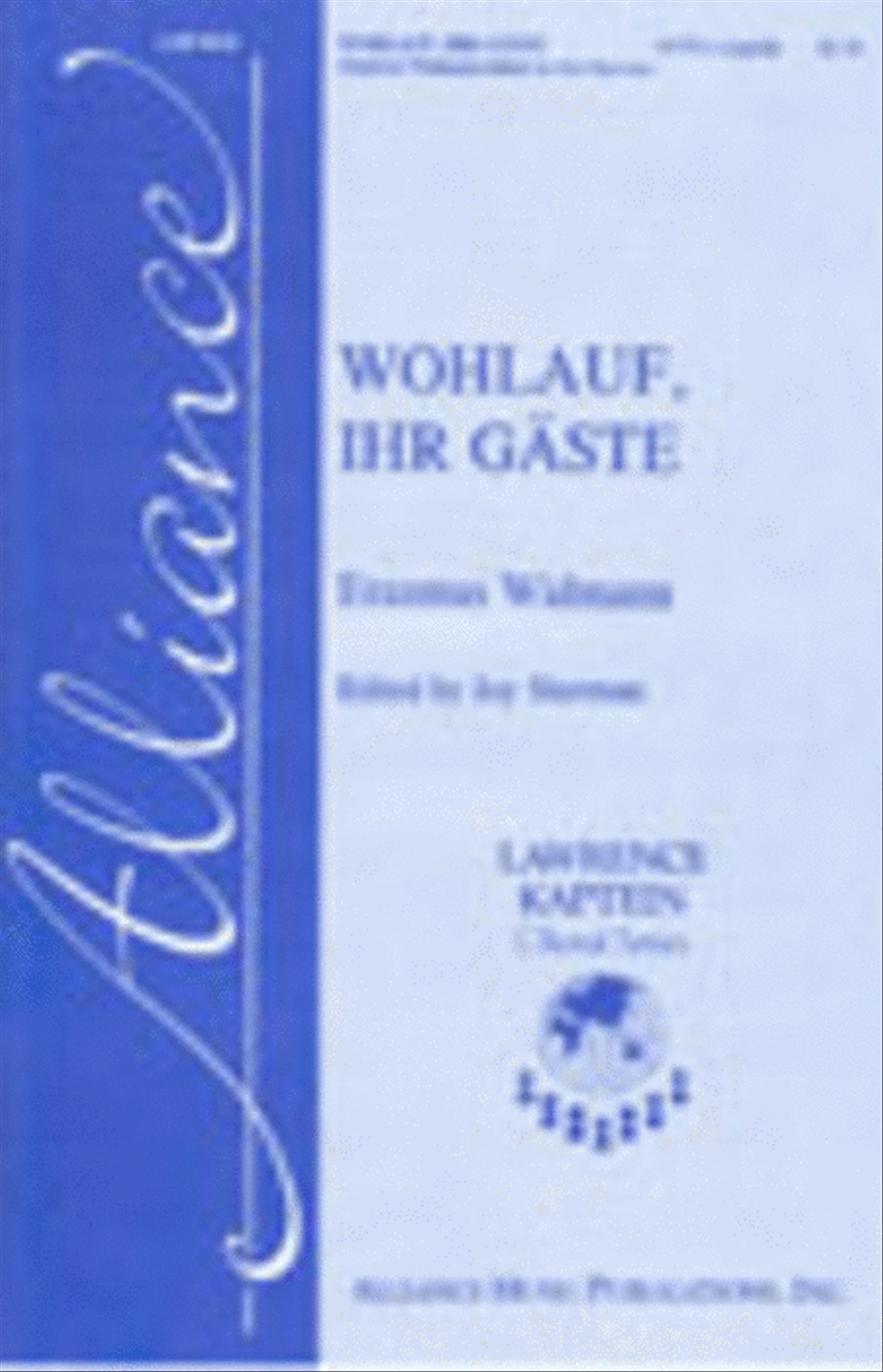
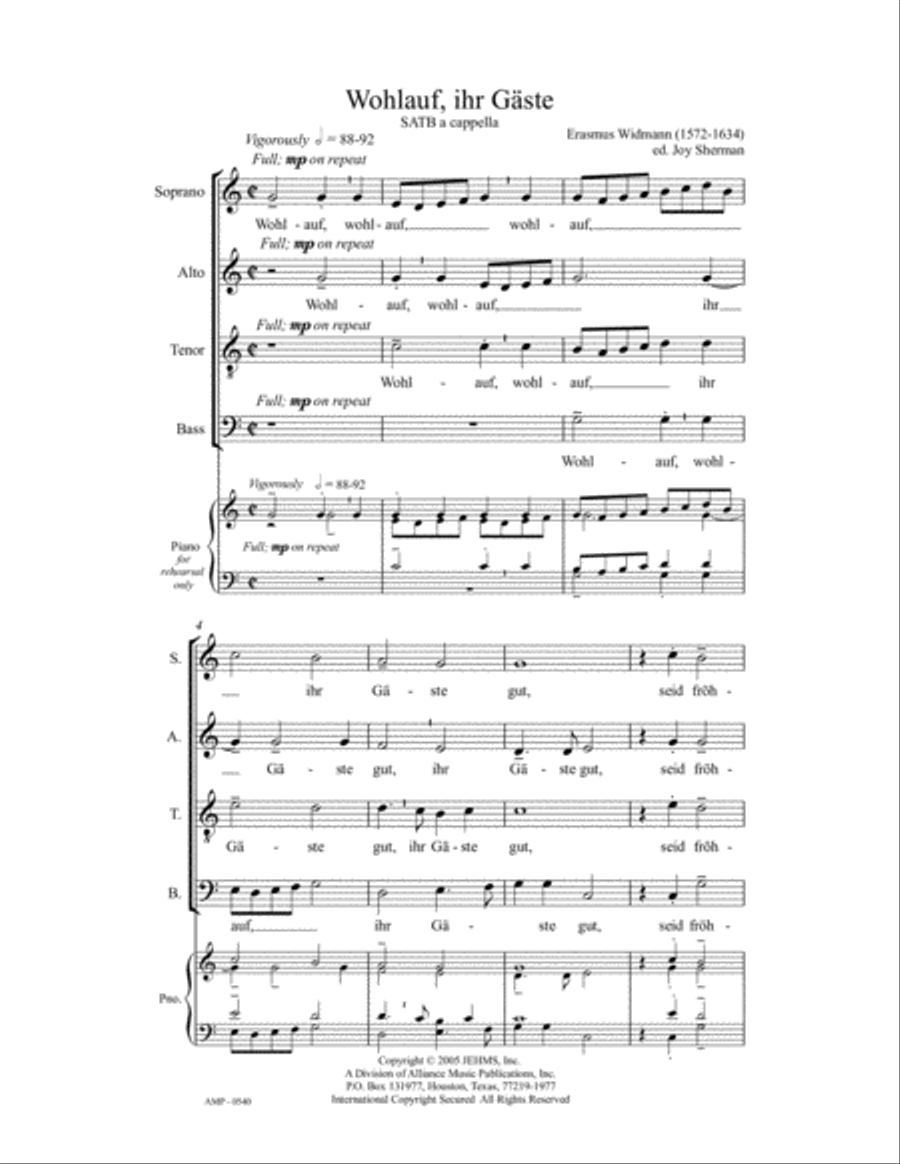
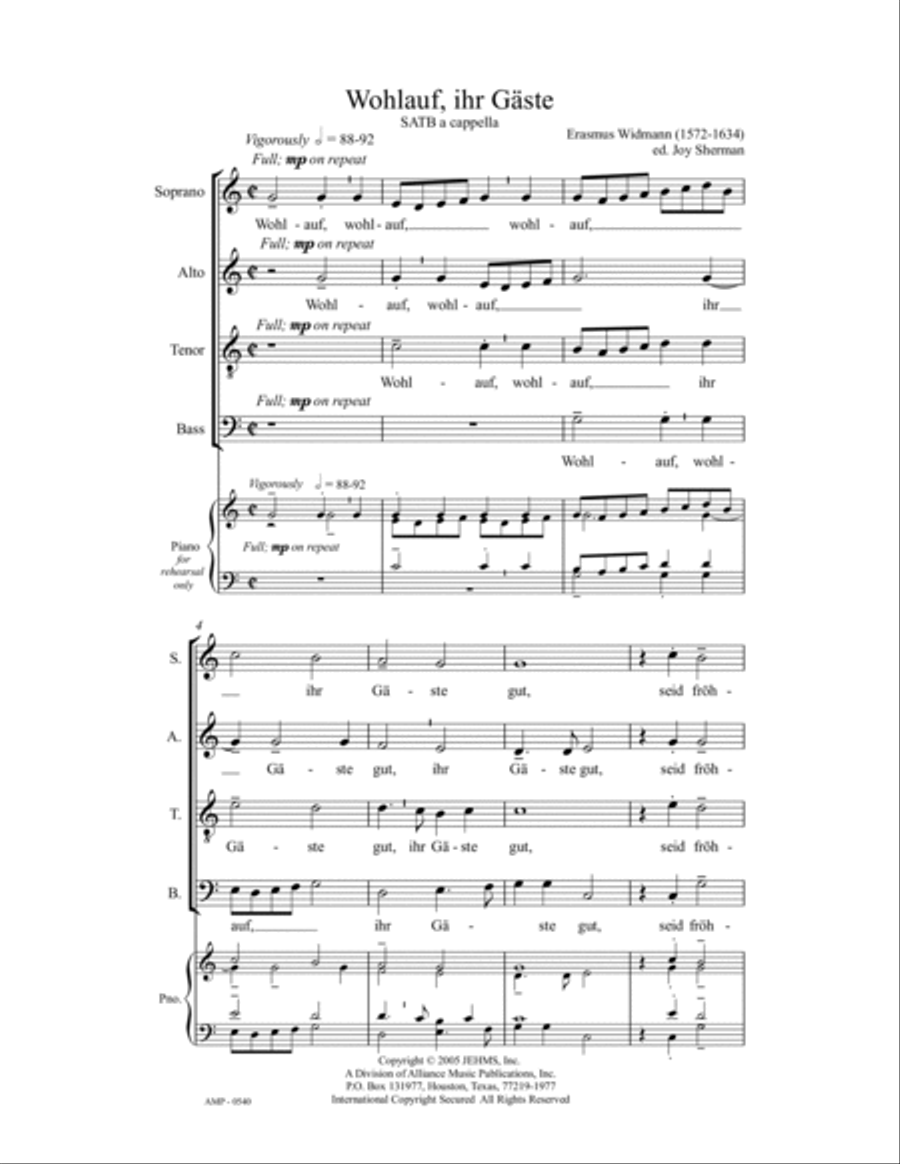
Composed by Erasmus Widmann. Edited by Joy Sherman and Lawrence Kaptein. Octavo. Alliance Music Publications #AMP 0540. Published by Alliance Music Publications (AN.AMP-0540).
Widmann/Sherman.
EDITORIAL NOTES
ERASMUS WIDMANN (1572-1634) was a highly regarded German musician and literary figure whose many artistic contributions to the German Renaissance remain largely undiscovered by toda's musical world. A composer of both vocal and instrumental works, Widmann was equally recognized as a poet and author within German cultural circles. Around 1615 he published a musical treatise (Praecepta musicae latino Germania) and was later awarded the title Imperial Poet-laureate. Widmann frequently utilized his own poems as the texts for his secular compositions. His vocal works included psalms, motets, as well as secular songs, of which Wohlauf ihr Gaste is a fine example. Short works like this one were primarily sung by sophisticated amateur musicians within informal settings. Such in-home use allowed for great flexibility with regard to the number of singers per part and the use of instruments with voices. Consequently, instrumental doublings and/or substitutions as a means of reinforcing or replacing vocal lines by today's choral ensembles is completely appropriate.
Most German composers from this period, including Erasmus Widmann, imitated the compositional style made popular by their better-known Italian contemporaries. The migration of accomplished Italian and Netherlands composers to German courts and municipalities during the late Renaissance (including Lasso, who settled in Munich in 1556) undoubtedly contributed to the internationalization of this popular Italian/Franco-Flemish compositional style.
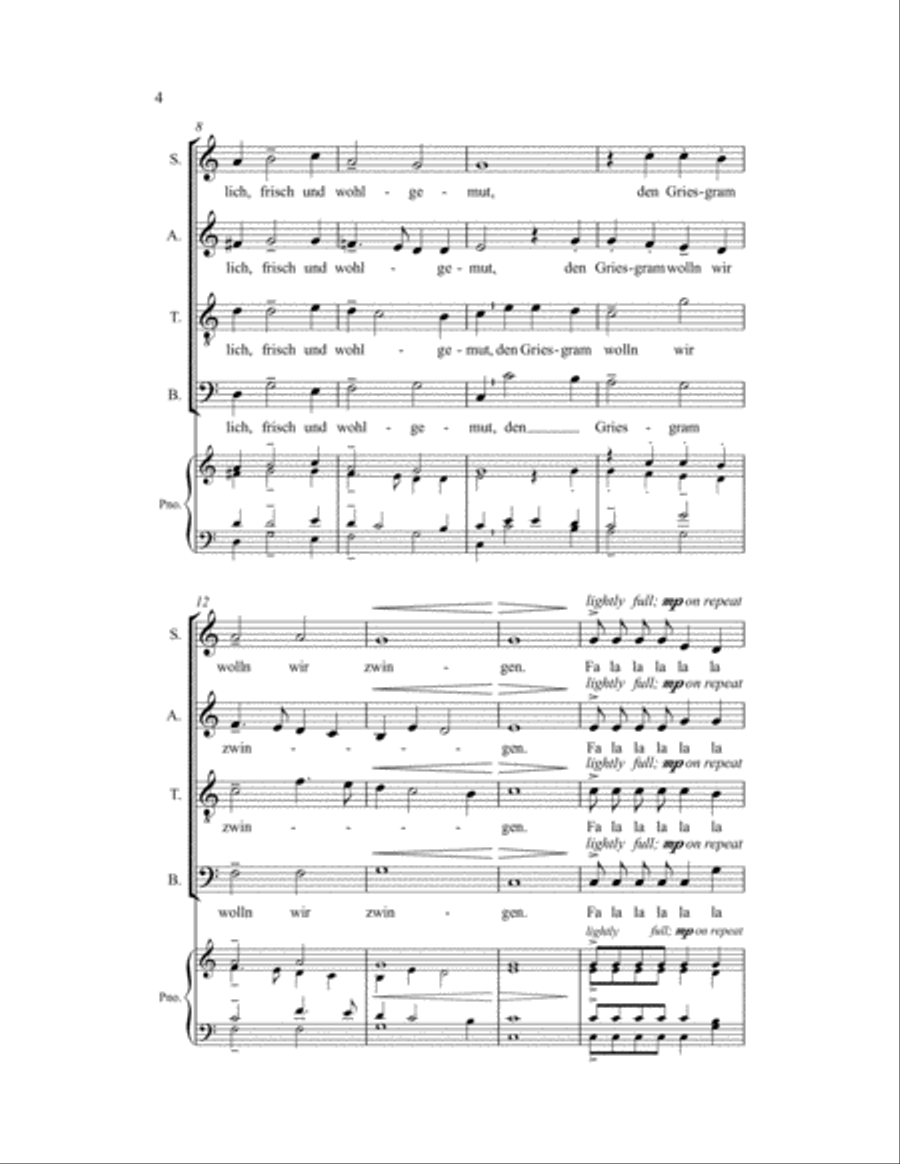
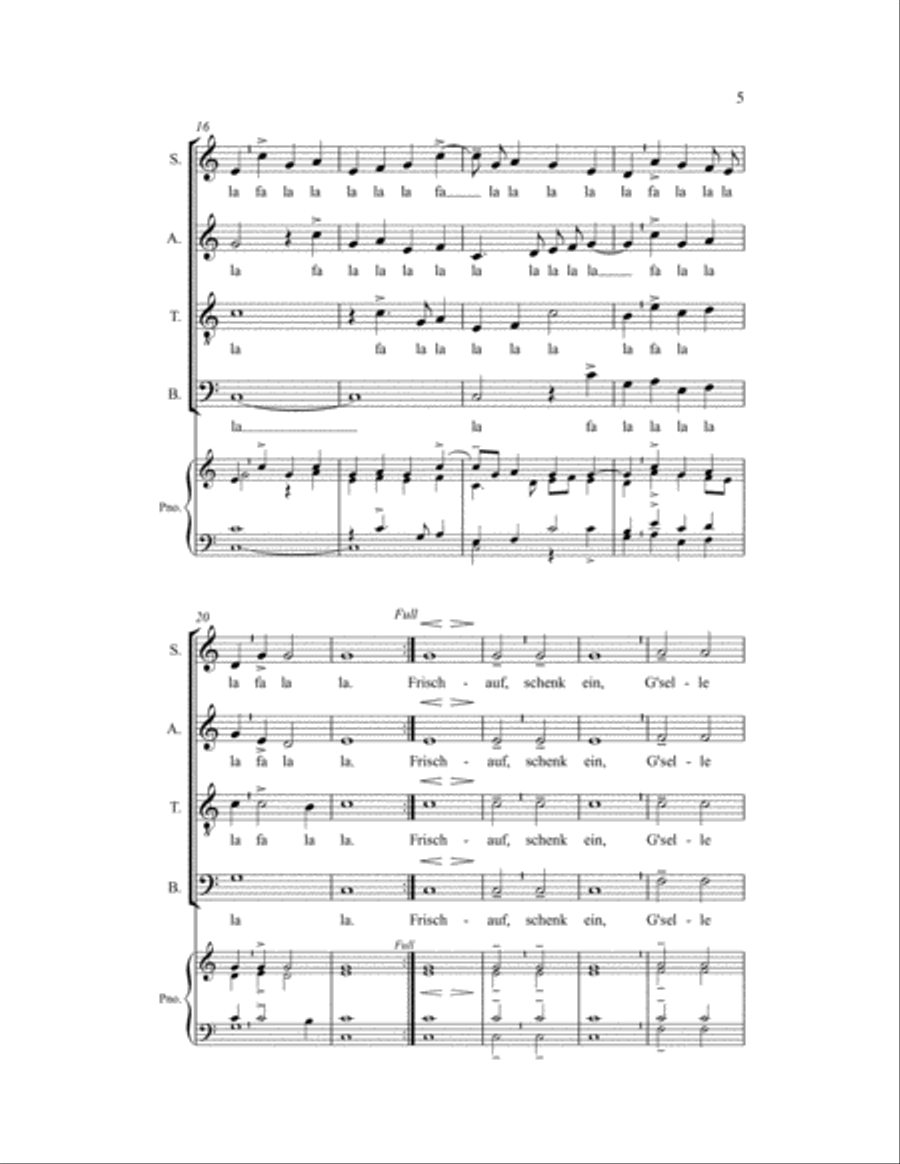
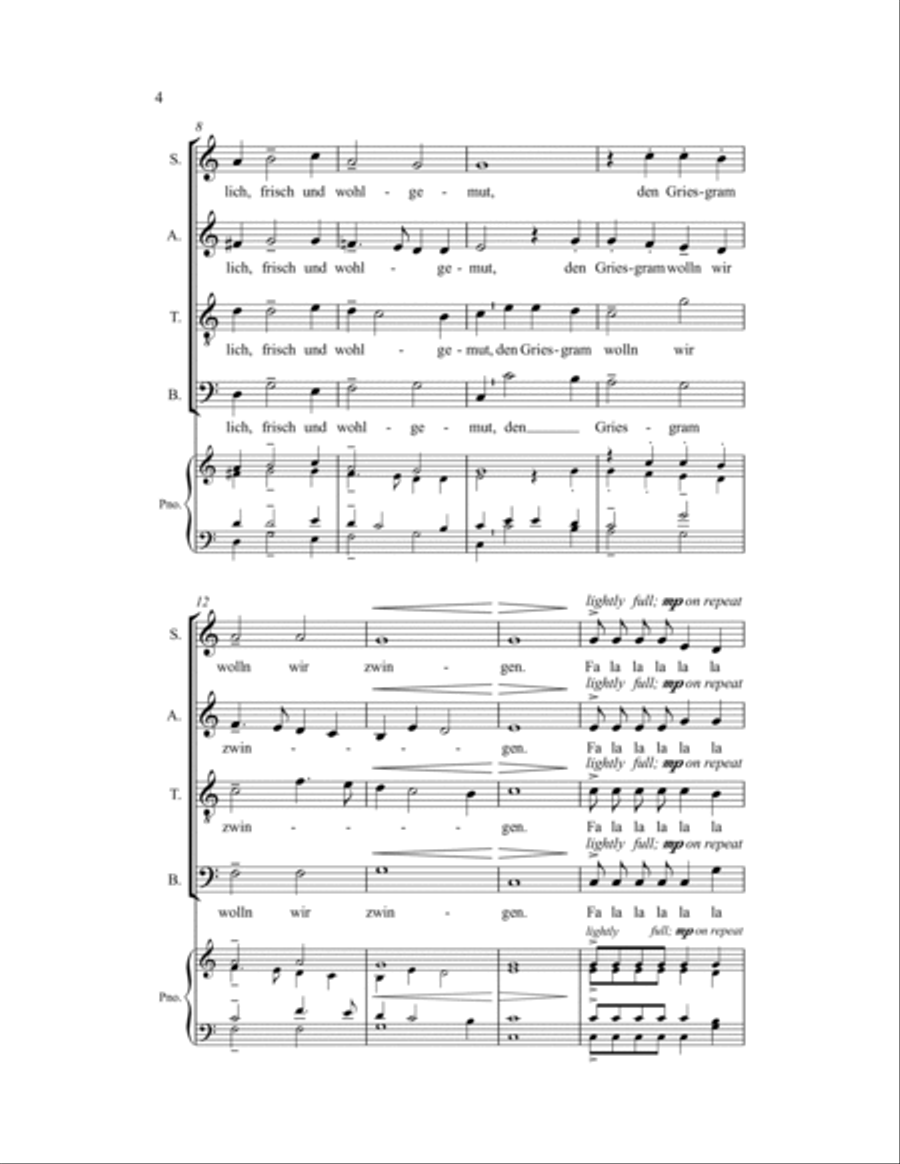
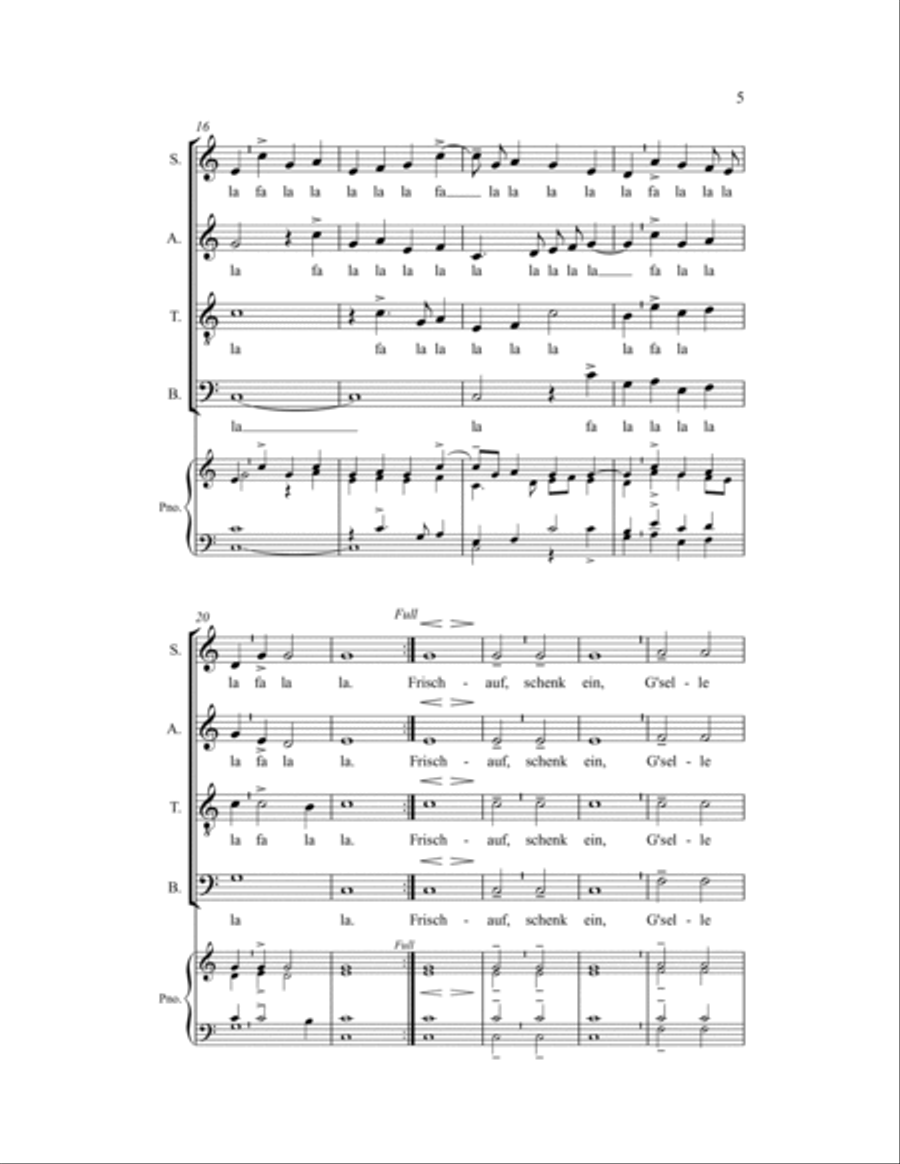
Wohlauf ihr Gaste is an appealing, light-hearted work, appropriate for any time of year, but perhaps particularly well-suited for the holiday season. All tempo, articulation, and expression marks are completely editorial, as it was not the custom to indicate such things in manuscripts from this period. In general, Wohlauf, ihr Gaste should be sung with an energized, detached articulation.
Composed by Erasmus Widmann. Edited by Joy Sherman and Lawrence Kaptein. Octavo. Alliance Music Publications #AMP 0540. Published by Alliance Music Publications (AN.AMP-0540).
Widmann/Sherman.
EDITORIAL NOTES
ERASMUS WIDMANN (1572-1634) was a highly regarded German musician and literary figure whose many artistic contributions to the German Renaissance remain largely undiscovered by toda's musical world. A composer of both vocal and instrumental works, Widmann was equally recognized as a poet and author within German cultural circles. Around 1615 he published a musical treatise (Praecepta musicae latino Germania) and was later awarded the title Imperial Poet-laureate. Widmann frequently utilized his own poems as the texts for his secular compositions. His vocal works included psalms, motets, as well as secular songs, of which Wohlauf ihr Gaste is a fine example. Short works like this one were primarily sung by sophisticated amateur musicians within informal settings. Such in-home use allowed for great flexibility with regard to the number of singers per part and the use of instruments with voices. Consequently, instrumental doublings and/or substitutions as a means of reinforcing or replacing vocal lines by today's choral ensembles is completely appropriate.
Most German composers from this period, including Erasmus Widmann, imitated the compositional style made popular by their better-known Italian contemporaries. The migration of accomplished Italian and Netherlands composers to German courts and municipalities during the late Renaissance (including Lasso, who settled in Munich in 1556) undoubtedly contributed to the internationalization of this popular Italian/Franco-Flemish compositional style.
Wohlauf ihr Gaste is an appealing, light-hearted work, appropriate for any time of year, but perhaps particularly well-suited for the holiday season. All tempo, articulation, and expression marks are completely editorial, as it was not the custom to indicate such things in manuscripts from this period. In general, Wohlauf, ihr Gaste should be sung with an energized, detached articulation.
Preview: Wohlauf, ihr Gaste
Tell A Friend
Tell a friend (or remind yourself) about this product. We'll instantly send an email containing product info and a link to it. You may also enter a personal message.
We do not use or store email addresses from this form for any other purpose than sending your share email.
After purchase, you can download your MP3 from your Sheet Music Plus Digital Library - no software installation is necessary! You can also listen to your MP3 at any time in your Digital Library.
Learn about Smart Music
After purchase, you can download your Smart Music from your Sheet Music Plus Digital Library - no software installation is necessary! You can also download at any time in your Digital Library.
Learn about Digital Video
After purchase you can download your video from your Digital Library. Your video is in XX format and is playable on most pre-installed video players.