Order two or more copies of the same title and we'll automatically give you 5% off list price on that title.
To get 2+ Pricing , just add two or more copies of a title to your shopping cart. Your discount will be immediately applied to your order.
Sale titles, hymnals, and ShowKits (MTI's Broadway Junior Collection, Getting to Know... Collection (G2K) and MTI's Kids Collection) do not qualify for 2+ Pricing
If you have any questions or comments regarding 2+ Pricing , please visit our Help Center to find more information or chat with our support team
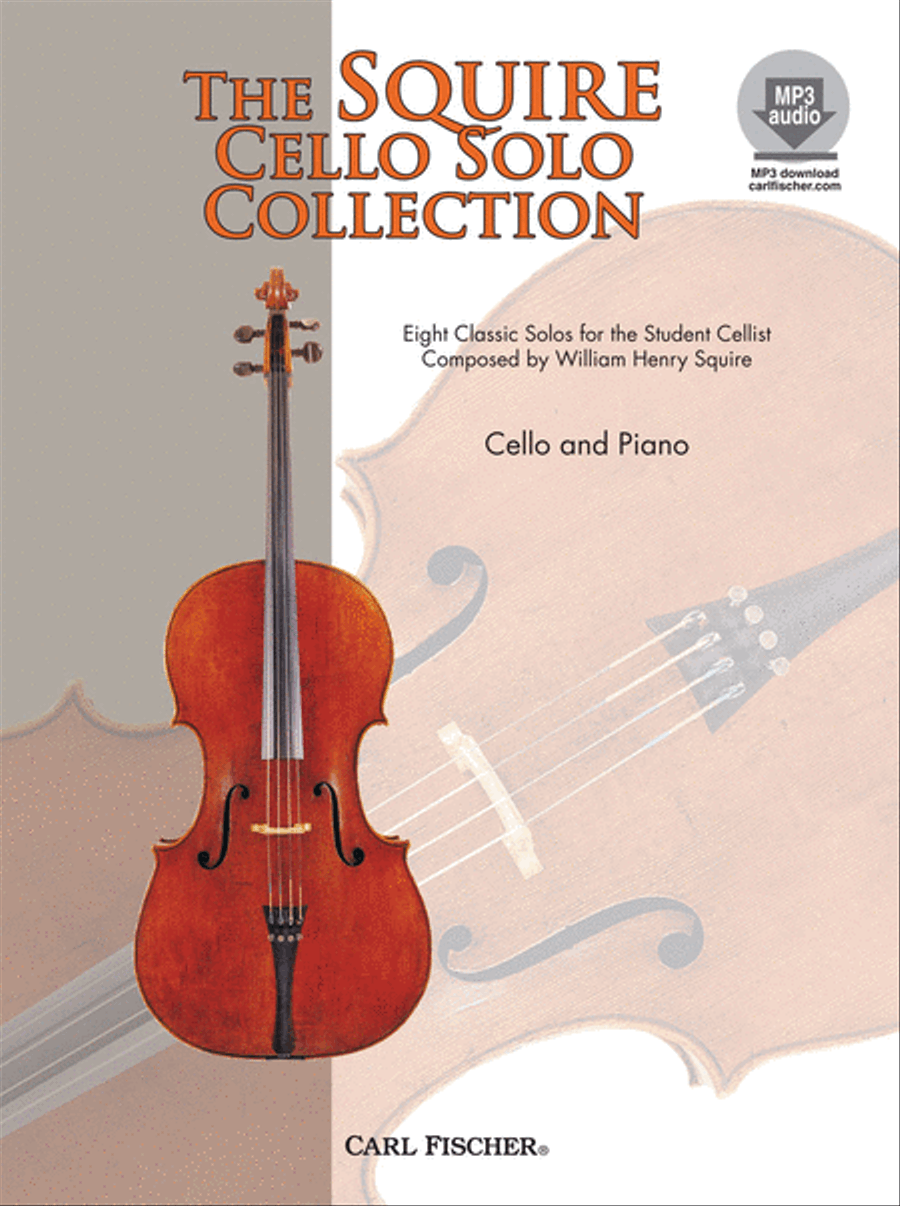
Eight Classic Solos for the Student Cellist. Composed by William Squire. This edition: saddle-wire stitch. Sws. Collection. With Standard notation. 68 pages. Carl Fischer Music #BF47. Published by Carl Fischer Music (CF.BF47).
ISBN 9780825867262. UPC: 798408067267. 9 x 12 inches.
William Henry Squire (1871–1963) was an English composer and virtuosocellist, whose playing was greatly respected in his own day. Squire composed in a variety of genres during his long and celebrated career, yet he is best remembered today for his compositions and arrangements for cello and piano. These were pieces that Squire used as vehicles for self-promotion on his concert tours, and many of them have since become staples in the cellist’s repertoire. The most popular and remembered of these works are featured in this collection. William Henry Squire was an English composer and virtuoso cellist, whoseplaying was greatly respected in his own day. Squire composed in a variety of genres, but is best remembered today for his compositions and arrangements for cello and piano, many of which have become staples in the cellist’s repertoire.Squire was born in 1871 in Ross-on-Wye, a small market town in southeastHerefordshire, England. He displayed a precocious aptitude for music, and his father, who recognized this aptitude, instructed him on the cello. He continued his studies at age thirteen as a foundation scholar at the Royal College of Music in London. There, he studied cello with Edward Howell and composition with Sir Hubert Parry and the Irish composer Charles Stanford. At the tender age of nineteen, Squire made his concert debut in London’s St. James’ Hall in a concert organized by the Spanish composer Isaac Albéniz. Four years later, he presented the premiere English performance of the Saint-Saëns Cello Concerto in A minor at London’s Crystal Palace.By the age of twenty-three, Squire was critically acclaimed as a virtuosocellist, and was in great demand in England and elsewhere in Europe. He directed the cello section in the Covent Garden Orchestra from 1894–1897 and was subsequently engaged to perform in the Queen’s Hall Orchestra from 1897–1901. He toured widely and with great success with the vocalist Clara Butt, an English contralto who was likewise in great demand. Gabriel Fauré was enchanted by the warm and full tone of Squire’s cello playing, for which reason Fauré dedicated his famous Sicilienne to Squire. An aged and established Edward Elgar requested Squire to prepare the first recording of his Cello Concerto in E minor in 1930. His last concert appearance was in 1941 at age seventy in Exeter Cathedral. Squire died in 1963 at the age of ninety-one, following a life rich in achievement and celebration.Squire was less acclaimed in his own day as a composer, though his outputwas respected by many. He composed a cello concerto, two operettas and various works for orchestra. His numerous instrumental miniatures are primarily for cello and piano accompaniment, pieces which he used as vehicles for self-promotion on his concert tours. The most popular and remembered of these works, such as the jaunty At Morn, the picturesque Cradle Song and the impetuous Tarentella, are featured in this collection.
Eight Classic Solos for the Student Cellist. Composed by William Squire. This edition: saddle-wire stitch. Sws. Collection. With Standard notation. 68 pages. Carl Fischer Music #BF47. Published by Carl Fischer Music (CF.BF47).
ISBN 9780825867262. UPC: 798408067267. 9 x 12 inches.
William Henry Squire (1871–1963) was an English composer and virtuosocellist, whose playing was greatly respected in his own day. Squire composed in a variety of genres during his long and celebrated career, yet he is best remembered today for his compositions and arrangements for cello and piano. These were pieces that Squire used as vehicles for self-promotion on his concert tours, and many of them have since become staples in the cellist’s repertoire. The most popular and remembered of these works are featured in this collection. William Henry Squire was an English composer and virtuoso cellist, whoseplaying was greatly respected in his own day. Squire composed in a variety of genres, but is best remembered today for his compositions and arrangements for cello and piano, many of which have become staples in the cellist’s repertoire.Squire was born in 1871 in Ross-on-Wye, a small market town in southeastHerefordshire, England. He displayed a precocious aptitude for music, and his father, who recognized this aptitude, instructed him on the cello. He continued his studies at age thirteen as a foundation scholar at the Royal College of Music in London. There, he studied cello with Edward Howell and composition with Sir Hubert Parry and the Irish composer Charles Stanford. At the tender age of nineteen, Squire made his concert debut in London’s St. James’ Hall in a concert organized by the Spanish composer Isaac Albéniz. Four years later, he presented the premiere English performance of the Saint-Saëns Cello Concerto in A minor at London’s Crystal Palace.By the age of twenty-three, Squire was critically acclaimed as a virtuosocellist, and was in great demand in England and elsewhere in Europe. He directed the cello section in the Covent Garden Orchestra from 1894–1897 and was subsequently engaged to perform in the Queen’s Hall Orchestra from 1897–1901. He toured widely and with great success with the vocalist Clara Butt, an English contralto who was likewise in great demand. Gabriel Fauré was enchanted by the warm and full tone of Squire’s cello playing, for which reason Fauré dedicated his famous Sicilienne to Squire. An aged and established Edward Elgar requested Squire to prepare the first recording of his Cello Concerto in E minor in 1930. His last concert appearance was in 1941 at age seventy in Exeter Cathedral. Squire died in 1963 at the age of ninety-one, following a life rich in achievement and celebration.Squire was less acclaimed in his own day as a composer, though his outputwas respected by many. He composed a cello concerto, two operettas and various works for orchestra. His numerous instrumental miniatures are primarily for cello and piano accompaniment, pieces which he used as vehicles for self-promotion on his concert tours. The most popular and remembered of these works, such as the jaunty At Morn, the picturesque Cradle Song and the impetuous Tarentella, are featured in this collection.
Preview: Squire Cello Solo Collection
Tell A Friend
Tell a friend (or remind yourself) about this product. We'll instantly send an email containing product info and a link to it. You may also enter a personal message.
We do not use or store email addresses from this form for any other purpose than sending your share email.
After purchase, you can download your MP3 from your Sheet Music Plus Digital Library - no software installation is necessary! You can also listen to your MP3 at any time in your Digital Library.
Learn about Smart Music
After purchase, you can download your Smart Music from your Sheet Music Plus Digital Library - no software installation is necessary! You can also download at any time in your Digital Library.
Learn about Digital Video
After purchase you can download your video from your Digital Library. Your video is in XX format and is playable on most pre-installed video players.