
Ships to you
Ships to you
SKU: CA.3117205
Cantata for the 1st day of Pentecost. Composed by Johann Sebastian Bach. Edited by Ulrich Leisinger. Arranged by Paul Horn. This edition: urtext. Stuttgart Urtext Edition: Bach vocal. German title: Erschallet, ihr Lieder. Sacred vocal music, Whitsun. Choral score. Composed 1714. BWV 172. 4 pages. Duration 25 minutes. Carus Verlag #CV 31.172/05. Published by Carus Verlag (CA.3117205).ISBN 9790007128814. 8.27 x 11.69 inches. Key: C major. Language: German/English.
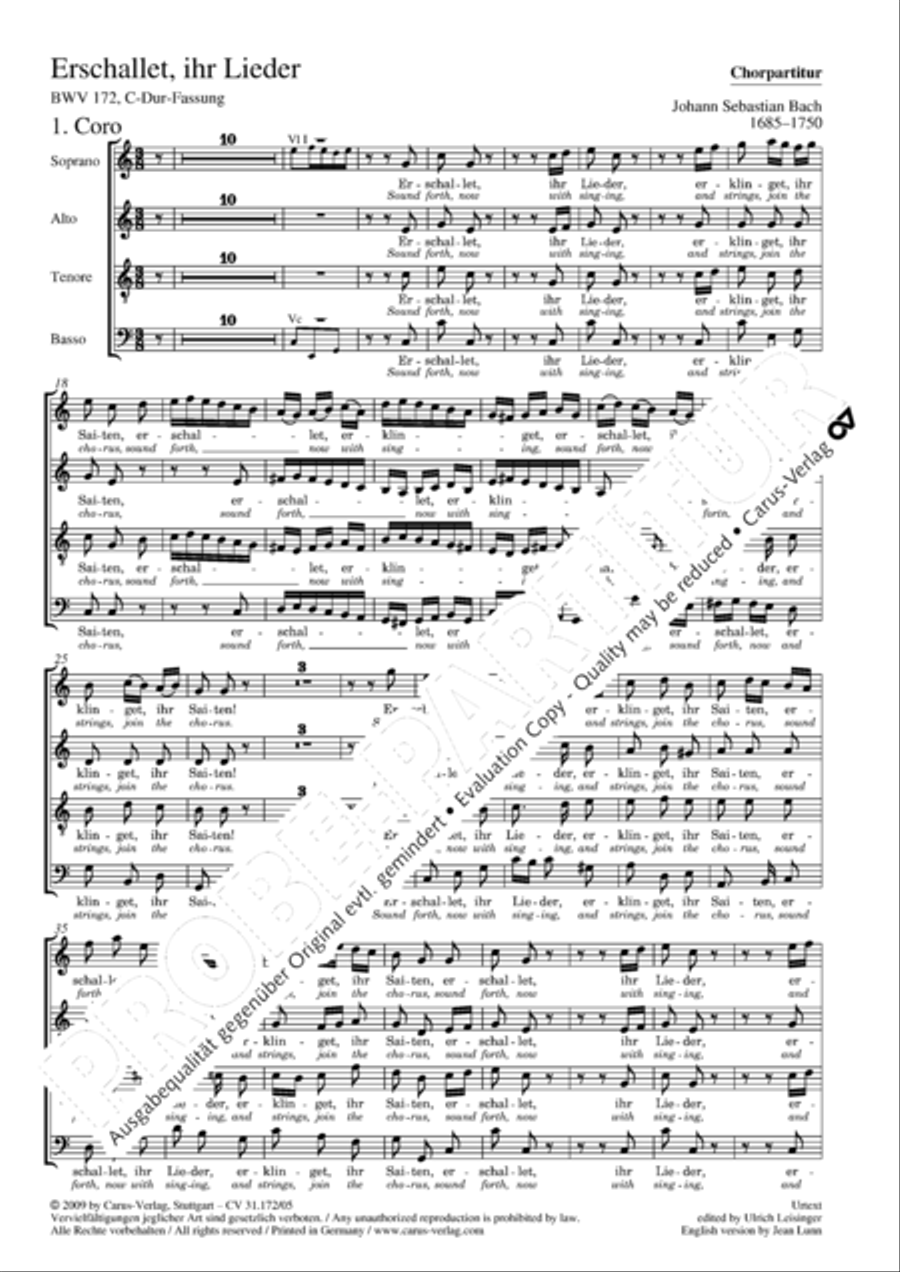
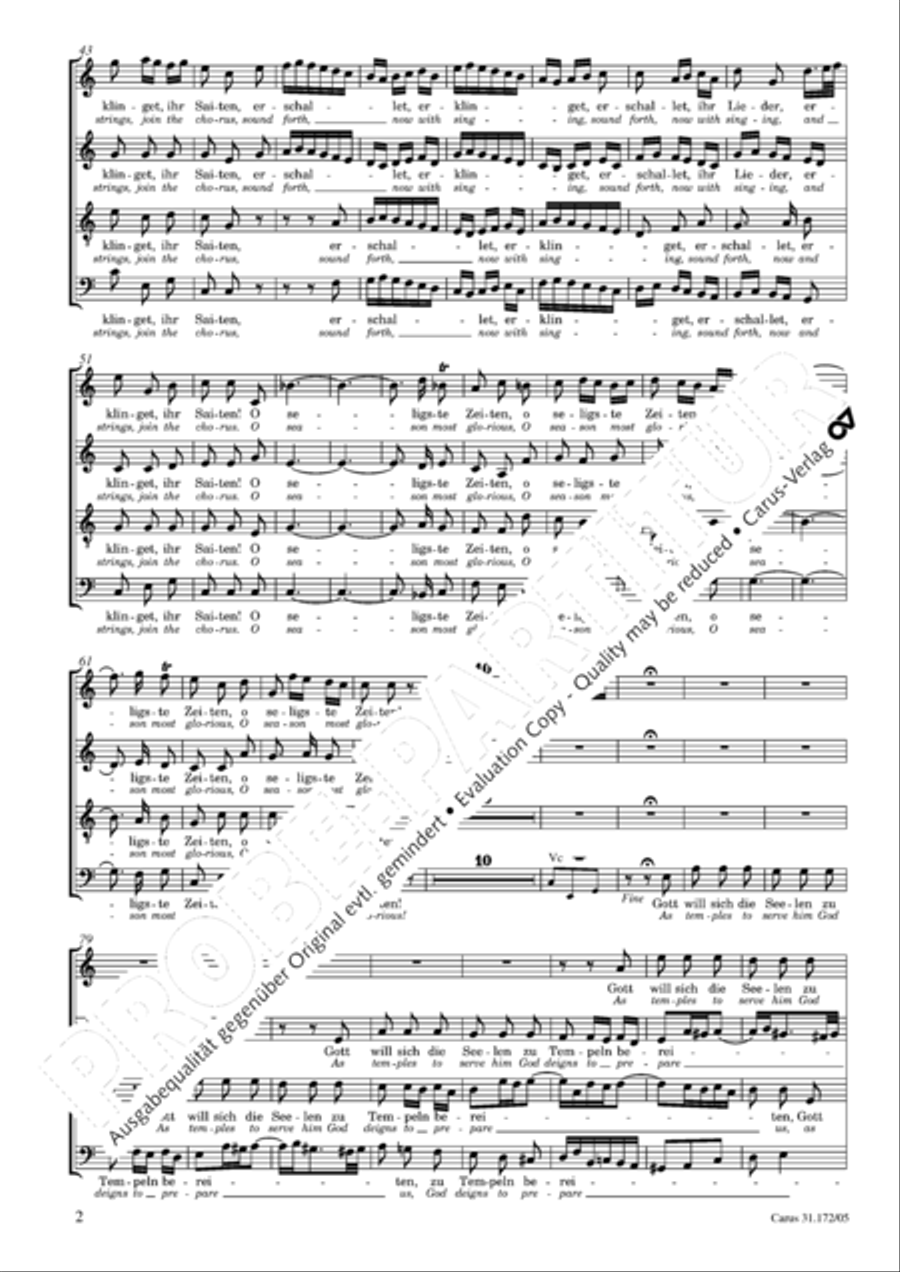
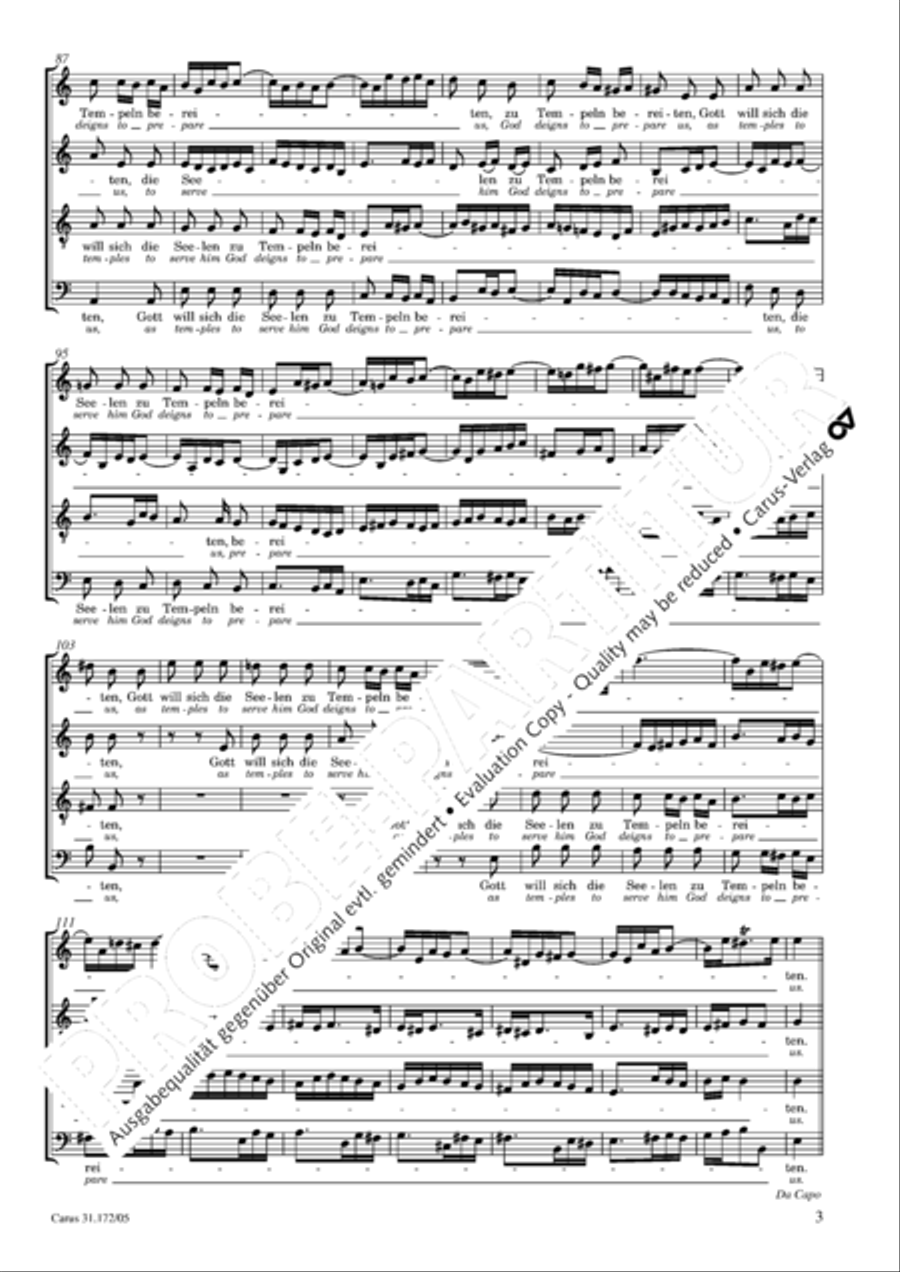
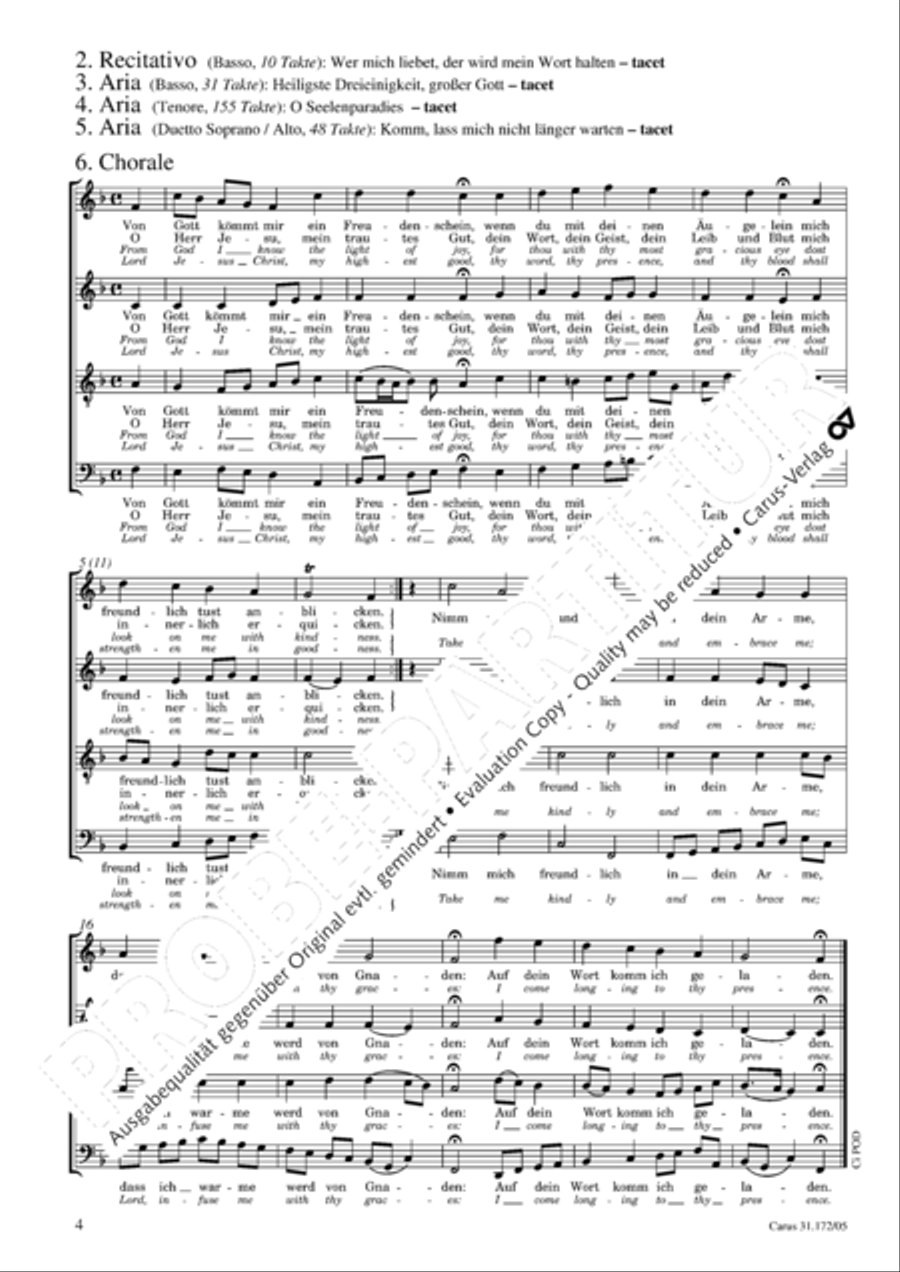
The Pentecost cantata Erschallet ihr Lieder (Sound forth, now with singing), composed for Whit Sunday in 1714, was performed several times in Leipzig in slightly different forms. In particular, there is documentary evidence for performances in 1724 and 1731 (our edition offers the 2nd and last Leipzig version in C major). The cantata opens with a rousing and joyful chorus. The work’s only recitative, written for bass on Jesus’s words from John 14 ("Wer mich liebet, der wird mein Wort halten"/ "He who loves me keeps all my comandments"), leads to a sequence of arias, the first of which, "Heiligste Dreieinigkeit" (O most holy Trinity) for bass, 3 trumpets, and continuo is the most virtuosic-sounding of Bach’s trumpet parts, even if it is perhaps not the most difficult! This is directly followed by a contrasting second aria for tenor and strings (in unison), featuring long cantabile phrases. The third aria, a duet, was accompanied in 1731 by obbligato organ (alternatively: oboe and cello as in the earlier versions). The final chorale contains – as in several of Bach’s Weimar cantatas – an independent upper voice for violin.
See Similar Sheet Music and Digital Downloads