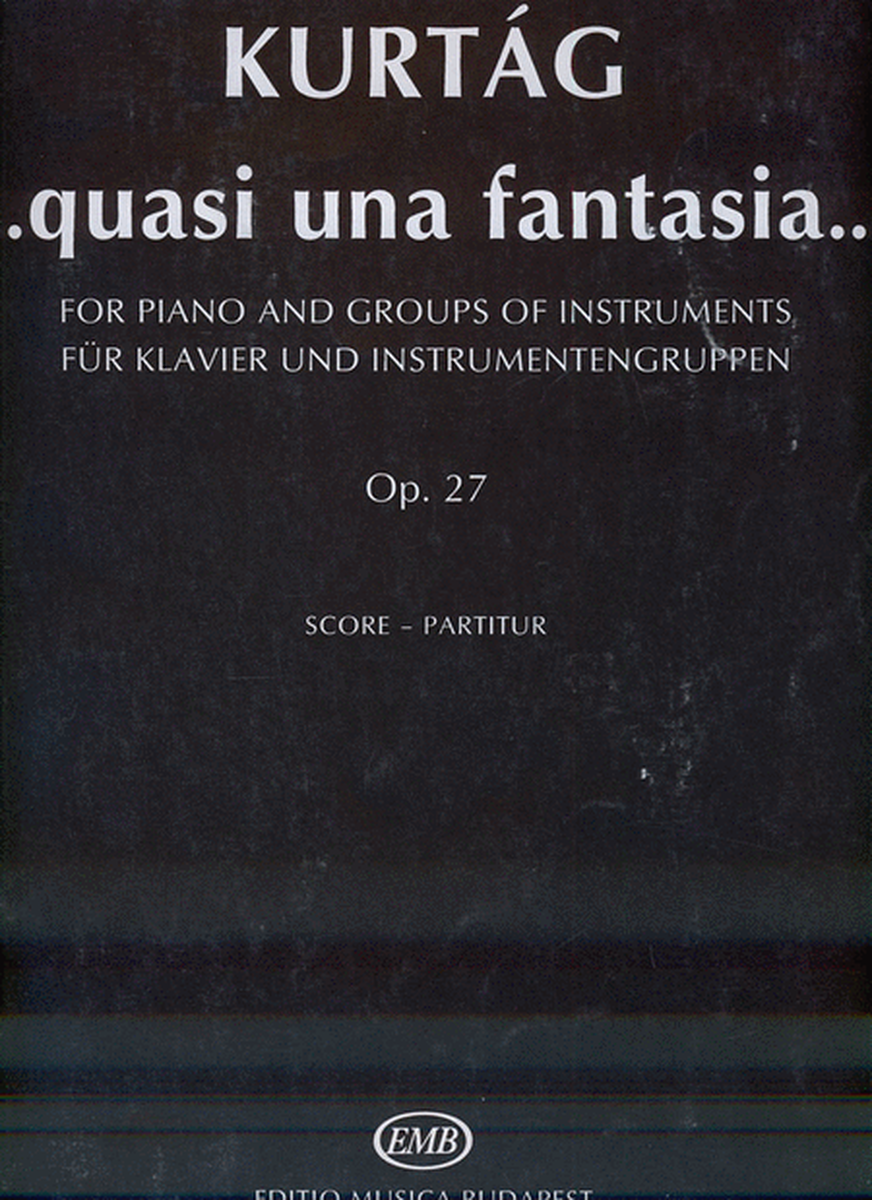
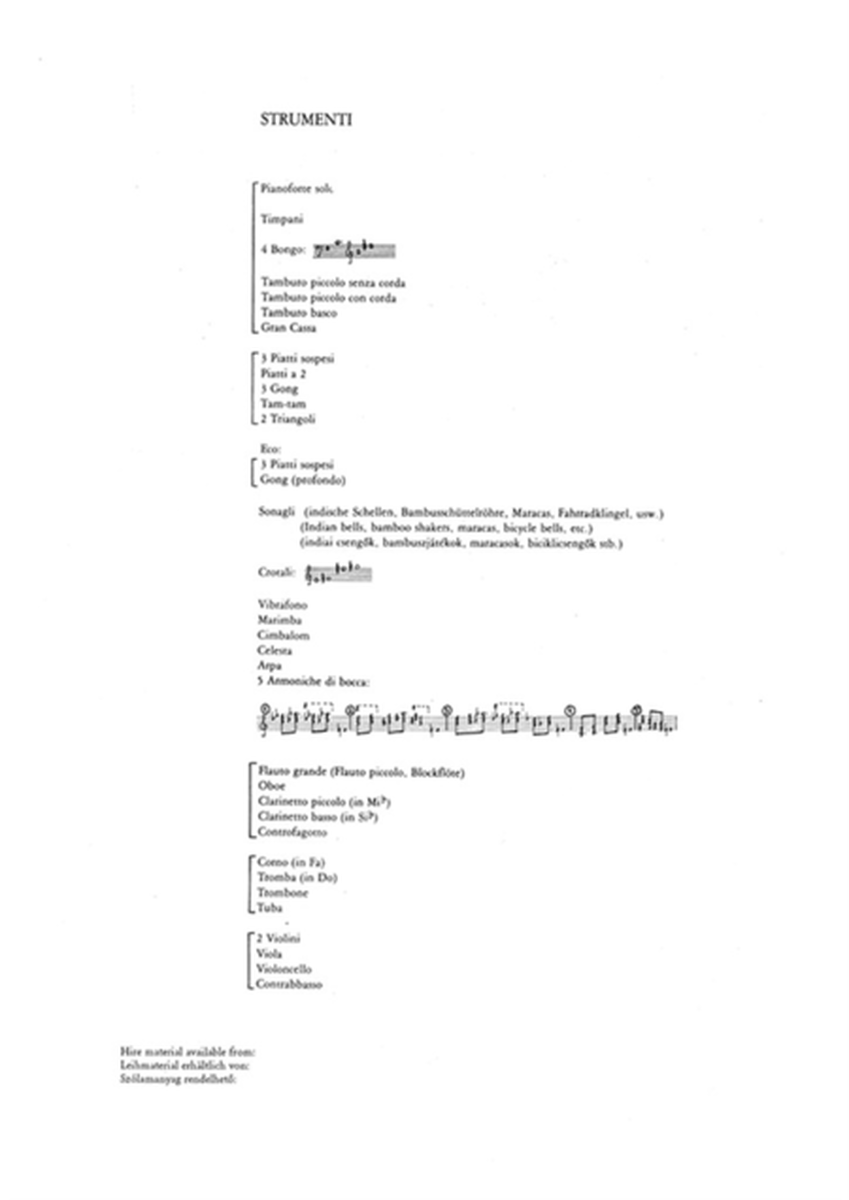
Für Klavier und Instrumentengruppen. Composed by Gyorgy Kurtag. Book Only. Composed 1989. 28 pages. Editio Musica Budapest #EMBZ13742. Published by Editio Musica Budapest (PR.EMB13742).
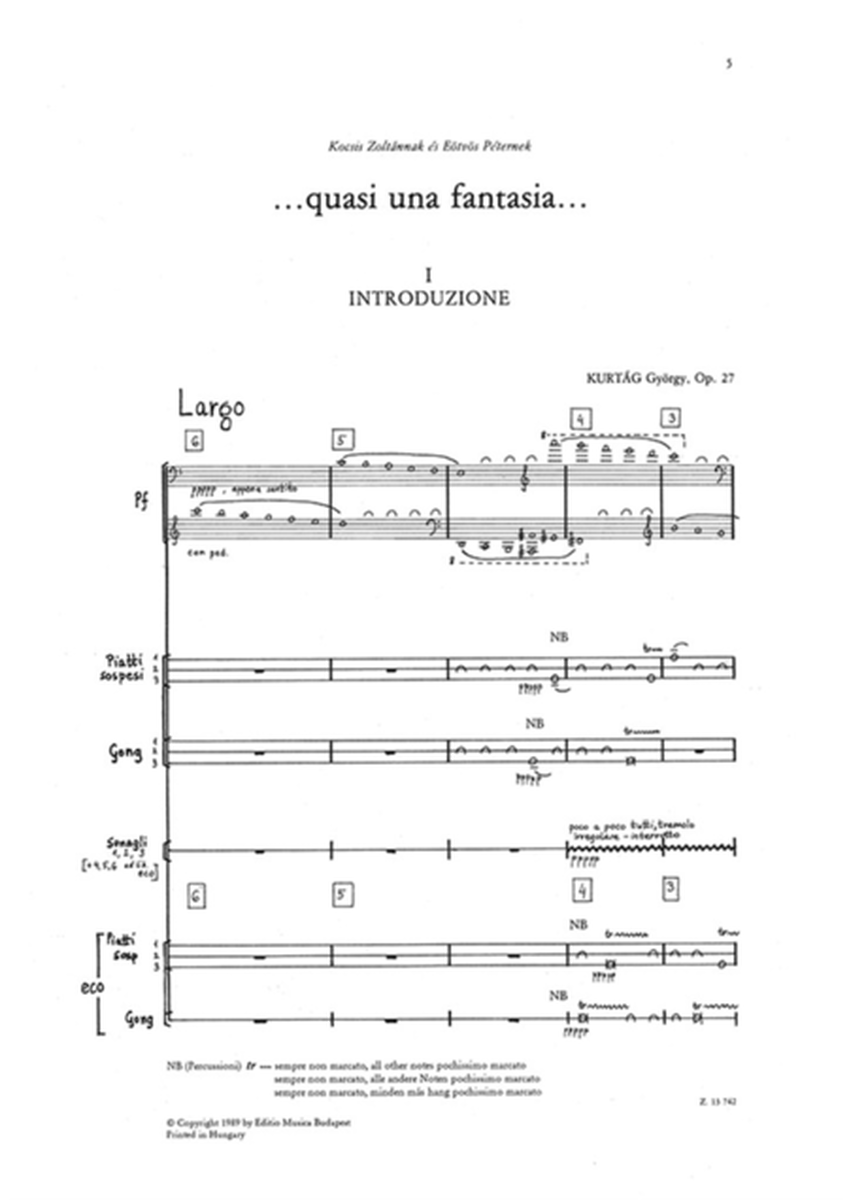
I wanted for musicians to not be able to discuss how bad the music was during rehearsals, said György Kurtág (* 1926) at his own expense in reference to his works, which call for the use of orchestras scattered throughout the concert hall sounding from different directions and heights. Between 1987 and 1991, he composed four pieces for such stereophonically-used ensembles, each of which, apart from its spatial sound, has its own specific form and profile. The earliest of these is quasi una fantasia , a mini piano concerto which, with its opus number 27 and title, refers to both Beethoven and his piano music, both of which were so crucial for Kurtág s own music. Thework was commissioned by the Berlin Festive Weeks and premiered on October 16, 1988, with Zoltán Kocsis as soloist and Péter Eötvös as the conductor.
Für Klavier und Instrumentengruppen. Composed by Gyorgy Kurtag. Book Only. Composed 1989. 28 pages. Editio Musica Budapest #EMBZ13742. Published by Editio Musica Budapest (PR.EMB13742).
I wanted for musicians to not be able to discuss how bad the music was during rehearsals, said György Kurtág (* 1926) at his own expense in reference to his works, which call for the use of orchestras scattered throughout the concert hall sounding from different directions and heights. Between 1987 and 1991, he composed four pieces for such stereophonically-used ensembles, each of which, apart from its spatial sound, has its own specific form and profile. The earliest of these is quasi una fantasia , a mini piano concerto which, with its opus number 27 and title, refers to both Beethoven and his piano music, both of which were so crucial for Kurtág s own music. Thework was commissioned by the Berlin Festive Weeks and premiered on October 16, 1988, with Zoltán Kocsis as soloist and Péter Eötvös as the conductor.
Preview: ...quasi una fantasia... op. 27 für Klavier und I
Tell A Friend
Tell a friend (or remind yourself) about this product. We'll instantly send an email containing product info and a link to it. You may also enter a personal message.
We do not use or store email addresses from this form for any other purpose than sending your share email.
After purchase, you can download your MP3 from your Sheet Music Plus Digital Library - no software installation is necessary! You can also listen to your MP3 at any time in your Digital Library.
Learn about Smart Music
After purchase, you can download your Smart Music from your Sheet Music Plus Digital Library - no software installation is necessary! You can also download at any time in your Digital Library.
Learn about Digital Video
After purchase you can download your video from your Digital Library. Your video is in XX format and is playable on most pre-installed video players.