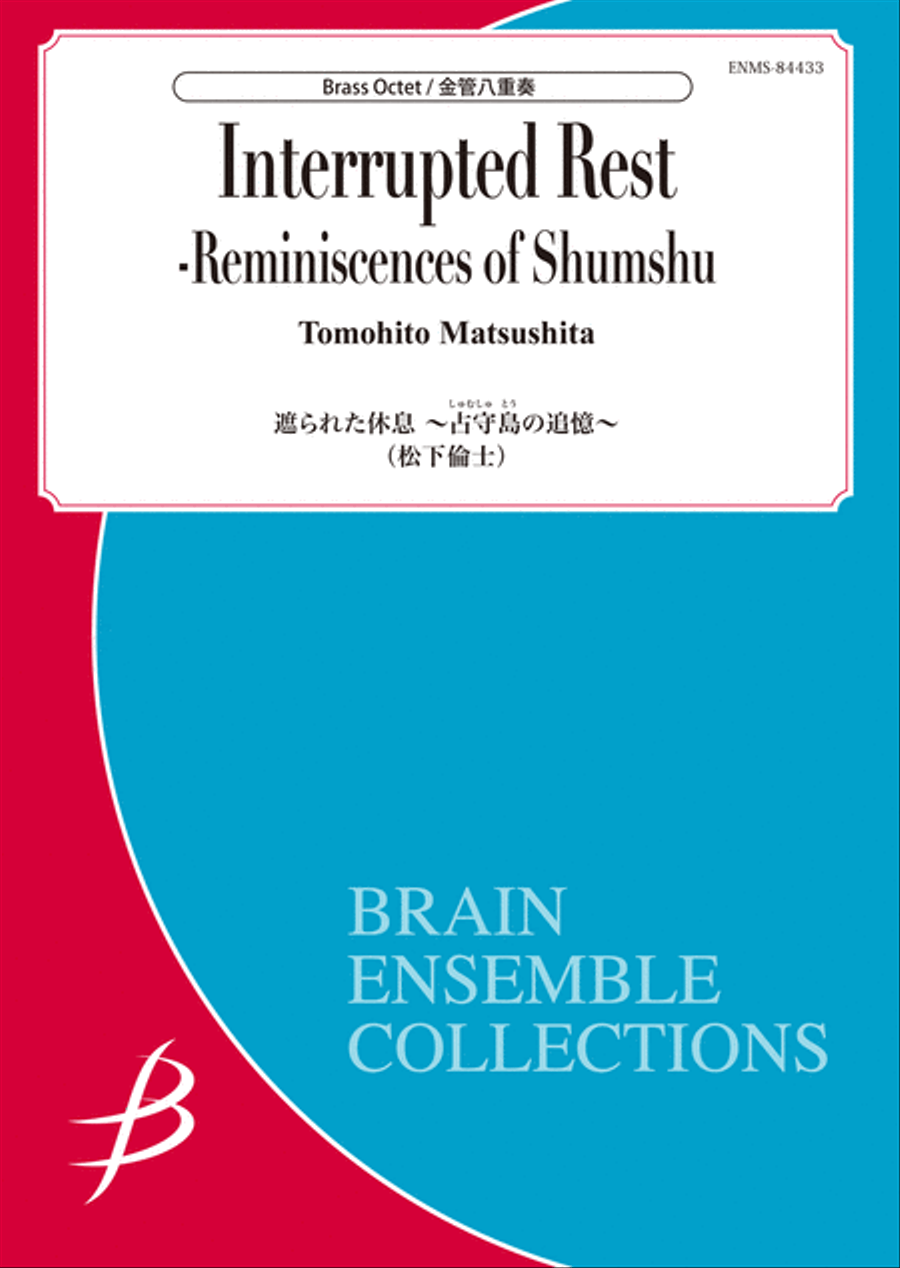
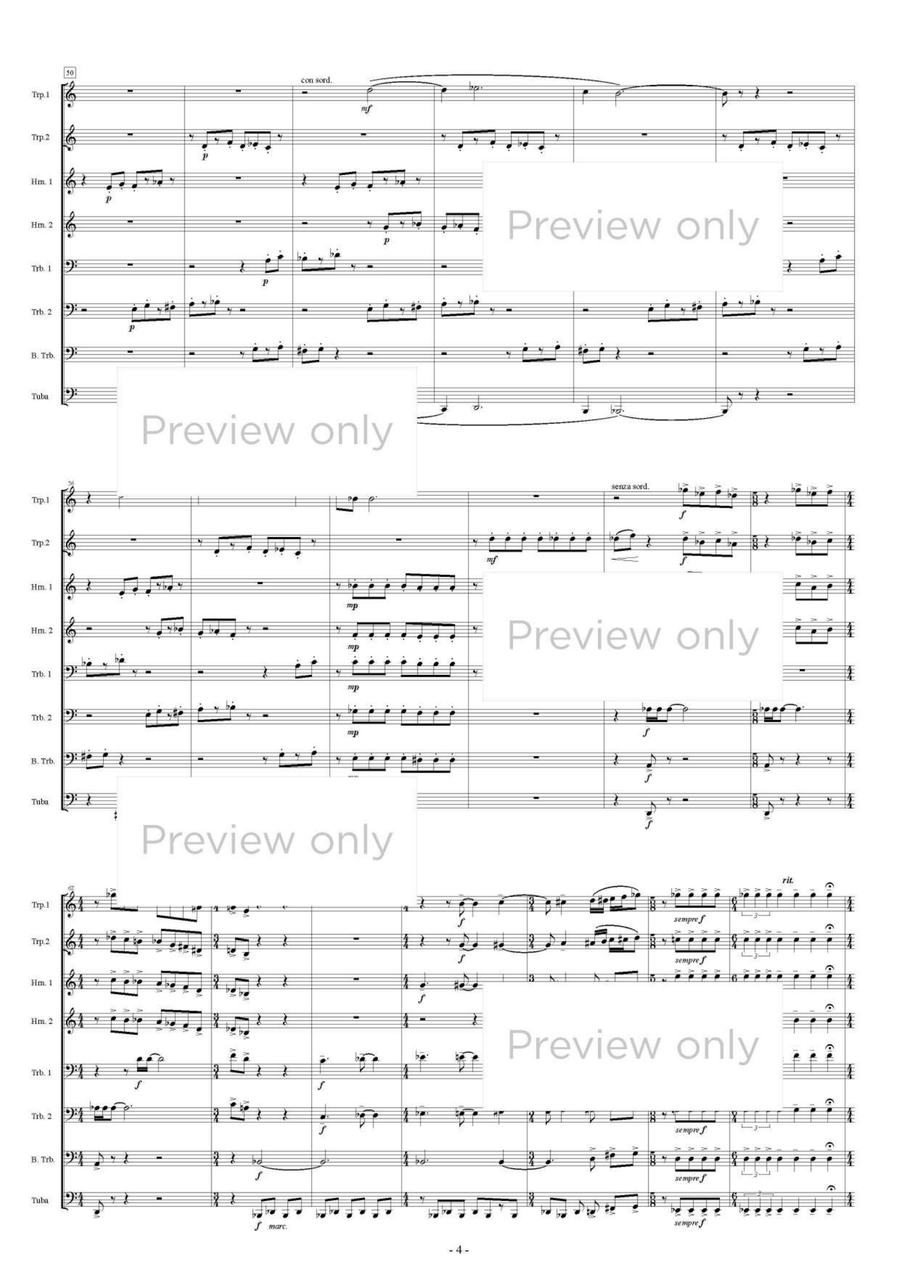
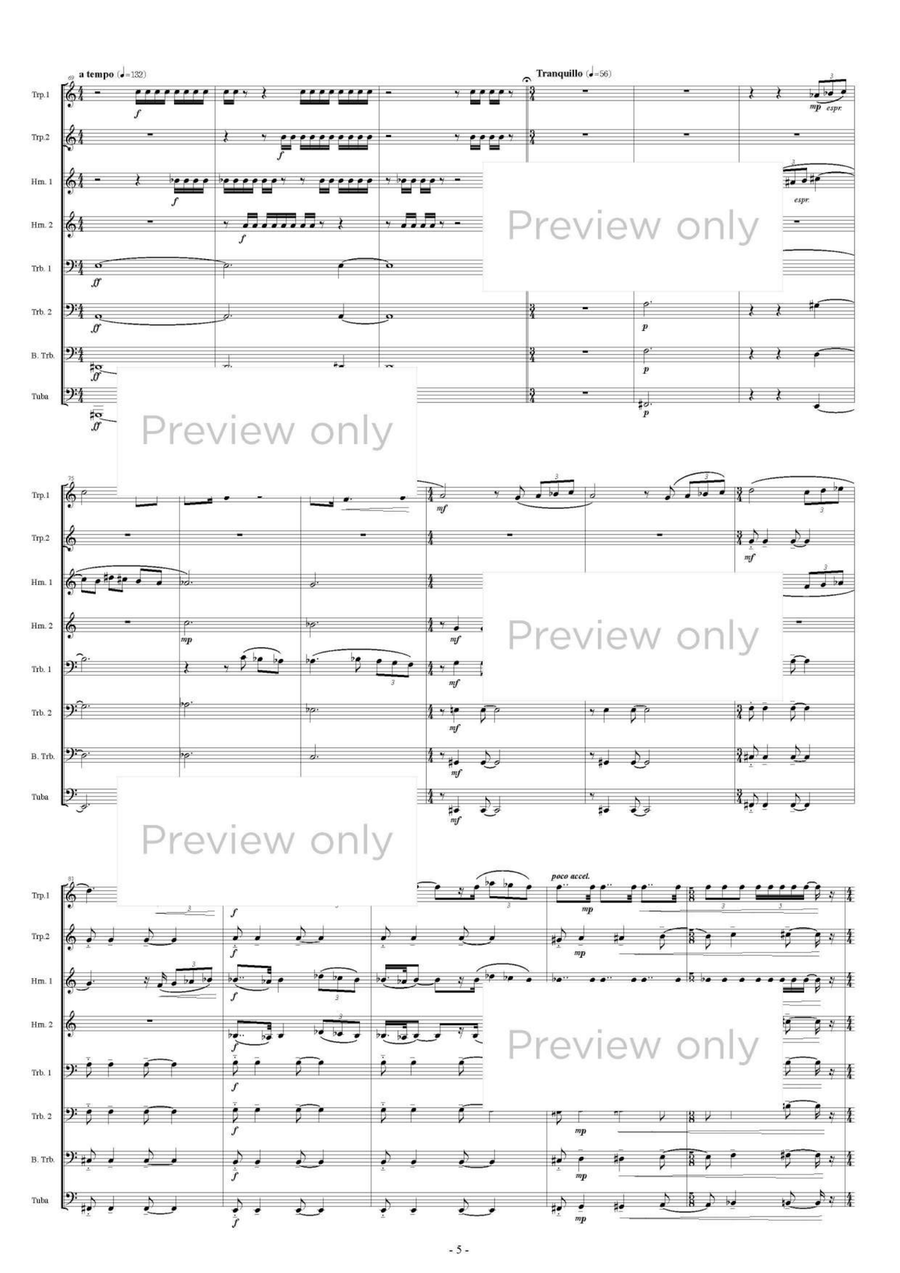
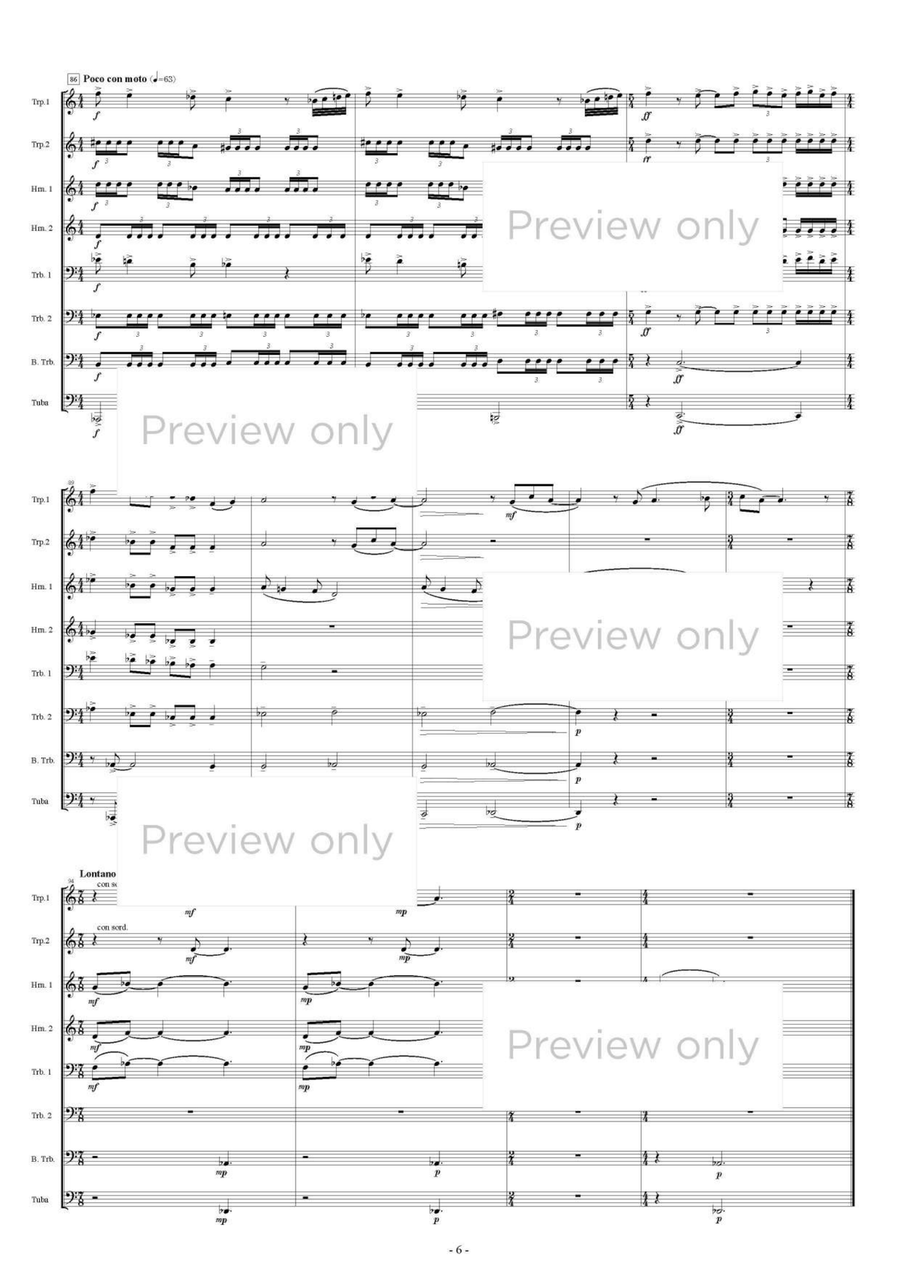
Reminiscences of Shumshu. Composed by Tomohito Matsushita. Brass. Ensemble. Score & parts. Duration 5:00. Bravo Music #ENMS-84433. Published by Bravo Music (BZ.ENMS-84433).
The composition is based on the Battle of Shumshu. Shumshu is an island located in the northern most part of the Kuril Islands (known as the Chishima Islands in Japan). On August 18th, 1945 three days after the end of the World War II, the Soviet Union made a surprise attack on Japan and invaded Shumshu Island. Japan was at postwar disarmament and they quickly rearmed and defended themselves. The battle quickly became violent and the Soviets suffered 3000 casualties and the Japanese 600 casualties. Although the Japanese military seemed to have had the advantage, the battle being post Potsdam Declaration and the main purpose for Japan was to defend themselves, Japan's higher command ordered the Japanese military division to cease all hostilities and surrender on August 21st. The Japanese soldiers were then taken to Siberia as Japanese prisoners of war. Many lives were lost under several years of severe living condition and forced labor. I can only imagine how they must have felt going through all these horrific events. They were physically and mentally exhausted from WWII, yet another battle interrupted their rest and kept them from returning to their loved ones. They fought for Japan by duty but perhaps also to protect their loved ones. This work expresses the grief, fear, dismay and suffering of all those events. (Tomohito Matsushita).
Reminiscences of Shumshu. Composed by Tomohito Matsushita. Brass. Ensemble. Score & parts. Duration 5:00. Bravo Music #ENMS-84433. Published by Bravo Music (BZ.ENMS-84433).
The composition is based on the Battle of Shumshu. Shumshu is an island located in the northern most part of the Kuril Islands (known as the Chishima Islands in Japan). On August 18th, 1945 three days after the end of the World War II, the Soviet Union made a surprise attack on Japan and invaded Shumshu Island. Japan was at postwar disarmament and they quickly rearmed and defended themselves. The battle quickly became violent and the Soviets suffered 3000 casualties and the Japanese 600 casualties. Although the Japanese military seemed to have had the advantage, the battle being post Potsdam Declaration and the main purpose for Japan was to defend themselves, Japan's higher command ordered the Japanese military division to cease all hostilities and surrender on August 21st. The Japanese soldiers were then taken to Siberia as Japanese prisoners of war. Many lives were lost under several years of severe living condition and forced labor. I can only imagine how they must have felt going through all these horrific events. They were physically and mentally exhausted from WWII, yet another battle interrupted their rest and kept them from returning to their loved ones. They fought for Japan by duty but perhaps also to protect their loved ones. This work expresses the grief, fear, dismay and suffering of all those events. (Tomohito Matsushita).
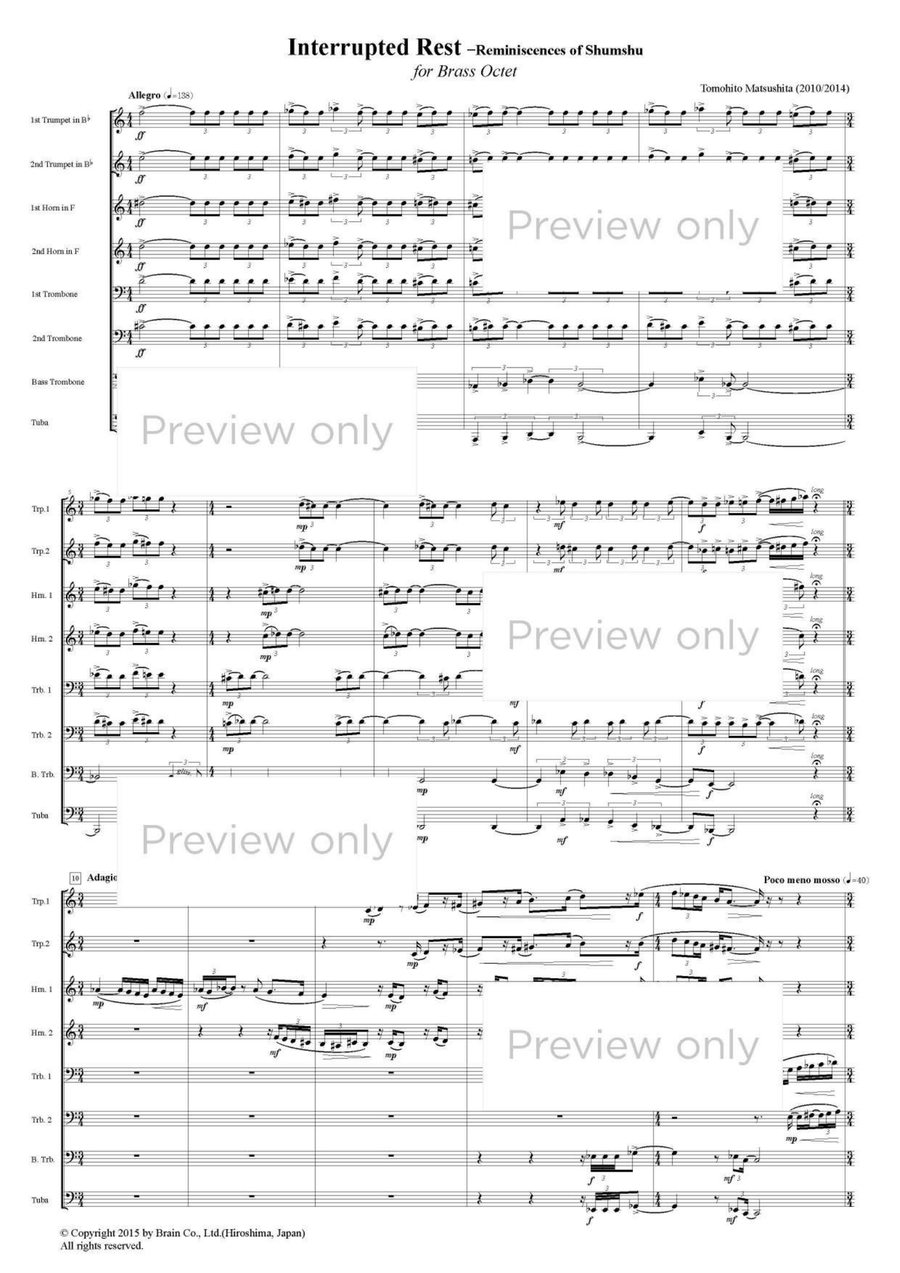
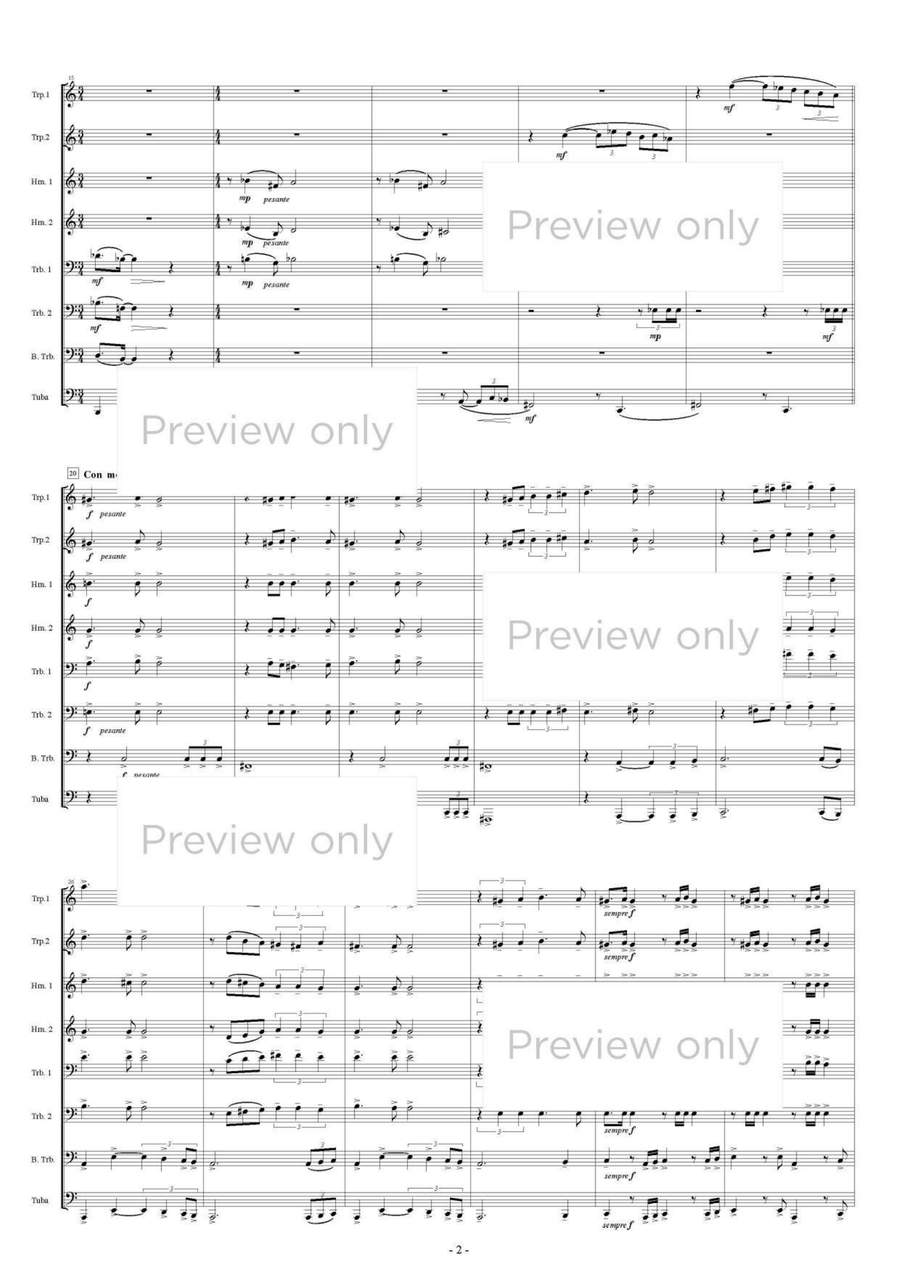
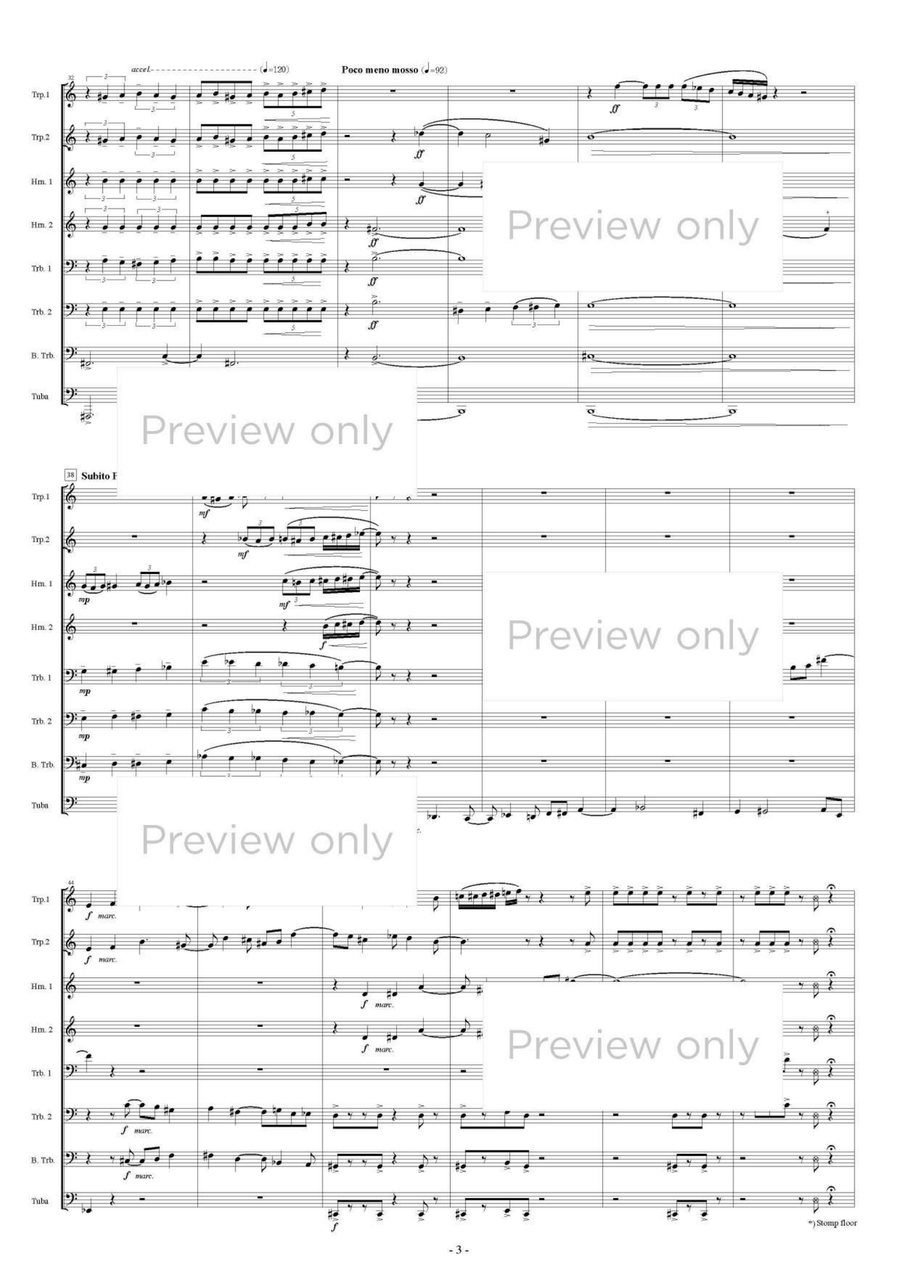
Preview: Interrupted Rest - Brass Octet
Tell A Friend
Tell a friend (or remind yourself) about this product. We'll instantly send an email containing product info and a link to it. You may also enter a personal message.
We do not use or store email addresses from this form for any other purpose than sending your share email.
After purchase, you can download your MP3 from your Sheet Music Plus Digital Library - no software installation is necessary! You can also listen to your MP3 at any time in your Digital Library.
Learn about Smart Music
After purchase, you can download your Smart Music from your Sheet Music Plus Digital Library - no software installation is necessary! You can also download at any time in your Digital Library.
Learn about Digital Video
After purchase you can download your video from your Digital Library. Your video is in XX format and is playable on most pre-installed video players.