Details
- Instrument:
- Piano
- Genres:
- 20th Century
- Composers:
- Alexander Scriabin
- Publishers:
- Edition Peters
- ISBN:
- 9790014109769
- Format:
- Score
- Item types:
- Physical
- Artist:
- Alexander Scriabin
- Usages:
- School and Community
- Number of Pages:
- 24
- Shipping Weight:
- 0.31 pounds
SKU: PE.EP11103
Urtext. Composed by Alexander Scriabin. Edited by Günter Phillipp. Piano Sheet. Edition Peters. Score. 24 pages. Edition Peters #98-EP11103. Published by Edition Peters (PE.EP11103).ISBN 9790014109769. English.
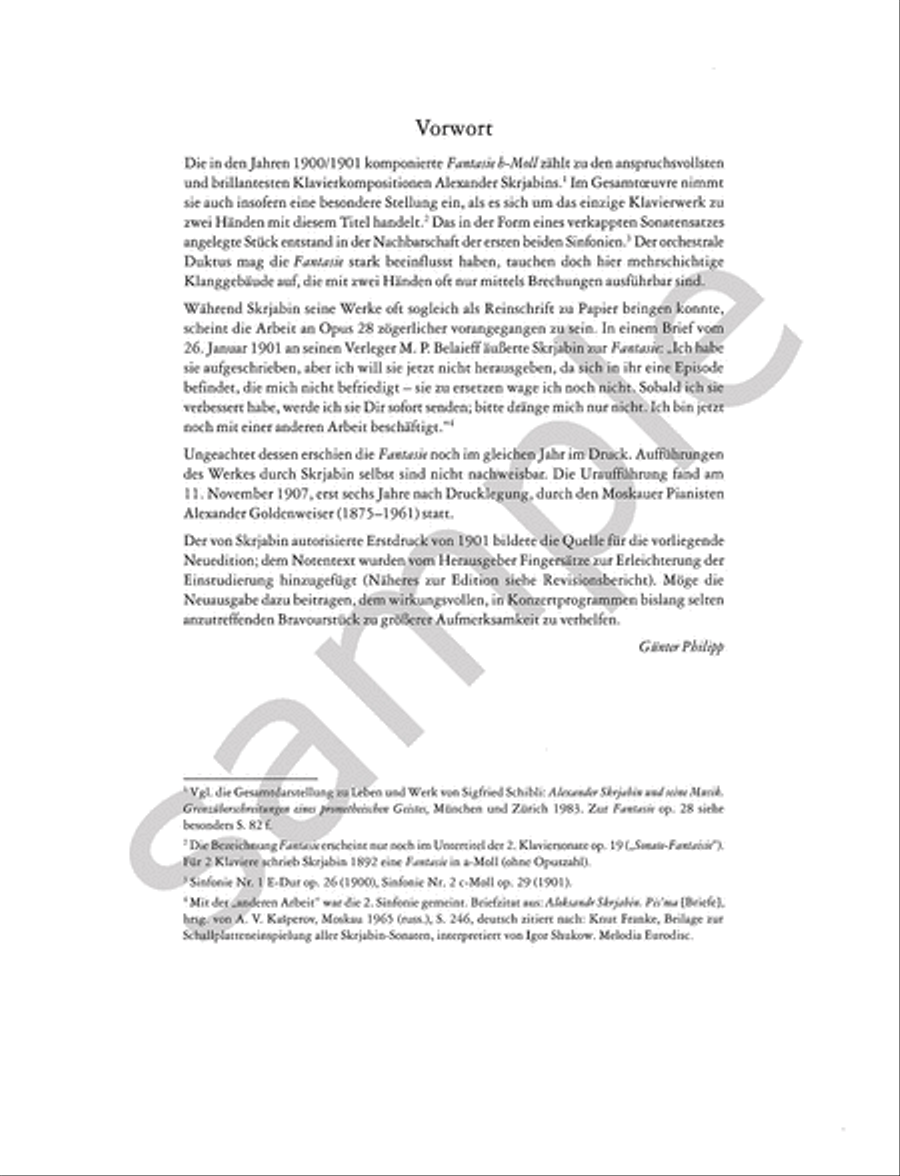
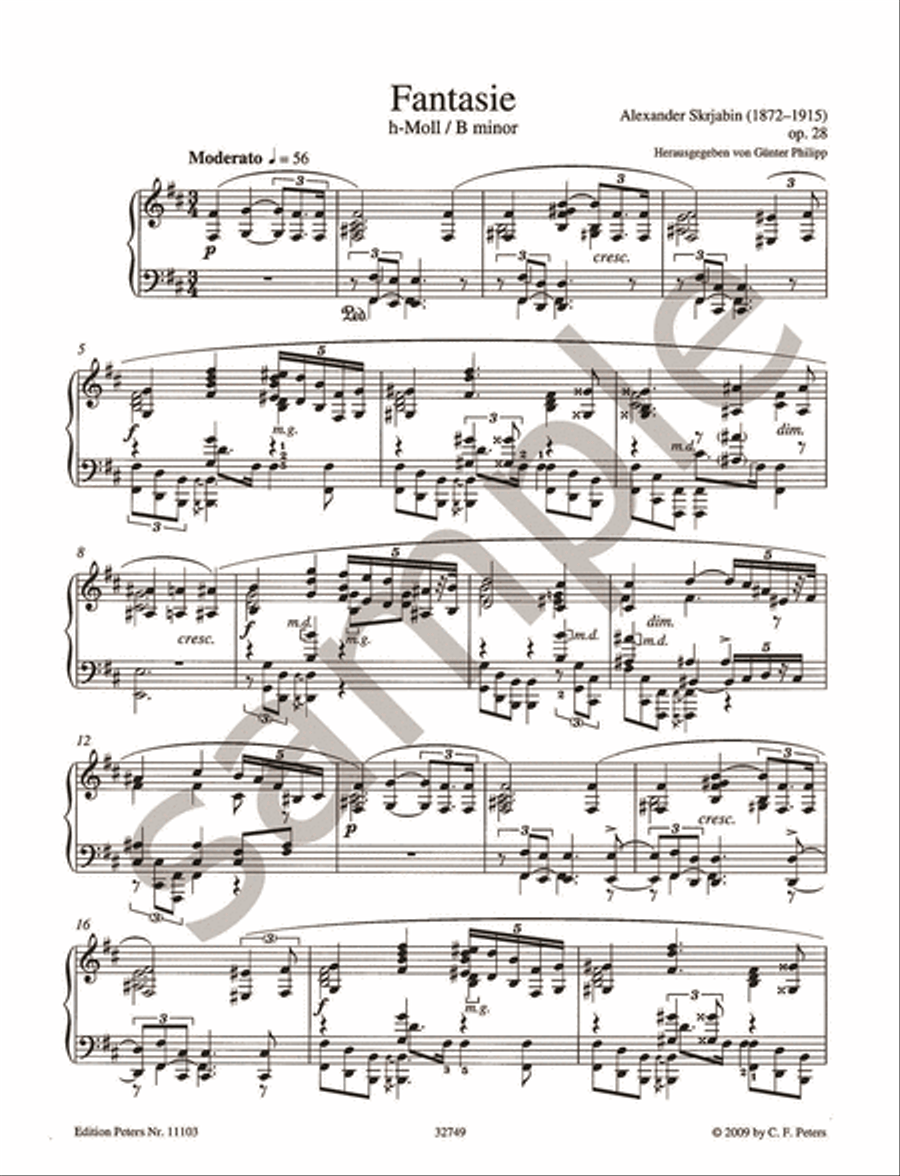
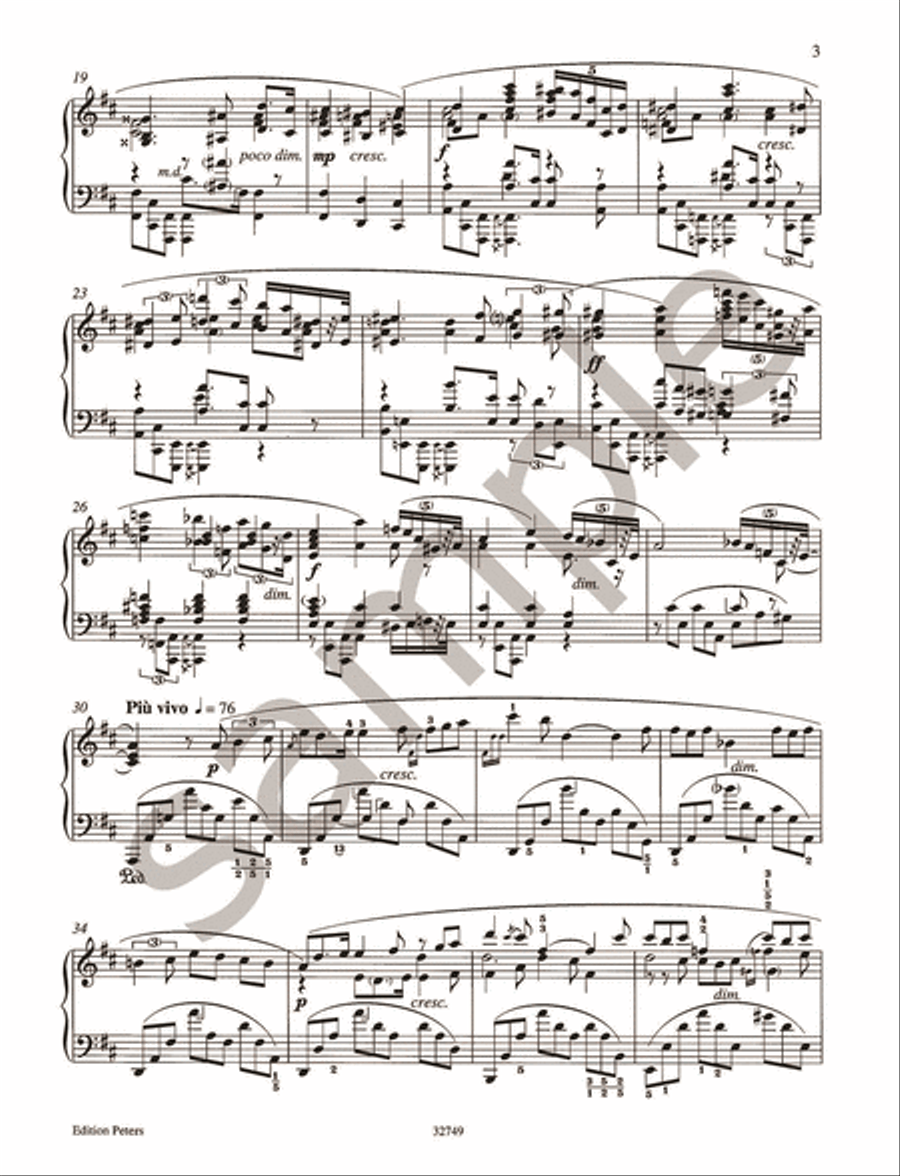
Composed in 1900-01, the Fantasie in B minor is one of Alexander Skryabin's most demanding and brilliant works for the piano. 1 It has a special position in his oeuvre, being his only solo piano piece with this title.2 The work is laid out in abridged sonata-allegro form and was composed roughly at the same time as his first two symphonies.3 The orchestral writing may have had a strong influence on the Fantasy, which boasts of multi-tiered sound edifices that must often be arpeggiated to be playable at all with two hands.
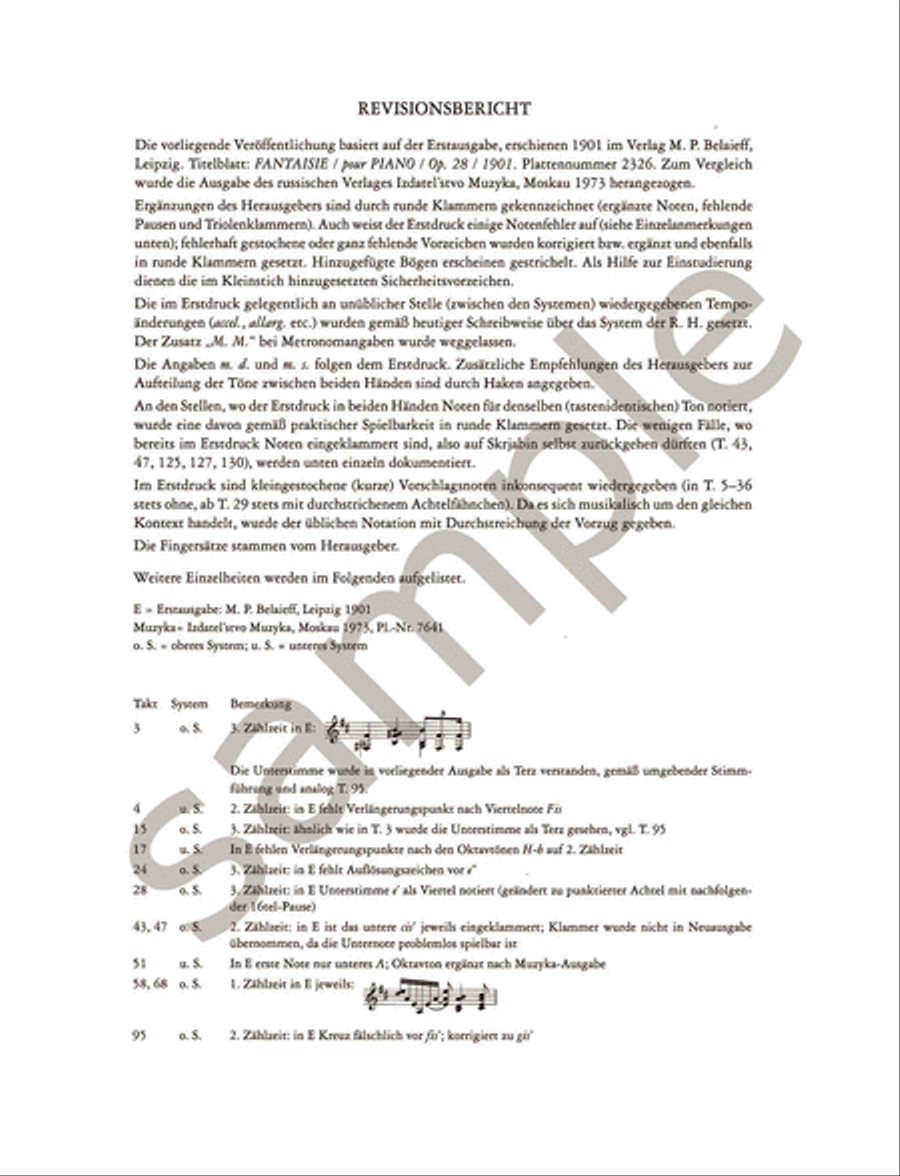
The first edition of 1901 was authorized by the composer and has formed the source of this new edition. The editor has added fingering to the musical text to make it easier to master (further information on the edition can be found in the critical commentary).
- More by this Composer:
- Alexander Scriabin Alexander Scriabin Piano Alexander Scriabin Piano Accompaniment Alexander Scriabin Piano Solo
- Instrument:
- Piano and Keyboard Piano
- Artists:
- Alexander Scriabin
- Publisher:
- Edition Peters