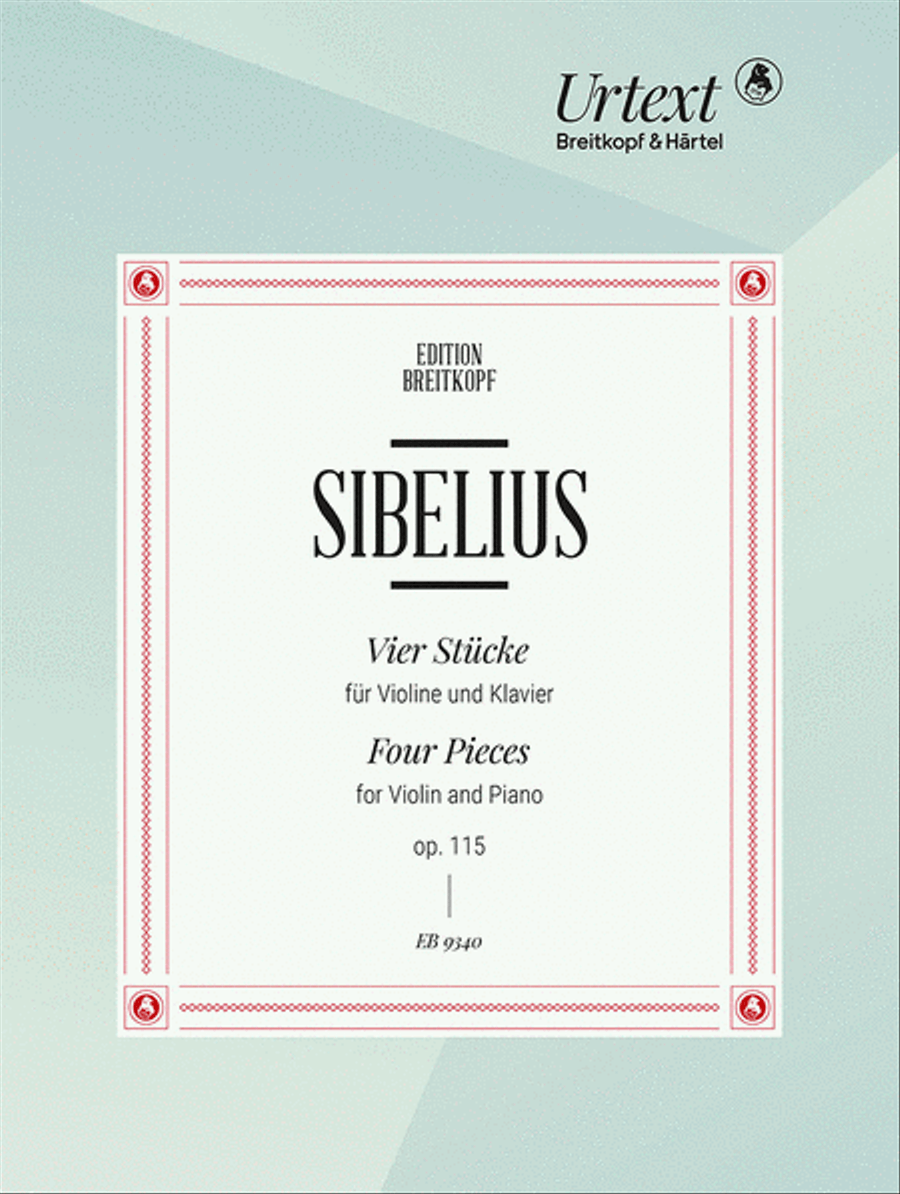
Urtext based on the Complete Edition “Jean Sibelius Works” (JSW). Composed by Jean Sibelius. Edited by Anna Pulkkis. Solo instruments; stapled. Edition Breitkopf. Late-romantic; Early modern. Score. 28 pages. Breitkopf and Haertel #EB 9340. Published by Breitkopf and Haertel (BR.EB-9340).
ISBN 9790004188040. 9 x 12 inches.
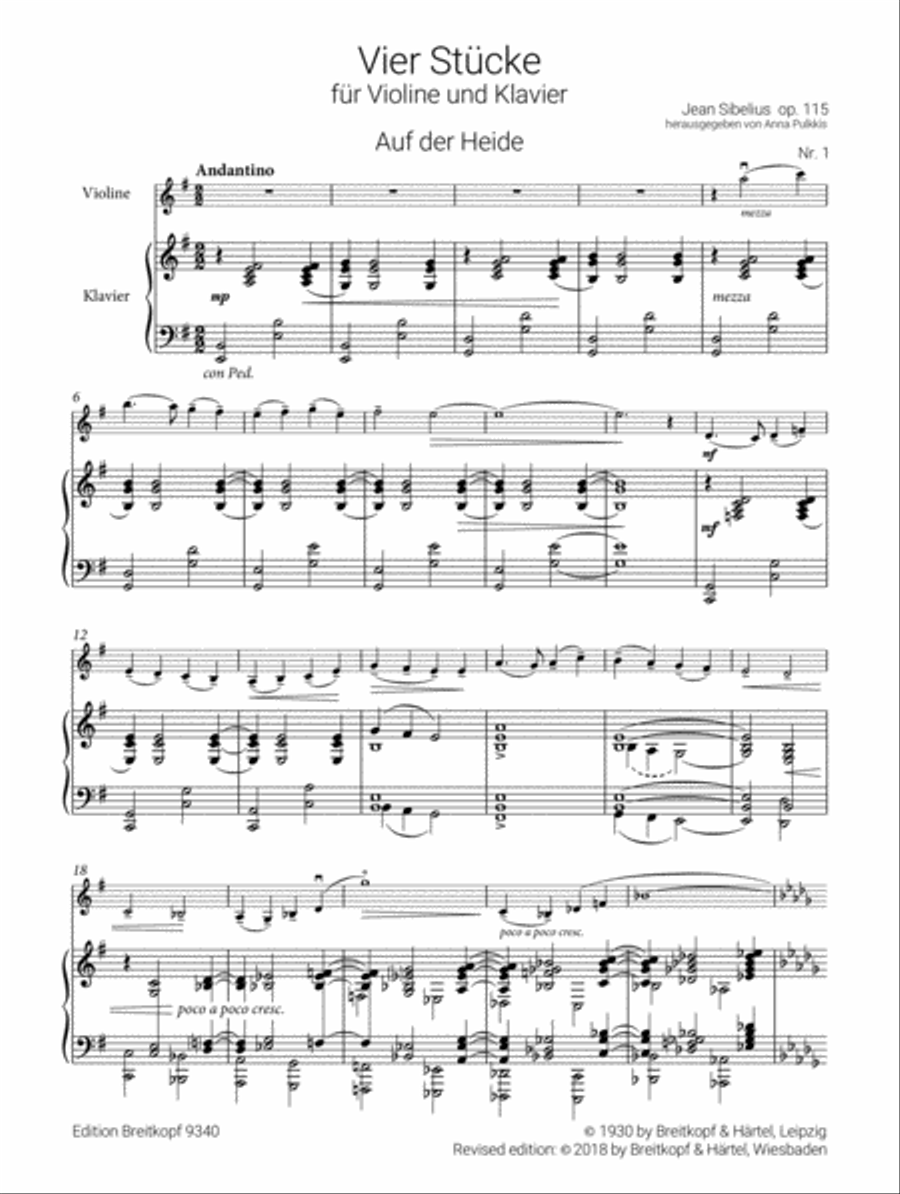
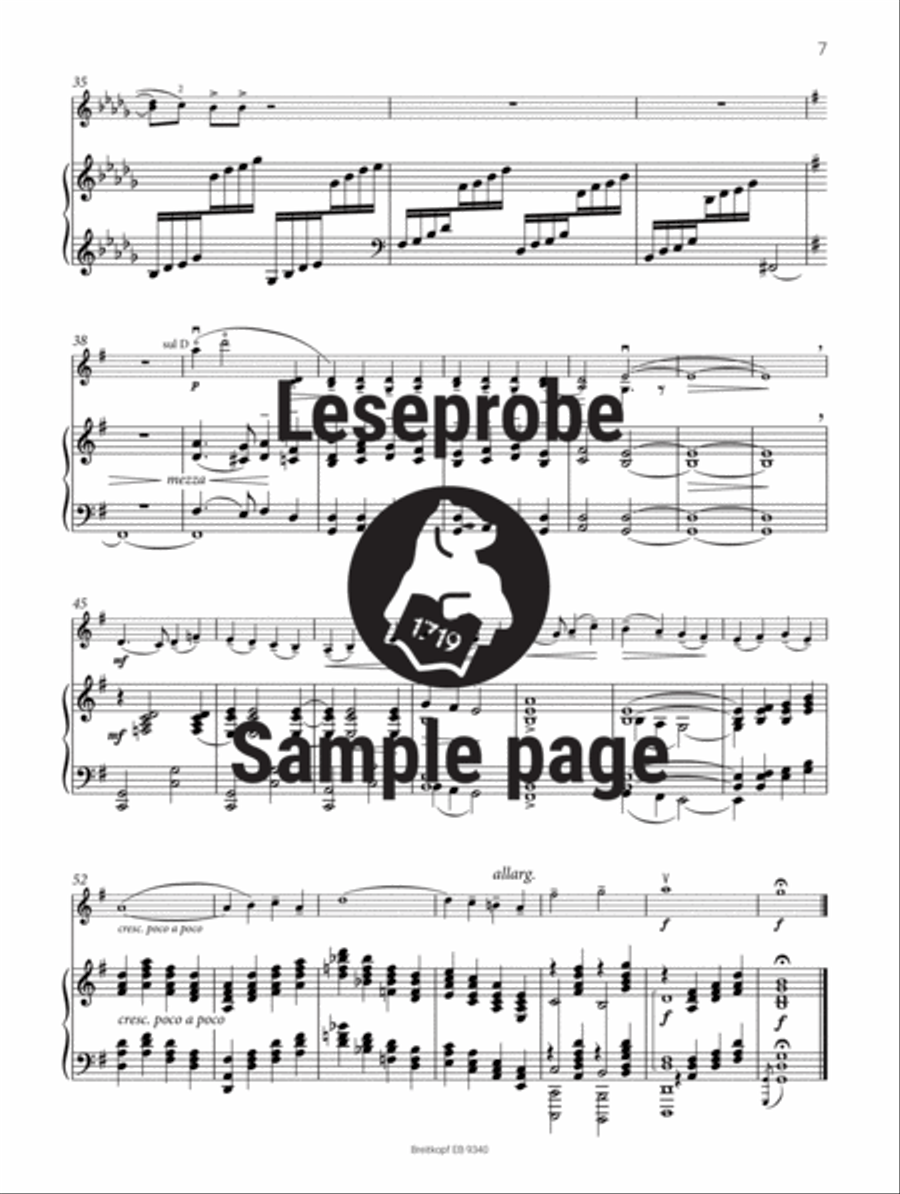
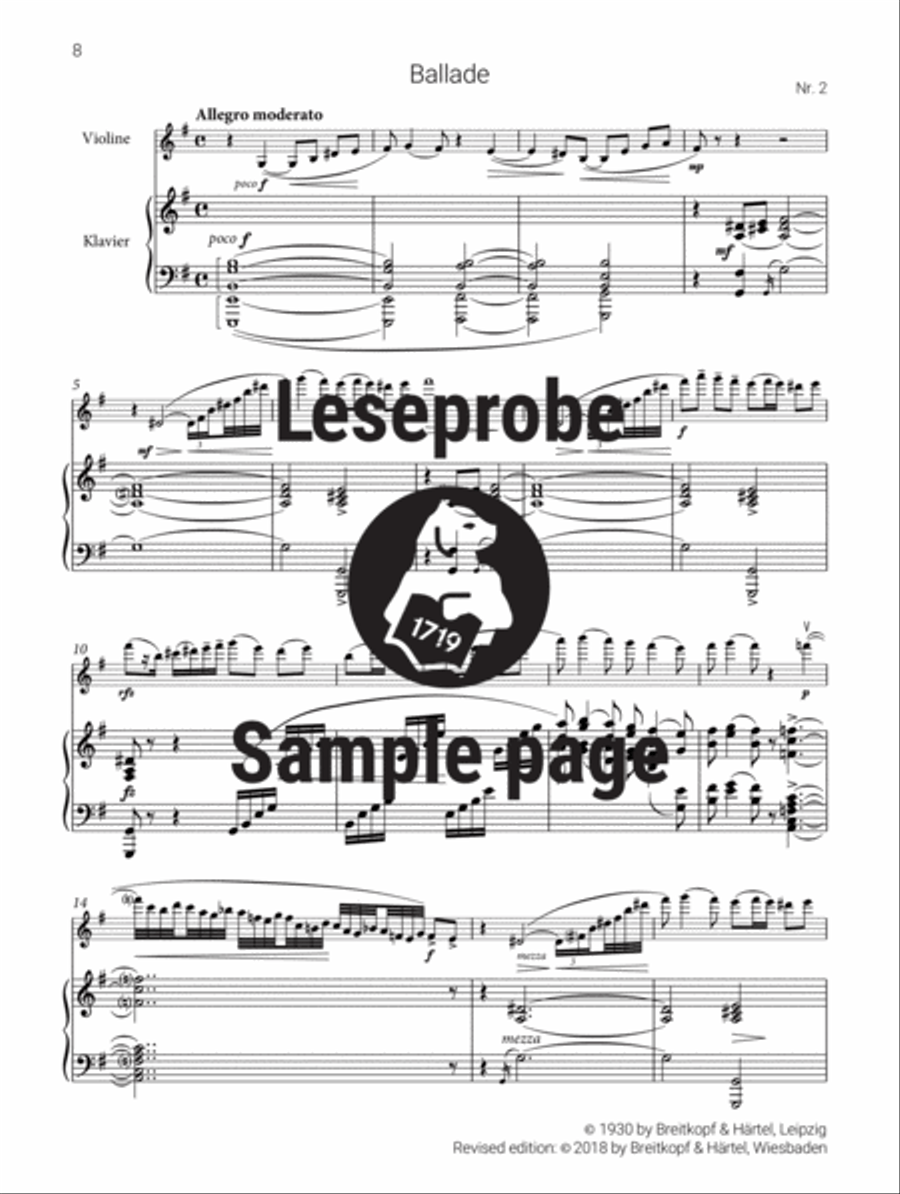
Characteristic Numbers Sibelius completed his final opus-number compositions, opp. 115 and 116, in 1929. They were originally composed at the suggestion of the publishers Carl Fischer, Inc., but were then refused acceptance due to their high performance demands. There, as "characteristic numbers [...] for general purposes," something else had evidently been envisioned - above all, something easier to sell. After some delays, the pieces were published instead by Breitkopf & Hartel in 1930. If earlier on Sibelius had composed smaller chamber music works especially to earn money from their sales, this was no longer necessary by the end of the 1920s. He then seemed to use this artistic freedom to experiment once again with "his" instruments (devoting himself in particular to the violin besides the piano). Op. 115 consists of four programmatically titled pieces in which we find not only melodic lines and introverted sounds, but also virtuosic runs as well as lively rhythms, presupposing perfect ensemble playing by pianist and violinist.
Urtext based on the Complete Edition “Jean Sibelius Works” (JSW). Composed by Jean Sibelius. Edited by Anna Pulkkis. Solo instruments; stapled. Edition Breitkopf. Late-romantic; Early modern. Score. 28 pages. Breitkopf and Haertel #EB 9340. Published by Breitkopf and Haertel (BR.EB-9340).
ISBN 9790004188040. 9 x 12 inches.
Characteristic Numbers Sibelius completed his final opus-number compositions, opp. 115 and 116, in 1929. They were originally composed at the suggestion of the publishers Carl Fischer, Inc., but were then refused acceptance due to their high performance demands. There, as "characteristic numbers [...] for general purposes," something else had evidently been envisioned - above all, something easier to sell. After some delays, the pieces were published instead by Breitkopf & Hartel in 1930. If earlier on Sibelius had composed smaller chamber music works especially to earn money from their sales, this was no longer necessary by the end of the 1920s. He then seemed to use this artistic freedom to experiment once again with "his" instruments (devoting himself in particular to the violin besides the piano). Op. 115 consists of four programmatically titled pieces in which we find not only melodic lines and introverted sounds, but also virtuosic runs as well as lively rhythms, presupposing perfect ensemble playing by pianist and violinist.
Preview: 4 Pieces for Violin and Piano Op. 115
Tell A Friend
Tell a friend (or remind yourself) about this product. We'll instantly send an email containing product info and a link to it. You may also enter a personal message.
We do not use or store email addresses from this form for any other purpose than sending your share email.
After purchase, you can download your MP3 from your Sheet Music Plus Digital Library - no software installation is necessary! You can also listen to your MP3 at any time in your Digital Library.
Learn about Smart Music
After purchase, you can download your Smart Music from your Sheet Music Plus Digital Library - no software installation is necessary! You can also download at any time in your Digital Library.
Learn about Digital Video
After purchase you can download your video from your Digital Library. Your video is in XX format and is playable on most pre-installed video players.