About Stephen Heller
Stephen Heller was a celebrated Hungarian pianist, teacher, and prolific composer, best known for his extensive contributions to solo piano literature during the Romantic era. Born in 1813, his career spanned from the time of Schumann to Bizet, and he held a significant, though often understated, role in shaping 19th-century piano music, influencing later Romantic composers.
- Stephen Heller displayed prodigious musical talent from an early age, performing a concerto for two pianos with his teacher at the Budapest Theater when he was just nine years old.
- He later settled in Paris at the age of 25, where he became closely acquainted with some of the most prominent musical figures of his time, including Hector Berlioz, Frédéric Chopin, and Franz Liszt.
- Heller composed several hundred piano pieces across 158 opus numbers, and his studies are particularly noted for their blend of technical skill with profound musical depth.
- Despite his considerable success as a concert performer and teacher during his lifetime, Heller outlived his widespread reputation and was almost a forgotten figure by the time of his death in 1888.
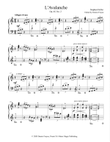
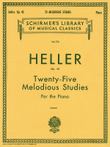
Heller's sheet music, particularly his numerous etudes and character pieces, is an invaluable resource for pianists. His works are ideally suited for late beginner to intermediate players seeking to develop both technical proficiency and expressive musicality. Pieces such as his 25 Melodious Etudes, Op. 45, and 30 Progressive Studies, Op. 46, are renowned for being far more than mere technical drills; they are lyrical, engaging compositions that serve as a crucial bridge into the Romantic idiom. Performing Heller's music is rewarding as it cultivates a beautiful legato touch, independent finger control, nuanced phrasing, and dynamic shading, allowing students to explore emotional expression within miniature, appealing forms.