About Oscar Peterson
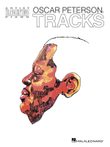
Oscar Peterson was a legendary Canadian jazz pianist and composer, widely celebrated for his virtuosic technique, exceptional improvisational skills, and profound influence on the jazz genre. Often referred to as "the Maharaja of the keyboard" by Duke Ellington, Peterson's primary musical style encompassed swing, bebop, and post-bop, characterized by dazzling speed, complex harmonies, and a deep sense of rhythmic sophistication. His prolific career spanned over six decades, leaving an indelible mark on music history through hundreds of recordings and countless performances worldwide.
- Peterson began playing piano and trumpet at age five, but a bout of tuberculosis at seven years old led him to focus entirely on the piano.
- He was discovered by jazz impresario Norman Granz, who heard him on a Montreal radio broadcast and arranged for his surprise American debut at Carnegie Hall in 1949, which immediately launched his international career.
- Beyond his acclaimed performing career, Peterson was also a dedicated educator, establishing the Advanced School of Contemporary Music in Toronto and mentoring numerous aspiring musicians.
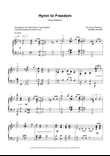
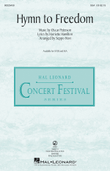
- Among his notable compositions is "Hymn to Freedom," which became an unofficial anthem of the Civil Rights Movement, and the GRAMMY-nominated "Canadiana Suite," a musical tribute to his home country.
Playing Oscar Peterson's music is a highly rewarding experience for intermediate to advanced jazz pianists, as well as those looking to explore sophisticated jazz arrangements for small ensembles. His sheet music offers a deep dive into the language of jazz piano, providing challenging yet gratifying material that helps develop technical mastery, improvisation skills, and a nuanced understanding of jazz harmony and rhythm. Studying his intricate runs, block chords, and inventive comping, as found in numerous transcriptions and collections, serves as a benchmark for excellence and a profound lesson in combining virtuosity with emotional expression.