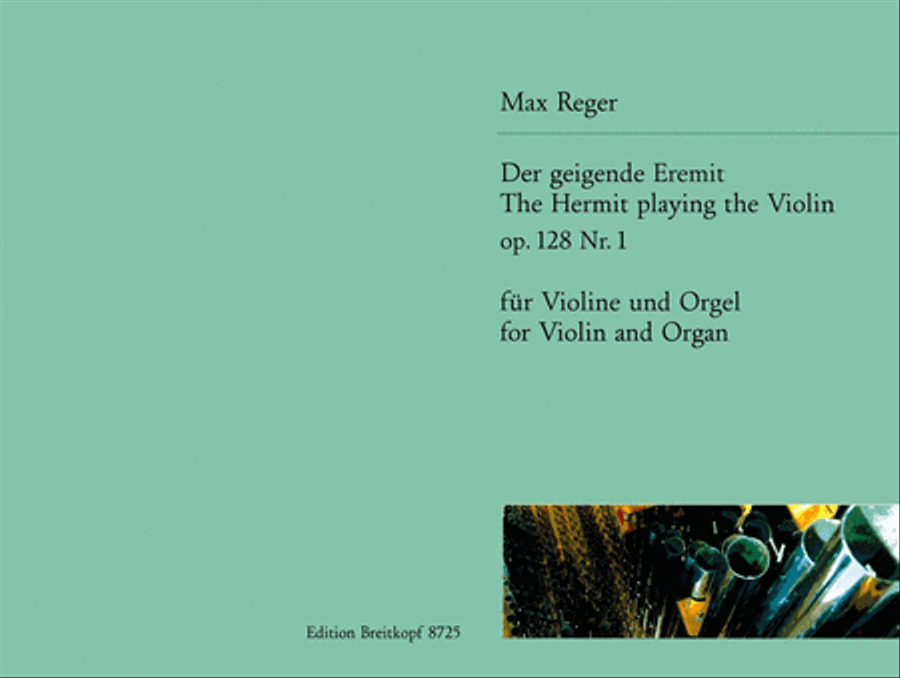
Composed by Max Reger. Edited by Klaus Uwe Ludwig. Arranged by Klaus Uwe Ludwig. Solo instruments; stapled. Edition Breitkopf. Klaus Uwe Ludwig found in the original score a highly colorful, variegated orchestral work that was practically asking to be transferred to the organ. The result is virtually a new orchestration. Solo concerto; Romantic; Late-romantic. Score. 16 pages. Breitkopf and Haertel #EB 8725. Published by Breitkopf and Haertel (BR.EB-8725).
ISBN 9790004181027. 12 x 9 inches.
With these two transcriptions by Reger (EB 8725) and Wagner (EB 8726), Breitkopf launches a new little publication series destined to meet the ever-growing interest in organ transcriptions. In each case, Klaus Uwe Ludwig found in the original score a highly colorful, variegated orchestral work that was practically asking to be transferred to the organ. The result is virtually a new orchestration. Organs from the Romantic era have proven especially well suited to these transcriptions, as their world premieres at the Walcker organ (1911) in Wiesbaden's Lutherkirche have shown.
Klaus Uwe Ludwig found in the original score a highly colorful, variegated orchestral work that was practically asking to be transferred to the organ. The result is virtually a new orchestration.
Composed by Max Reger. Edited by Klaus Uwe Ludwig. Arranged by Klaus Uwe Ludwig. Solo instruments; stapled. Edition Breitkopf. Klaus Uwe Ludwig found in the original score a highly colorful, variegated orchestral work that was practically asking to be transferred to the organ. The result is virtually a new orchestration. Solo concerto; Romantic; Late-romantic. Score. 16 pages. Breitkopf and Haertel #EB 8725. Published by Breitkopf and Haertel (BR.EB-8725).
ISBN 9790004181027. 12 x 9 inches.
With these two transcriptions by Reger (EB 8725) and Wagner (EB 8726), Breitkopf launches a new little publication series destined to meet the ever-growing interest in organ transcriptions. In each case, Klaus Uwe Ludwig found in the original score a highly colorful, variegated orchestral work that was practically asking to be transferred to the organ. The result is virtually a new orchestration. Organs from the Romantic era have proven especially well suited to these transcriptions, as their world premieres at the Walcker organ (1911) in Wiesbaden's Lutherkirche have shown.
Klaus Uwe Ludwig found in the original score a highly colorful, variegated orchestral work that was practically asking to be transferred to the organ. The result is virtually a new orchestration.
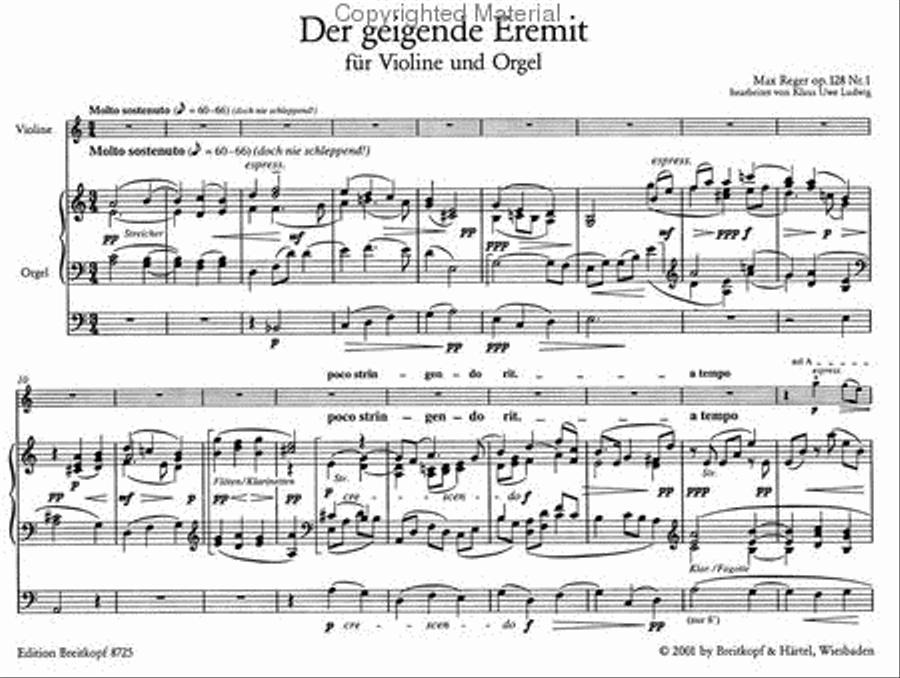
Preview: The Hermit Playing the Violin from the “Böcklin-Suite” Op. 128
Tell A Friend
Tell a friend (or remind yourself) about this product. We'll instantly send an email containing product info and a link to it. You may also enter a personal message.
We do not use or store email addresses from this form for any other purpose than sending your share email.
After purchase, you can download your MP3 from your Sheet Music Plus Digital Library - no software installation is necessary! You can also listen to your MP3 at any time in your Digital Library.
Learn about Smart Music
After purchase, you can download your Smart Music from your Sheet Music Plus Digital Library - no software installation is necessary! You can also download at any time in your Digital Library.
Learn about Digital Video
After purchase you can download your video from your Digital Library. Your video is in XX format and is playable on most pre-installed video players.