
Order two or more copies of the same title and we'll automatically give you 5% off list price on that title.
To get 2+ Pricing , just add two or more copies of a title to your shopping cart. Your discount will be immediately applied to your order.
Sale titles, hymnals, and ShowKits (MTI's Broadway Junior Collection, Getting to Know... Collection (G2K) and MTI's Kids Collection) do not qualify for 2+ Pricing
If you have any questions or comments regarding 2+ Pricing , please visit our Help Center to find more information or chat with our support team
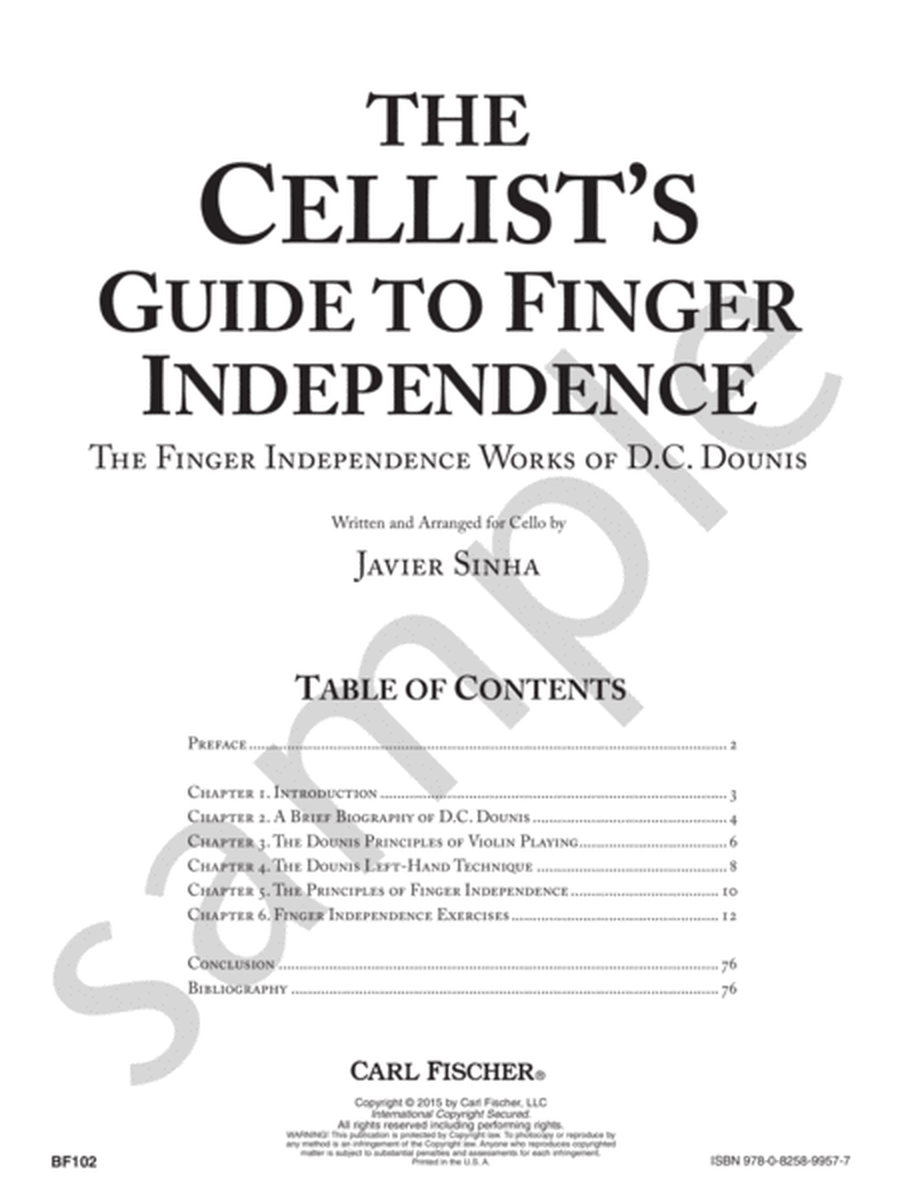
The Finger Independence Works of D.C. Dounis. Composed by Demetrius Dounis. Arranged by Javier Sinha. This edition: saddle-wire stitch. Sws. Classical. Methods And Studies. With Standard notation. 76 pages. Carl Fischer Music #BF102. Published by Carl Fischer Music (CF.BF102).
ISBN 9780825899577. UPC: 798408099572. 9 x 12 inches. Text: Javier Sinha.
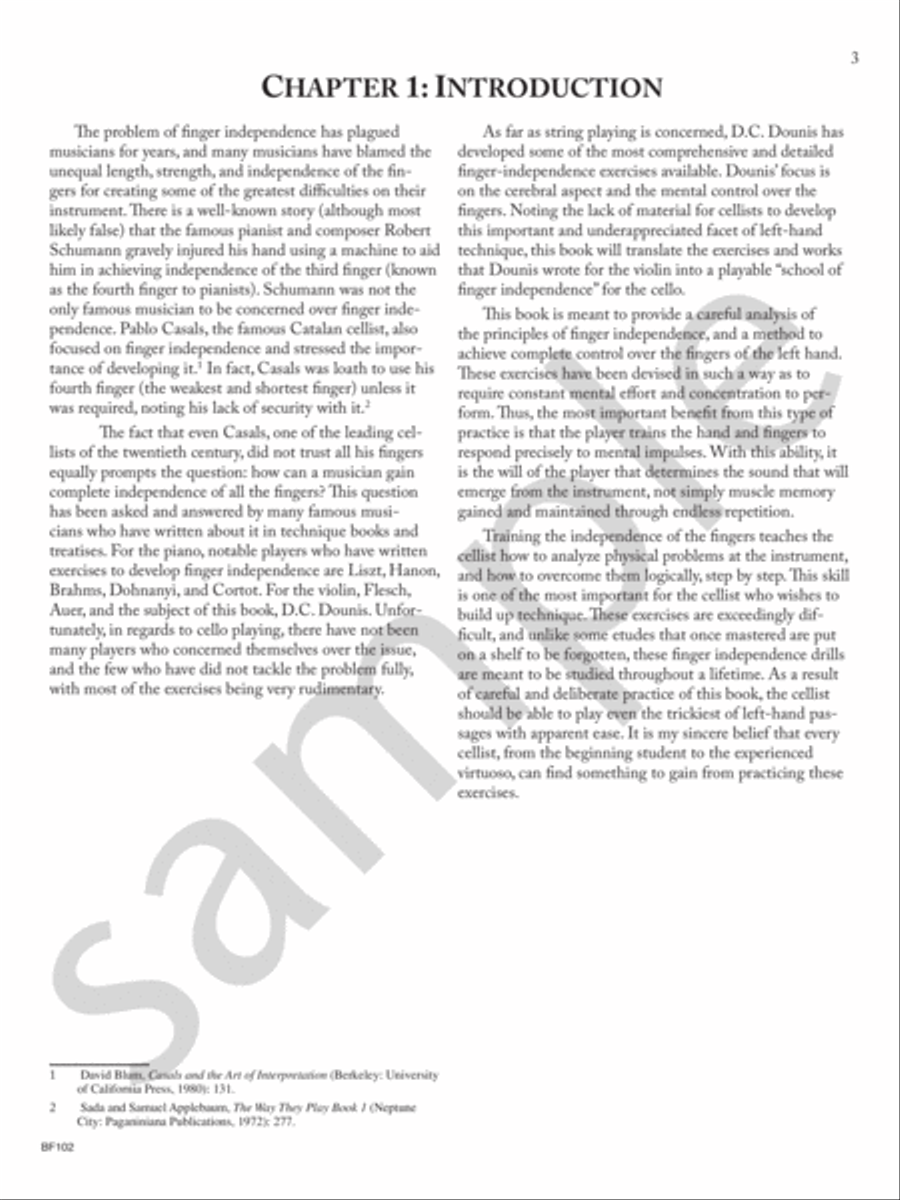
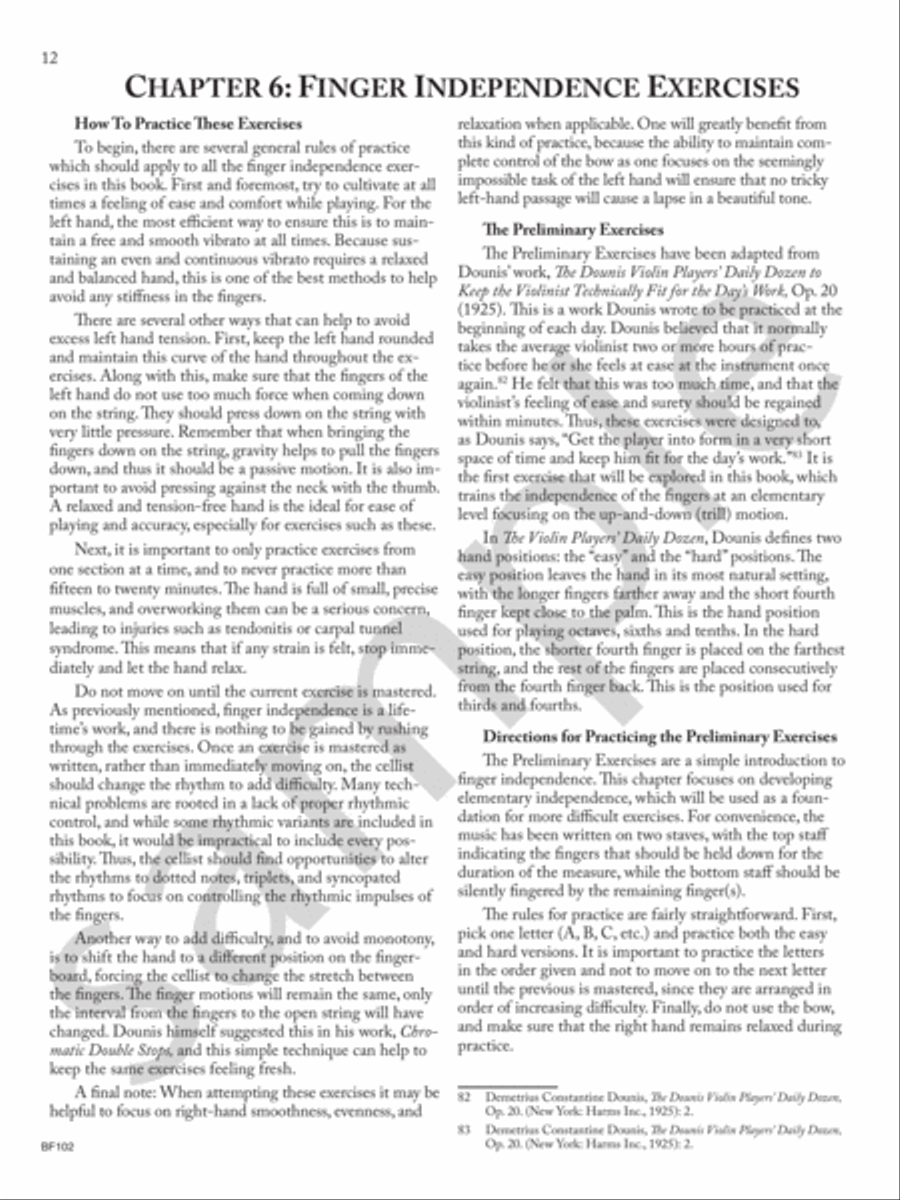
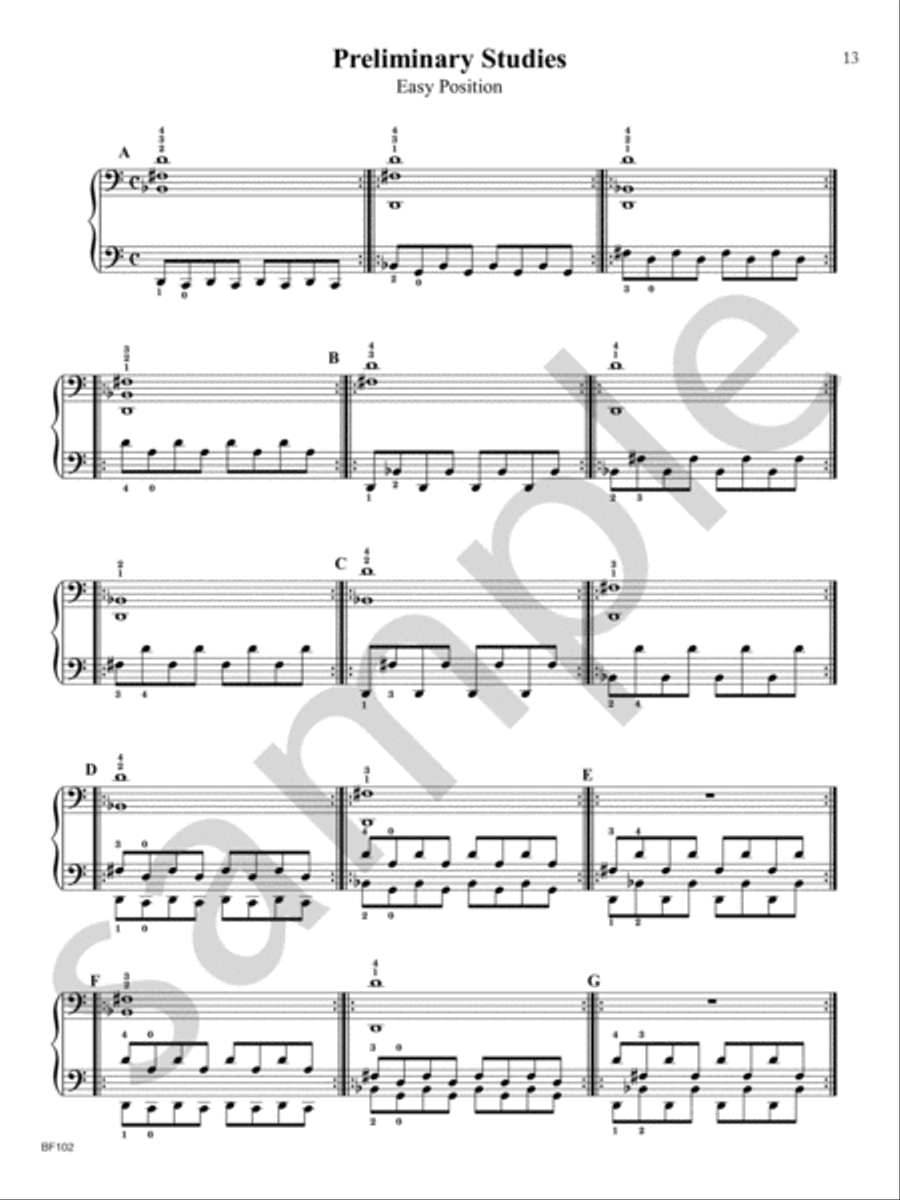
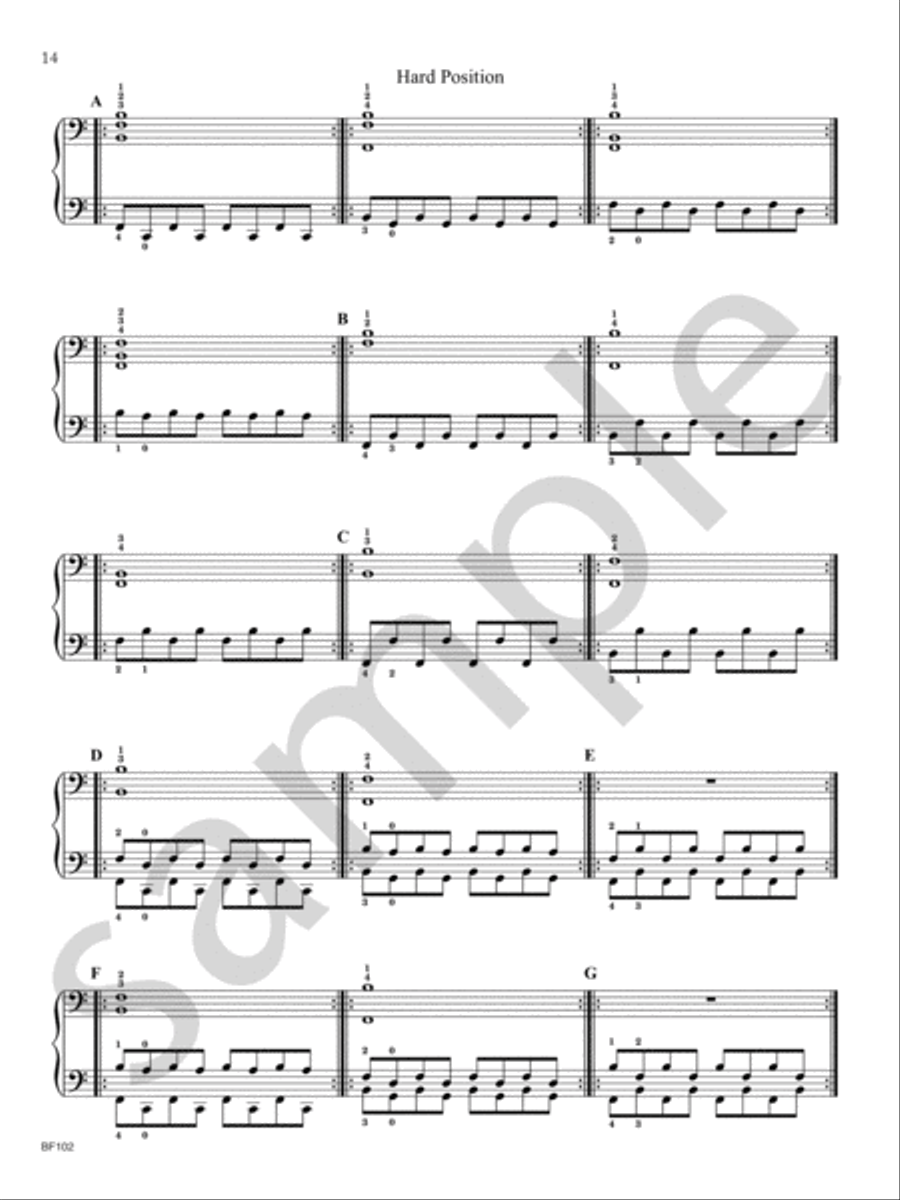
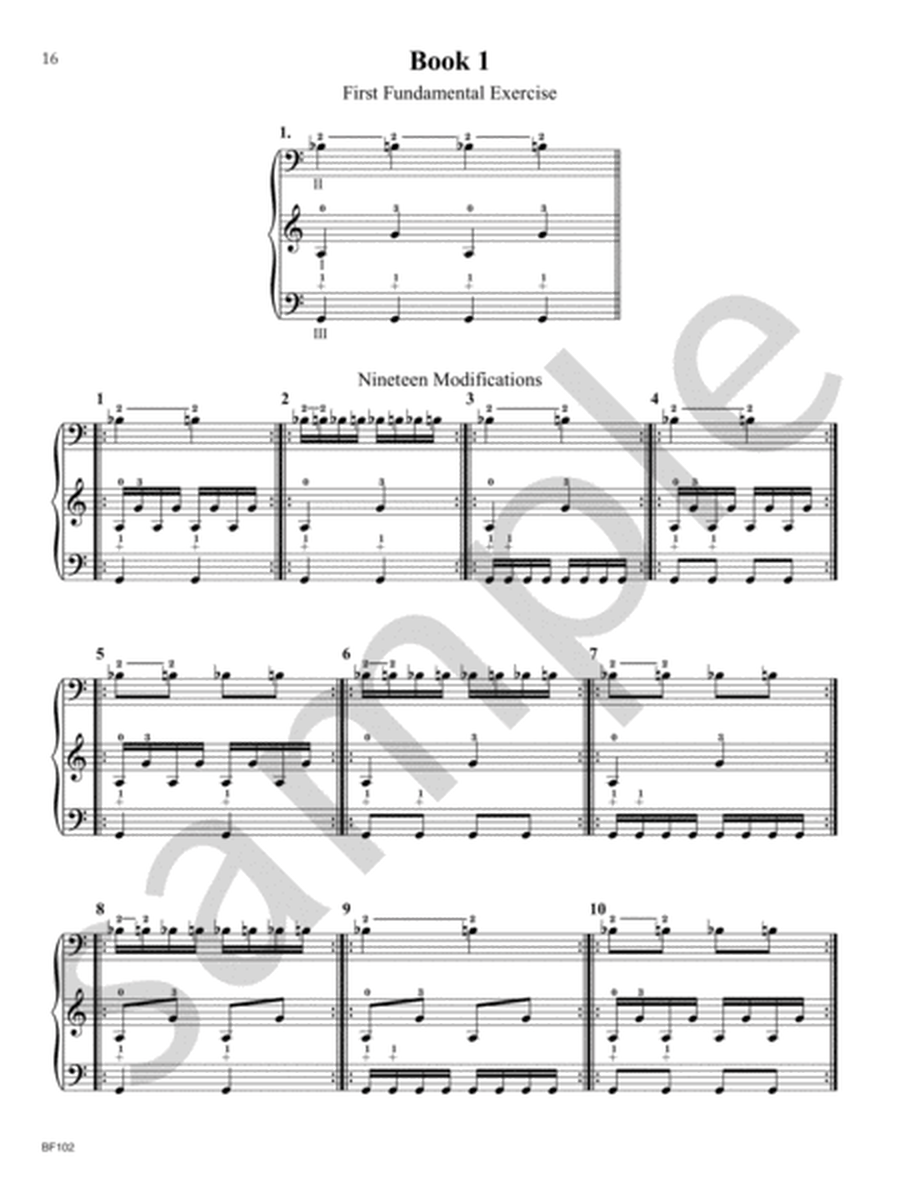
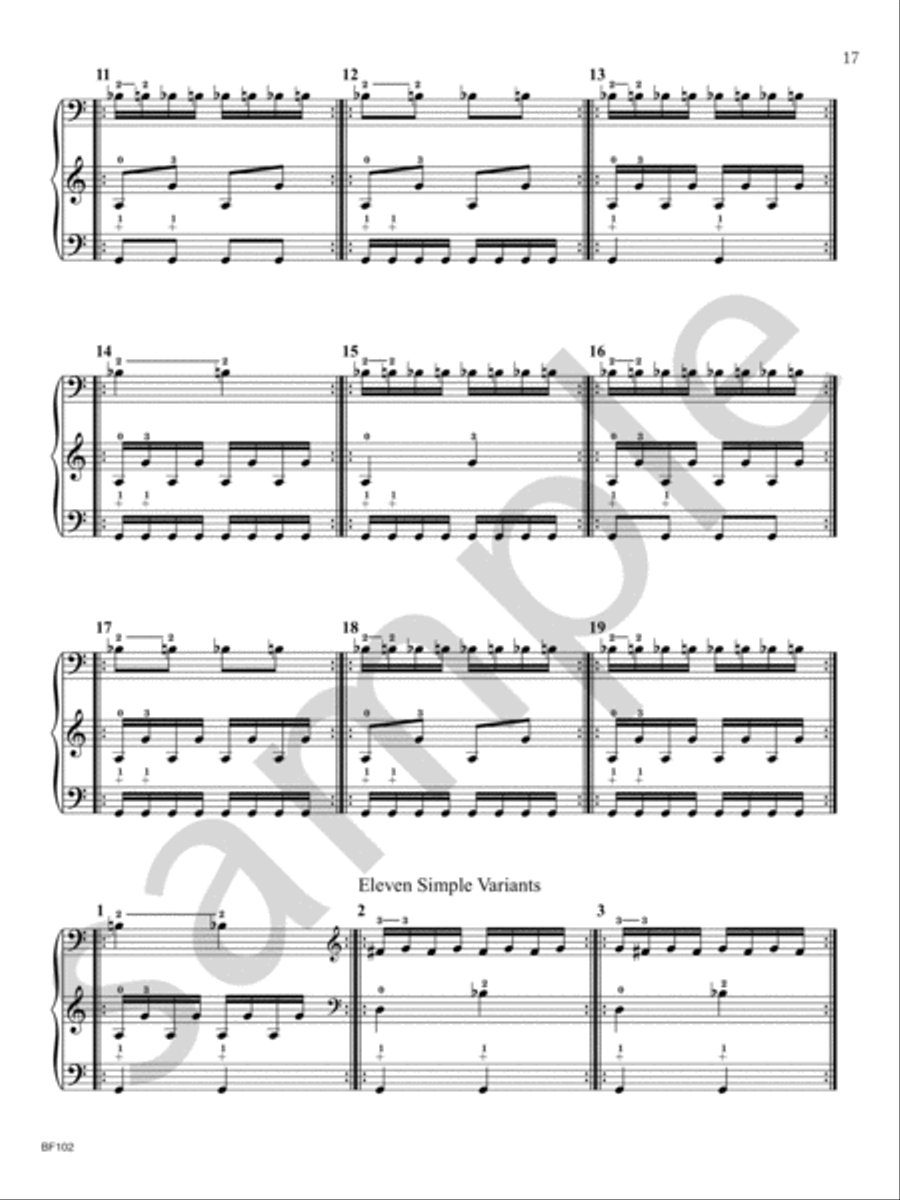
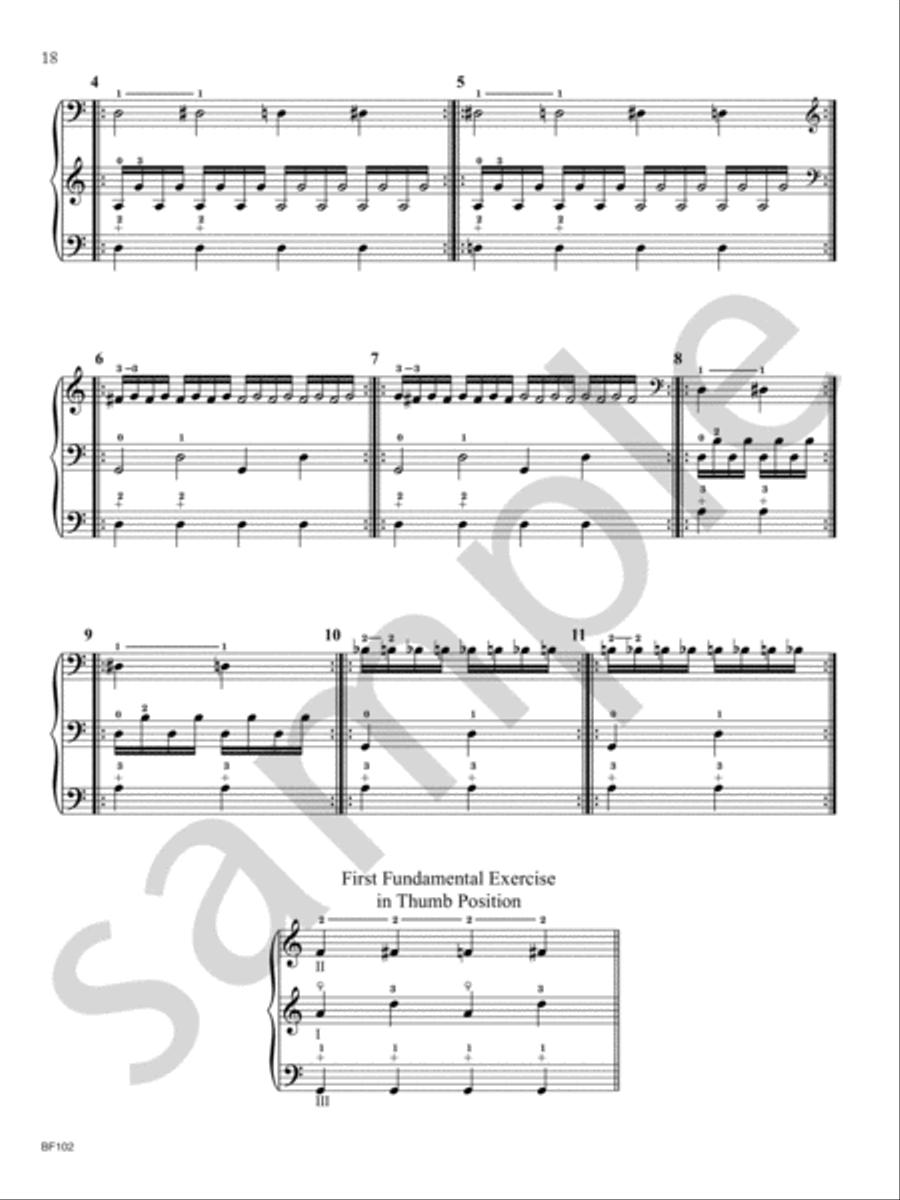
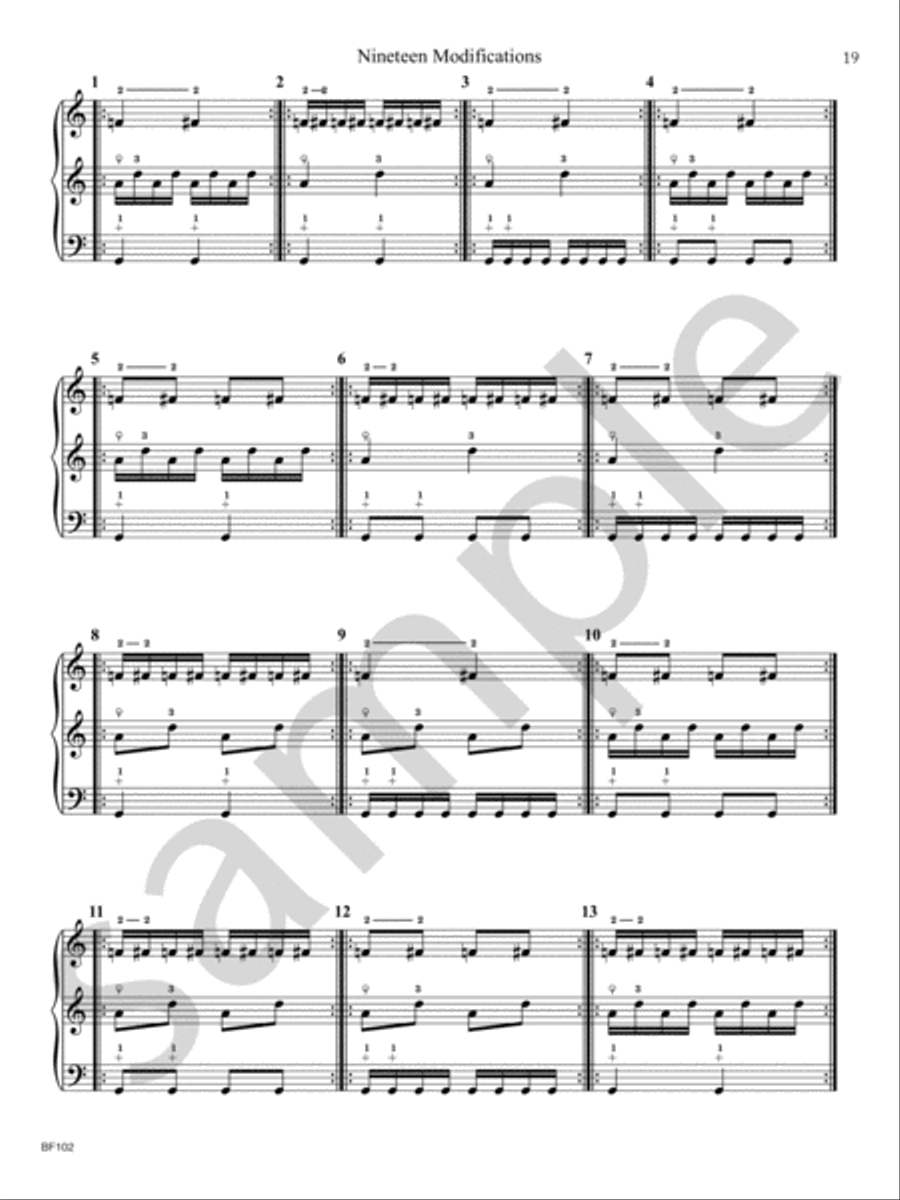
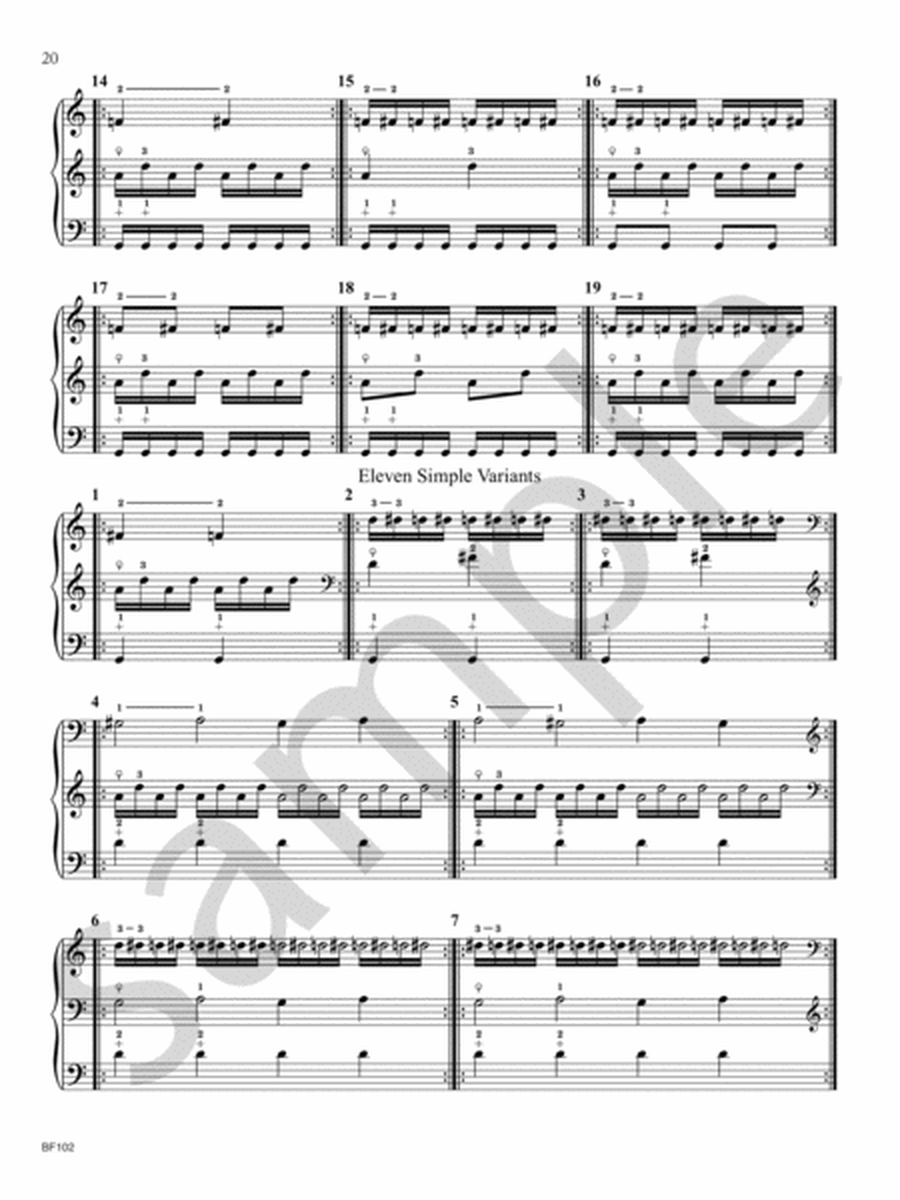
The method books of D.C. Dounis are universally acclaimedfor their ability to improve technique and finger independence.Focusing mostly on violin, the exercises were previously unavailablefor any other instruments. Javier Sinha has now adapted these studiesfor the cello. The principles of the Dounis method are explainedwith special focus on left-hand technique and finger independence.Progressive exercises, with instructions and suggestions, providean opportunity for every cellist to vastly improve their technique.Finally available for cello, the expertly crafted Dounis method is anoverdue and welcome addition to the instrument’s repertoire. The cello can be a difficult instrument to play. The distancesthe left hand has to travel are enormous, it requiresa large amount of muscular effort to play, its thick stringscall for extremely precise bow control, and its considerablerange requires the cellist to learn two distinct hand positions.This book will attempt to make the job of the cellistjust a bit easier, by providing a set of exercises, previouslywritten for the violin, that will help train the hand and thefingers to be perfectly responsive to the player’s mentalimpulses. It is my sincere wish that the ideas and techniquesof D.C. Dounis, the author of these exercises, bemore widely spread and understood.D.C. Dounis wrote most of his technique books for theviolin, and it seems a shame that cellists have been barred fromsuch incredibly useful exercises simply because Dounis himselfwas a violinist. Despite the fact that he never wrote a book forcellists, his ideas were all-encompassing and easily adaptedto the cello. The repertoire of technical books for cellists haslagged behind that of the violin and piano for too long. We cellistsmust take every opportunity to add to our libraries, worksthat help to erase the difficulties of our instrument. Dounis didnot believe, as other teachers do, that pure technical work dullsan instrumentalist’s innate musicality. Instead, he believed thatinstrumentalists who diligently practiced these technical exerciseswould unlock their musicality. It is with this in mind thatthis text was written and these works were arranged: to helpdevelop better cellists, and ultimately, better musicians.
The Finger Independence Works of D.C. Dounis. Composed by Demetrius Dounis. Arranged by Javier Sinha. This edition: saddle-wire stitch. Sws. Classical. Methods And Studies. With Standard notation. 76 pages. Carl Fischer Music #BF102. Published by Carl Fischer Music (CF.BF102).
ISBN 9780825899577. UPC: 798408099572. 9 x 12 inches. Text: Javier Sinha.
The method books of D.C. Dounis are universally acclaimedfor their ability to improve technique and finger independence.Focusing mostly on violin, the exercises were previously unavailablefor any other instruments. Javier Sinha has now adapted these studiesfor the cello. The principles of the Dounis method are explainedwith special focus on left-hand technique and finger independence.Progressive exercises, with instructions and suggestions, providean opportunity for every cellist to vastly improve their technique.Finally available for cello, the expertly crafted Dounis method is anoverdue and welcome addition to the instrument’s repertoire. The cello can be a difficult instrument to play. The distancesthe left hand has to travel are enormous, it requiresa large amount of muscular effort to play, its thick stringscall for extremely precise bow control, and its considerablerange requires the cellist to learn two distinct hand positions.This book will attempt to make the job of the cellistjust a bit easier, by providing a set of exercises, previouslywritten for the violin, that will help train the hand and thefingers to be perfectly responsive to the player’s mentalimpulses. It is my sincere wish that the ideas and techniquesof D.C. Dounis, the author of these exercises, bemore widely spread and understood.D.C. Dounis wrote most of his technique books for theviolin, and it seems a shame that cellists have been barred fromsuch incredibly useful exercises simply because Dounis himselfwas a violinist. Despite the fact that he never wrote a book forcellists, his ideas were all-encompassing and easily adaptedto the cello. The repertoire of technical books for cellists haslagged behind that of the violin and piano for too long. We cellistsmust take every opportunity to add to our libraries, worksthat help to erase the difficulties of our instrument. Dounis didnot believe, as other teachers do, that pure technical work dullsan instrumentalist’s innate musicality. Instead, he believed thatinstrumentalists who diligently practiced these technical exerciseswould unlock their musicality. It is with this in mind thatthis text was written and these works were arranged: to helpdevelop better cellists, and ultimately, better musicians.
Preview: The Cellist's Guide to Finger Independence
Tell A Friend
Tell a friend (or remind yourself) about this product. We'll instantly send an email containing product info and a link to it. You may also enter a personal message.
We do not use or store email addresses from this form for any other purpose than sending your share email.
After purchase, you can download your MP3 from your Sheet Music Plus Digital Library - no software installation is necessary! You can also listen to your MP3 at any time in your Digital Library.
Learn about Smart Music
After purchase, you can download your Smart Music from your Sheet Music Plus Digital Library - no software installation is necessary! You can also download at any time in your Digital Library.
Learn about Digital Video
After purchase you can download your video from your Digital Library. Your video is in XX format and is playable on most pre-installed video players.