19970086
Tenebrae factae sunt
19970086
19970086
19970086
Copyright Material for Preview Only - Sheet Music Plus
SSATBB chorus
SKU: CA.964100
Responsory in the Nocturn on Good Friday. Composed by Ko Matsushita. Contemporary Choir Music. Genres / texts frequently set to music: Sacred vocal music. Sacred vocal music, Lent and Passiontide. Score. Duration 6 minutes. Carus Verlag #CV 09.641/00. Published by Carus Verlag (CA.964100).
ISBN 9790007143541. 8.27 x 11.69 inches. Text language: Latin.
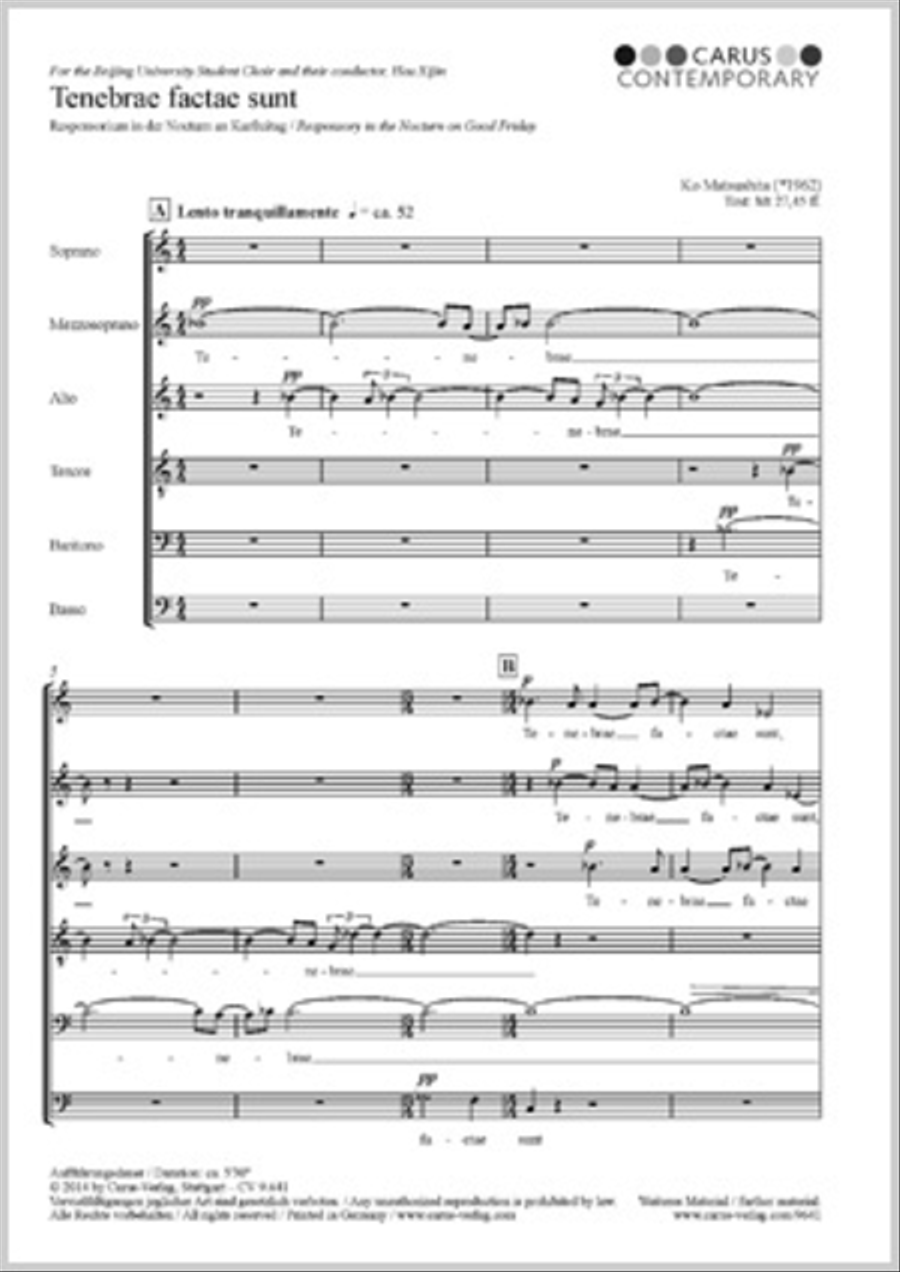
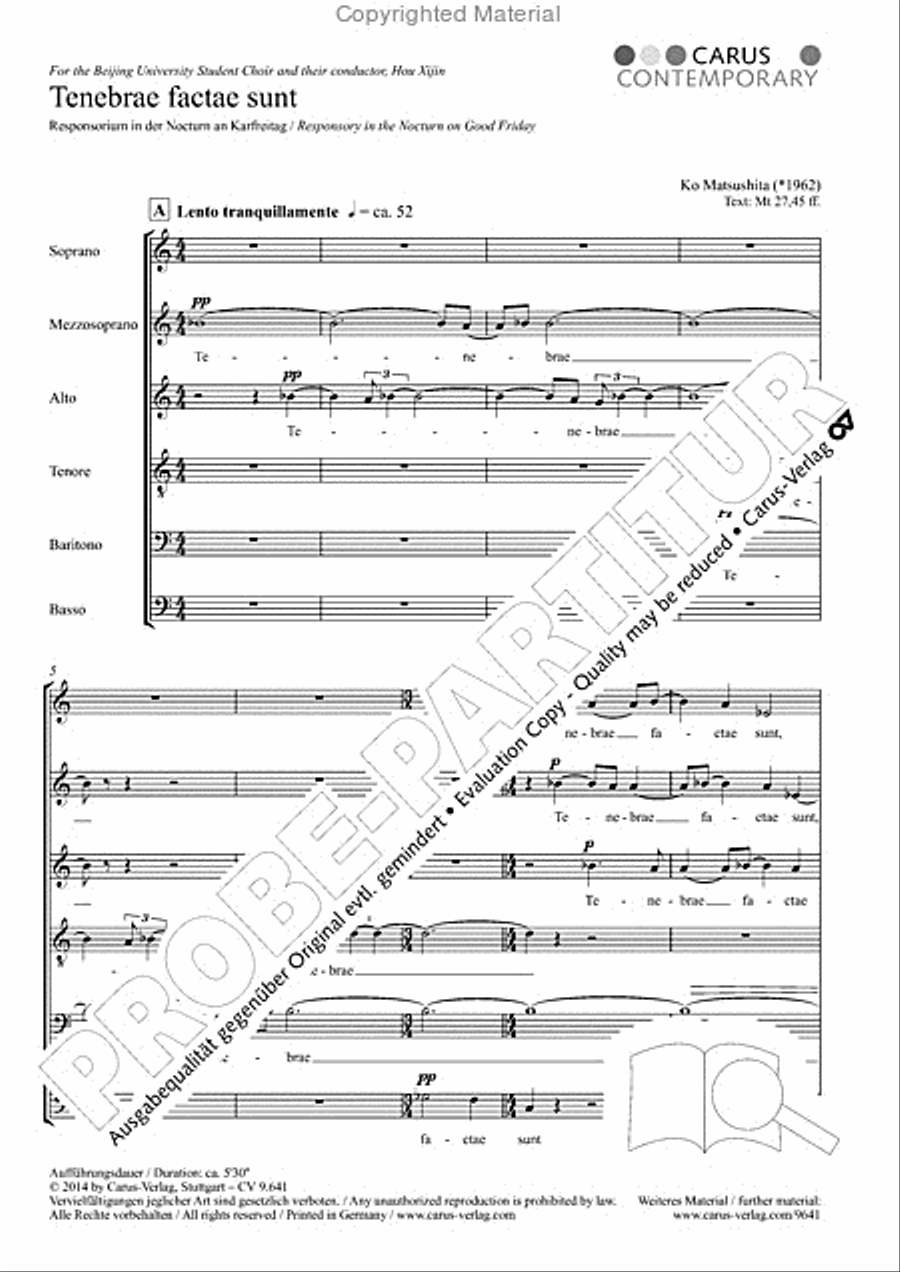
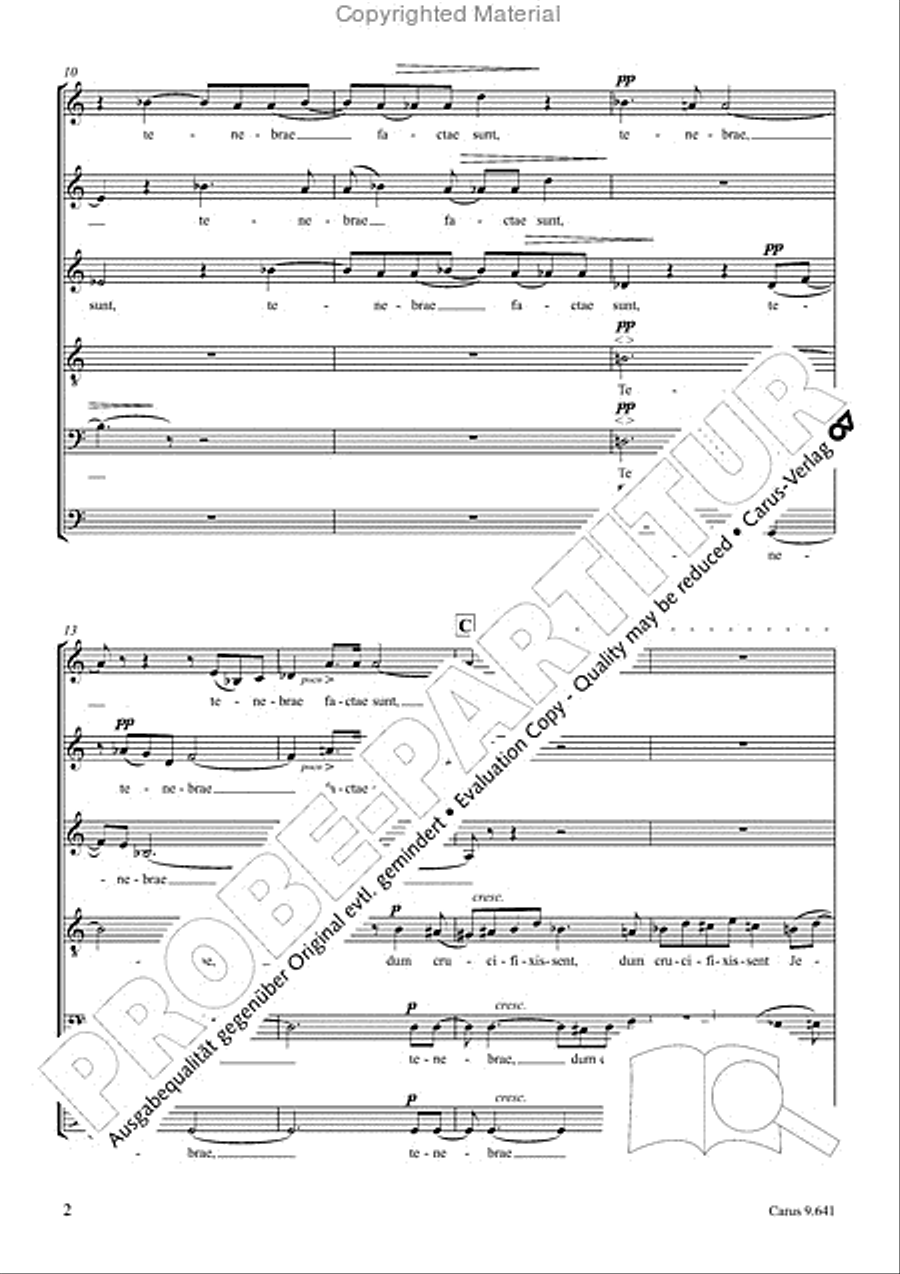
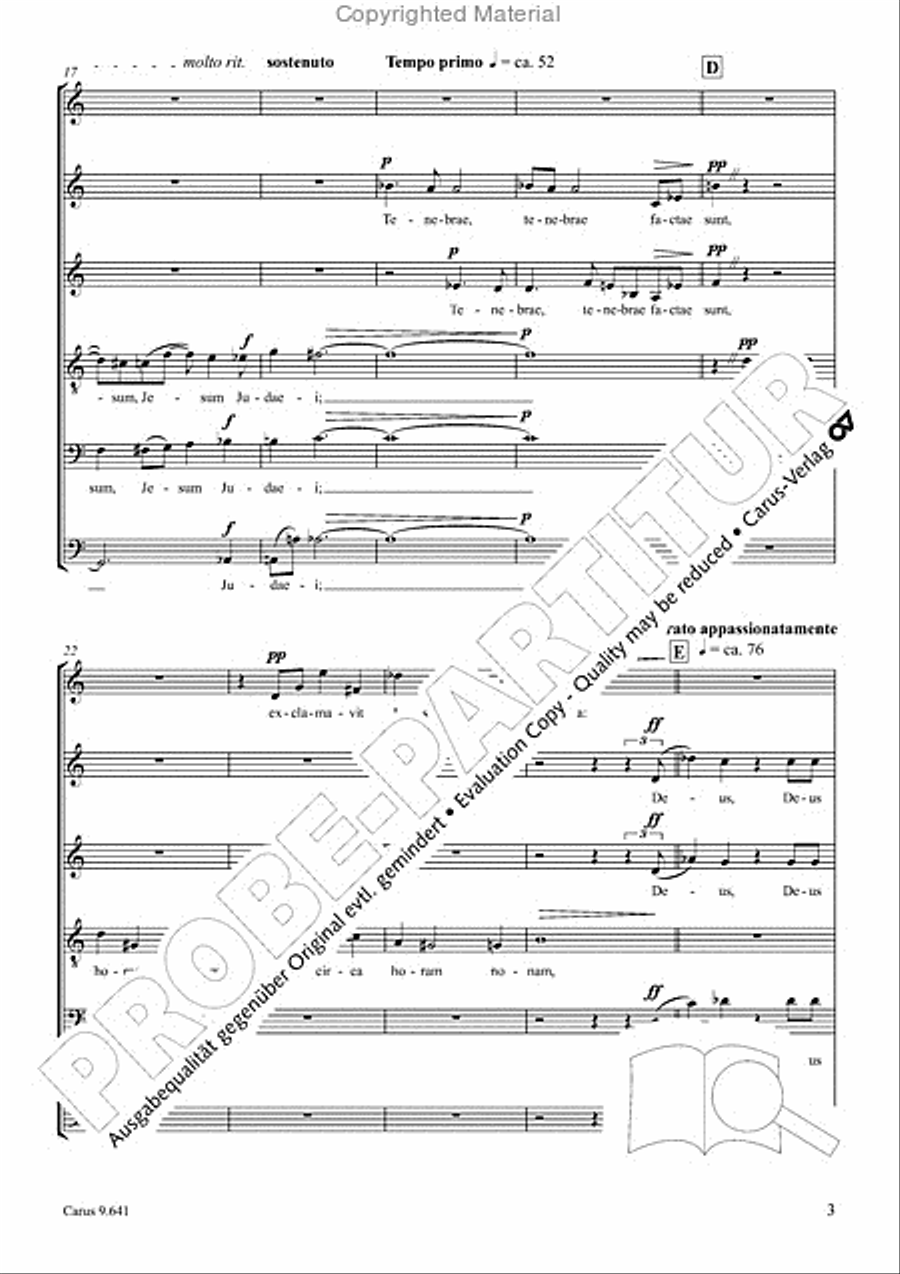
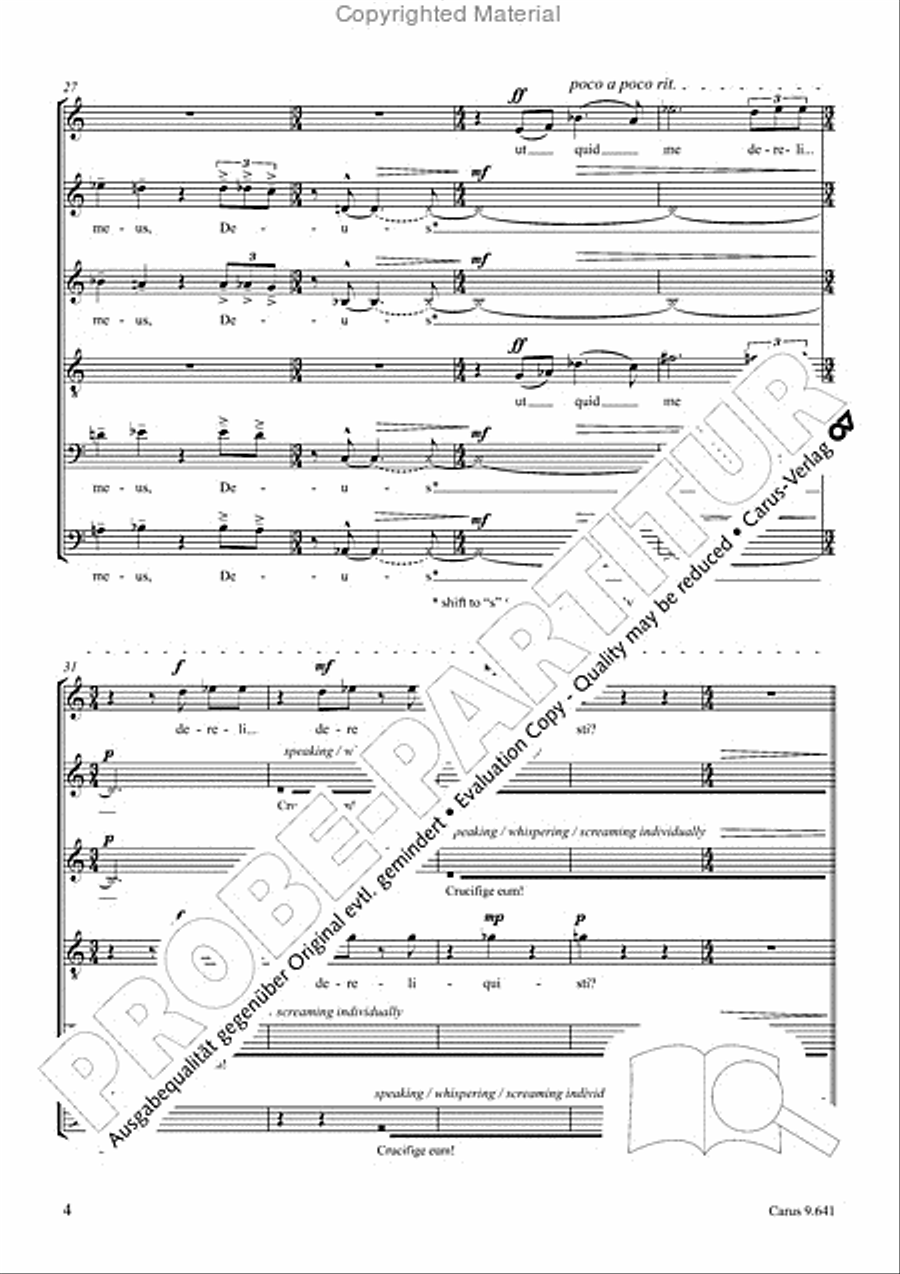
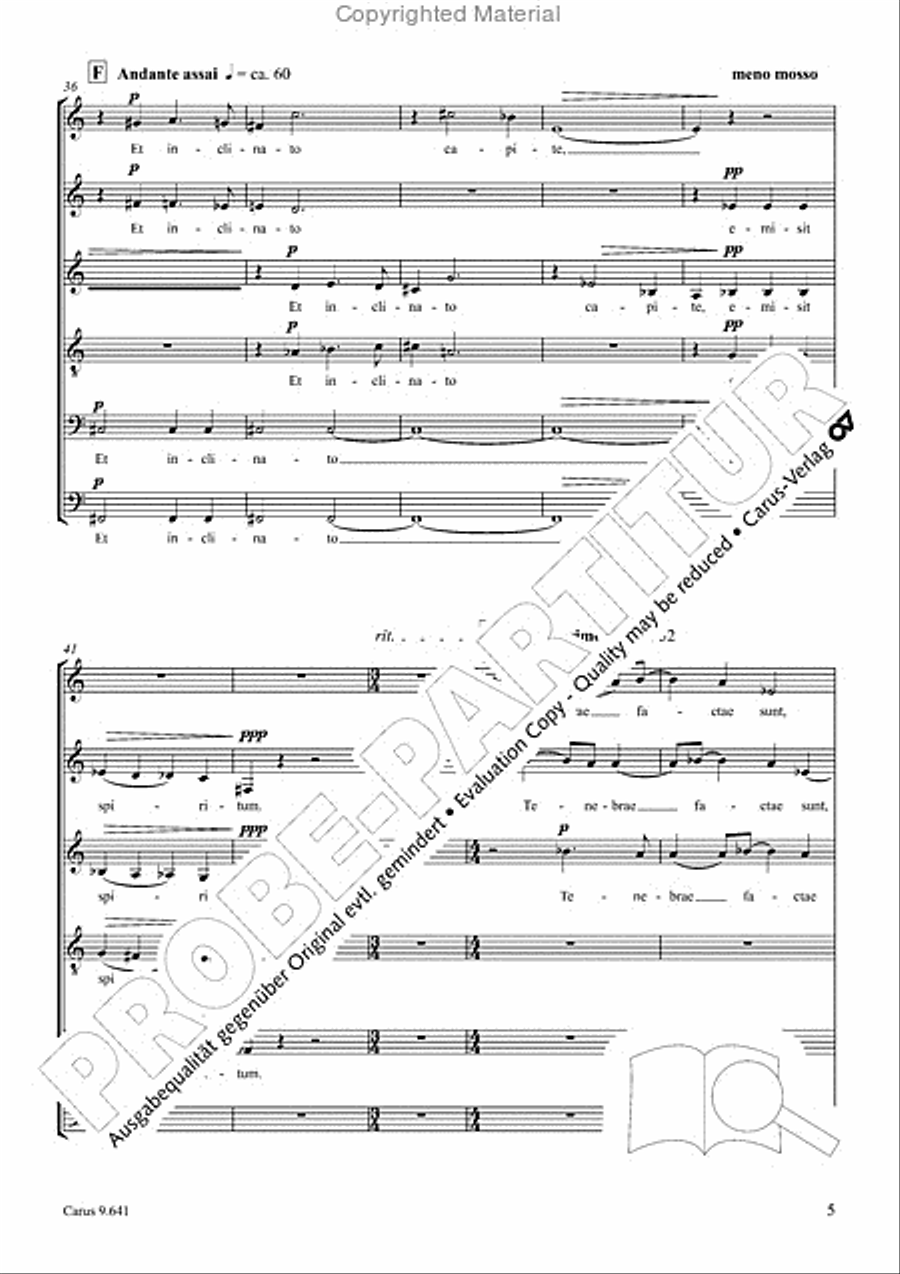
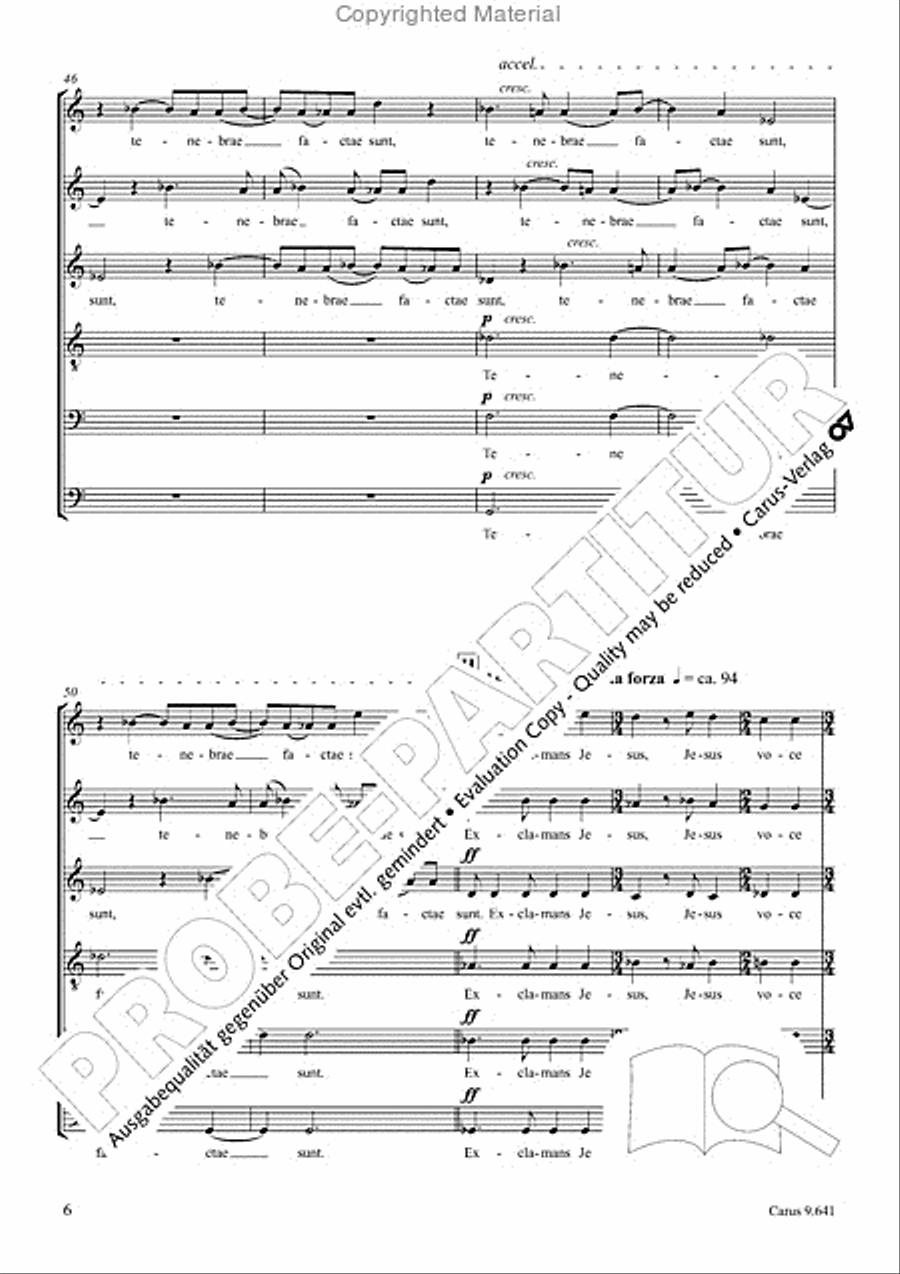
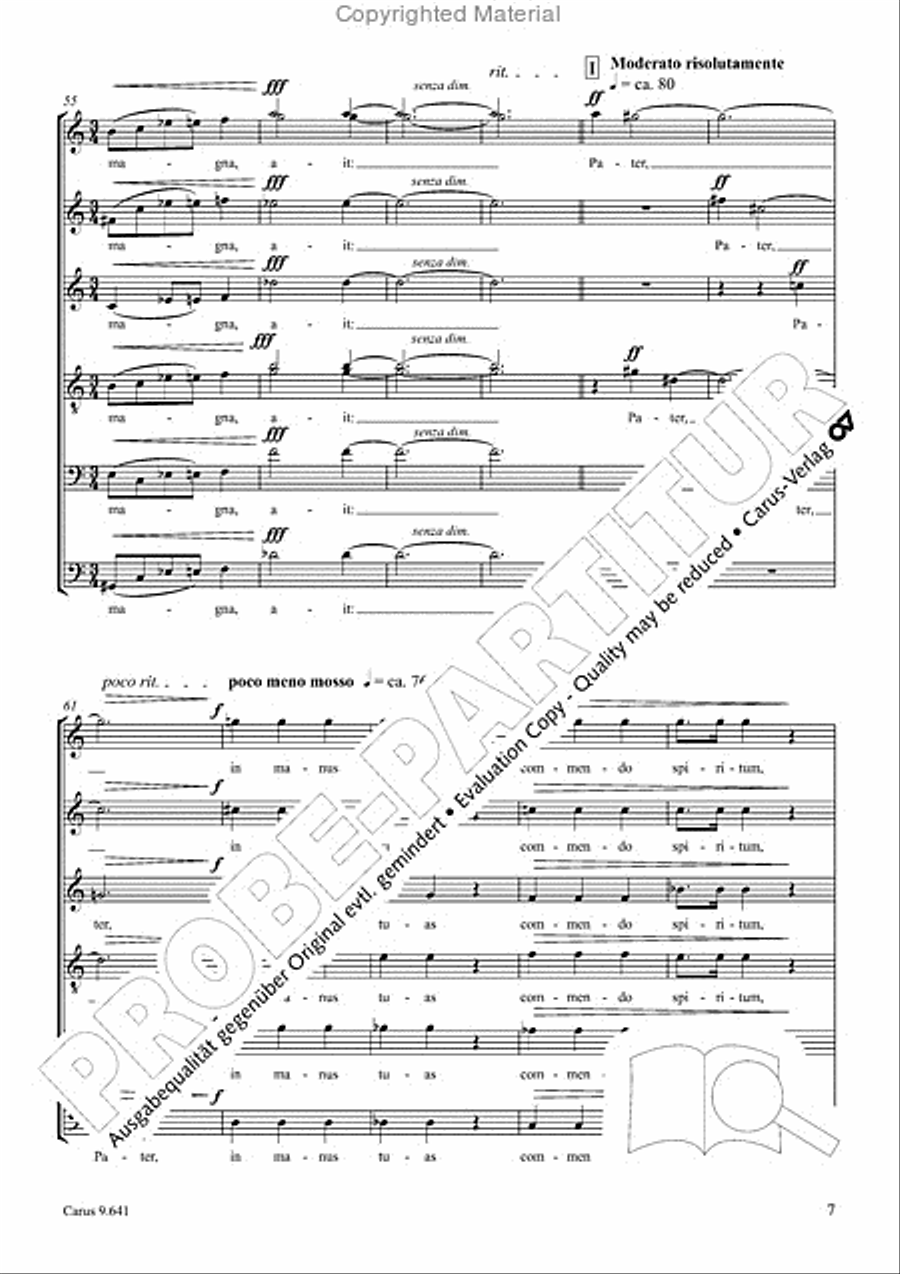
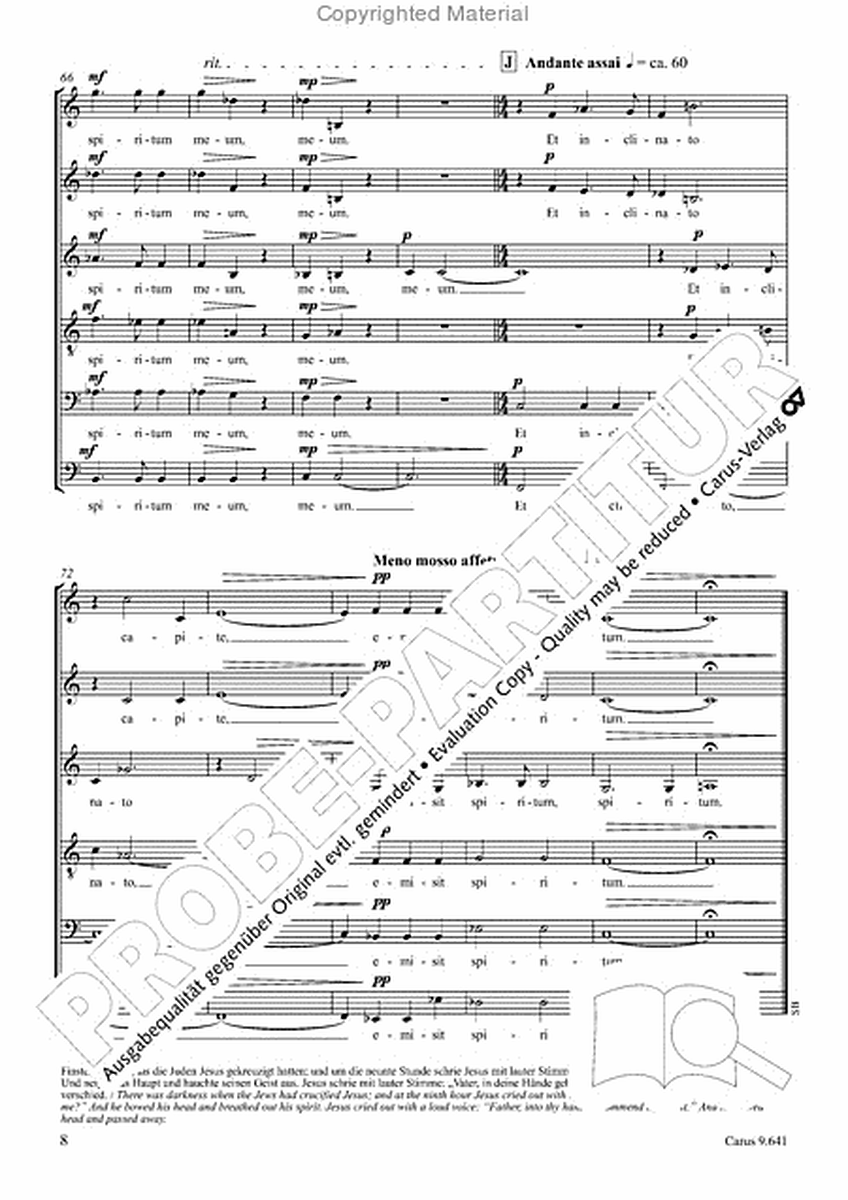
The Good Friday Responsory "Tenebrae factae sunt" for six-part chorus was commissioned in 2012 for Peking University Student Choir and was premiered at the "World Choir Games" in Cincinnati, Ohio, USA conducted by Hou Xijin. It is an ambitious work with a fervent intensity. Matsushita sets the two last words of Jesus, "Deus meus, ut quid me dereliquisti?" ["My God, why hast thou forsaken me"] and "Pater, in manus tuas commendo spiritum meum" ["Father, into thy hands I commend my spirit"] as pained outcries in Stravinskyian harshness, in chords characterized by tritones, as a truly superhuman work of redemption whose Easter message of hope only appears in the last conciliatory F major chord. Although this work lies slightly beyond the upper limit of the musical and vocal technical demands of the "Carus Contemporary" series, it is well within the abilities of ambitious chamber choirs.
SSATBB chorus
SKU: CA.964100
Responsory in the Nocturn on Good Friday. Composed by Ko Matsushita. Contemporary Choir Music. Genres / texts frequently set to music: Sacred vocal music. Sacred vocal music, Lent and Passiontide. Score. Duration 6 minutes. Carus Verlag #CV 09.641/00. Published by Carus Verlag (CA.964100).
ISBN 9790007143541. 8.27 x 11.69 inches. Text language: Latin.
The Good Friday Responsory "Tenebrae factae sunt" for six-part chorus was commissioned in 2012 for Peking University Student Choir and was premiered at the "World Choir Games" in Cincinnati, Ohio, USA conducted by Hou Xijin. It is an ambitious work with a fervent intensity. Matsushita sets the two last words of Jesus, "Deus meus, ut quid me dereliquisti?" ["My God, why hast thou forsaken me"] and "Pater, in manus tuas commendo spiritum meum" ["Father, into thy hands I commend my spirit"] as pained outcries in Stravinskyian harshness, in chords characterized by tritones, as a truly superhuman work of redemption whose Easter message of hope only appears in the last conciliatory F major chord. Although this work lies slightly beyond the upper limit of the musical and vocal technical demands of the "Carus Contemporary" series, it is well within the abilities of ambitious chamber choirs.
Tell a friend (or remind yourself) about this product. We'll instantly send an email containing product info and a link to it. You may also enter a personal message.
We do not use or store email addresses from this form for any other purpose than sending your share email.
Read our Privacy Policy.
After purchase, you can download your MP3 from your Sheet Music Plus Digital Library - no software installation is necessary! You can also listen to your MP3 at any time in your Digital Library.
After purchase, you can download your Smart Music from your Sheet Music Plus Digital Library - no software installation is necessary! You can also download at any time in your Digital Library.
After purchase you can download your video from your Digital Library. Your video is in XX format and is playable on most pre-installed video players.