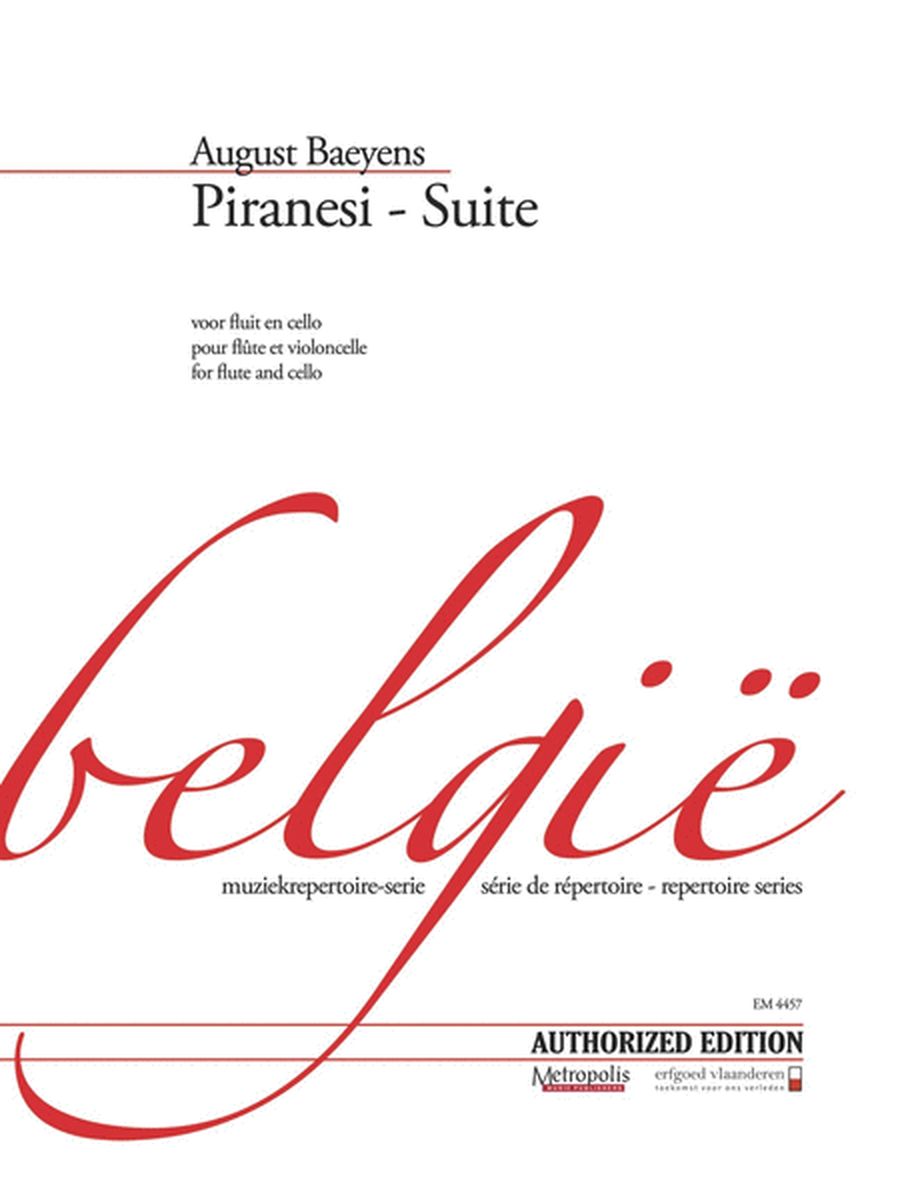
Composed by August Baeyens. Ensembles - Chamber Music. Score and parts. Metropolis Music Publishers #FVC4457EM. Published by Metropolis Music Publishers (IS.FVC4457EM).
ISBN 9790365044573.
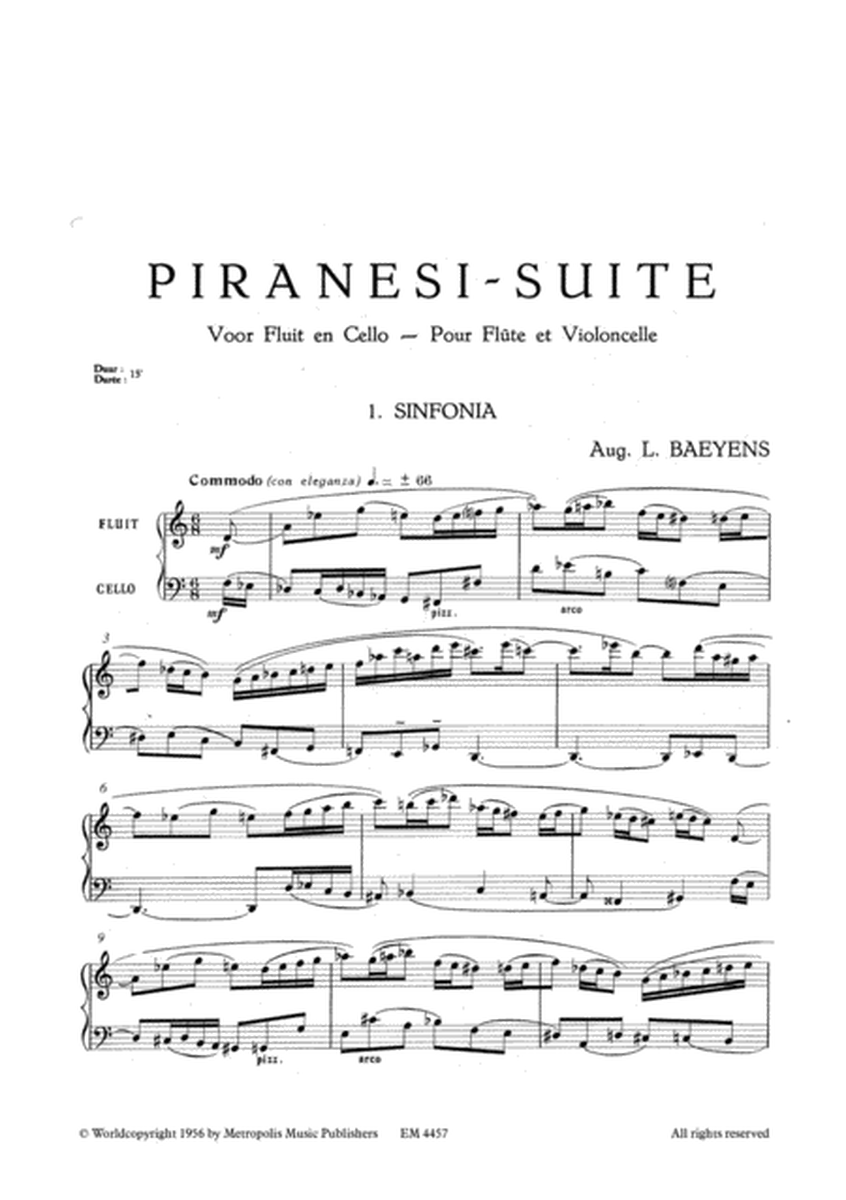
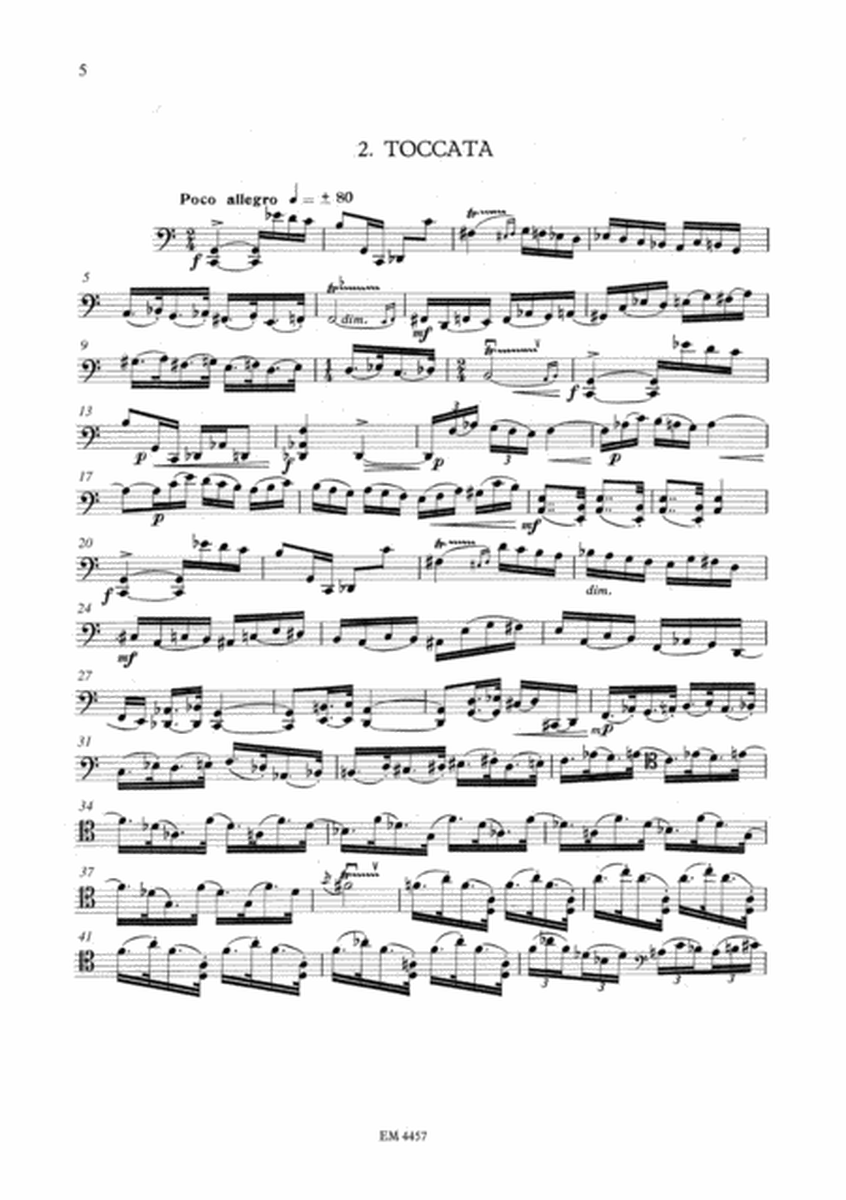
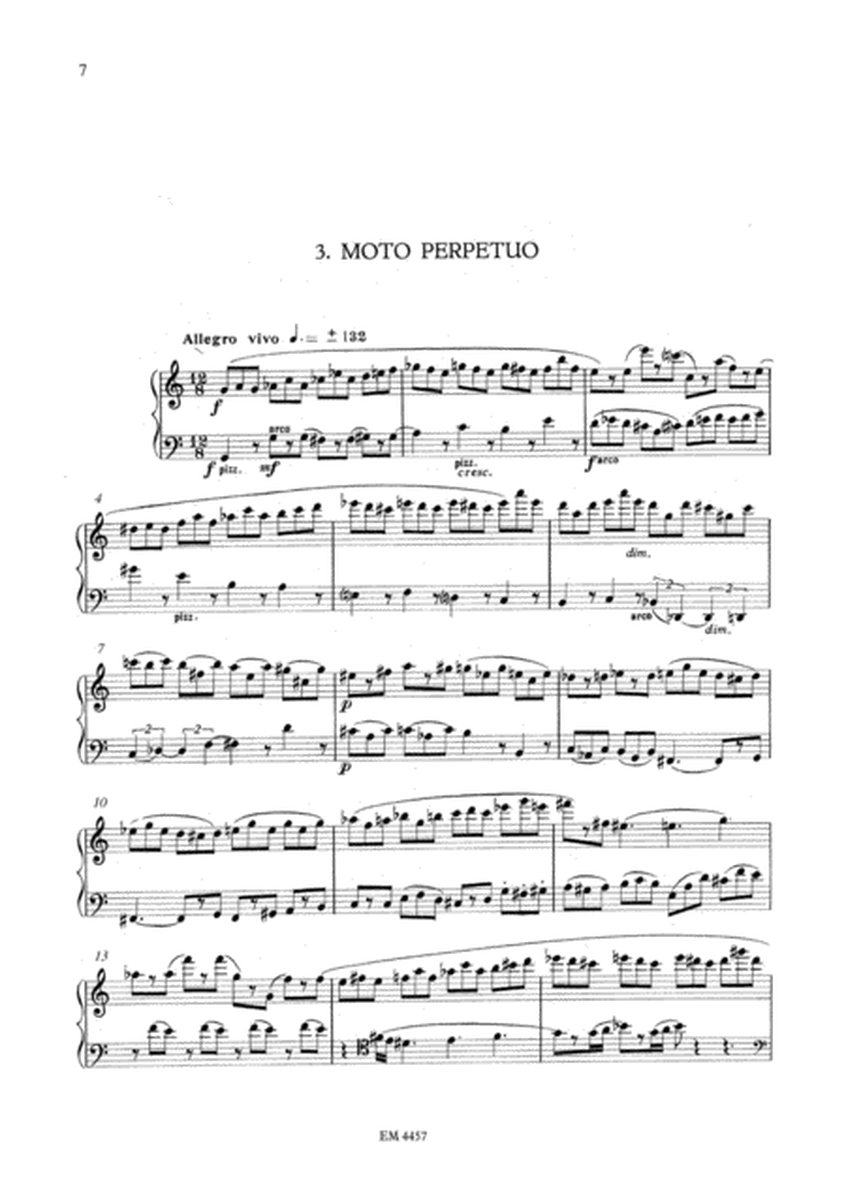
August Louis Baeyens received his musical training at the Royal Flemish Music Conservatory in Antwerp, studying solfège, viola, and harmony. As a composer, Baeyens developed chiefly through the study of composers such as Debussy, Wagner and Strauss; this interest gave him the reputation of a revolutionary within the confines of the very traditionalist conservatory. However, this was not where Baeyens’ exploration of musical language was to end. The 1956 Piranesi Suite for flute and cello, written three decades after Baeyens’ graduation from the Flemish Conservatory, marks an intriguing phase of his composition. Baeyens tended towards older forms - the Suite, for example, is a five-movement work, though each movement is drawn through a more modern glass; it’s hardly usual to hear a Sinfonia, Toccata, Moto Perpetuo, Aria, and Corrente together. The resemblance towards older forms breaks down as the music is further examined; the Sinfonia is full of transposed, repetitive melodies that play off each other with sly rhythmic twists (much in the manner of Stravinsky), the Toccata is a powerful solo cello showpiece, and the Aria is a delicate flute melody winding above bitonal cello pizzicato. The final Corrente, belying its name, brings the piece to a close with an accelerating back-and-forth of melody and accompaniment.
Composed by August Baeyens. Ensembles - Chamber Music. Score and parts. Metropolis Music Publishers #FVC4457EM. Published by Metropolis Music Publishers (IS.FVC4457EM).
ISBN 9790365044573.
August Louis Baeyens received his musical training at the Royal Flemish Music Conservatory in Antwerp, studying solfège, viola, and harmony. As a composer, Baeyens developed chiefly through the study of composers such as Debussy, Wagner and Strauss; this interest gave him the reputation of a revolutionary within the confines of the very traditionalist conservatory. However, this was not where Baeyens’ exploration of musical language was to end. The 1956 Piranesi Suite for flute and cello, written three decades after Baeyens’ graduation from the Flemish Conservatory, marks an intriguing phase of his composition. Baeyens tended towards older forms - the Suite, for example, is a five-movement work, though each movement is drawn through a more modern glass; it’s hardly usual to hear a Sinfonia, Toccata, Moto Perpetuo, Aria, and Corrente together. The resemblance towards older forms breaks down as the music is further examined; the Sinfonia is full of transposed, repetitive melodies that play off each other with sly rhythmic twists (much in the manner of Stravinsky), the Toccata is a powerful solo cello showpiece, and the Aria is a delicate flute melody winding above bitonal cello pizzicato. The final Corrente, belying its name, brings the piece to a close with an accelerating back-and-forth of melody and accompaniment.
Preview: Piranesi Suite for Flute and Cello
Tell A Friend
Tell a friend (or remind yourself) about this product. We'll instantly send an email containing product info and a link to it. You may also enter a personal message.
We do not use or store email addresses from this form for any other purpose than sending your share email.
After purchase, you can download your MP3 from your Sheet Music Plus Digital Library - no software installation is necessary! You can also listen to your MP3 at any time in your Digital Library.
Learn about Smart Music
After purchase, you can download your Smart Music from your Sheet Music Plus Digital Library - no software installation is necessary! You can also download at any time in your Digital Library.
Learn about Digital Video
After purchase you can download your video from your Digital Library. Your video is in XX format and is playable on most pre-installed video players.