Samuel Barber Sheet Music

About Samuel Barber

Samuel Barber (1910-1981) was a highly celebrated American composer of the 20th century, renowned for his distinctively lyrical, expressive, and often deeply emotional musical style. His compositions seamlessly blended the romantic traditions of the 19th century with modernist sensibilities, creating a sound that was both timeless and innovative. Barber's significant contributions to classical music encompass a wide array of genres, including orchestral, vocal, chamber, and operatic works, solidifying his place as one of the most frequently performed and respected American composers.

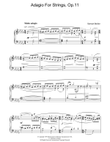
  • Barber's most iconic and widely recognized work is the "Adagio for Strings," originally the slow movement of his String Quartet, Op. 11. It premiered in 1938 with Arturo Toscanini conducting the NBC Symphony Orchestra, quickly achieving extraordinary popularity.
  • He was a child prodigy, composing his first piece at the age of seven and attempting his first opera at ten. At the age of nine, he famously wrote a letter to his mother declaring, "I was meant to be a composer and will be I'm sure... Don't ask me to try to forget this unpleasant thing and go play football - please."
  • Barber had a lifelong personal and professional relationship with fellow composer Gian Carlo Menotti, who provided libretti for two of Barber's three operas, including the Pulitzer Prize-winning Vanessa. They shared a home named "Capricorn" in Mount Kisco, New York.
  • He was a two-time recipient of the Pulitzer Prize for Music, first for his opera Vanessa in 1958 and again for his Piano Concerto in 1963.

Samuel Barber's sheet music offers a profoundly rewarding experience for musicians ranging from intermediate to advanced levels. His compositions are particularly well-suited for vocalists, pianists, string players, and various chamber and orchestral ensembles. Performers will discover music rich in emotional depth, beautiful melodic lines, and a masterful blend of traditional craftsmanship with engaging harmonies. Whether exploring his beloved art songs, the challenging Piano Sonata, or the expressive concertos, playing Barber's music provides a deeply satisfying journey into the heart of 20th-century American lyricism.

Search all Samuel Barber