Top Sellers
-
![Violin Concerto No. 1 in f#, Op. 14]()
$100.00 $90.00
-
![Wieniawski Theme original varié Op.15 for Violin and String Orchestra]()
-
![Fantaisie Orientale, Op. 24]()
$18.99 $11.07
-
![Souvenir de Posen Op. 3]()
$31.00 $16.95
-
![Souvenir de Moscou, Op. 6]()
$41.95 $23.95




-
![Violin Concerto No. 2 in D Minor]()
$57.99 $52.19
-
![Violin Concerto No. 2 in D Minor]()
$47.99 $43.19
-
![Legend]()
$71.95 $64.76
-
![Wieniawski Scherzo Tarentelle Op.16 for violin and string orchestra]()
-
![Wieniawski Kujawiak for Violin and String Orchestra]()
$14.99 $13.49


-
![Wieniawski Obertass Op. 19 No. 1 for Violin and String Orchestra]()
-
![Wieniawski Romance Sans Paroles Et Rondo Élégant Op. 9 for Violin and String Orchestra]()
-
![Violin Concerto No. 1 in f#, Op. 14]()
$45.00 $40.50
-
![Wieniawski Grand Caprice Fantastique Op 1 for Violin and String Orchestra]()
-
![Wieniawski Souvenir de Posen Op. 3 for Violin and String Orchestra]()




-
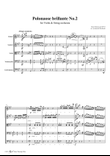
![Polonaose brillante No.2 for Violin & String orchestra]()
$29.99 $26.99
-
![Violin Concerto #1 in F# minor, op. 14 - Tutti, Mvt. 1]()
-
![Wieniawski Polonaise No. 2 Op 21 for Violin and String Orchestra]()
-
![Wieniawski Polonaise No. 2 Op 21 for Violin and Orchestra]()
-
![Wieniaski Scherzo-Tarantella for Violin and String Orchestra]()