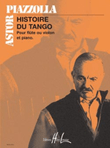
About Astor Piazzolla
Astor Piazzolla was an extraordinary Argentine composer, bandoneon player, and arranger who revolutionized the traditional tango. He is widely recognized as the creator of "Nuevo Tango" (New Tango), a distinct musical style that masterfully fused traditional Argentine tango with elements of jazz and classical music. Piazzolla's innovative approach transformed tango from primarily a dance form into a sophisticated genre of concert music, profoundly impacting Latin American music and gaining him international acclaim as a major 20th-century composer.
- Born in Mar del Plata, Argentina, Piazzolla spent a significant portion of his childhood in New York City, where he was exposed to a diverse musical landscape including jazz and classical music.
- He famously studied classical composition with two influential figures: the Argentine composer Alberto Ginastera and the renowned French teacher Nadia Boulanger, who encouraged him to embrace his authentic tango voice.
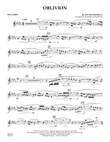
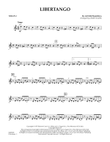
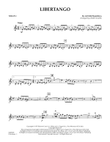
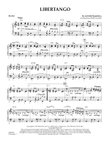
- Piazzolla composed over 3,000 pieces and recorded around 500 works throughout his prolific career. Some of his most celebrated compositions include "Libertango," "Oblivion," and "Adios Nonino."
Piazzolla's sheet music offers a deeply rewarding experience for musicians seeking to explore a genre rich with passion, melancholy, and intellectual depth. His compositions, often characterized by complex harmonies, counterpoint, and rhythmic vitality, are particularly well-suited for intermediate to advanced players across various instruments. Musicians will find arrangements for piano, violin, cello, guitar, and for ensembles like string quartets and orchestras. Performing Piazzolla provides a unique opportunity to engage with a revolutionary musical language that blends the dramatic intensity of tango with the sophistication of classical forms and the improvisational spirit of jazz, offering both technical challenge and profound emotional expression.