

Details
- Instrument:
- Choir Piano and Keyboard
- Ensembles:
- 4-Part SATB Mixed Choir
- Composers:
- Heinrich von Herzogenberg
- Publishers:
- Alliance Music Publications
- Format:
- Octavo
- Item types:
- Physical
- Artist:
- Heinrich von Herzogenberg
- Usages:
- School and Community
- Shipping Weight:
- 0.83 pounds
SKU: AN.AMP-0047
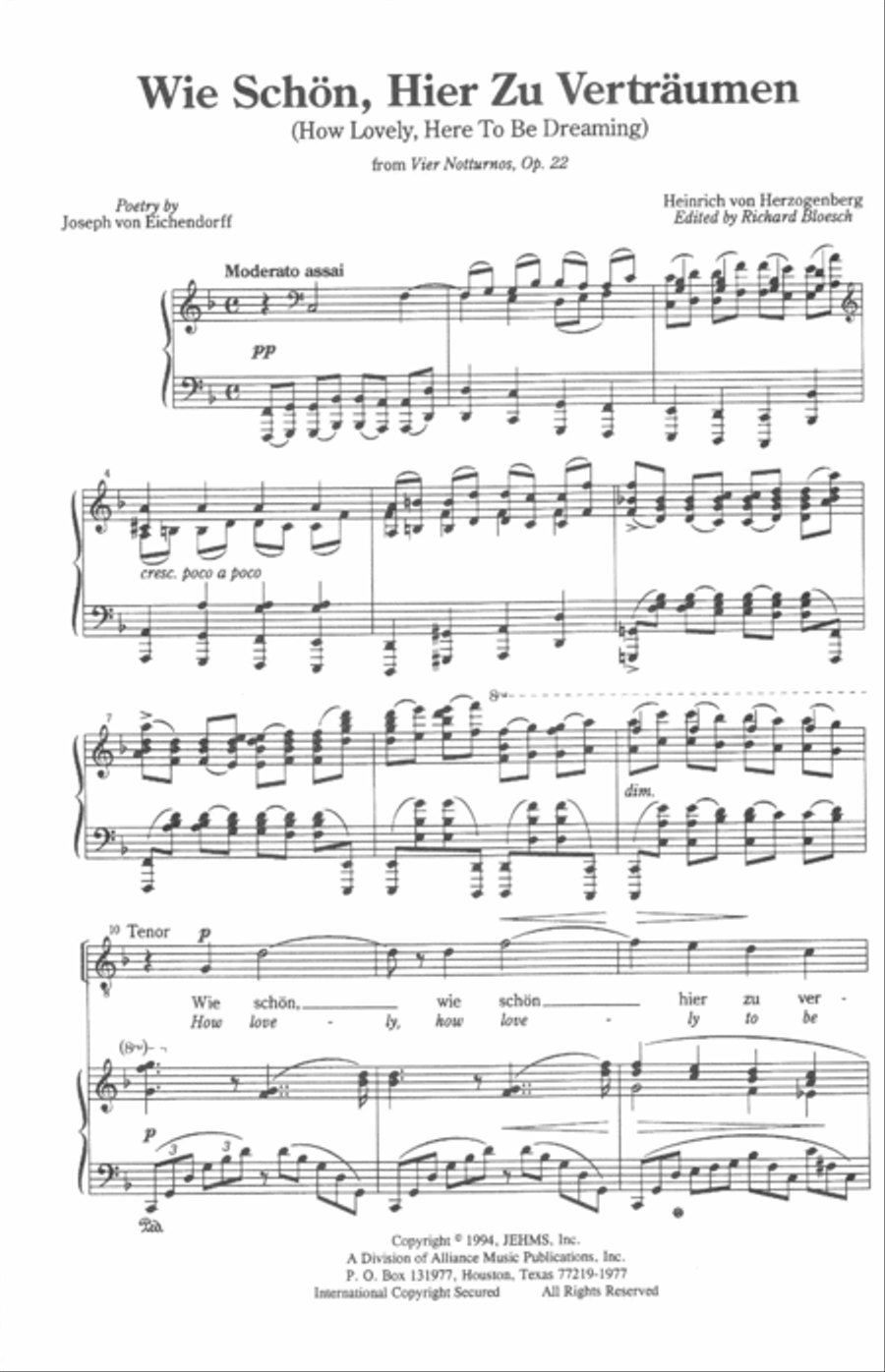
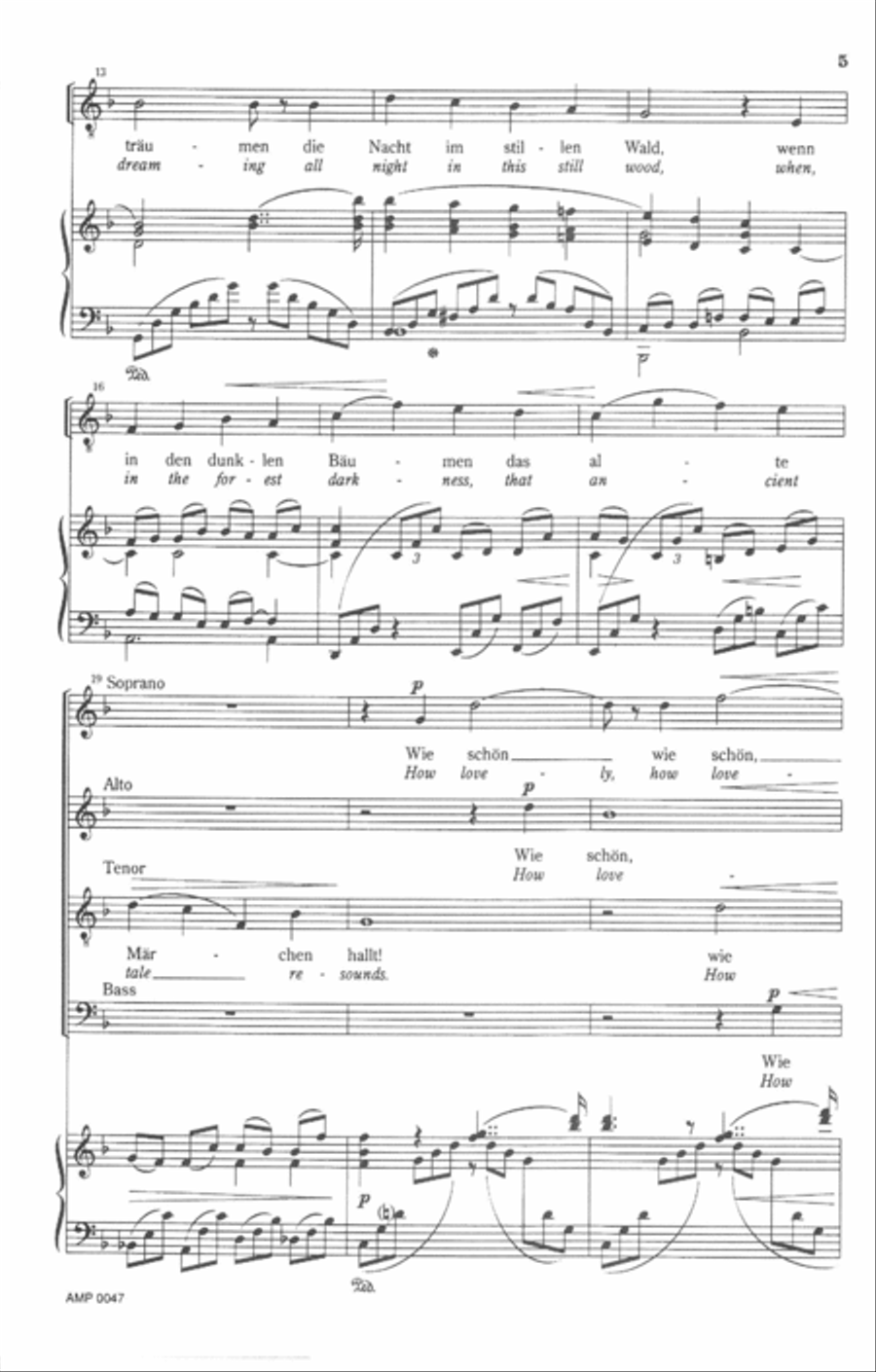
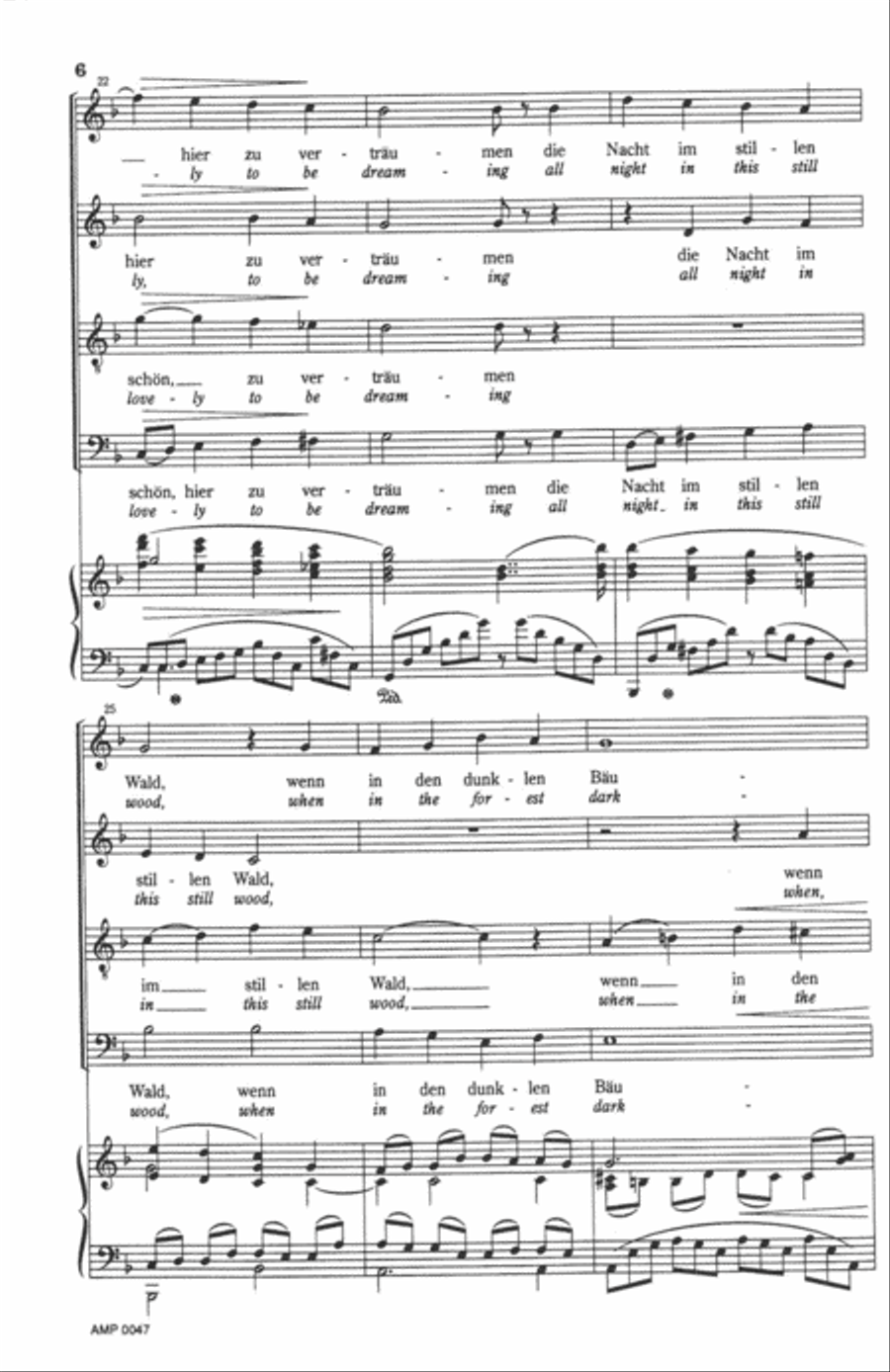
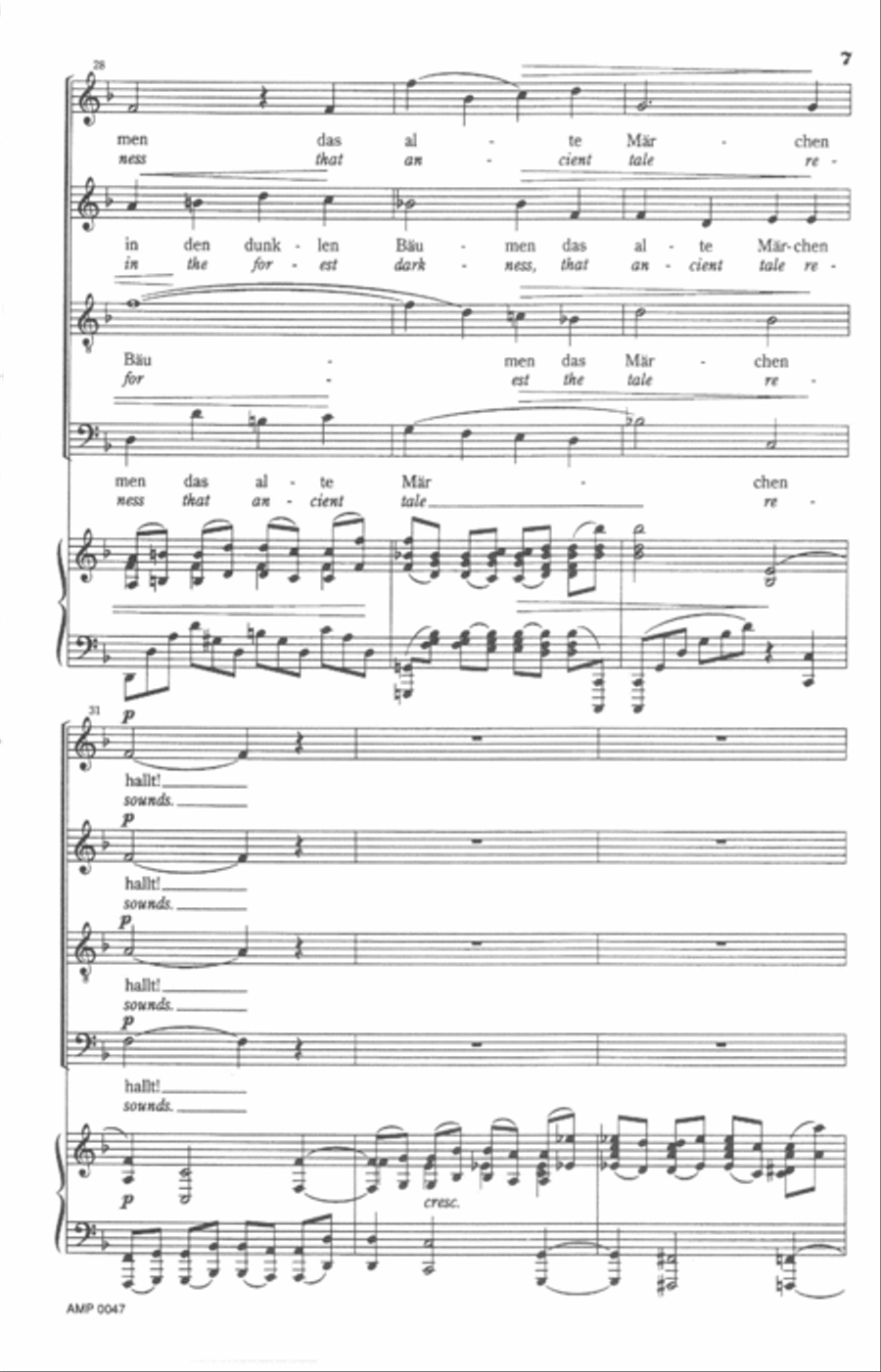
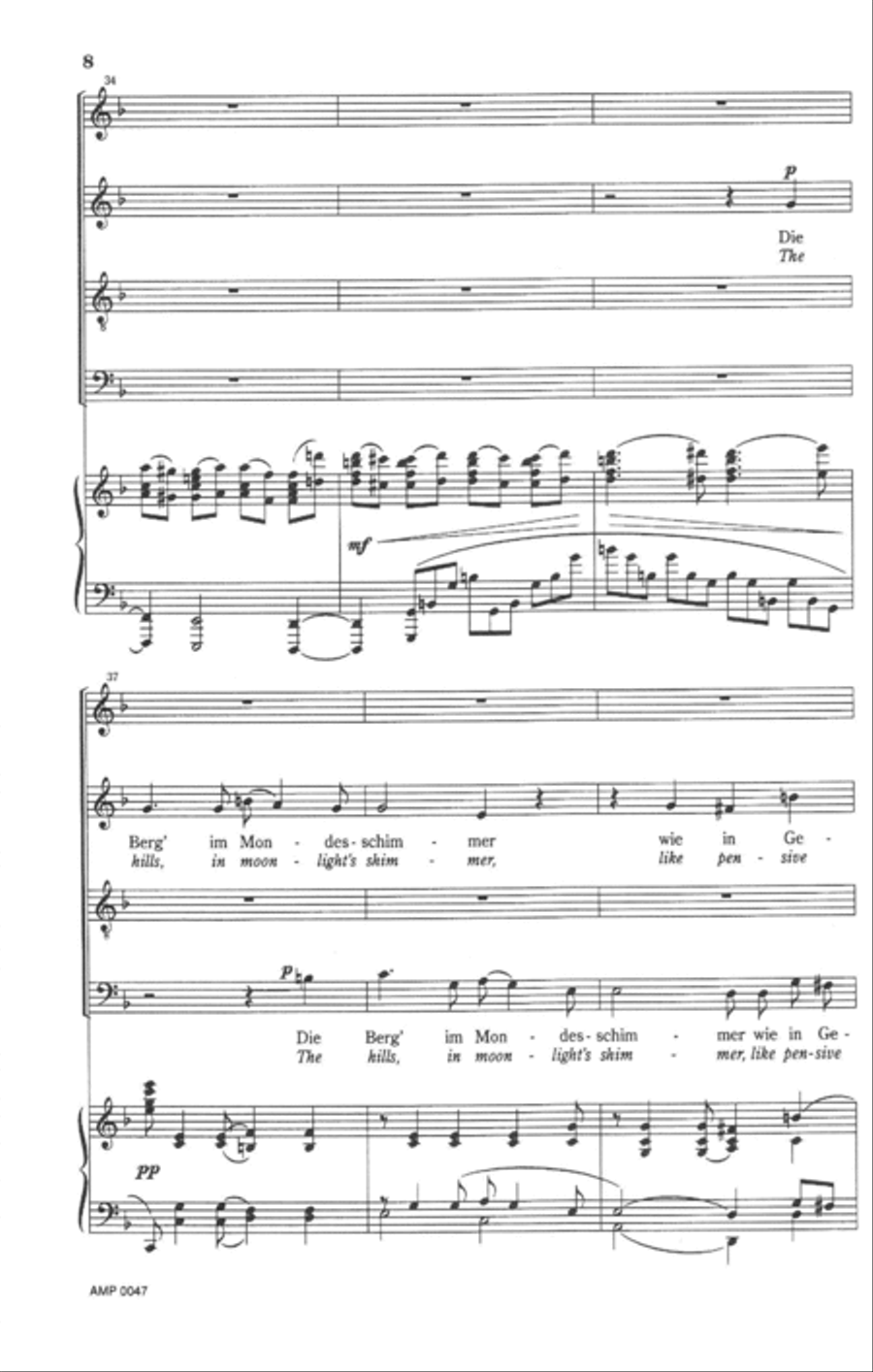
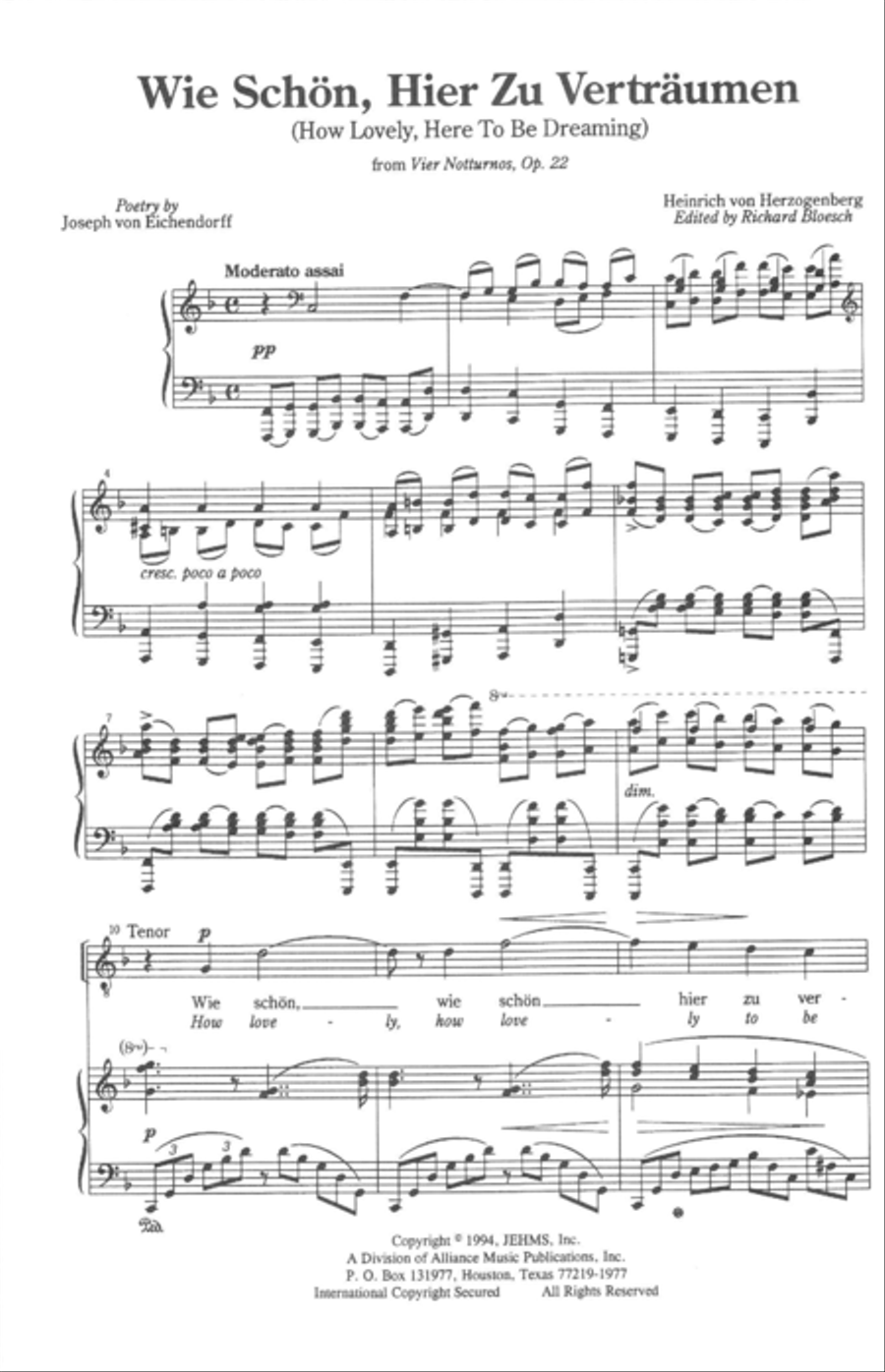
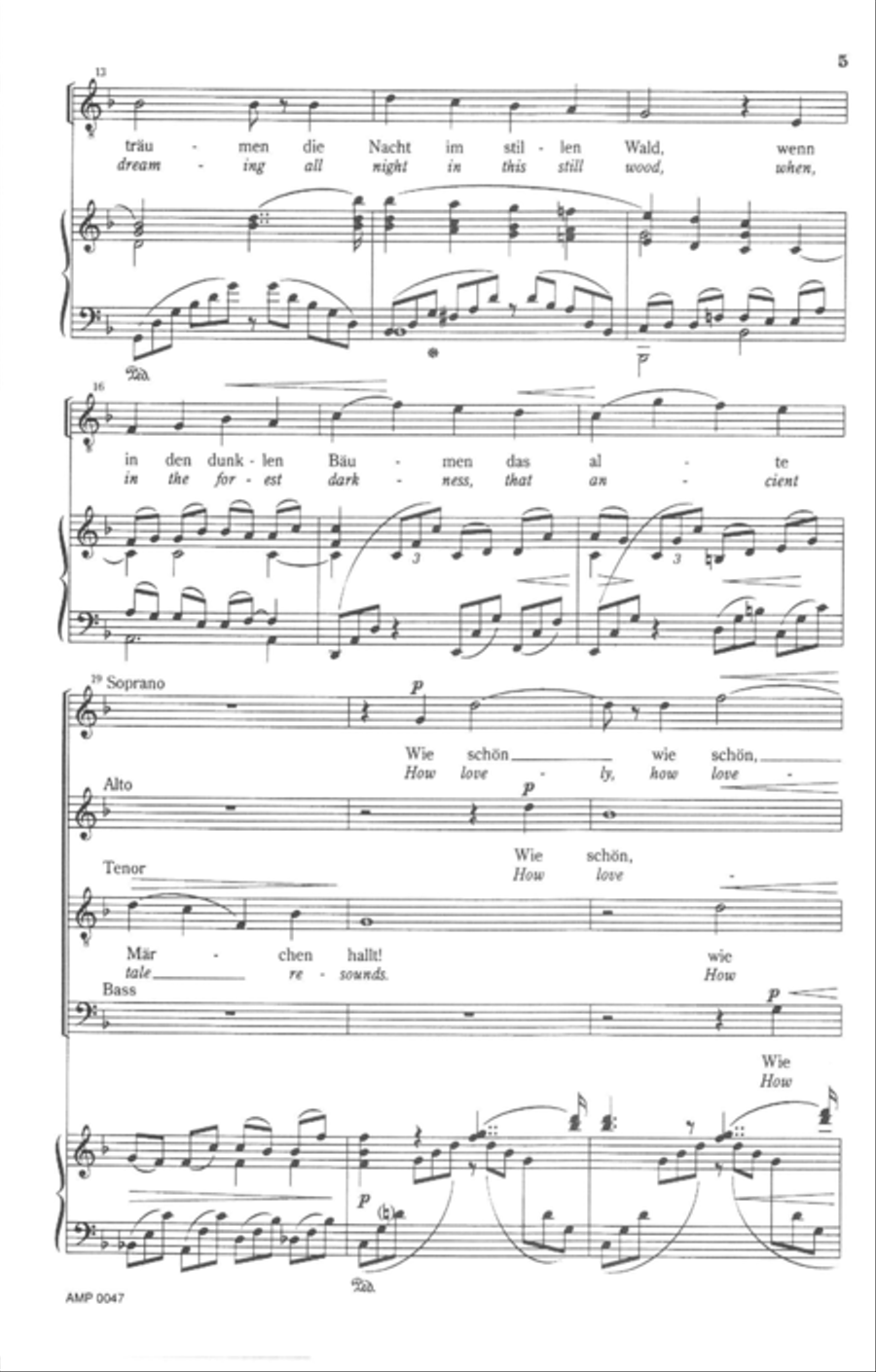
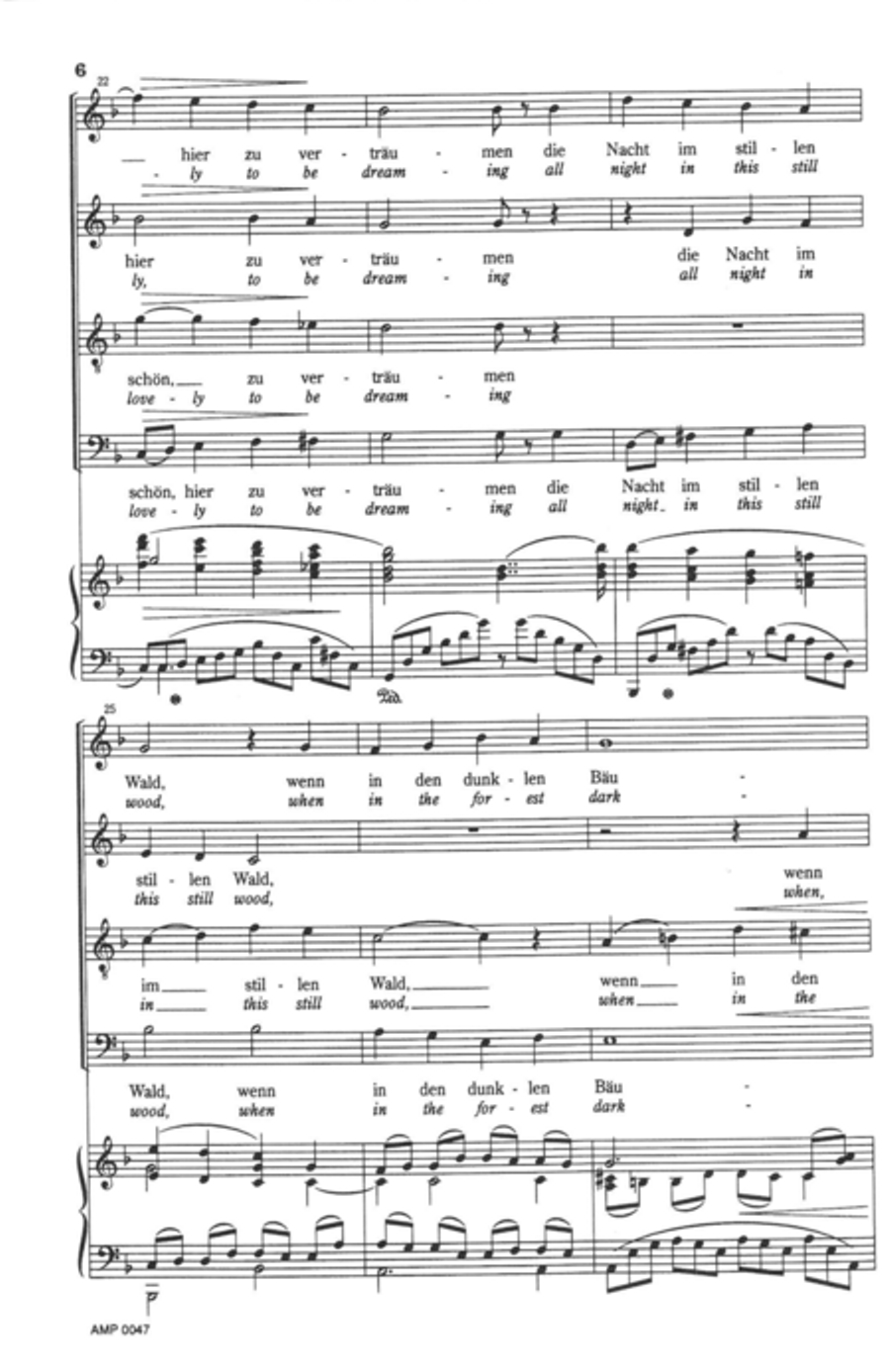
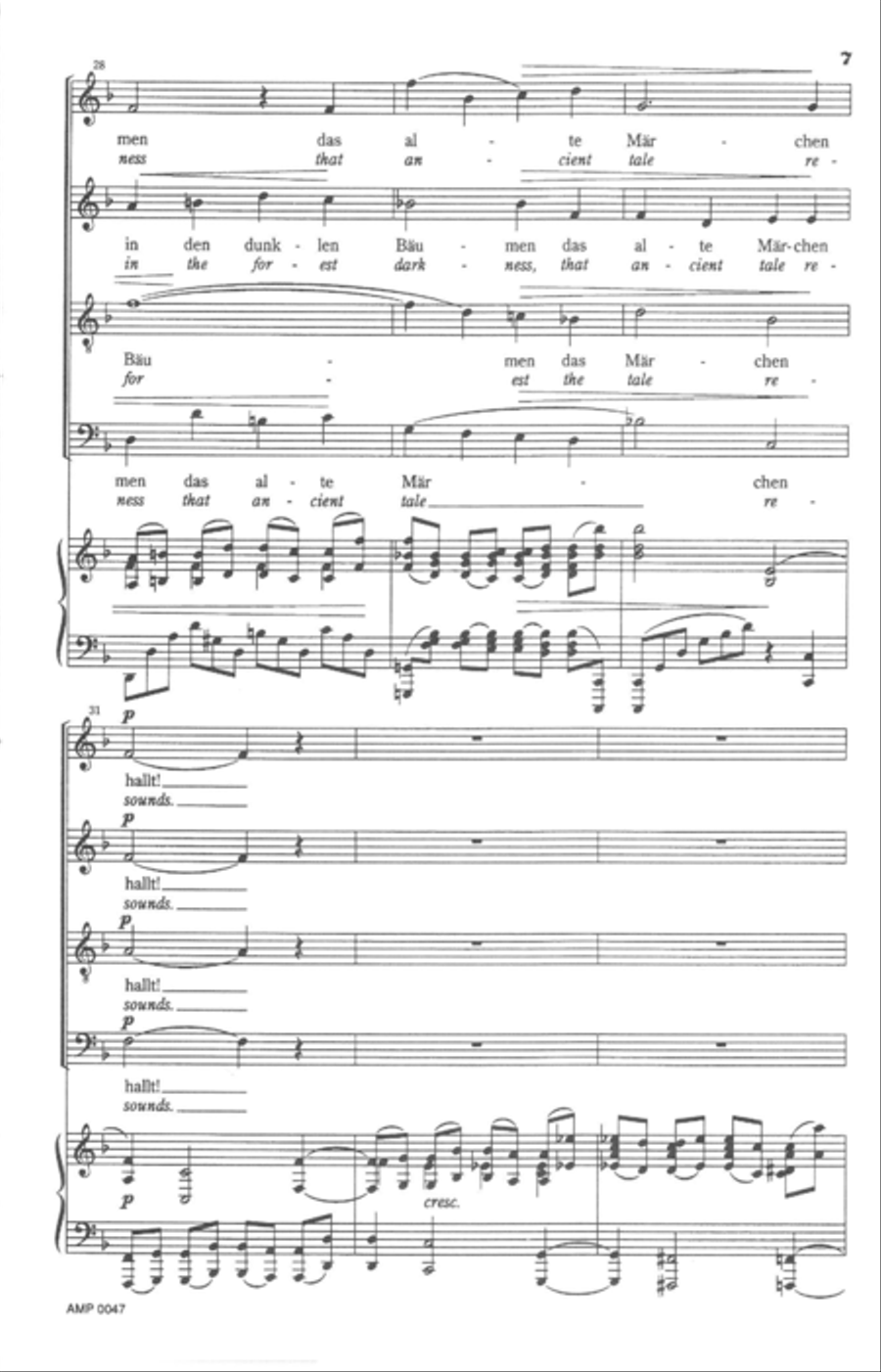
Composed by Heinrich von Herzogenberg. Edited by Richard Bloesch and William Hatcher. Octavo. Alliance Music Publications #AMP 0047. Published by Alliance Music Publications (AN.AMP-0047).Herzogenberg/Bloesch.
This poem, published in the 1837 edition of the collected poems under the title Nacht, and in the 1841 edition under the title Die Nacht, was written shortly after the death of Eichendorff's youngchild. A number of references in the poem point to the poet's grief: e.g., Und durch verworr'ne Trummer die Quellen klagend gehn (And through entangled ruins, the springs flow mournfully);and, especially in the following stanza, Denn mud' ging auf den Mat ten die Schonheit nun zur Ruh', es deckt mit kyhlen Schatten die Nacht das Liebchen zu (For tired on the meadows, Beauty nowrests, and with her cooling shadows, night covers the beloved). Further hints regarding his state of mind occur in stanzas five and six: Wann kommst du Morgenwind und hebst die Schleier wieder von dem vertraumten Kind (When will you come, O morning wind, to lift the veil again off thedreaming child?); and, Schon ruhrt sich's in den Bamen, die Lerche weckt sie bald!&rdquu (There is movement in the trees, the lark will wake her soon!).
Herzogenberg evidently considered this poem to be the most important of the four, since he placed it as the last of the Vier Notturnos and lavished upon it music both ecstatic and profound. Emotionally and musically it forms the climax of the set.
Joseph von Eichendorff (1788-1857)
- More by this Composer:
- Heinrich von Herzogenberg Heinrich von Herzogenberg Choir Heinrich von Herzogenberg Voice Heinrich von Herzogenberg Piano, Vocal
- Instrument:
- Vocal Choir Piano and Keyboard
- Artists:
- Heinrich von Herzogenberg
- Ensemble:
- 4-Part SATB Mixed Choir
- Publisher:
- Alliance Music Publications