Details
- Instrument:
- Choir Organ Accompaniment
- Ensembles:
- Mixed Choir
- Genres:
- 20th Century
- Composers:
- Naji Hakim
- Publishers:
- Schott Music
- UPC:
- 888680033712
- ISBN:
- 9790001187978
- Format:
- Collection / Songbook
- Item types:
- Physical
- Level:
- Intermediate
- Artist:
- Naji Hakim
- Usages:
- School and Community
- Number of Pages:
- 36
- Size:
- 9.25x12.0x0.12 inches
- Shipping Weight:
- 0.45 pounds
Mixed choir and organ - intermediate
SKU: HL.49019725
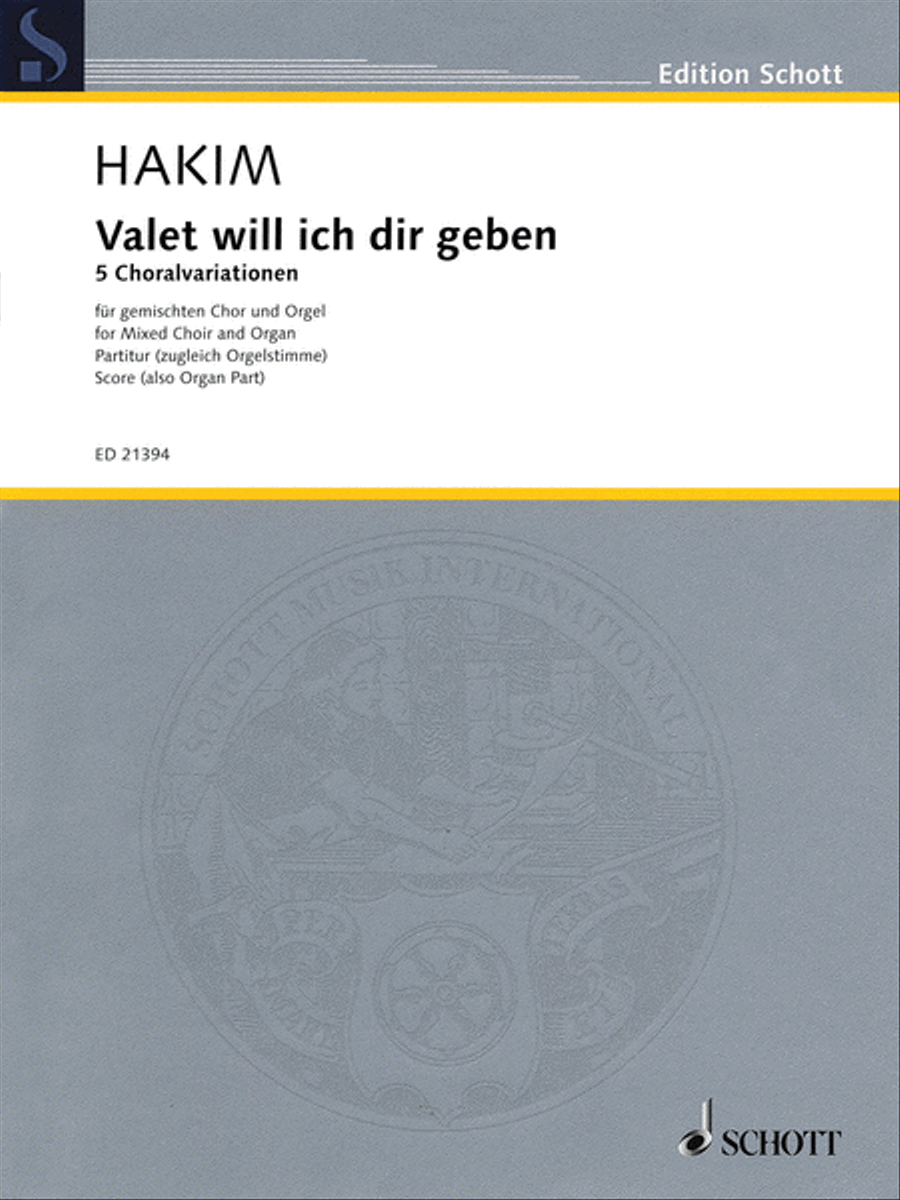
SATB Choir and Organ. Composed by Naji Hakim. This edition: Saddle stitching. Sheet music. Edition Schott. Classical. Softcover. Composed 2011. 36 pages. Duration 11'. Schott Music #ED21394. Published by Schott Music (HL.49019725).ISBN 9790001187978. UPC: 888680033712. 9.25x12.0x0.12 inches. German.
'Valet will ich dir geben - Du arge, falsche Welt' Based on the sacred poem of Valerius Herberger and written in the style of Melchior Teschner's chorale melody, the French composer Naji Hakim (*1955) wrote a moving work for choir and organ. The five chorale variations lead from heavenly joy in the choral parts to a charming setting for solo organ; then Hakim moves on to a setting for a cappella choir and a canon for soprano and alto with organ accompaniment. The expressive work ends with a lively toccata which is complemented by an expressive adagio in the middle.
- More by this Composer:
- Naji Hakim Naji Hakim Choir Naji Hakim Organ Naji Hakim Organ Accompaniment
- Instrument:
- Vocal Choir Piano and Keyboard Organ Accompaniment
- Artists:
- Naji Hakim
- Ensemble:
- Mixed Choir
- Publisher:
- Schott Music