Order two or more copies of the same title and we'll automatically give you 5% off list price on that title.
To get 2+ Pricing , just add two or more copies of a title to your shopping cart. Your discount will be immediately applied to your order.
Sale titles, hymnals, and ShowKits (MTI's Broadway Junior Collection, Getting to Know... Collection (G2K) and MTI's Kids Collection) do not qualify for 2+ Pricing
If you have any questions or comments regarding 2+ Pricing , please visit our Help Center to find more information or chat with our support team
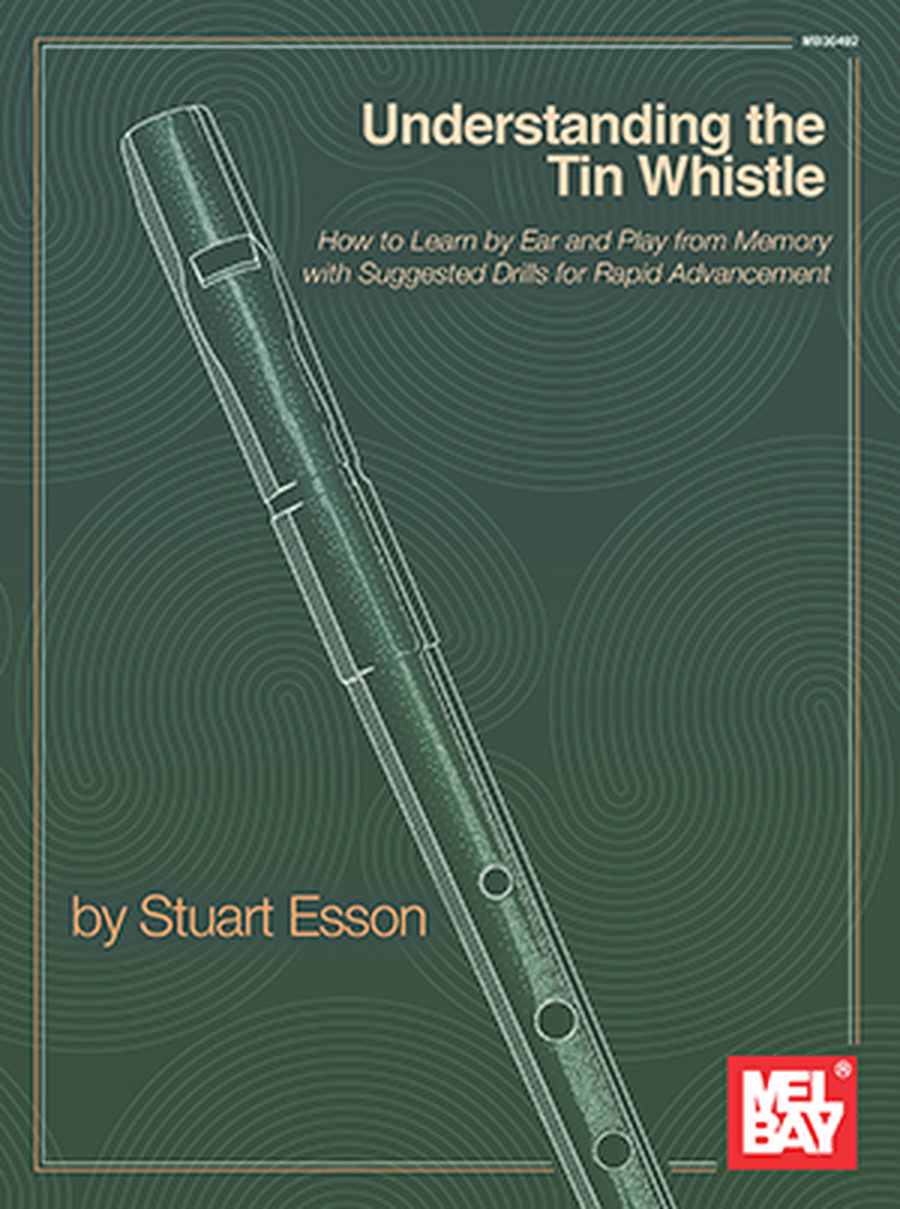
How to Learn by Ear and Play from Memory with Suggested Drills for Rapid Advancement. Composed by Stuart Esson. This edition: Saddle Stitch. Woodwinds, Tin Whistle, World, Technique, Theory and Reference, Celtic, Saddle-stitched. World. Book. 64 pages. Mel Bay Publications, Inc #30492. Published by Mel Bay Publications, Inc (MB.30492).
ISBN 9780786685998. 8.75 x 11.75 inches.
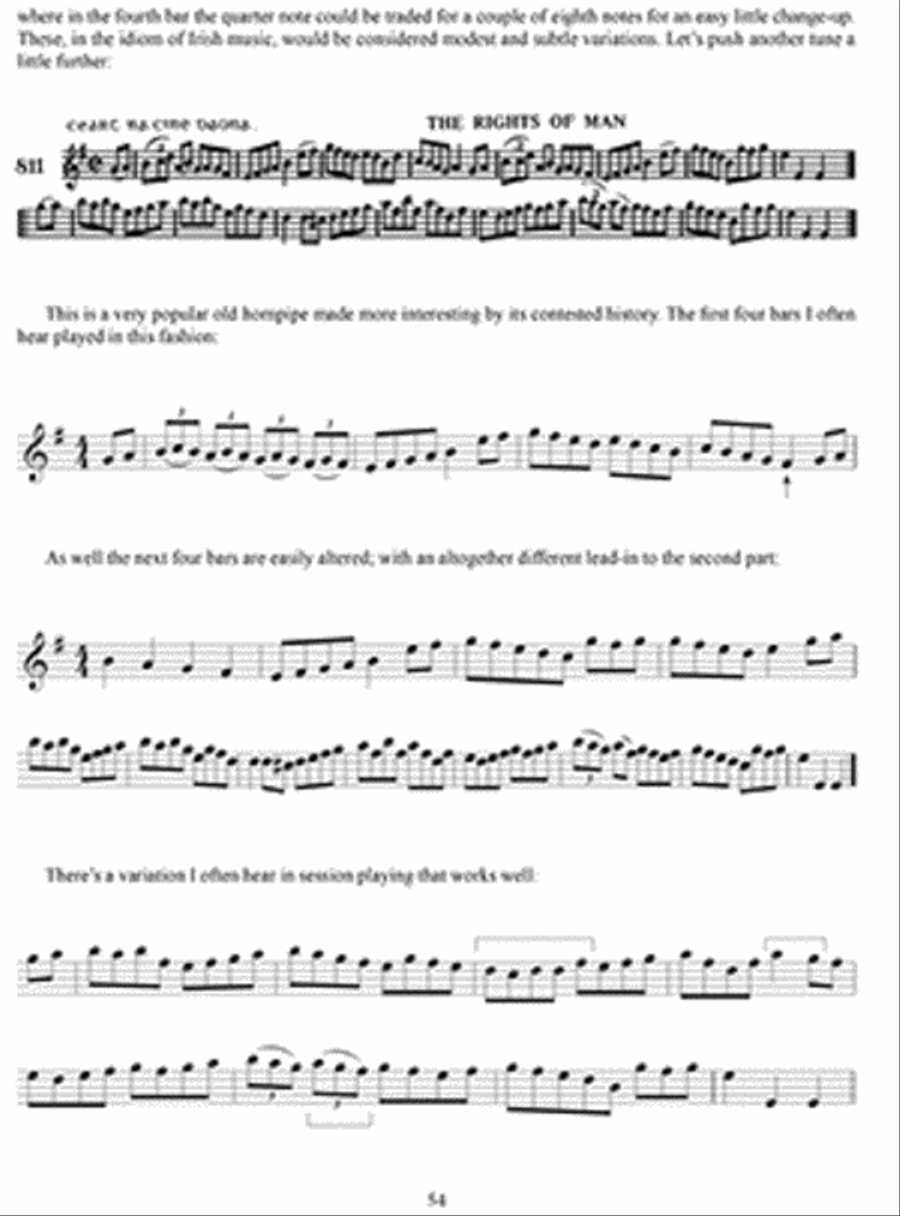
Unique among books on the whistle and Celtic music, this book takes the role of a personal tutor. It explains in detail the peculiarities of the instrument, the ancient modal scales the Irish tunes are based on, and offers a results-oriented program for quickly developing ability. As well it offers a practical method for developing breathing skills, something few books discuss. But what makes this book truly unique is the discussion of mnemonic techniques and analytical listening skills, which would make it an excellent resource for both parents and teachers. The author explains a simple, straightforward method of internalizing the old dance tunes of the session repertoire based on understanding the musics structure and the use of mnemonic cues. The scope of Mr. Essons book makes it relevant to a much wider audience than the title would suggest.
How to Learn by Ear and Play from Memory with Suggested Drills for Rapid Advancement. Composed by Stuart Esson. This edition: Saddle Stitch. Woodwinds, Tin Whistle, World, Technique, Theory and Reference, Celtic, Saddle-stitched. World. Book. 64 pages. Mel Bay Publications, Inc #30492. Published by Mel Bay Publications, Inc (MB.30492).
ISBN 9780786685998. 8.75 x 11.75 inches.
Unique among books on the whistle and Celtic music, this book takes the role of a personal tutor. It explains in detail the peculiarities of the instrument, the ancient modal scales the Irish tunes are based on, and offers a results-oriented program for quickly developing ability. As well it offers a practical method for developing breathing skills, something few books discuss. But what makes this book truly unique is the discussion of mnemonic techniques and analytical listening skills, which would make it an excellent resource for both parents and teachers. The author explains a simple, straightforward method of internalizing the old dance tunes of the session repertoire based on understanding the musics structure and the use of mnemonic cues. The scope of Mr. Essons book makes it relevant to a much wider audience than the title would suggest.
How To Use This Book
Choosing a Whistle
An Important Clue
The Fipple
The Body
Robert Clarke
Initiating Tones
Holding the Whistle
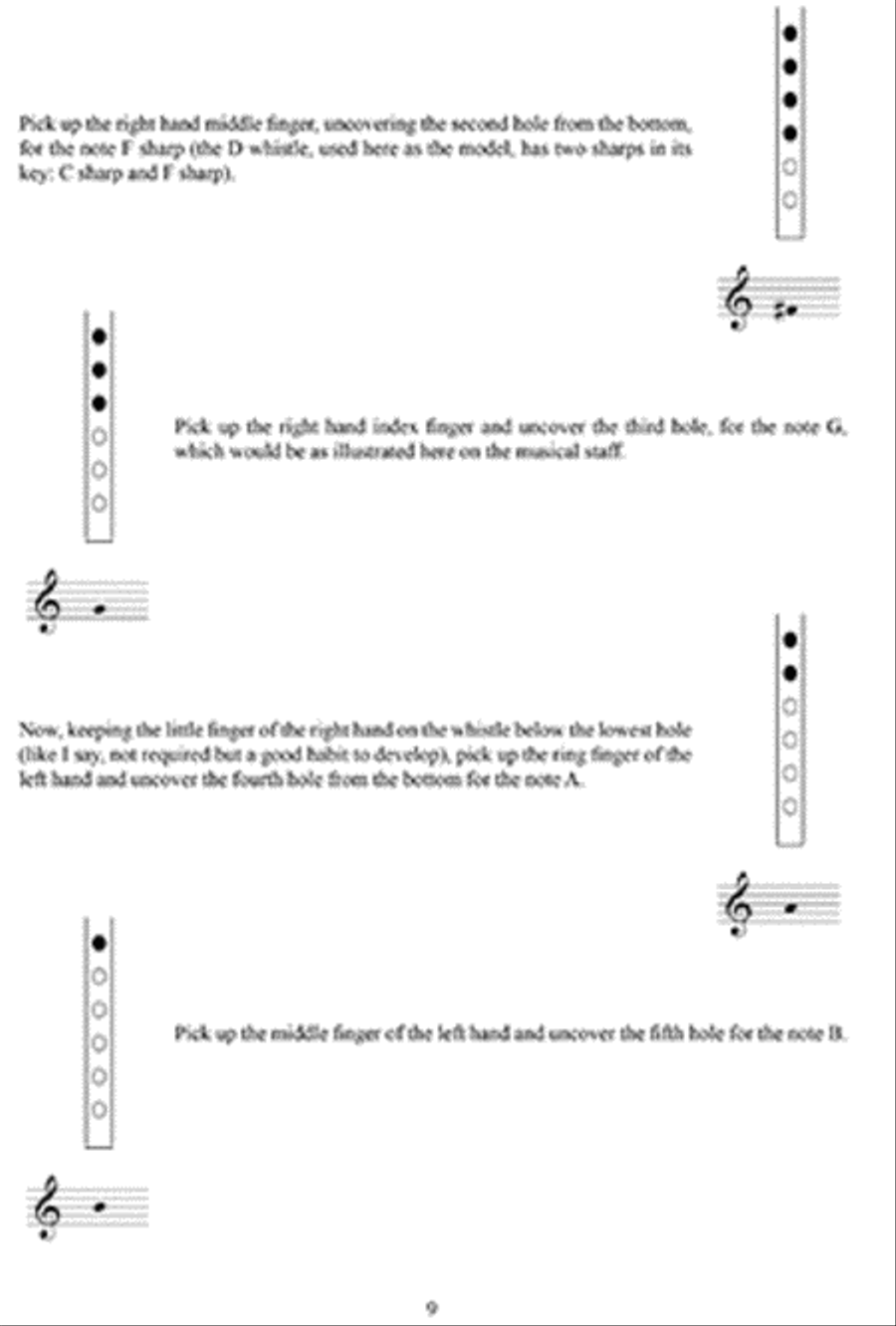
All About the Fingerings
Fingering Chart–Low Octave
Fingering Chart–Upper Octave
Octave Drill
Understanding C Natural
The G Scale
Practicing Scales
About the Modes
The Modes of D
D Modes Chart
The Modes of G
G Modes Chart
Shrill Notes and Sensitive Ears
Practice
The Learning Curve
A Most Beneficial Drill
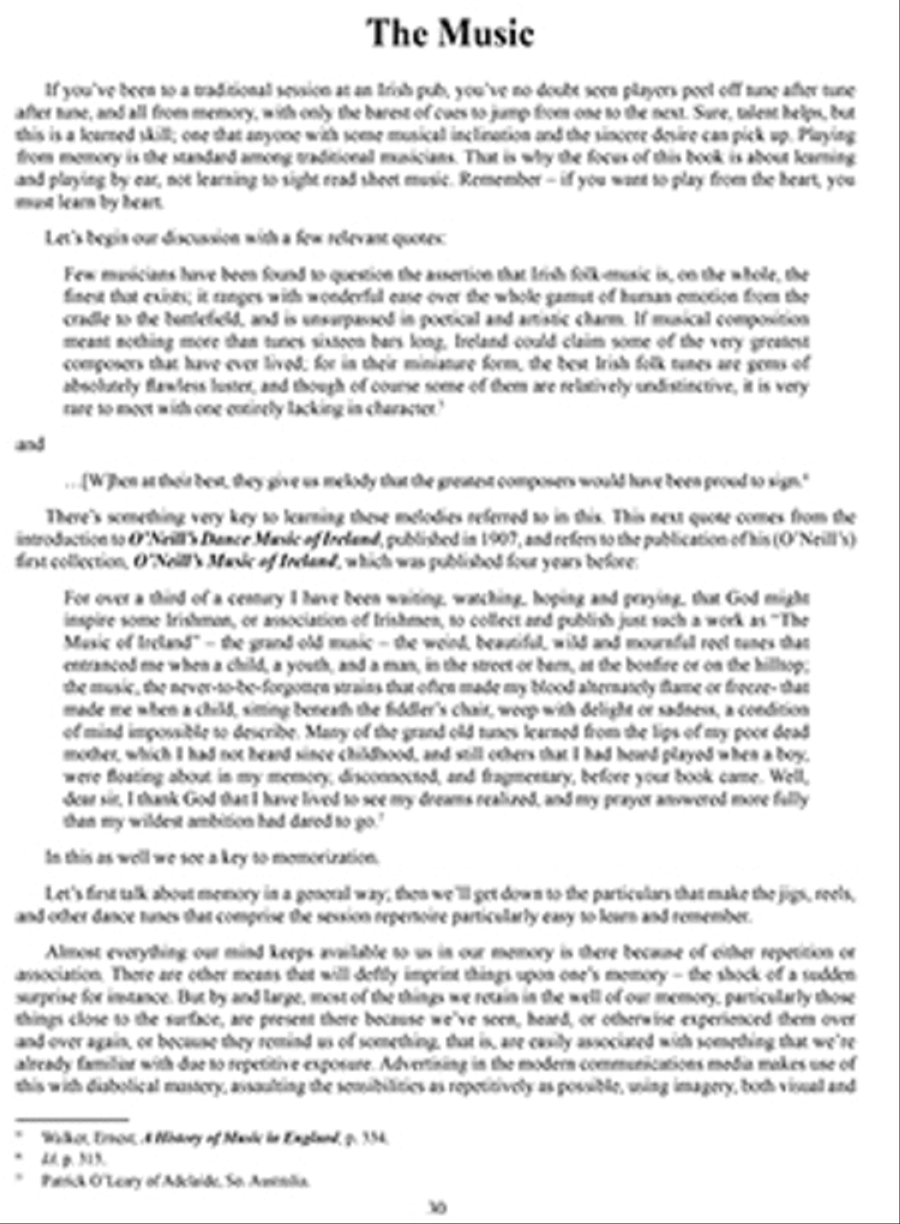
The Music
Impressions on the Memory
Andy of Mayberry
What’s in a Name?
Immersion
Let’s Learn a Tune
Analytical Listening
Parts
Primes
The First Note
About Written Music
Developing Breathing Skills
About Learning Tunes from Notation
Putting it in Your Fingers
Ornamentation
The Slow Aire
The Sound Model
Rhythmic Variation
Melodic Variation
Strange Keys and Half-holing
Tunable Whistles
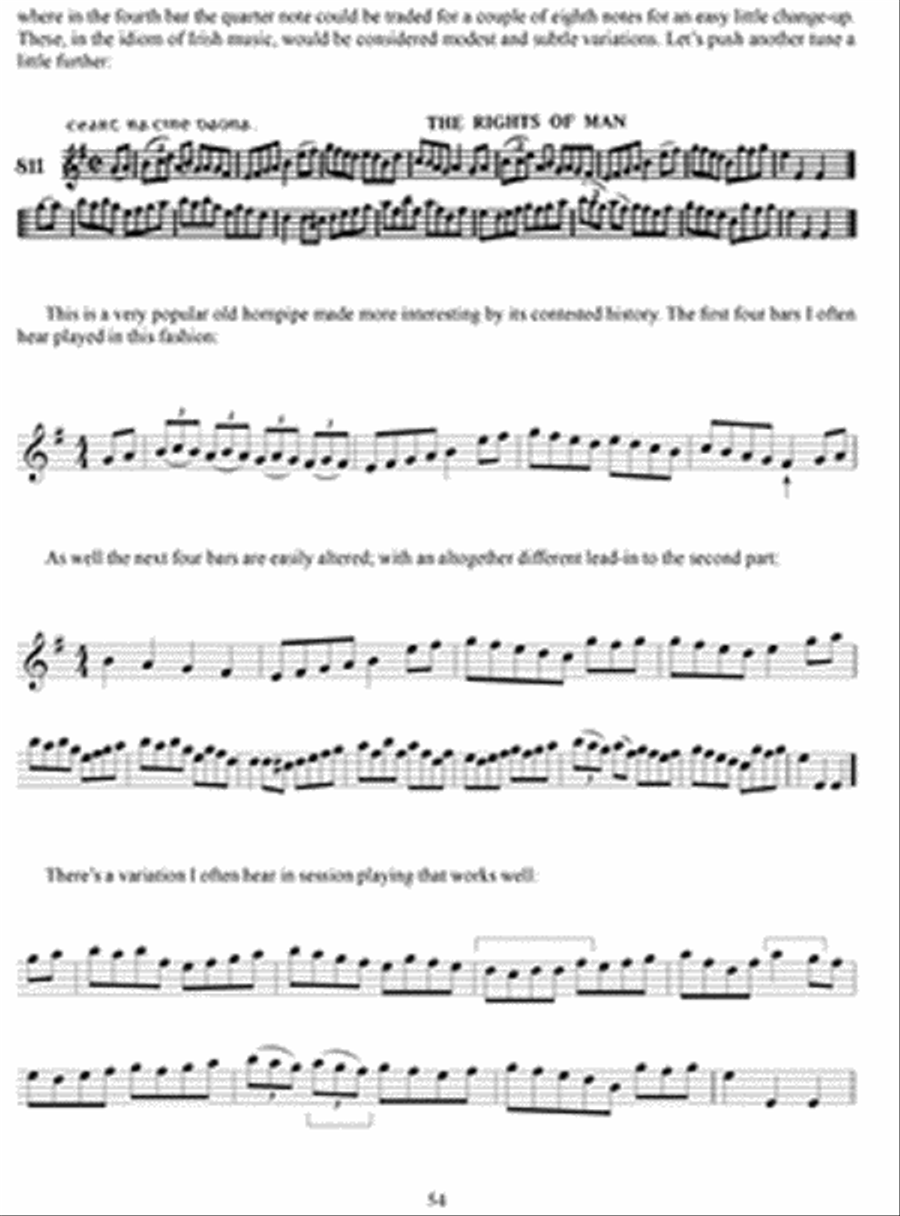
Hornpipes
Pointers on Notation
References and Recommended Reading
Appendix
Furthering Your Musicianship and Sessions
Acknowledgements
Preview: Understanding the Tin Whistle
Tell A Friend
Tell a friend (or remind yourself) about this product. We'll instantly send an email containing product info and a link to it. You may also enter a personal message.
We do not use or store email addresses from this form for any other purpose than sending your share email.
After purchase, you can download your MP3 from your Sheet Music Plus Digital Library - no software installation is necessary! You can also listen to your MP3 at any time in your Digital Library.
Learn about Smart Music
After purchase, you can download your Smart Music from your Sheet Music Plus Digital Library - no software installation is necessary! You can also download at any time in your Digital Library.
Learn about Digital Video
After purchase you can download your video from your Digital Library. Your video is in XX format and is playable on most pre-installed video players.