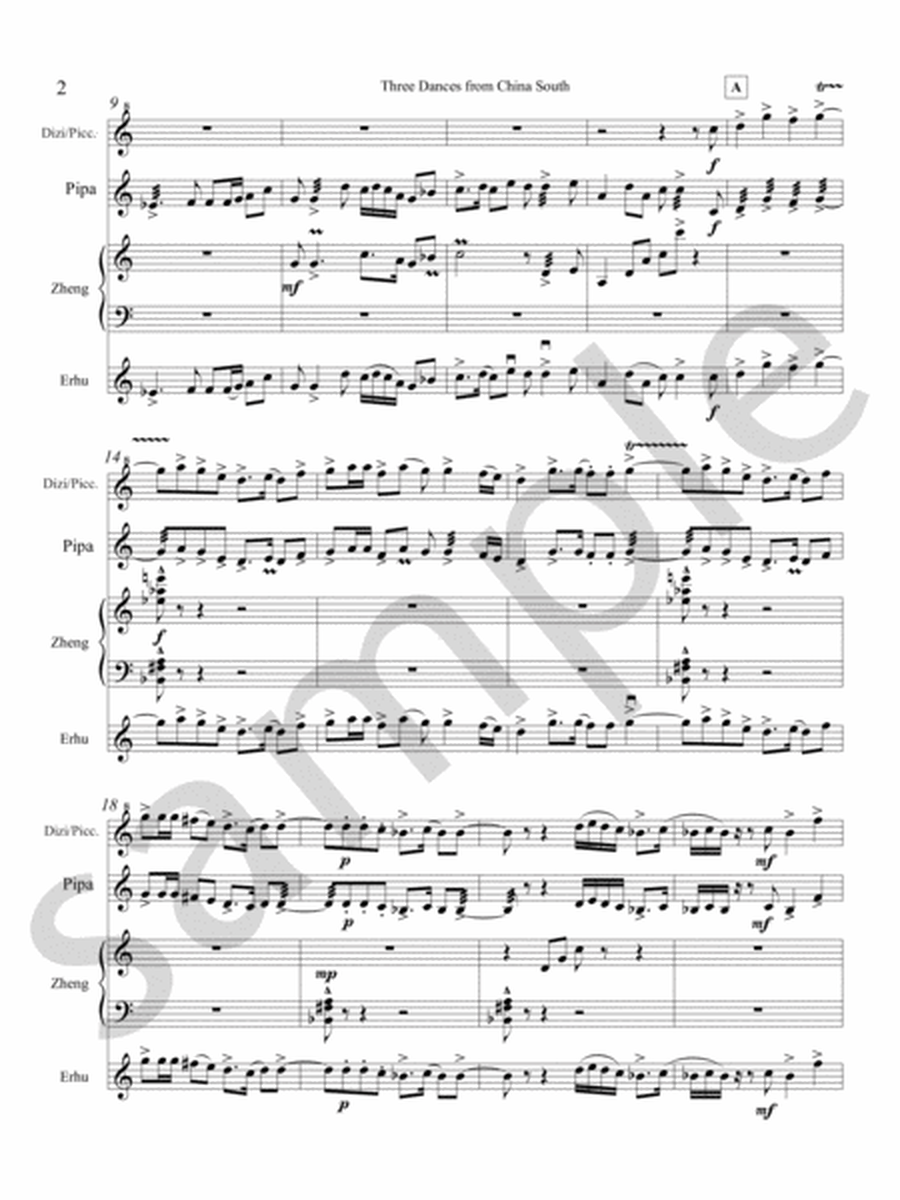
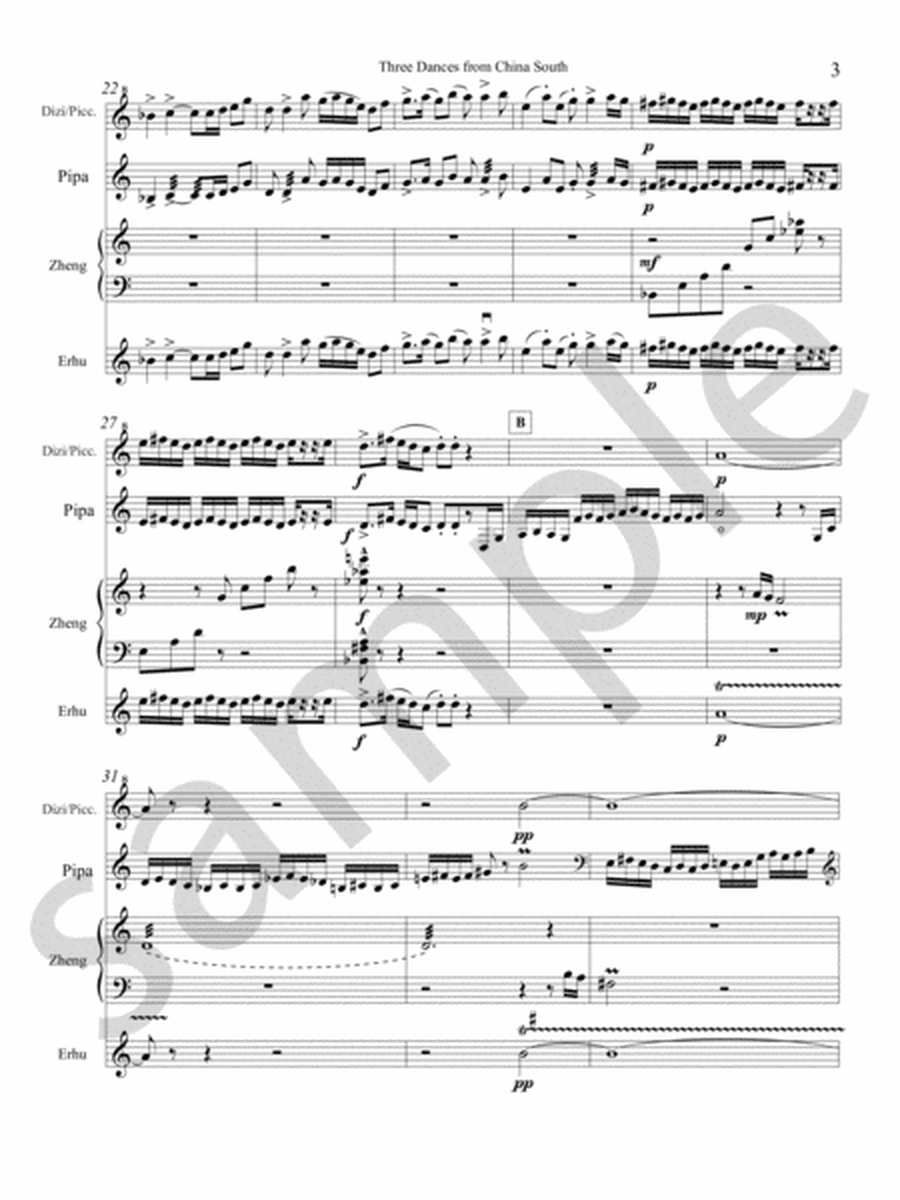
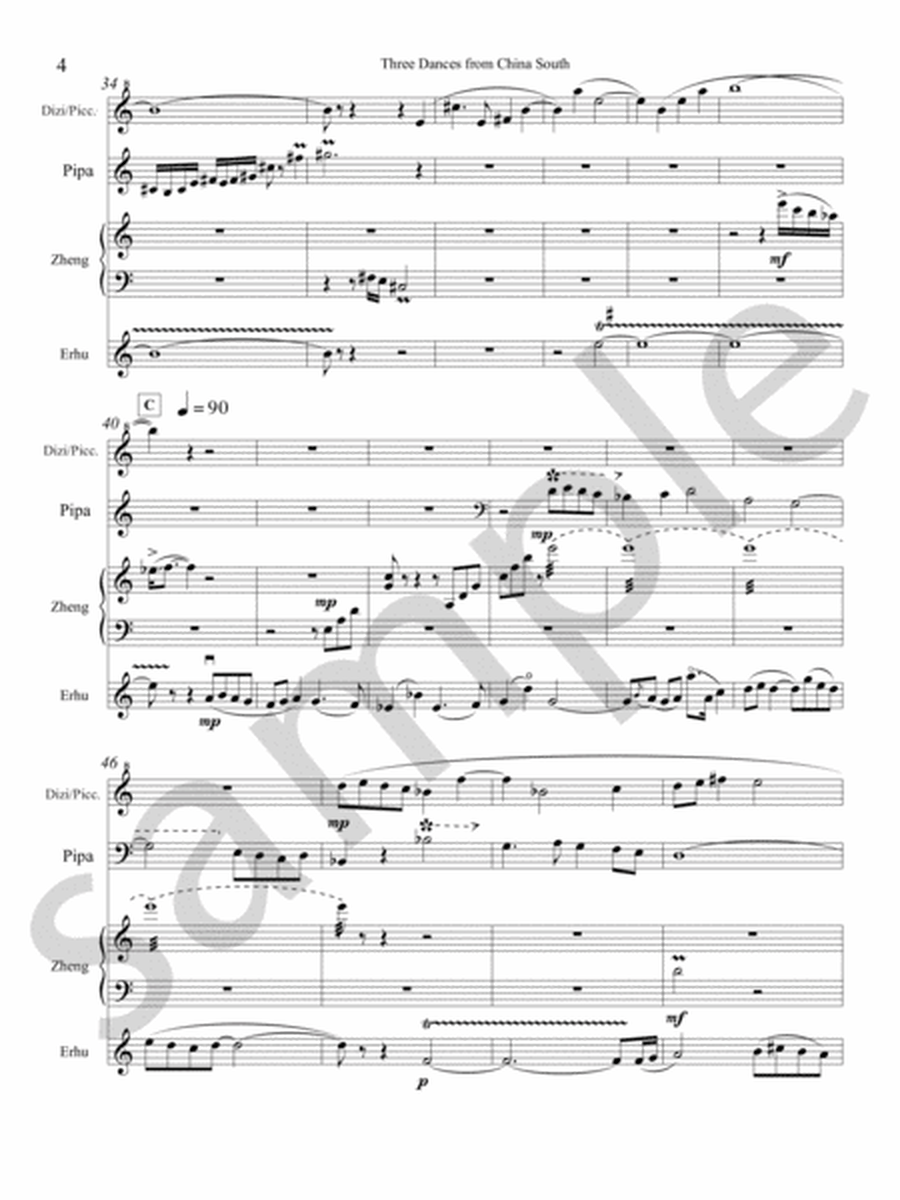
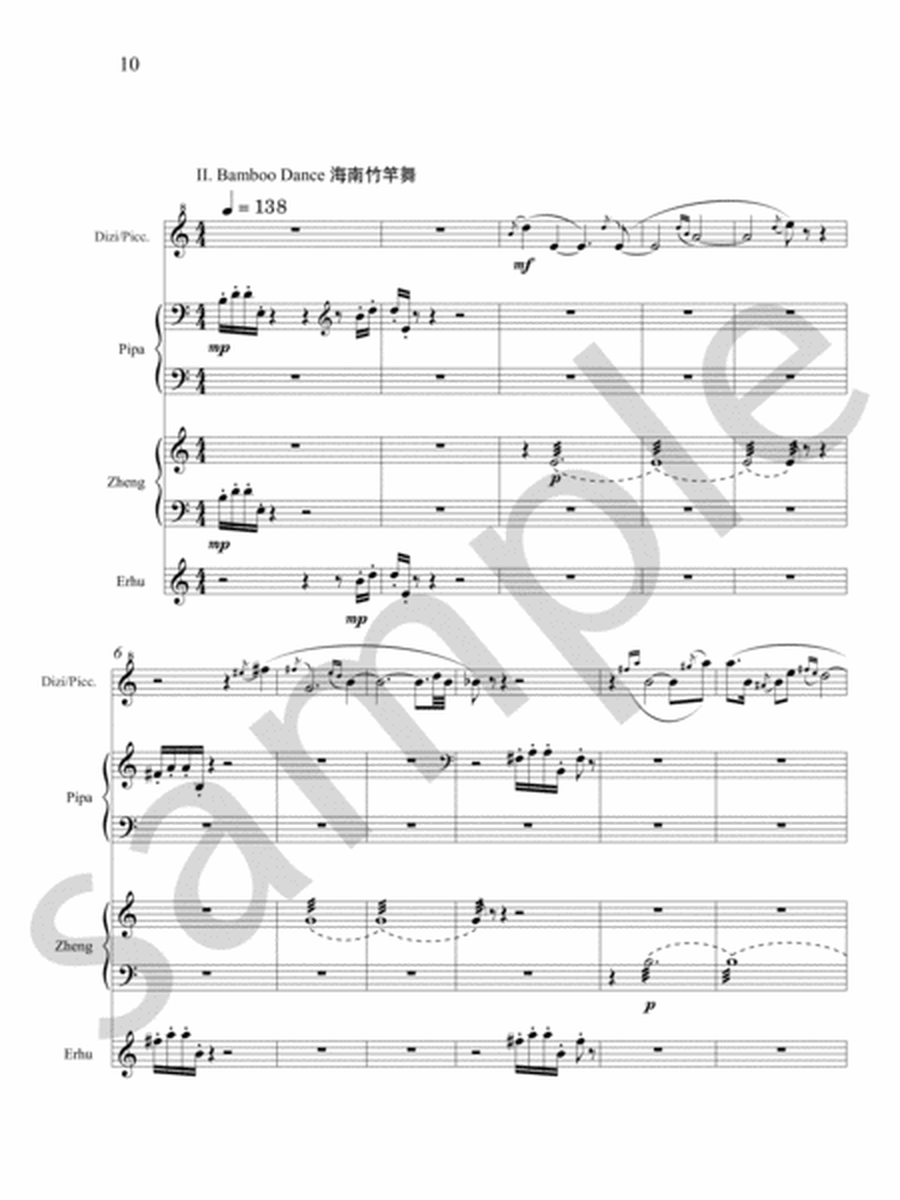
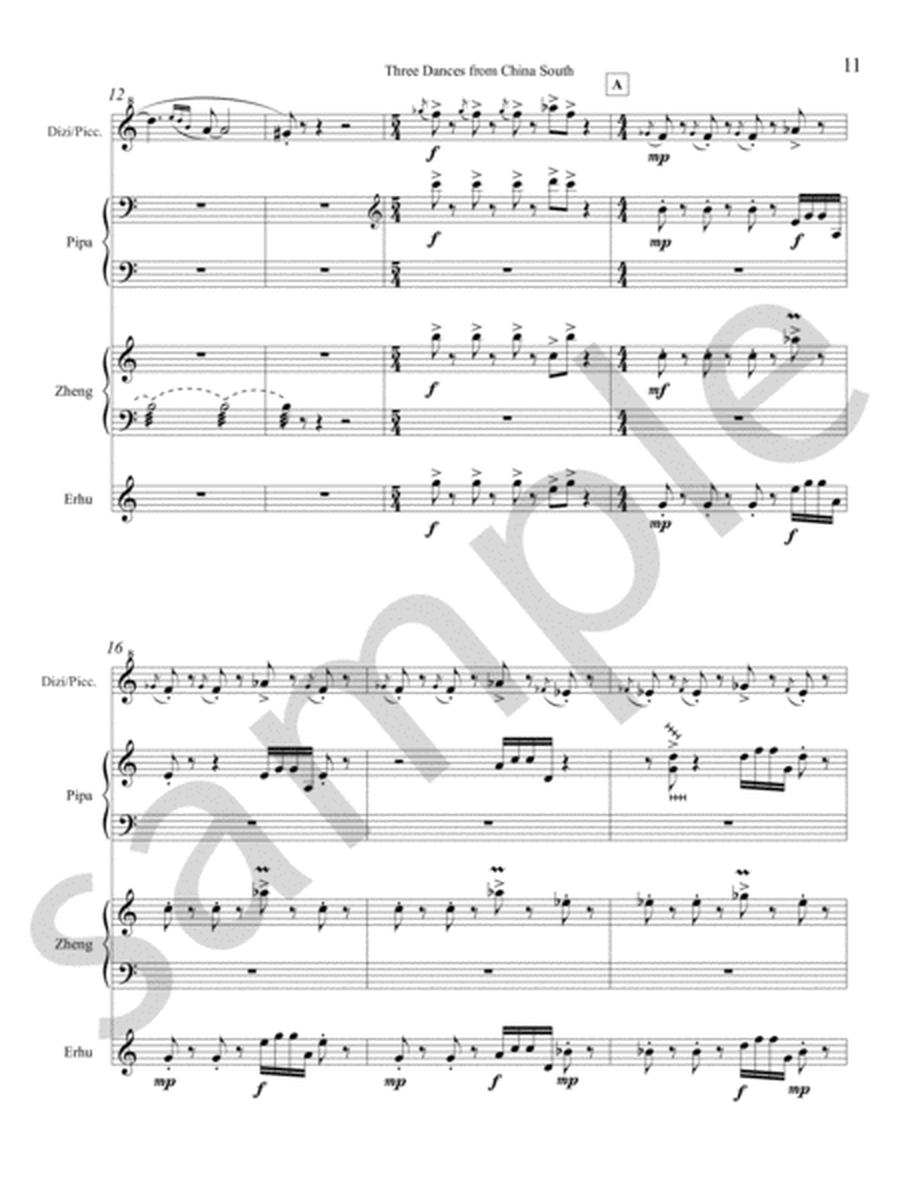
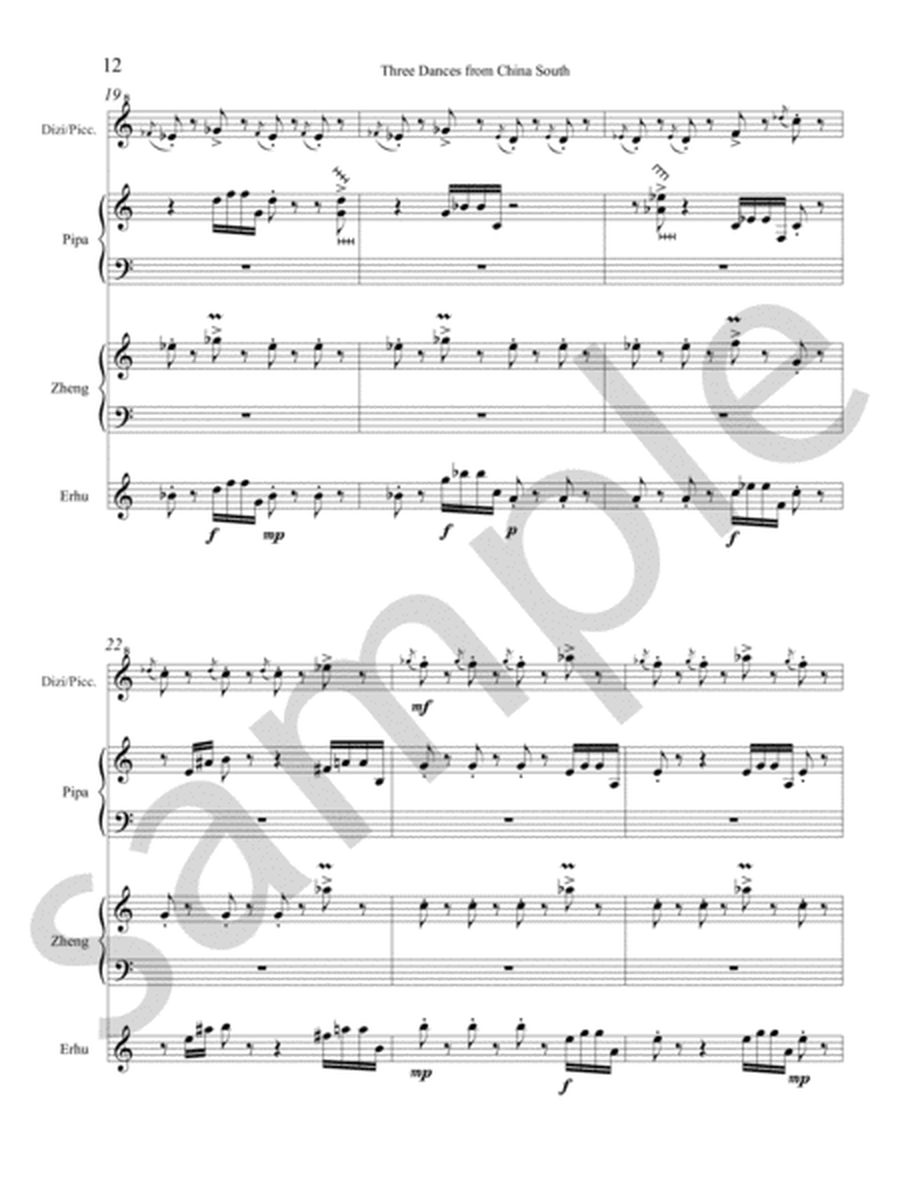
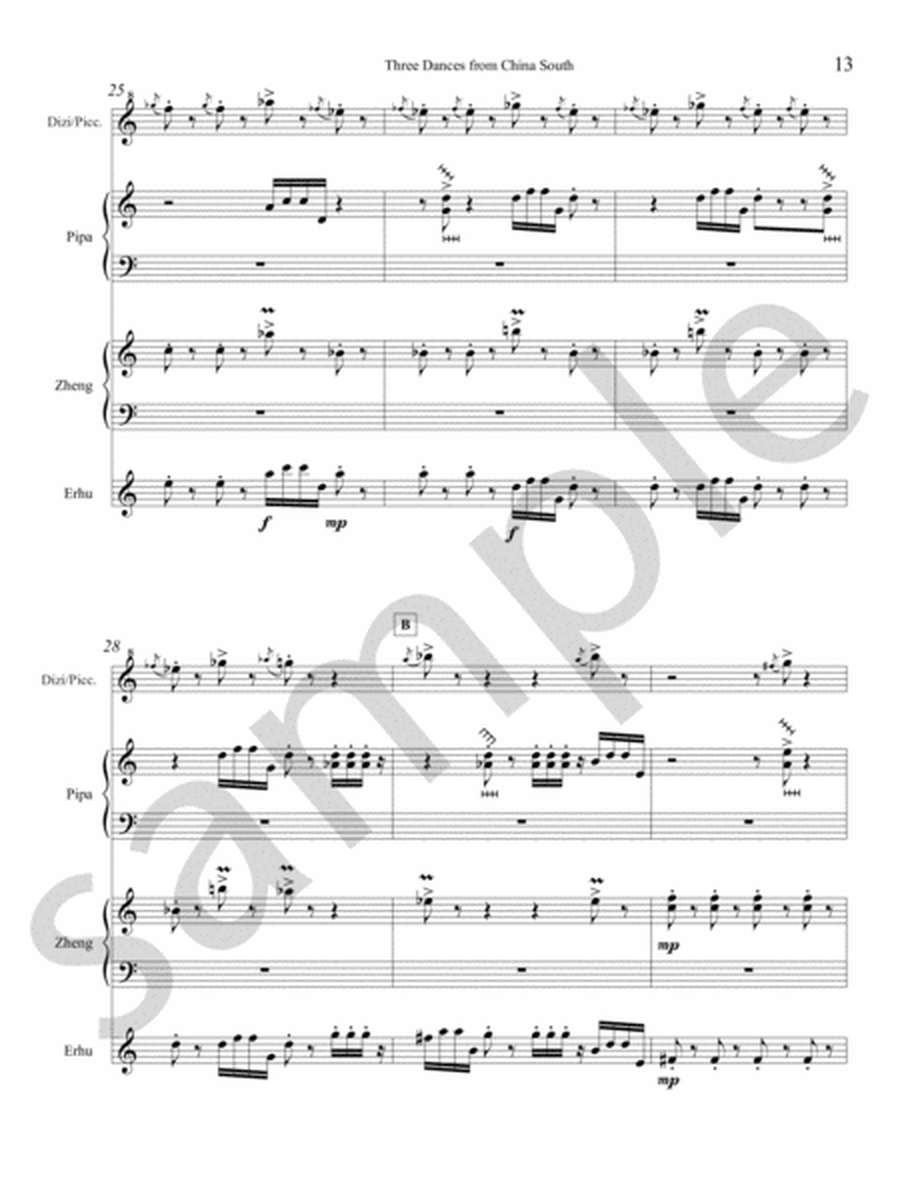
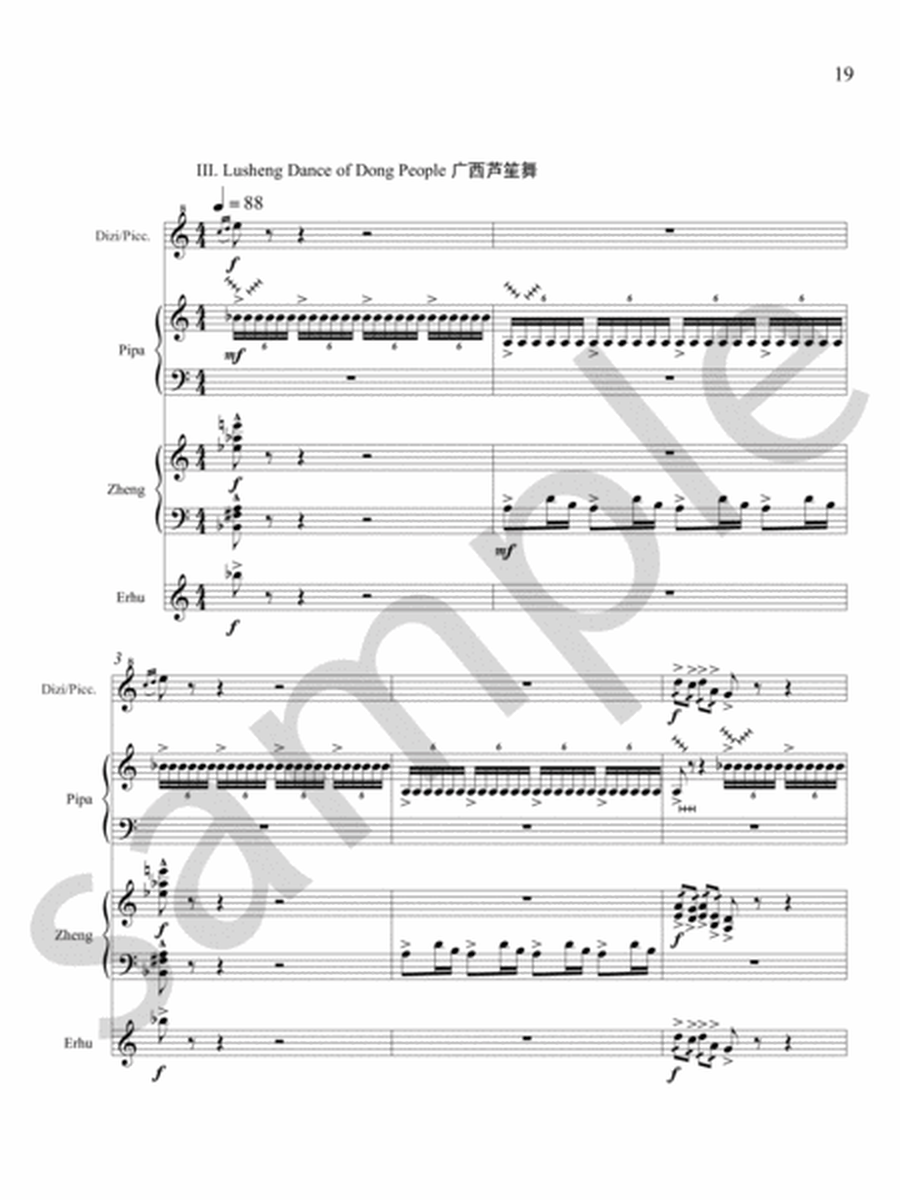
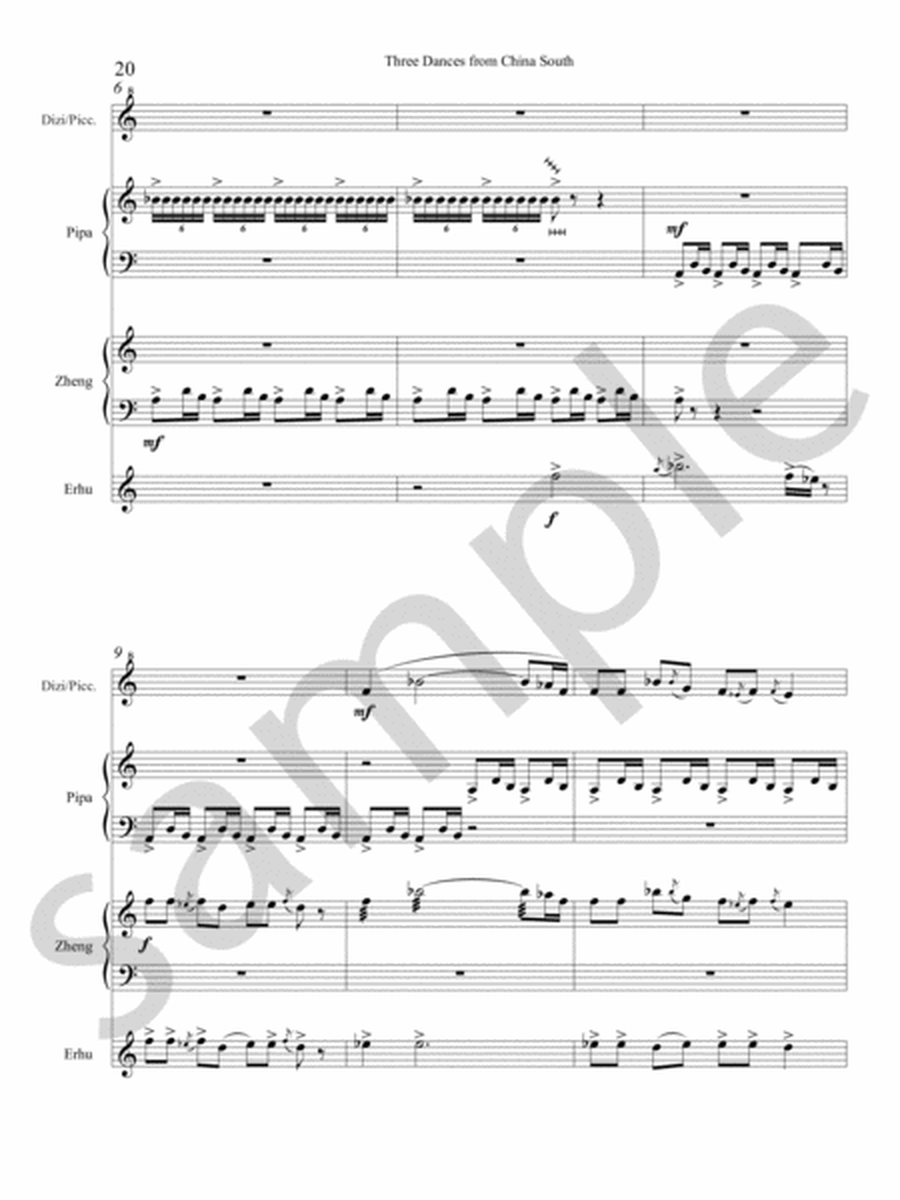
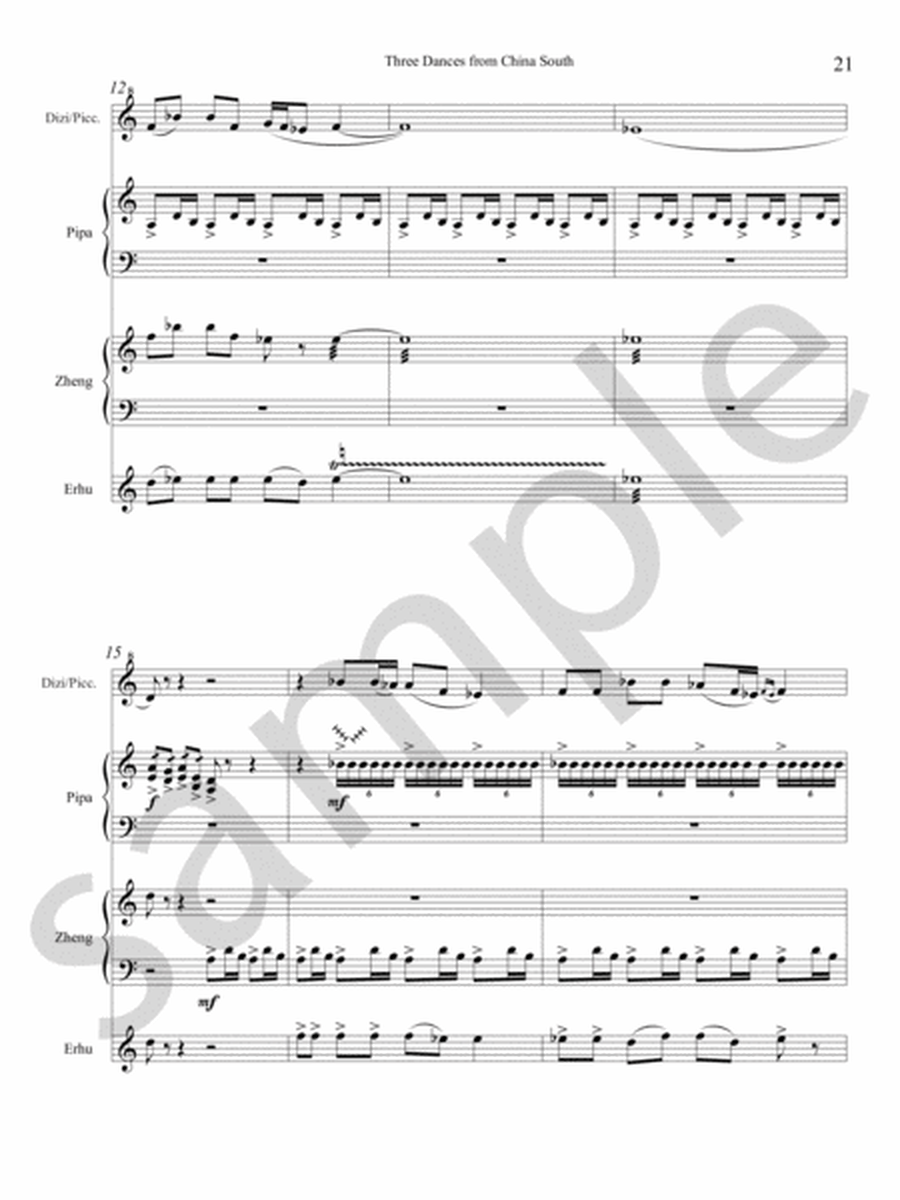
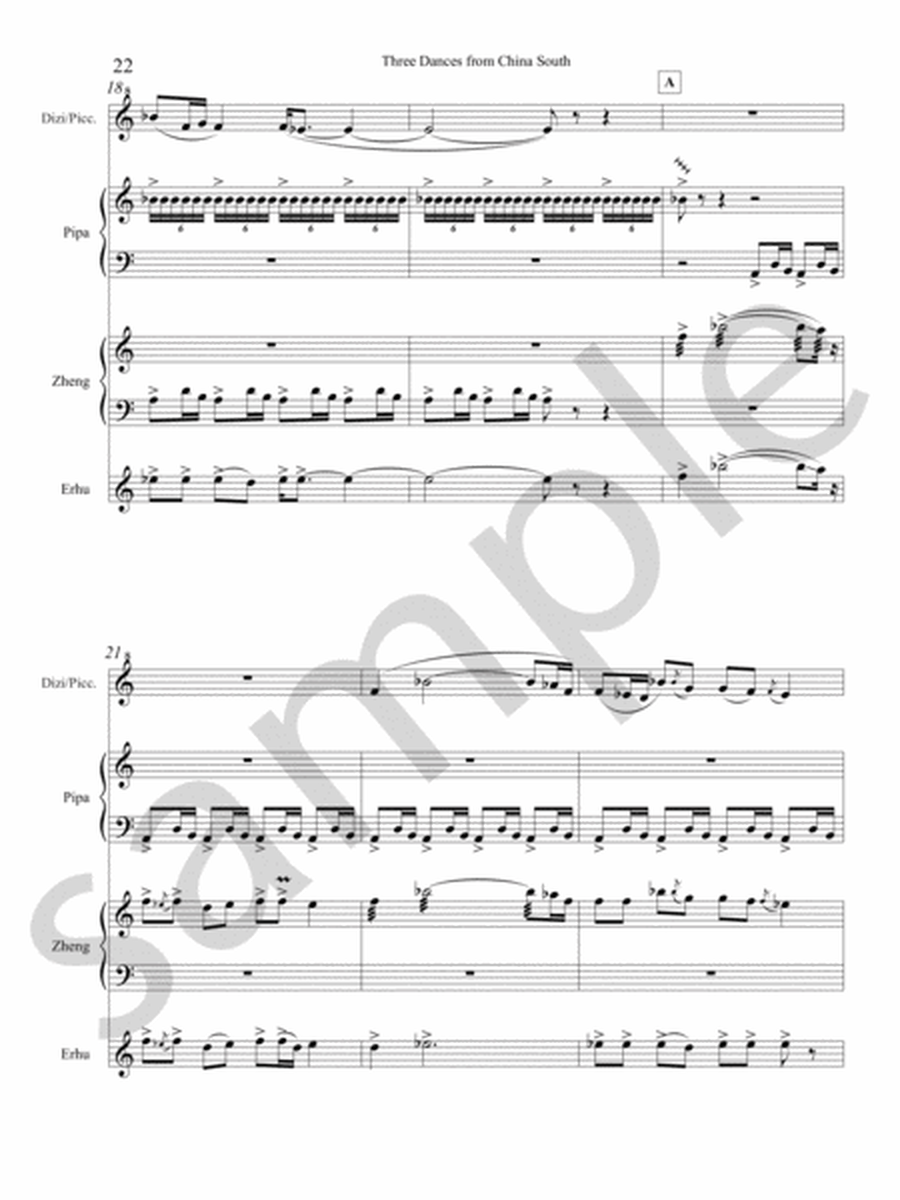
For Dizi, Erhu, Pipa, And Zheng. Composed by Chen Yi. This edition: saddle-wire stitch. Sws. Traditional. Score and parts. With Standard notation. Composed 2014. 76 pages. Duration 0:11:50. Theodore Presser Company #114-41684. Published by Theodore Presser Company (PR.114416840).
ISBN 9781491101285. UPC: 680160625239. 9 x 12 inches.
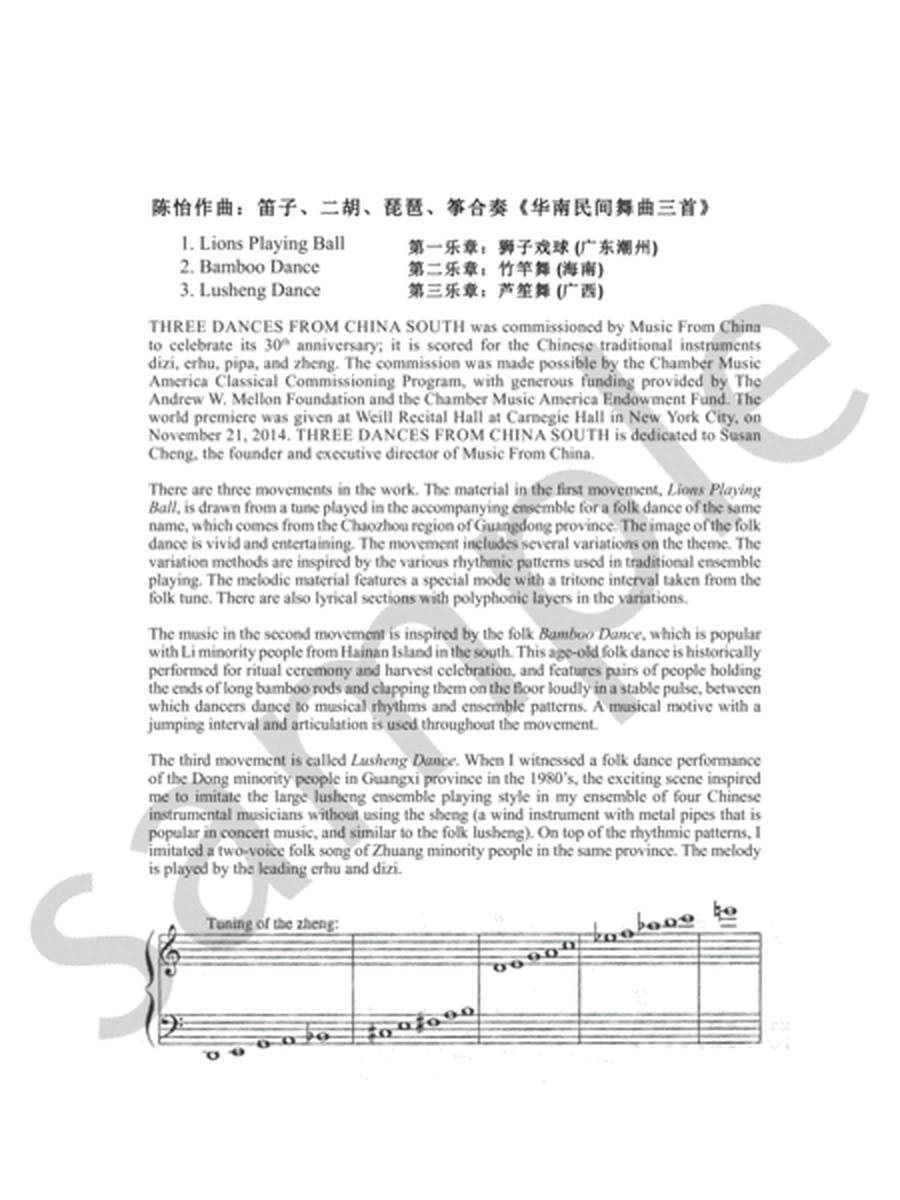
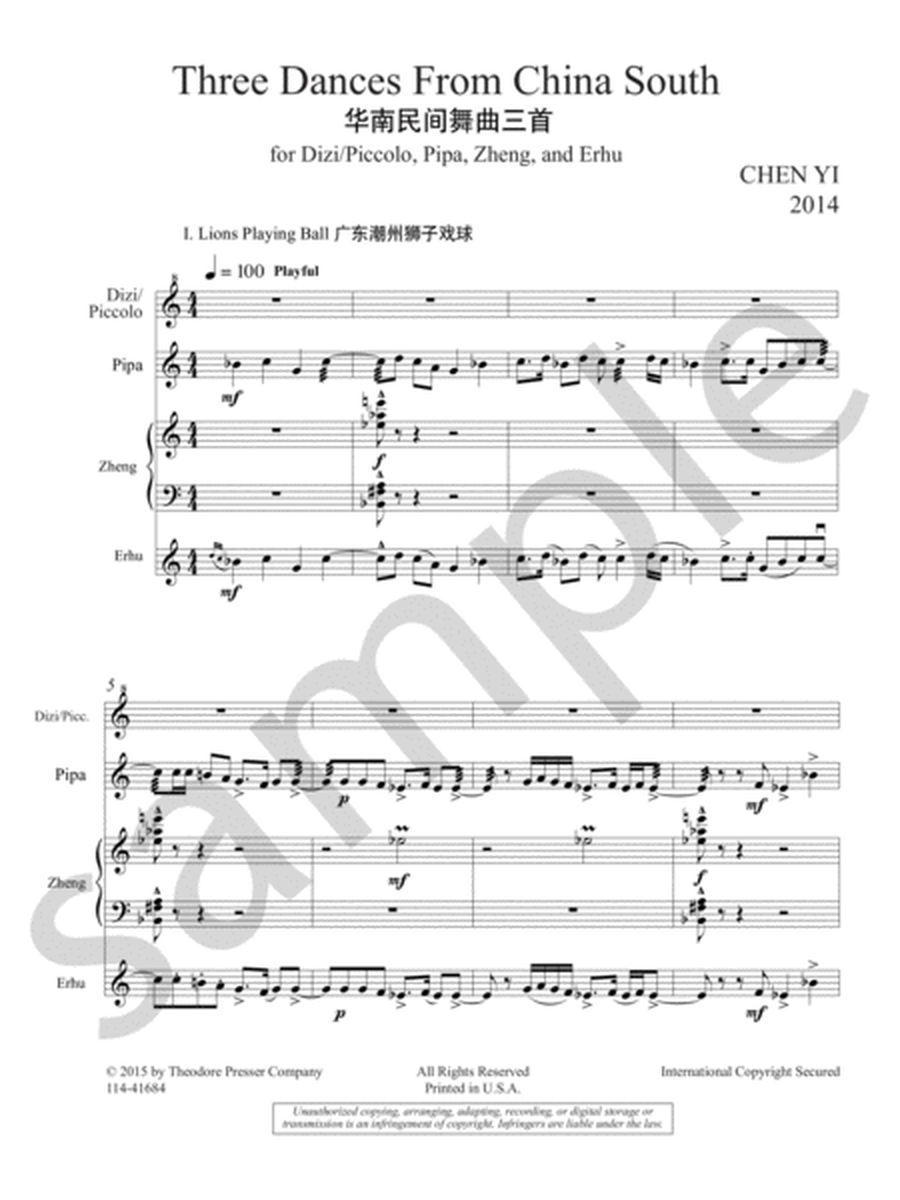
On the occasion of its 30th anniversary, the ensemble Music From China commissioned Chen Yi for a new work, which became Three Dances from China South, scored for Chinese instruments. Its three descriptive movements (Lions Playing Ball, Bamboo Dance, Lusheng Dance) are each inspired by folk dances from the southeastern provinces of China. Commissioned by the Barlow Endowment for Music Composition at Brigham Young University, the two-movement trio Tibetan Tunes was written for the New Pacific Trio (Igor Veligan, violin, Nina Flyer, cello, and Sonia Leong, piano). It was premiered at the Conservatory of Music at University of the Pacific on Jan. 27, 2007 in Stockton, California.The first movement is inspired by the Tibetan folk tune “Du Mu” as played on a recorder (Xiongling). This music presents the rich gestures of Du Mu (the name of a god in Tibetan Buddhism) in a serene mood.“Dui Xie” is a kind of Tibetan folk ensemble music using the same tune in the introduction and coda, played with the plucked instrument Zhamunie, the bamboo flute, and the fiddle Erhu, often performed with singing and tap dancing. The pitch materials of this movement are drawn from folk ensemble music and the lyrical Tibetan folk song “Amaliehuo.”.
For Dizi, Erhu, Pipa, And Zheng. Composed by Chen Yi. This edition: saddle-wire stitch. Sws. Traditional. Score and parts. With Standard notation. Composed 2014. 76 pages. Duration 0:11:50. Theodore Presser Company #114-41684. Published by Theodore Presser Company (PR.114416840).
ISBN 9781491101285. UPC: 680160625239. 9 x 12 inches.
On the occasion of its 30th anniversary, the ensemble Music From China commissioned Chen Yi for a new work, which became Three Dances from China South, scored for Chinese instruments. Its three descriptive movements (Lions Playing Ball, Bamboo Dance, Lusheng Dance) are each inspired by folk dances from the southeastern provinces of China. Commissioned by the Barlow Endowment for Music Composition at Brigham Young University, the two-movement trio Tibetan Tunes was written for the New Pacific Trio (Igor Veligan, violin, Nina Flyer, cello, and Sonia Leong, piano). It was premiered at the Conservatory of Music at University of the Pacific on Jan. 27, 2007 in Stockton, California.The first movement is inspired by the Tibetan folk tune “Du Mu” as played on a recorder (Xiongling). This music presents the rich gestures of Du Mu (the name of a god in Tibetan Buddhism) in a serene mood.“Dui Xie” is a kind of Tibetan folk ensemble music using the same tune in the introduction and coda, played with the plucked instrument Zhamunie, the bamboo flute, and the fiddle Erhu, often performed with singing and tap dancing. The pitch materials of this movement are drawn from folk ensemble music and the lyrical Tibetan folk song “Amaliehuo.”.
Preview: Three Dances From China South
Tell A Friend
Tell a friend (or remind yourself) about this product. We'll instantly send an email containing product info and a link to it. You may also enter a personal message.
We do not use or store email addresses from this form for any other purpose than sending your share email.
After purchase, you can download your MP3 from your Sheet Music Plus Digital Library - no software installation is necessary! You can also listen to your MP3 at any time in your Digital Library.
Learn about Smart Music
After purchase, you can download your Smart Music from your Sheet Music Plus Digital Library - no software installation is necessary! You can also download at any time in your Digital Library.
Learn about Digital Video
After purchase you can download your video from your Digital Library. Your video is in XX format and is playable on most pre-installed video players.