Order two or more copies of the same title and we'll automatically give you 5% off list price on that title.
To get 2+ Pricing , just add two or more copies of a title to your shopping cart. Your discount will be immediately applied to your order.
Sale titles, hymnals, and ShowKits (MTI's Broadway Junior Collection, Getting to Know... Collection (G2K) and MTI's Kids Collection) do not qualify for 2+ Pricing
If you have any questions or comments regarding 2+ Pricing , please visit our Help Center to find more information or chat with our support team
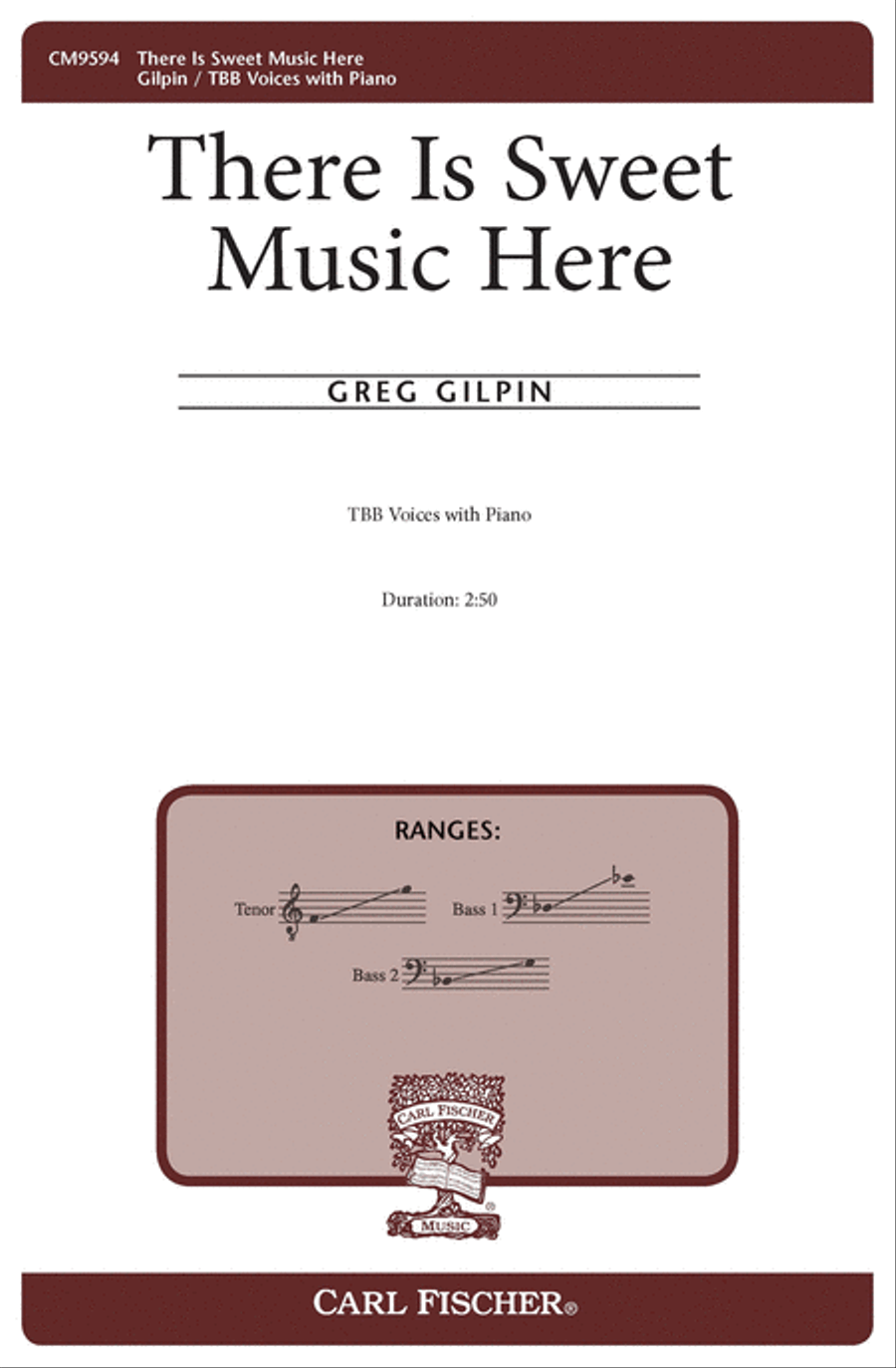
Composed by Greg Gilpin. Octavo. Performance Score. 8 pages. Duration 0:02:50. Carl Fischer Music #CM9594. Published by Carl Fischer Music (CF.CM9594).
ISBN 9781491154168. UPC: 680160912667. 6.875 x 10.5 inches. Key: Bb major. English. Lord Alfred Tennyson. Alfred, Lord Tennyson (1809-1892).
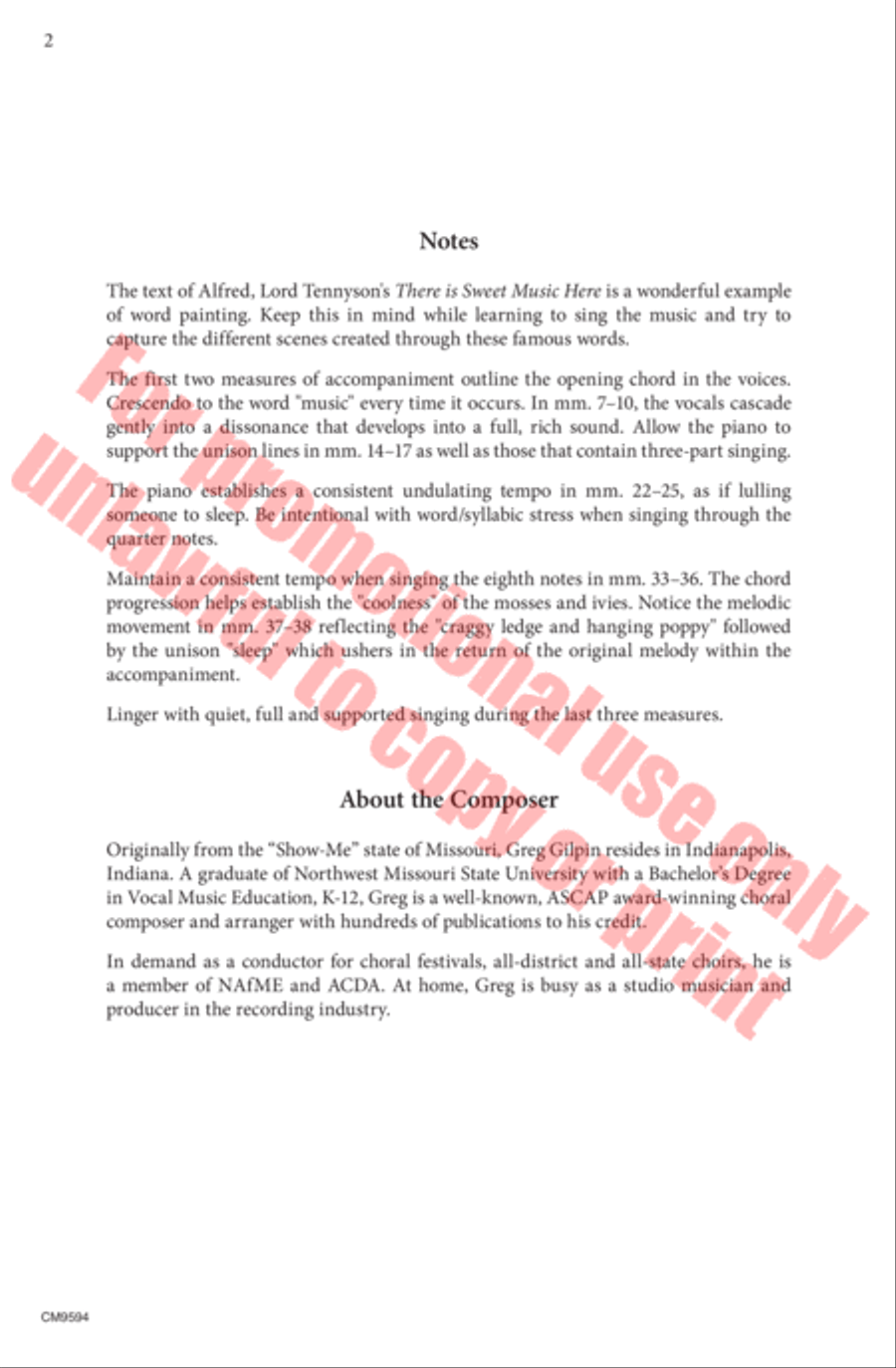
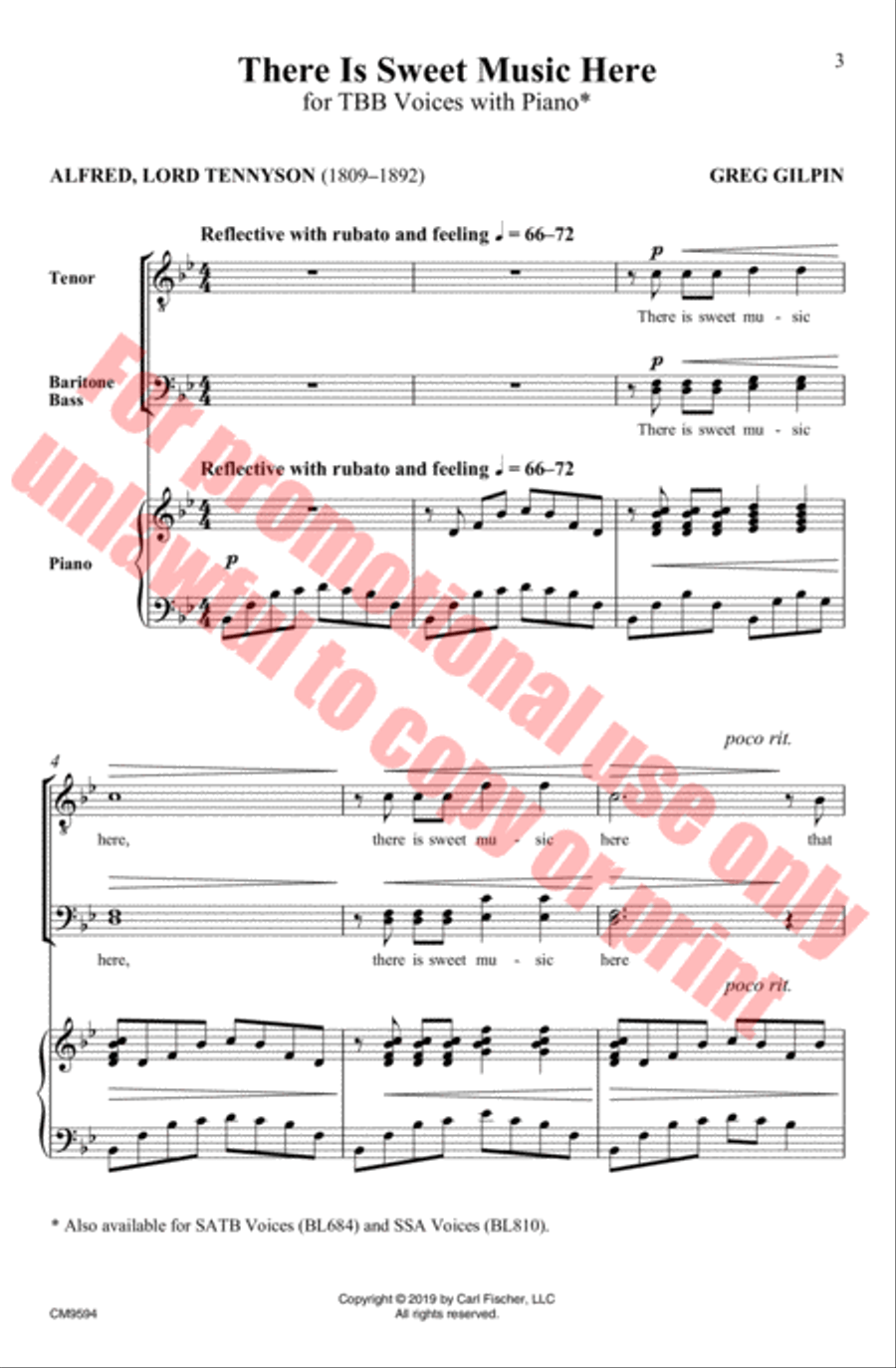
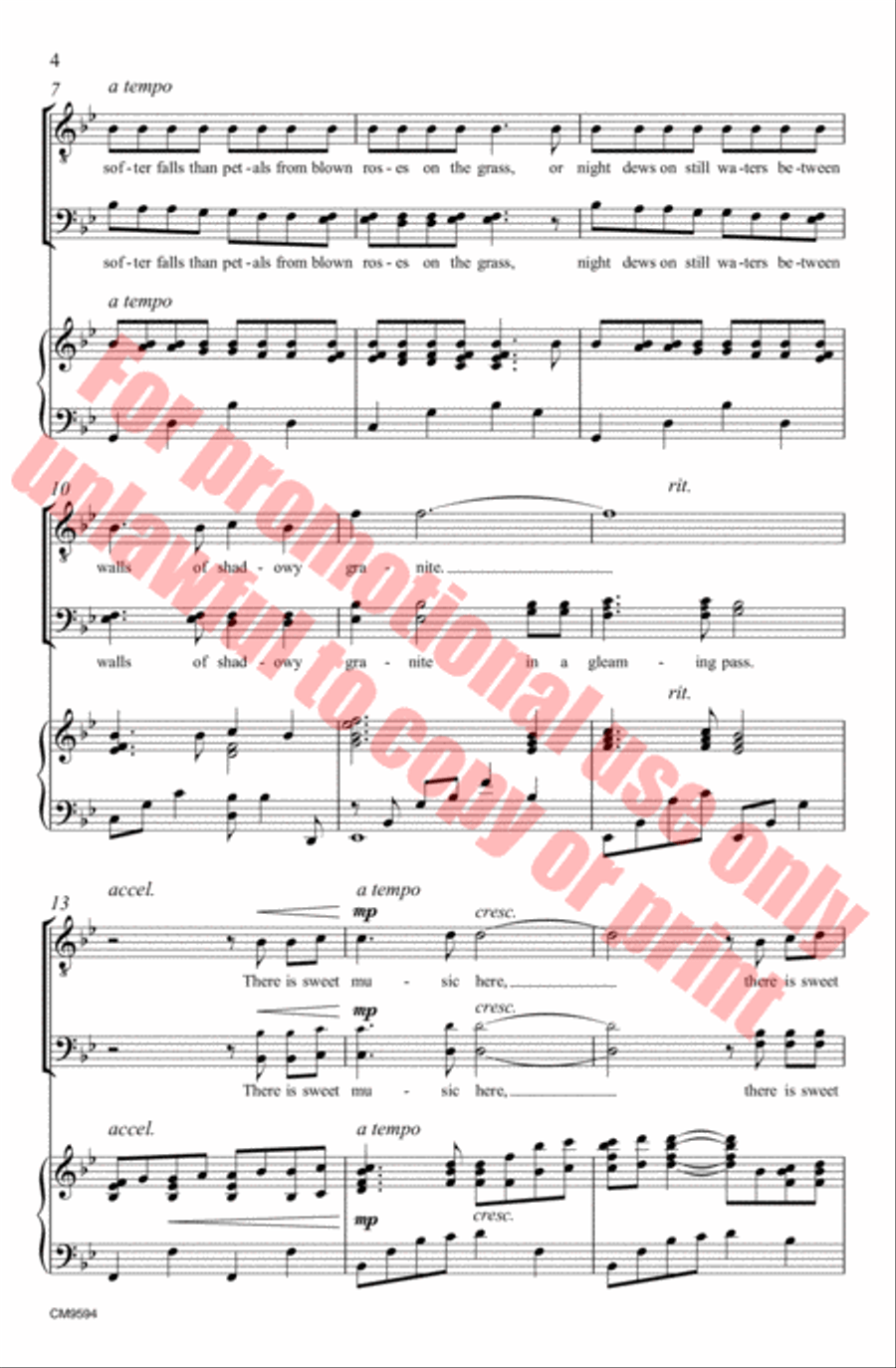
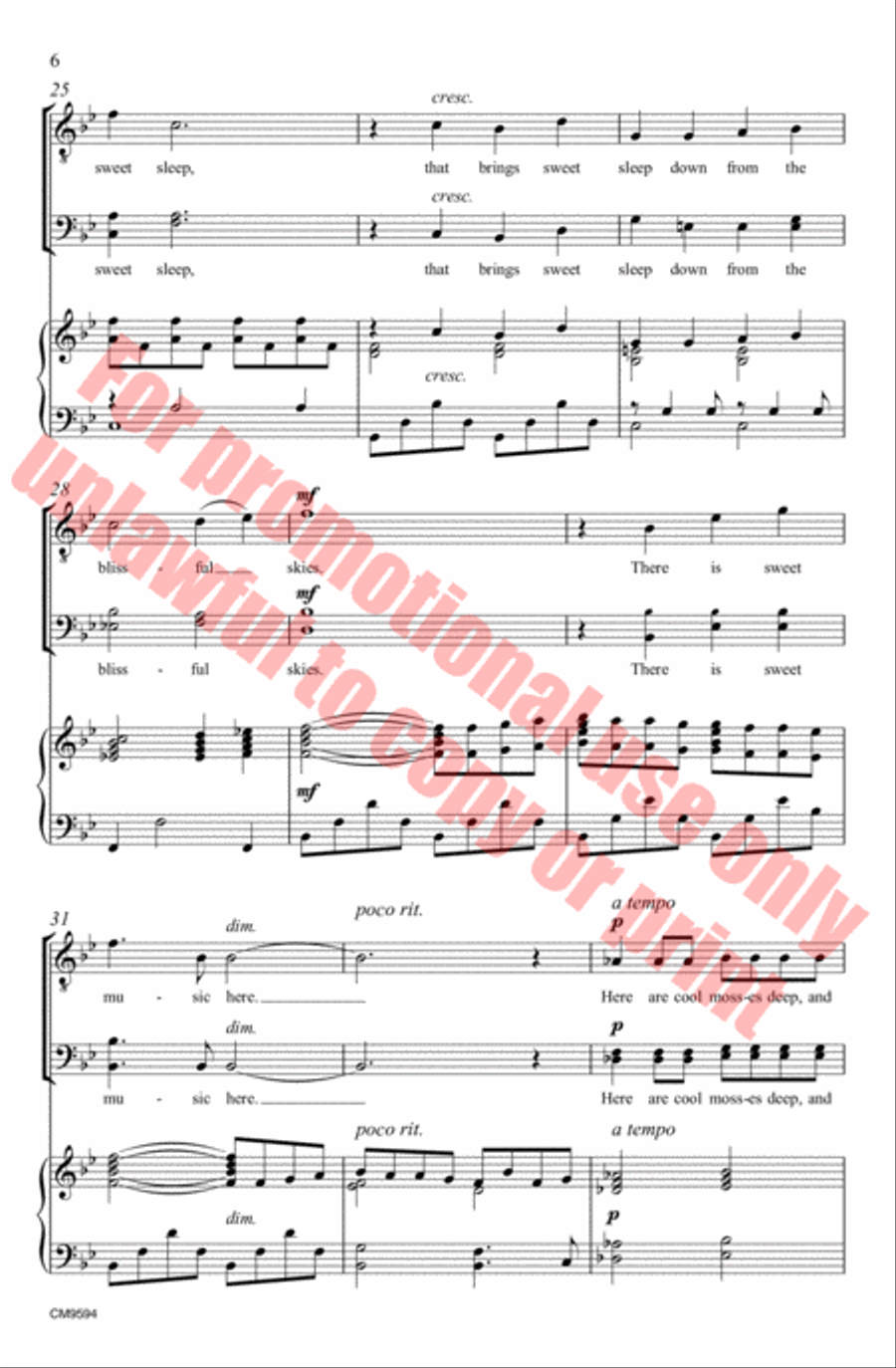
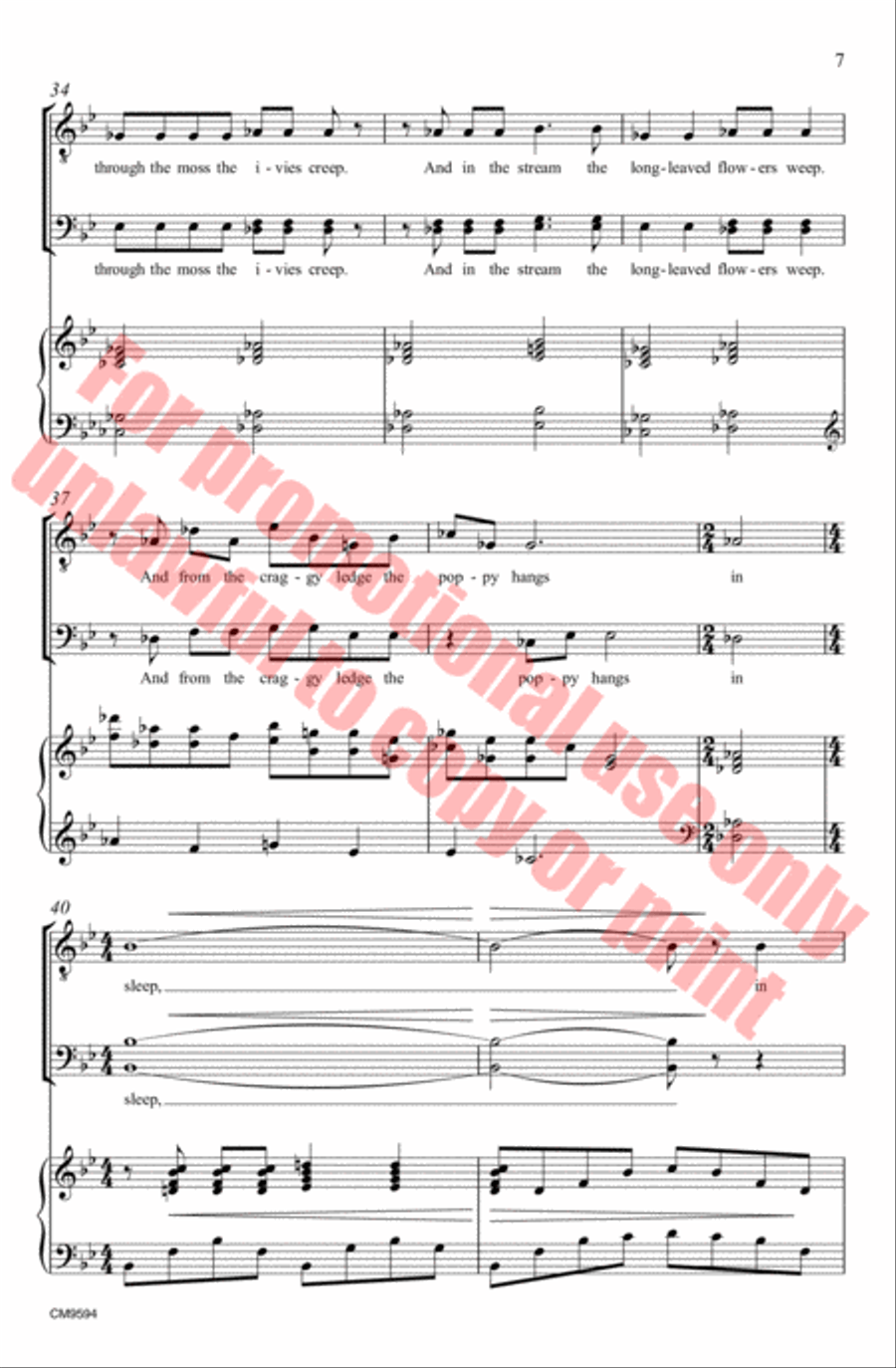
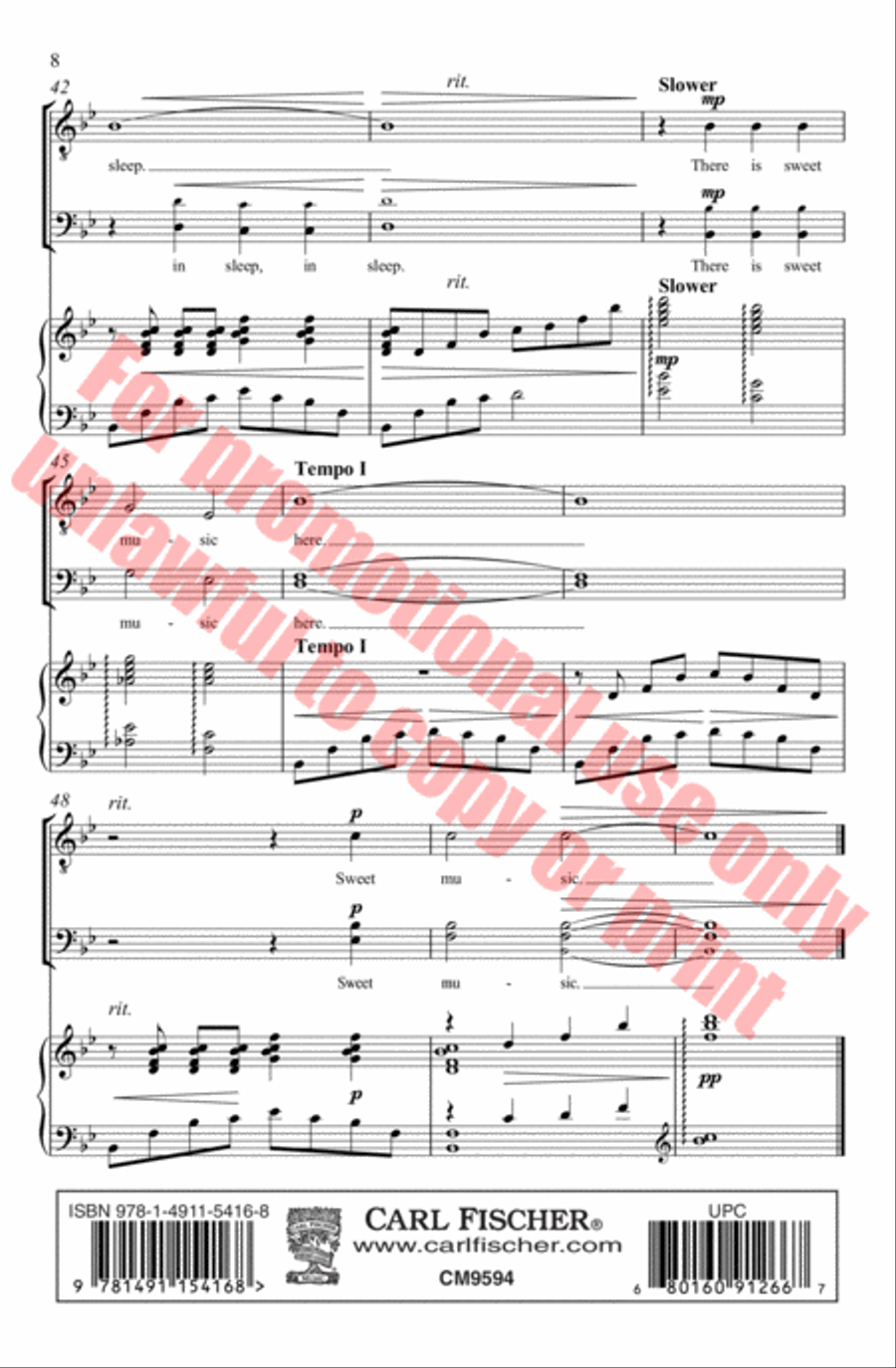
The text of Alfred, Lord Tennyson's There is Sweet Music Here is a wonderful example of word painting. Keep this in mind while learning to sing the music and try to capture the different scenes created through these famous words. The first two measures of accompaniment outline the opening chord in the voices. Crescendo to the word music every time it occurs. In mm. 710, the vocals cascade gently into a dissonance that develops into a full, rich sound. Allow the piano to support the unison lines in mm. 1417 as well as those that contain three-part singing. The piano establishes a consistent undulating tempo in mm. 2225, as if lulling someone to sleep. Be intentional with word/syllabic stress when singing through the quarter notes. Maintain a consistent tempo when singing the eighth notes in mm. 3336. The chord progression helps establish the coolness of the mosses and ivies. Notice the melodic movement in mm. 3738 reflecting the craggy ledge and hanging poppy followed by the unison sleep which ushers in the return of the original melody within the accompaniment. Linger with quiet, full and supported singing during the last three measures. The text of Alfred, Lord Tennyson'sA There is Sweet Music HereA is a wonderful example of word painting. Keep this in mind while learning to sing the music and try to capture the different scenes created through these famous words. The first two measures of accompaniment outline the opening chord in the voices. Crescendo to the word music every time it occurs. In mm. 7a10, the vocals cascade gently into a dissonance that develops into a full, rich sound. Allow the piano to support the unison lines in mm. 14a17 as well as those that contain three-part singing. The piano establishes a consistent undulating tempo in mm. 22a25, as if lulling someone to sleep. Be intentional with word/syllabic stress when singing through the quarter notes. Maintain a consistent tempo when singing the eighth notes in mm. 33a36. The chord progression helps establish the coolness of the mosses and ivies. Notice the melodic movement in mm. 37a38 reflecting the craggy ledge and hanging poppy followed by the unison sleep which ushers in the return of the original melody within the accompaniment. Linger with quiet, full and supported singing during the last three measures. The text of Alfred, Lord Tennyson'sA There is Sweet Music HereA is a wonderful example of word painting. Keep this in mind while learning to sing the music and try to capture the different scenes created through these famous words. The first two measures of accompaniment outline the opening chord in the voices. Crescendo to the word "music" every time it occurs. In mm. 7a10, the vocals cascade gently into a dissonance that develops into a full, rich sound. Allow the piano to support the unison lines in mm. 14a17 as well as those that contain three-part singing. The piano establishes a consistent undulating tempo in mm. 22a25, as if lulling someone to sleep. Be intentional with word/syllabic stress when singing through the quarter notes. Maintain a consistent tempo when singing the eighth notes in mm. 33a36. The chord progression helps establish the "coolness" of the mosses and ivies. Notice the melodic movement in mm. 37a38 reflecting the "craggy ledge and hanging poppy" followed by the unison "sleep" which ushers in the return of the original melody within the accompaniment. Linger with quiet, full and supported singing during the last three measures. The text of Alfred, Lord Tennyson's There is Sweet Music Here is a wonderful example of word painting. Keep this in mind while learning to sing the music and try to capture the different scenes created through these famous words. The first two measures of accompaniment outline the opening chord in the voices. Crescendo to the word "music" every time it occurs. In mm. 7-10, the vocals cascade gently into a dissonance that develops into a full, rich sound. Allow the piano to support the unison lines in mm. 14-17 as well as those that contain three-part singing. The piano establishes a consistent undulating tempo in mm. 22-25, as if lulling someone to sleep. Be intentional with word/syllabic stress when singing through the quarter notes. Maintain a consistent tempo when singing the eighth notes in mm. 33-36. The chord progression helps establish the "coolness" of the mosses and ivies. Notice the melodic movement in mm. 37-38 reflecting the "craggy ledge and hanging poppy" followed by the unison "sleep" which ushers in the return of the original melody within the accompaniment. Linger with quiet, full and supported singing during the last three measures. The text of Alfred, Lord Tennyson's There is Sweet Music Here is a wonderful example of word painting. Keep this in mind while learning to sing the music and try to capture the different scenes created through these famous words. The first two measures of accompaniment outline the opening chord in the voices. Crescendo to the word "music" every time it occurs. In mm. 7-10, the vocals cascade gently into a dissonance that develops into a full, rich sound. Allow the piano to support the unison lines in mm. 14-17 as well as those that contain three-part singing. The piano establishes a consistent undulating tempo in mm. 22-25, as if lulling someone to sleep. Be intentional with word/syllabic stress when singing through the quarter notes. Maintain a consistent tempo when singing the eighth notes in mm. 33-36. The chord progression helps establish the "coolness" of the mosses and ivies. Notice the melodic movement in mm. 37-38 reflecting the "craggy ledge and hanging poppy" followed by the unison "sleep" which ushers in the return of the original melody within the accompaniment. Linger with quiet, full and supported singing during the last three measures. The text of Alfred, Lord Tennyson's There is Sweet Music Here is a wonderful example of word painting. Keep this in mind while learning to sing the music and try to capture the different scenes created through these famous words.The first two measures of accompaniment outline the opening chord in the voices. Crescendo to the word "music" every time it occurs. In mm. 7–10, the vocals cascade gently into a dissonance that develops into a full, rich sound. Allow the piano to support the unison lines in mm. 14–17 as well as those that contain three-part singing.The piano establishes a consistent undulating tempo in mm. 22–25, as if lulling someone to sleep. Be intentional with word/syllabic stress when singing through the quarter notes.Maintain a consistent tempo when singing the eighth notes in mm. 33–36. The chord progression helps establish the "coolness" of the mosses and ivies. Notice the melodic movement in mm. 37–38 reflecting the "craggy ledge and hanging poppy" followed by the unison "sleep" which ushers in the return of the original melody within the accompaniment.Linger with quiet, full and supported singing during the last three measures. The text of Alfred, Lord Tennyson'sxa0There is Sweet Music Herexa0is a wonderful example of word painting. Keep this in mind while learning to sing the music and try to capture the different scenes created through these famous words.The first two measures of accompaniment outline the opening chord in the voices. Crescendo to the word "music" every time it occurs. In mm. 7–10, the vocals cascade gently into a dissonance that develops into a full, rich sound. Allow the piano to support the unison lines in mm. 14–17 as well as those that contain three-part singing.The piano establishes a consistent undulating tempo in mm. 22–25, as if lulling someone to sleep. Be intentional with word/syllabic stress when singing through the quarter notes.Maintain a consistent tempo when singing the eighth notes in mm. 33–36. The chord progression helps establish the "coolness" of the mosses and ivies. Notice the melodic movement in mm. 37–38 reflecting the "craggy ledge and hanging poppy" followed by the unison "sleep" which ushers in the return of the original melody within the accompaniment.Linger with quiet, full and supported singing during the last three measures.
Composed by Greg Gilpin. Octavo. Performance Score. 8 pages. Duration 0:02:50. Carl Fischer Music #CM9594. Published by Carl Fischer Music (CF.CM9594).
ISBN 9781491154168. UPC: 680160912667. 6.875 x 10.5 inches. Key: Bb major. English. Lord Alfred Tennyson. Alfred, Lord Tennyson (1809-1892).
The text of Alfred, Lord Tennyson's There is Sweet Music Here is a wonderful example of word painting. Keep this in mind while learning to sing the music and try to capture the different scenes created through these famous words. The first two measures of accompaniment outline the opening chord in the voices. Crescendo to the word music every time it occurs. In mm. 710, the vocals cascade gently into a dissonance that develops into a full, rich sound. Allow the piano to support the unison lines in mm. 1417 as well as those that contain three-part singing. The piano establishes a consistent undulating tempo in mm. 2225, as if lulling someone to sleep. Be intentional with word/syllabic stress when singing through the quarter notes. Maintain a consistent tempo when singing the eighth notes in mm. 3336. The chord progression helps establish the coolness of the mosses and ivies. Notice the melodic movement in mm. 3738 reflecting the craggy ledge and hanging poppy followed by the unison sleep which ushers in the return of the original melody within the accompaniment. Linger with quiet, full and supported singing during the last three measures. The text of Alfred, Lord Tennyson'sA There is Sweet Music HereA is a wonderful example of word painting. Keep this in mind while learning to sing the music and try to capture the different scenes created through these famous words. The first two measures of accompaniment outline the opening chord in the voices. Crescendo to the word music every time it occurs. In mm. 7a10, the vocals cascade gently into a dissonance that develops into a full, rich sound. Allow the piano to support the unison lines in mm. 14a17 as well as those that contain three-part singing. The piano establishes a consistent undulating tempo in mm. 22a25, as if lulling someone to sleep. Be intentional with word/syllabic stress when singing through the quarter notes. Maintain a consistent tempo when singing the eighth notes in mm. 33a36. The chord progression helps establish the coolness of the mosses and ivies. Notice the melodic movement in mm. 37a38 reflecting the craggy ledge and hanging poppy followed by the unison sleep which ushers in the return of the original melody within the accompaniment. Linger with quiet, full and supported singing during the last three measures. The text of Alfred, Lord Tennyson'sA There is Sweet Music HereA is a wonderful example of word painting. Keep this in mind while learning to sing the music and try to capture the different scenes created through these famous words. The first two measures of accompaniment outline the opening chord in the voices. Crescendo to the word "music" every time it occurs. In mm. 7a10, the vocals cascade gently into a dissonance that develops into a full, rich sound. Allow the piano to support the unison lines in mm. 14a17 as well as those that contain three-part singing. The piano establishes a consistent undulating tempo in mm. 22a25, as if lulling someone to sleep. Be intentional with word/syllabic stress when singing through the quarter notes. Maintain a consistent tempo when singing the eighth notes in mm. 33a36. The chord progression helps establish the "coolness" of the mosses and ivies. Notice the melodic movement in mm. 37a38 reflecting the "craggy ledge and hanging poppy" followed by the unison "sleep" which ushers in the return of the original melody within the accompaniment. Linger with quiet, full and supported singing during the last three measures. The text of Alfred, Lord Tennyson's There is Sweet Music Here is a wonderful example of word painting. Keep this in mind while learning to sing the music and try to capture the different scenes created through these famous words. The first two measures of accompaniment outline the opening chord in the voices. Crescendo to the word "music" every time it occurs. In mm. 7-10, the vocals cascade gently into a dissonance that develops into a full, rich sound. Allow the piano to support the unison lines in mm. 14-17 as well as those that contain three-part singing. The piano establishes a consistent undulating tempo in mm. 22-25, as if lulling someone to sleep. Be intentional with word/syllabic stress when singing through the quarter notes. Maintain a consistent tempo when singing the eighth notes in mm. 33-36. The chord progression helps establish the "coolness" of the mosses and ivies. Notice the melodic movement in mm. 37-38 reflecting the "craggy ledge and hanging poppy" followed by the unison "sleep" which ushers in the return of the original melody within the accompaniment. Linger with quiet, full and supported singing during the last three measures. The text of Alfred, Lord Tennyson's There is Sweet Music Here is a wonderful example of word painting. Keep this in mind while learning to sing the music and try to capture the different scenes created through these famous words. The first two measures of accompaniment outline the opening chord in the voices. Crescendo to the word "music" every time it occurs. In mm. 7-10, the vocals cascade gently into a dissonance that develops into a full, rich sound. Allow the piano to support the unison lines in mm. 14-17 as well as those that contain three-part singing. The piano establishes a consistent undulating tempo in mm. 22-25, as if lulling someone to sleep. Be intentional with word/syllabic stress when singing through the quarter notes. Maintain a consistent tempo when singing the eighth notes in mm. 33-36. The chord progression helps establish the "coolness" of the mosses and ivies. Notice the melodic movement in mm. 37-38 reflecting the "craggy ledge and hanging poppy" followed by the unison "sleep" which ushers in the return of the original melody within the accompaniment. Linger with quiet, full and supported singing during the last three measures. The text of Alfred, Lord Tennyson's There is Sweet Music Here is a wonderful example of word painting. Keep this in mind while learning to sing the music and try to capture the different scenes created through these famous words.The first two measures of accompaniment outline the opening chord in the voices. Crescendo to the word "music" every time it occurs. In mm. 7–10, the vocals cascade gently into a dissonance that develops into a full, rich sound. Allow the piano to support the unison lines in mm. 14–17 as well as those that contain three-part singing.The piano establishes a consistent undulating tempo in mm. 22–25, as if lulling someone to sleep. Be intentional with word/syllabic stress when singing through the quarter notes.Maintain a consistent tempo when singing the eighth notes in mm. 33–36. The chord progression helps establish the "coolness" of the mosses and ivies. Notice the melodic movement in mm. 37–38 reflecting the "craggy ledge and hanging poppy" followed by the unison "sleep" which ushers in the return of the original melody within the accompaniment.Linger with quiet, full and supported singing during the last three measures. The text of Alfred, Lord Tennyson'sxa0There is Sweet Music Herexa0is a wonderful example of word painting. Keep this in mind while learning to sing the music and try to capture the different scenes created through these famous words.The first two measures of accompaniment outline the opening chord in the voices. Crescendo to the word "music" every time it occurs. In mm. 7–10, the vocals cascade gently into a dissonance that develops into a full, rich sound. Allow the piano to support the unison lines in mm. 14–17 as well as those that contain three-part singing.The piano establishes a consistent undulating tempo in mm. 22–25, as if lulling someone to sleep. Be intentional with word/syllabic stress when singing through the quarter notes.Maintain a consistent tempo when singing the eighth notes in mm. 33–36. The chord progression helps establish the "coolness" of the mosses and ivies. Notice the melodic movement in mm. 37–38 reflecting the "craggy ledge and hanging poppy" followed by the unison "sleep" which ushers in the return of the original melody within the accompaniment.Linger with quiet, full and supported singing during the last three measures.
Tell a friend (or remind yourself) about this product. We'll instantly send an email containing product info and a link to it. You may also enter a personal message.
We do not use or store email addresses from this form for any other purpose than sending your share email.
After purchase, you can download your MP3 from your Sheet Music Plus Digital Library - no software installation is necessary! You can also listen to your MP3 at any time in your Digital Library.
Learn about Smart Music
After purchase, you can download your Smart Music from your Sheet Music Plus Digital Library - no software installation is necessary! You can also download at any time in your Digital Library.
Learn about Digital Video
After purchase you can download your video from your Digital Library. Your video is in XX format and is playable on most pre-installed video players.