Details
- Instrument:
- Oboe Solo
- Composers:
- Kenneth Hesketh
- Publishers:
- Hal Leonard
- UPC:
- 841886021976
- ISBN:
- 9790220134586
- Format:
- Collection / Songbook
- Item types:
- Physical
- Artist:
- Kenneth Hesketh
- Usages:
- School and Community
- Size:
- 9.0x12.0x0.075 inches
- Number of Pages:
- 12
- Shipping Weight:
- 0.29 pounds
SKU: HL.49044074
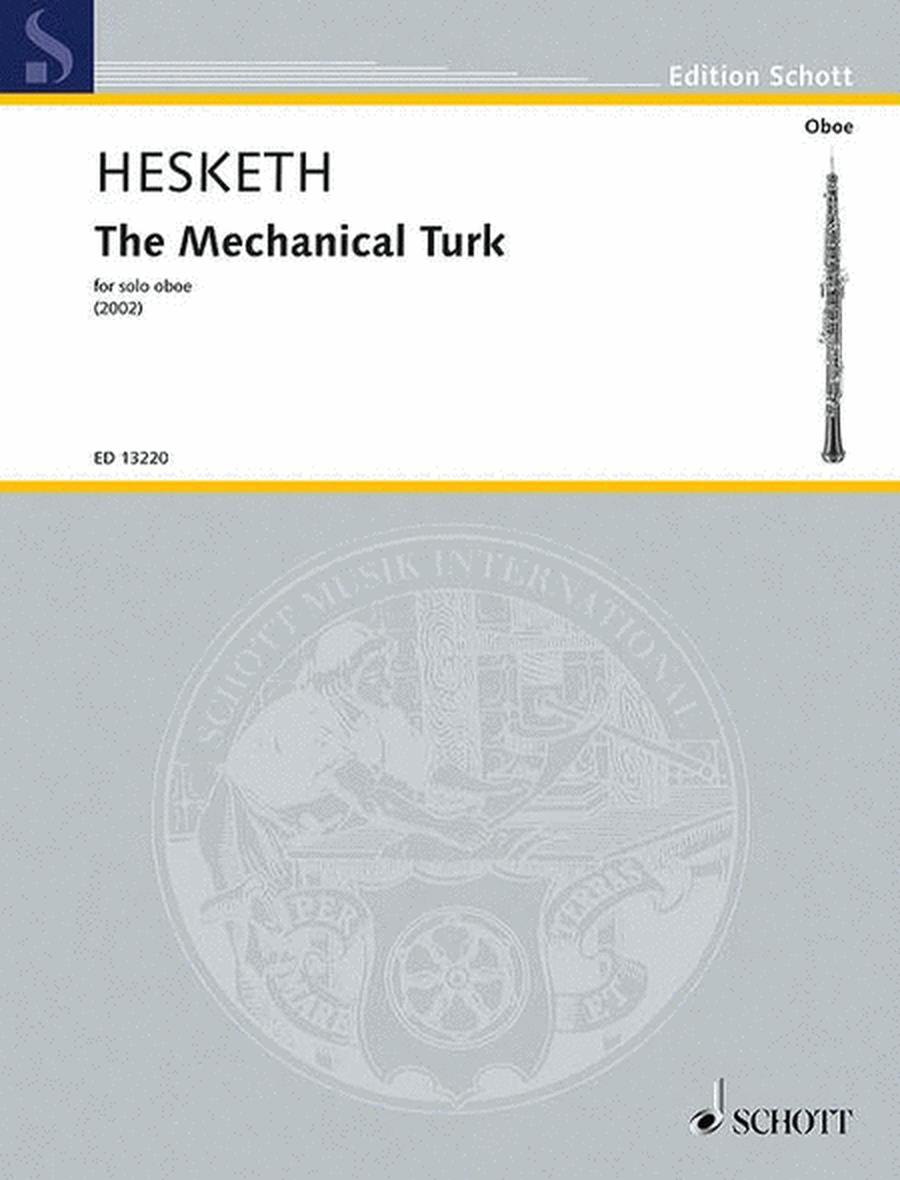
For solo oboe. Composed by Kenneth Hesketh. This edition: Saddle stitching. Sheet music. Woodwind Solo. Softcover. Composed 2002. 12 pages. Duration 8'. Hal Leonard #ED13220. Published by Hal Leonard (HL.49044074).ISBN 9790220134586. UPC: 841886021976. 9.0x12.0x0.075 inches.
Stimulated by my love of automata, this work for solo oboe takes its name from the invention of Wolfgang von Kempelen, who in the late eighteenth century constructed an extraordinary mechanical man powered by clockwork, dressed in a stylish Turkish costume and capable of playing chess. The chess player turned out to be a fraud but sparked many other thinkers and inventors to pondering what the possibilities of automation might be. In Hesketh's highly virtuosic work, the through-composed melody is subjected to a series of distortions by pulleys, cams, gears and cranks. There are also the onomatopoeic effects of winding up and whirring noises that add to the air of the mechanical.
- More by this Composer:
- Kenneth Hesketh Kenneth Hesketh Choir Kenneth Hesketh Piano Accompaniment Kenneth Hesketh Piano Solo
- Artists:
- Kenneth Hesketh
- Publisher:
- Hal Leonard