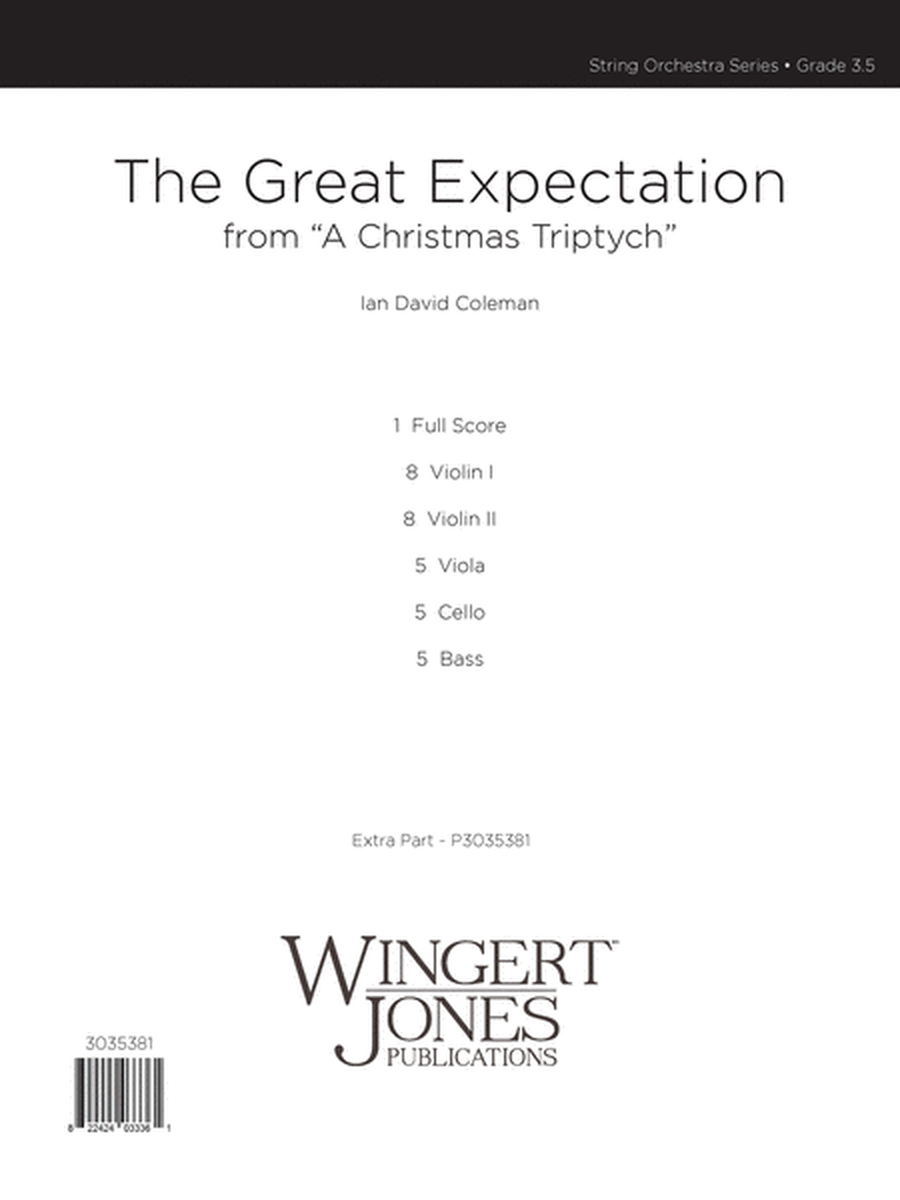
From "A Christmas Triptych". Composed by Ian David Coleman. This edition: Staple Bound. String Orchestra Score. String Orchestra Series. Score. Wingert-Jones Publications #3035382. Published by Wingert-Jones Publications (WJ.3035382).
UPC: 822424033361. 9 x 12 inches. English.
This movement uses two Advent melodies, Veni Veni Emmanuel and the French melody Picardy, the tune most often used with Let All Mortal Flesh Keep Silence. One never hears either melody in its complete form or alone. Rather, the two melodies weave around each other and are heard in their most complete forms toward the end of the piece.
From "A Christmas Triptych". Composed by Ian David Coleman. This edition: Staple Bound. String Orchestra Score. String Orchestra Series. Score. Wingert-Jones Publications #3035382. Published by Wingert-Jones Publications (WJ.3035382).
UPC: 822424033361. 9 x 12 inches. English.
This movement uses two Advent melodies, Veni Veni Emmanuel and the French melody Picardy, the tune most often used with Let All Mortal Flesh Keep Silence. One never hears either melody in its complete form or alone. Rather, the two melodies weave around each other and are heard in their most complete forms toward the end of the piece.
Tell a friend (or remind yourself) about this product. We'll instantly send an email containing product info and a link to it. You may also enter a personal message.
We do not use or store email addresses from this form for any other purpose than sending your share email.
After purchase, you can download your MP3 from your Sheet Music Plus Digital Library - no software installation is necessary! You can also listen to your MP3 at any time in your Digital Library.
Learn about Smart Music
After purchase, you can download your Smart Music from your Sheet Music Plus Digital Library - no software installation is necessary! You can also download at any time in your Digital Library.
Learn about Digital Video
After purchase you can download your video from your Digital Library. Your video is in XX format and is playable on most pre-installed video players.