Order two or more copies of the same title and we'll automatically give you 5% off list price on that title.
To get 2+ Pricing , just add two or more copies of a title to your shopping cart. Your discount will be immediately applied to your order.
Sale titles, hymnals, and ShowKits (MTI's Broadway Junior Collection, Getting to Know... Collection (G2K) and MTI's Kids Collection) do not qualify for 2+ Pricing
If you have any questions or comments regarding 2+ Pricing , please visit our Help Center to find more information or chat with our support team
Tenor voice solo with string quartet or piano (Violin I and II, Viola, and Cello) - Early Intermediate
SKU: EC.8329
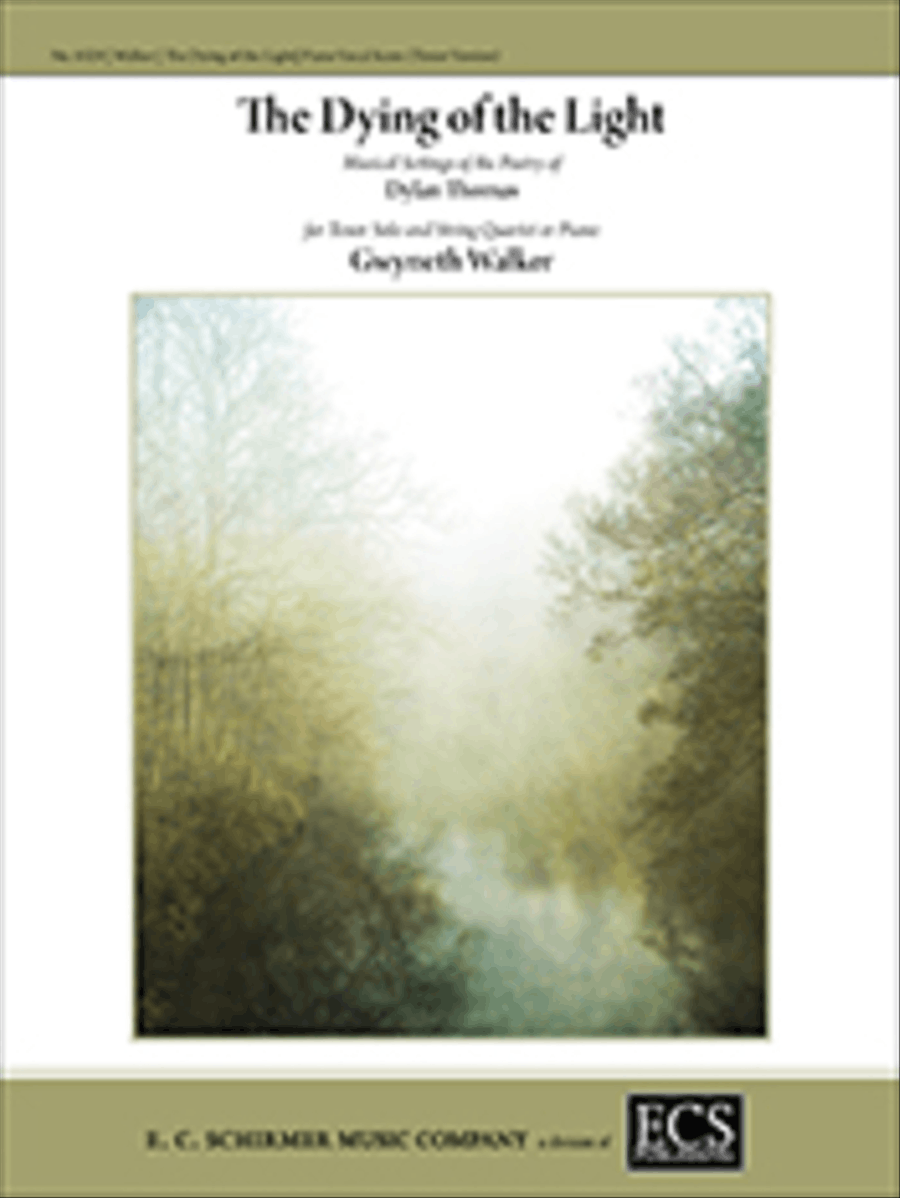
Composed by Gwyneth W. Walker. Vocal Solo. Secular, 21st century. Score. Duration 10 minutes, 10 seconds. E.C. Schirmer Publishing #8329. Published by E.C. Schirmer Publishing (EC.8329).
ISBN 600313483295. UPC: 600313483295. English.
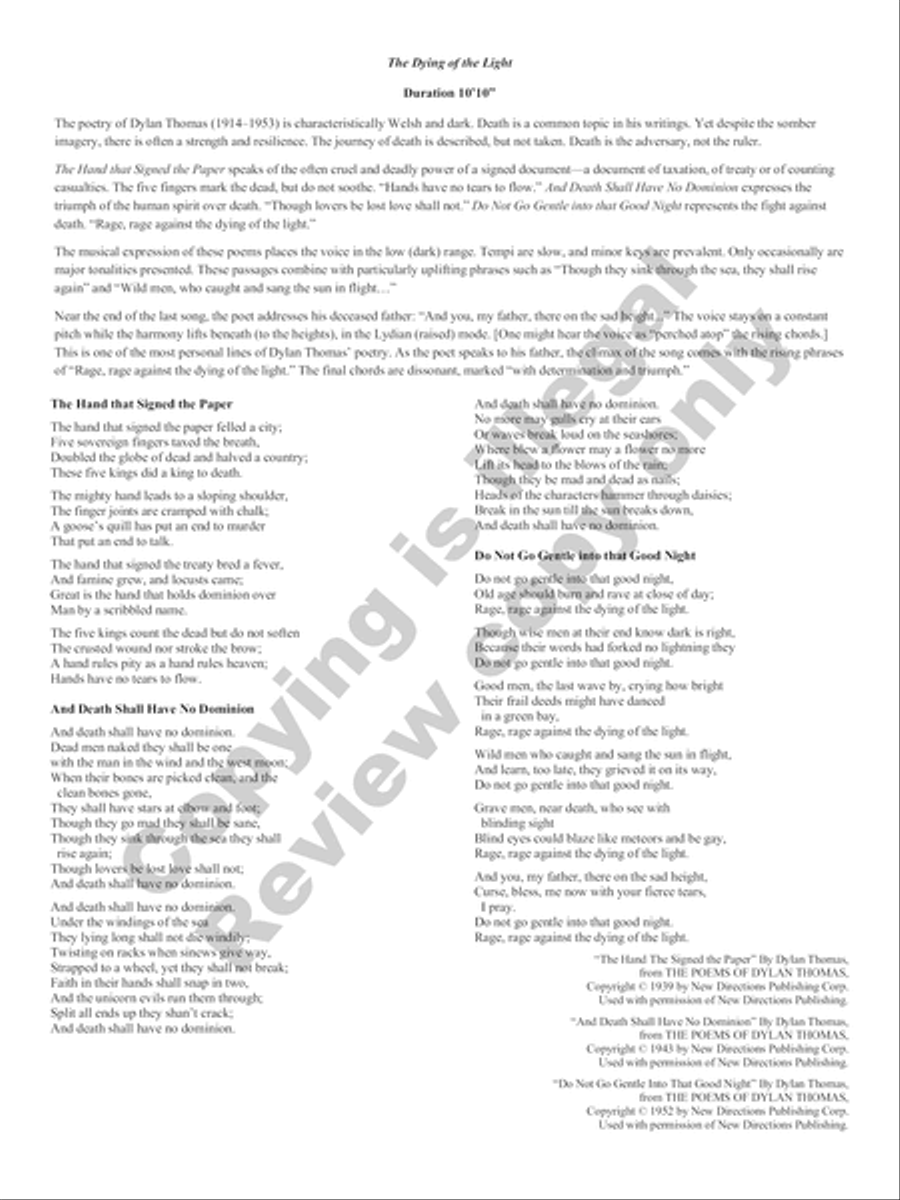
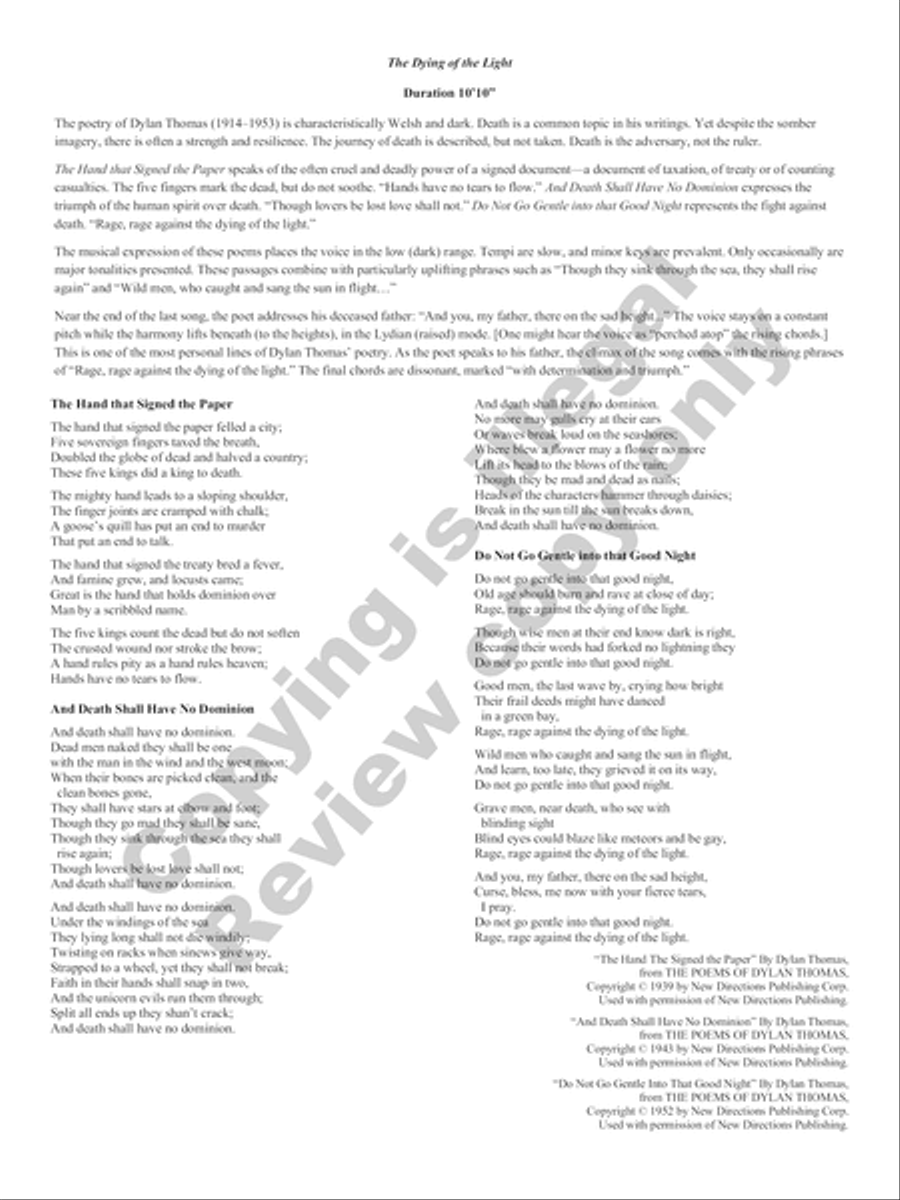
The poetry of Dylan Thomas (1914–1953) is characteristically Welsh and dark. Death is a common topic in his writings. Yet despite the somber imagery, there is often a strength and resilience. The journey of death is described, but not taken. Death is the adversary, not the ruler.
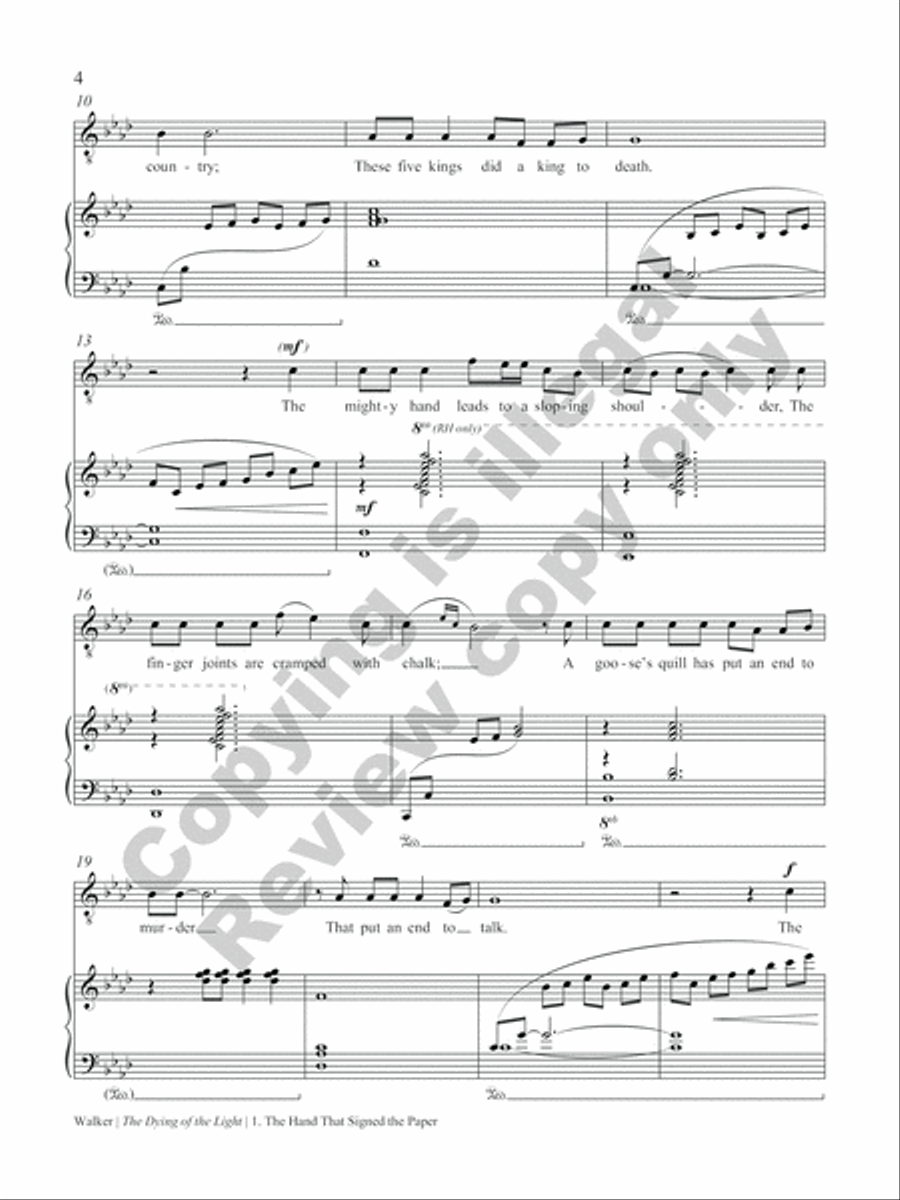
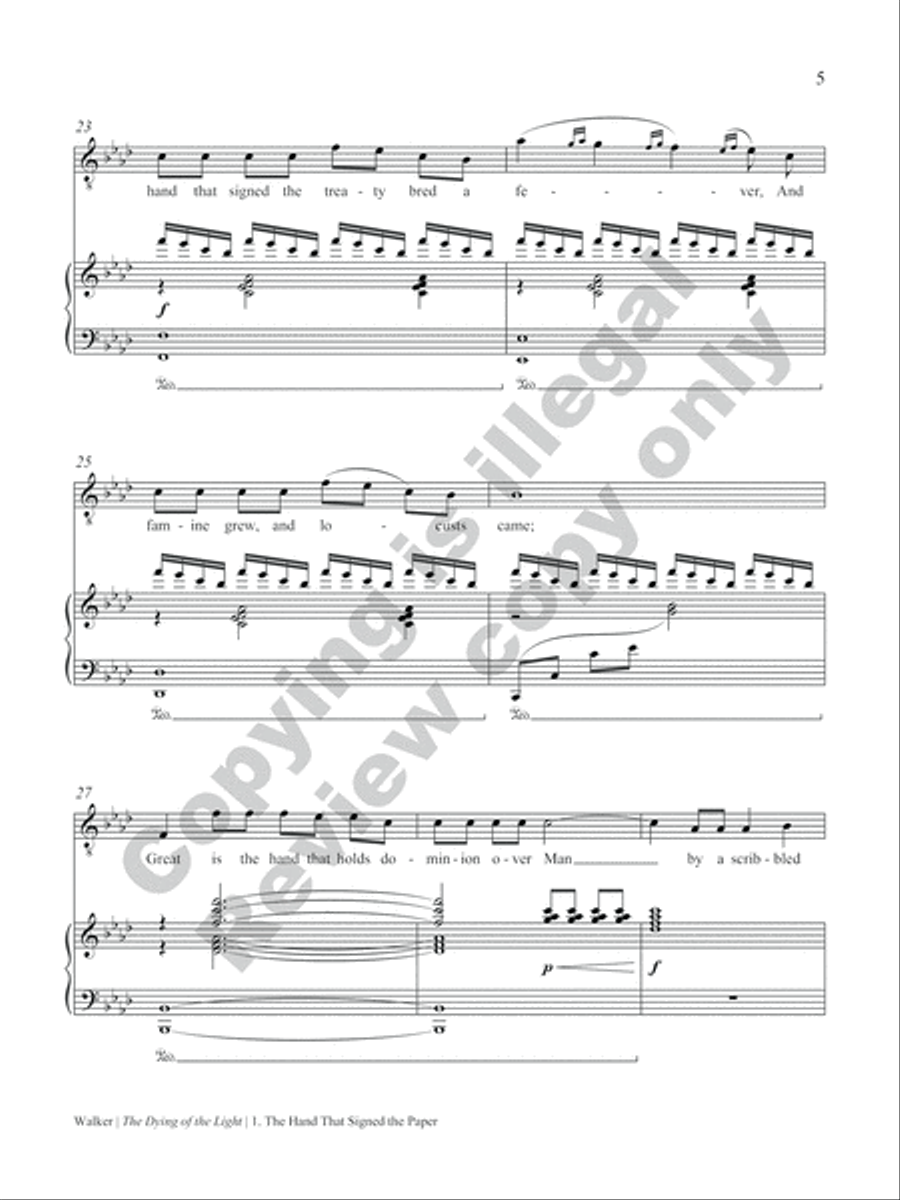
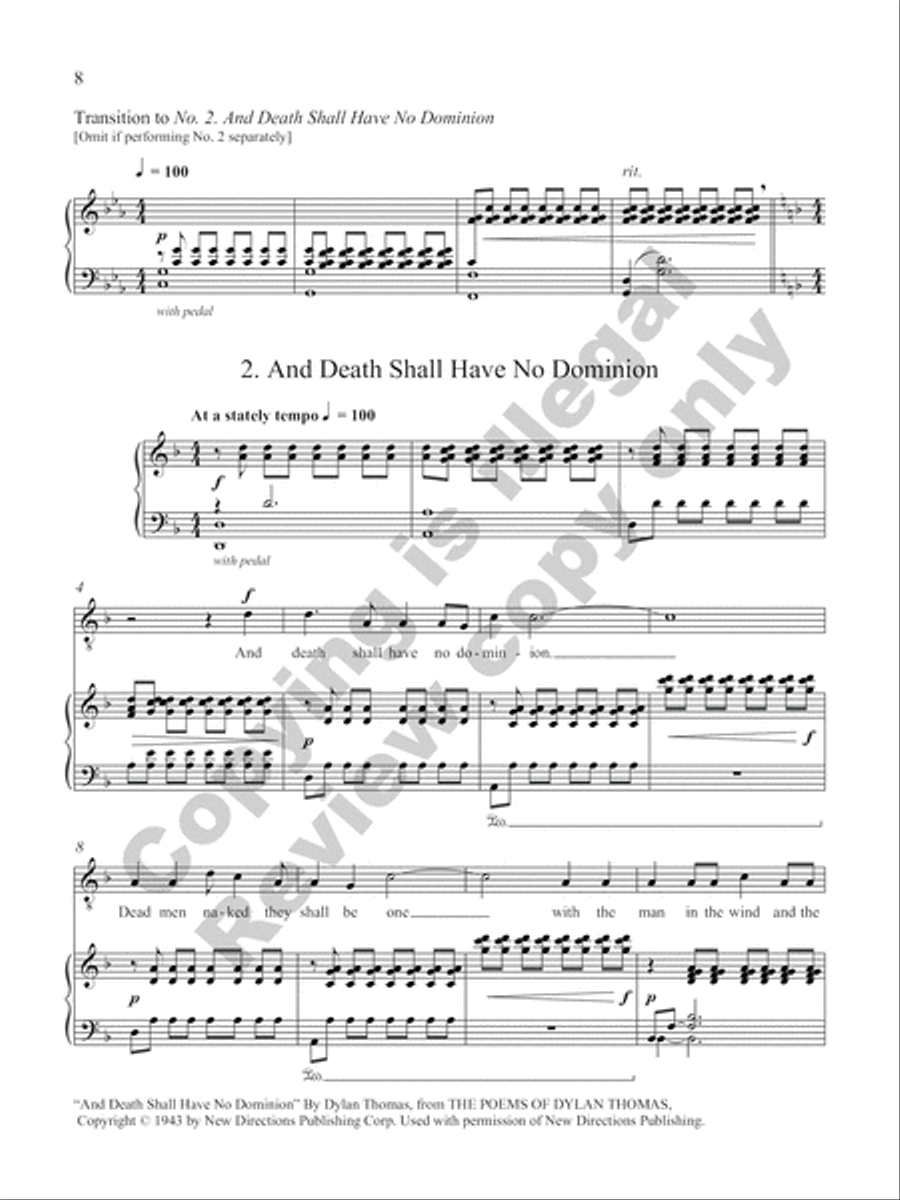
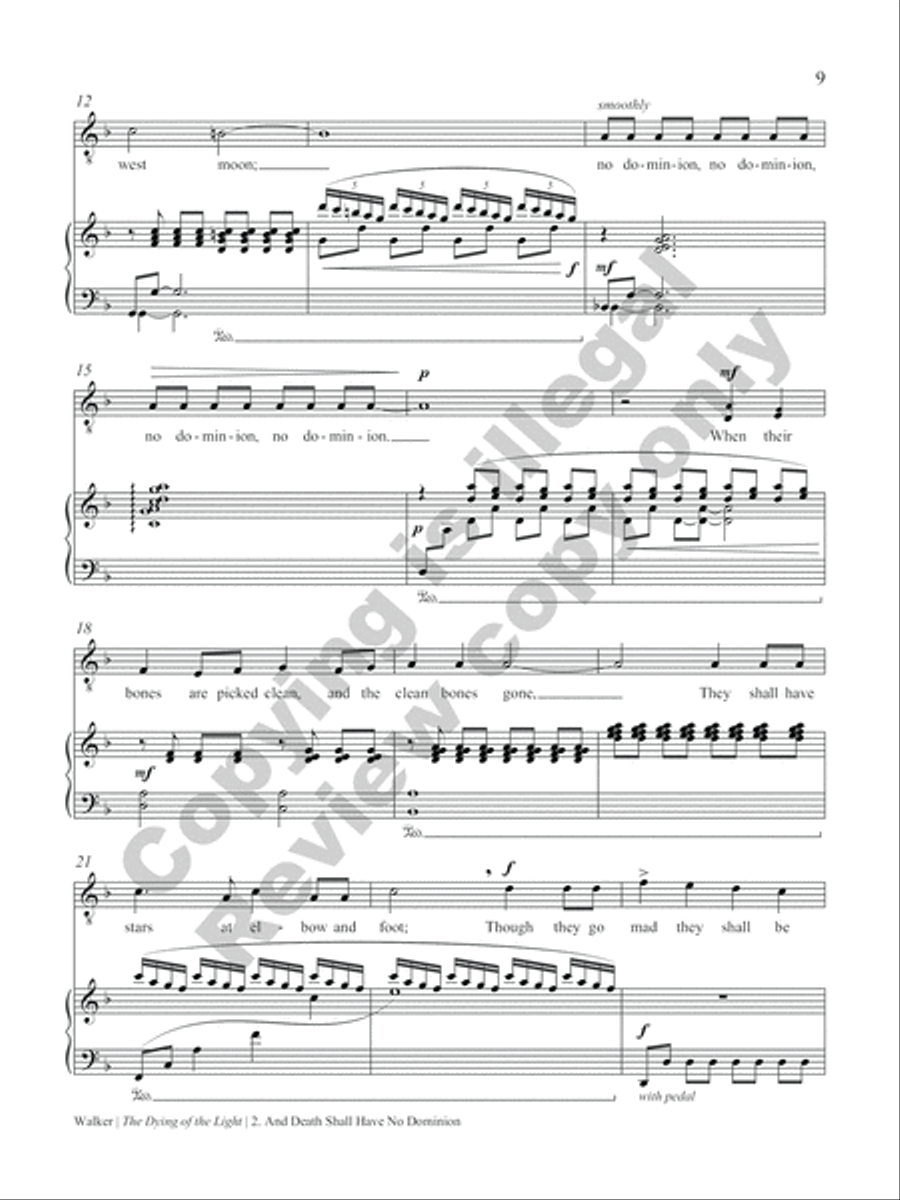
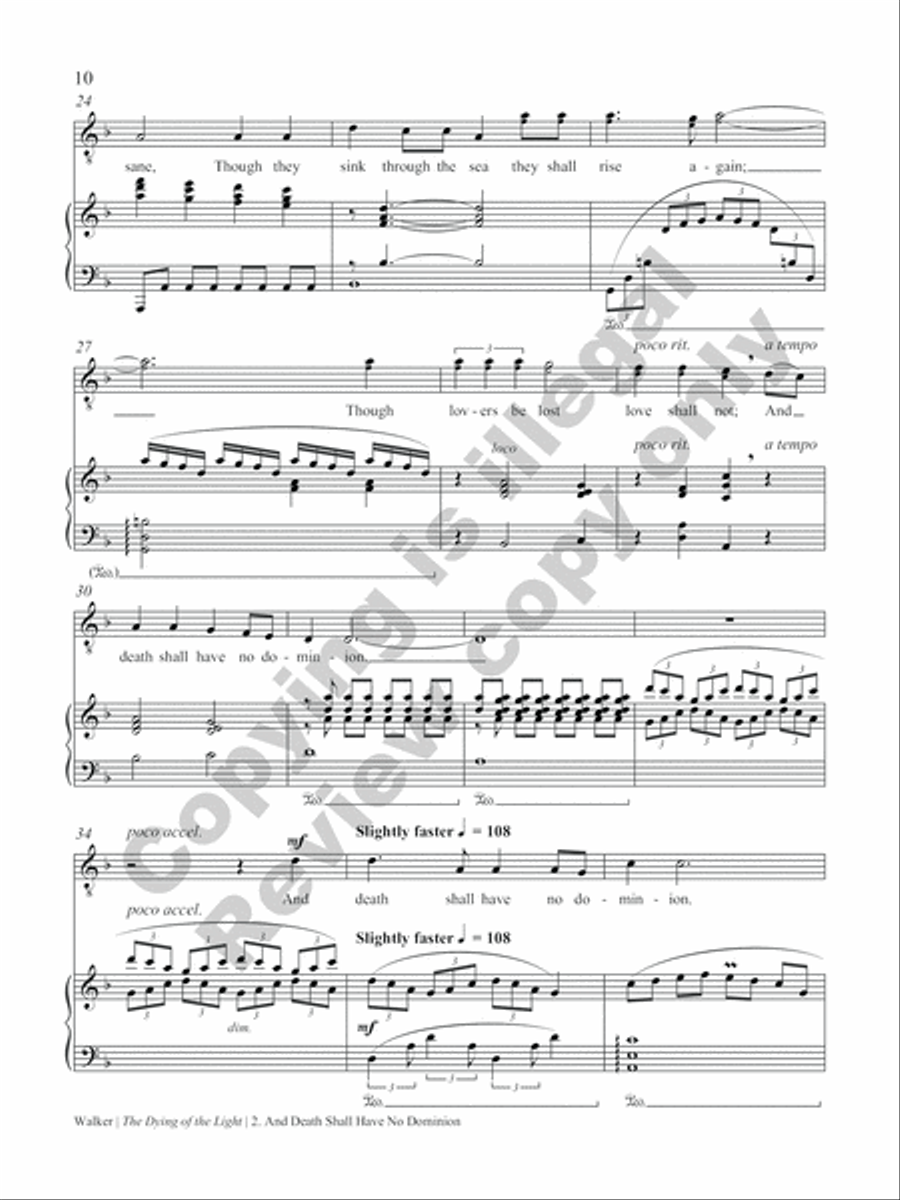
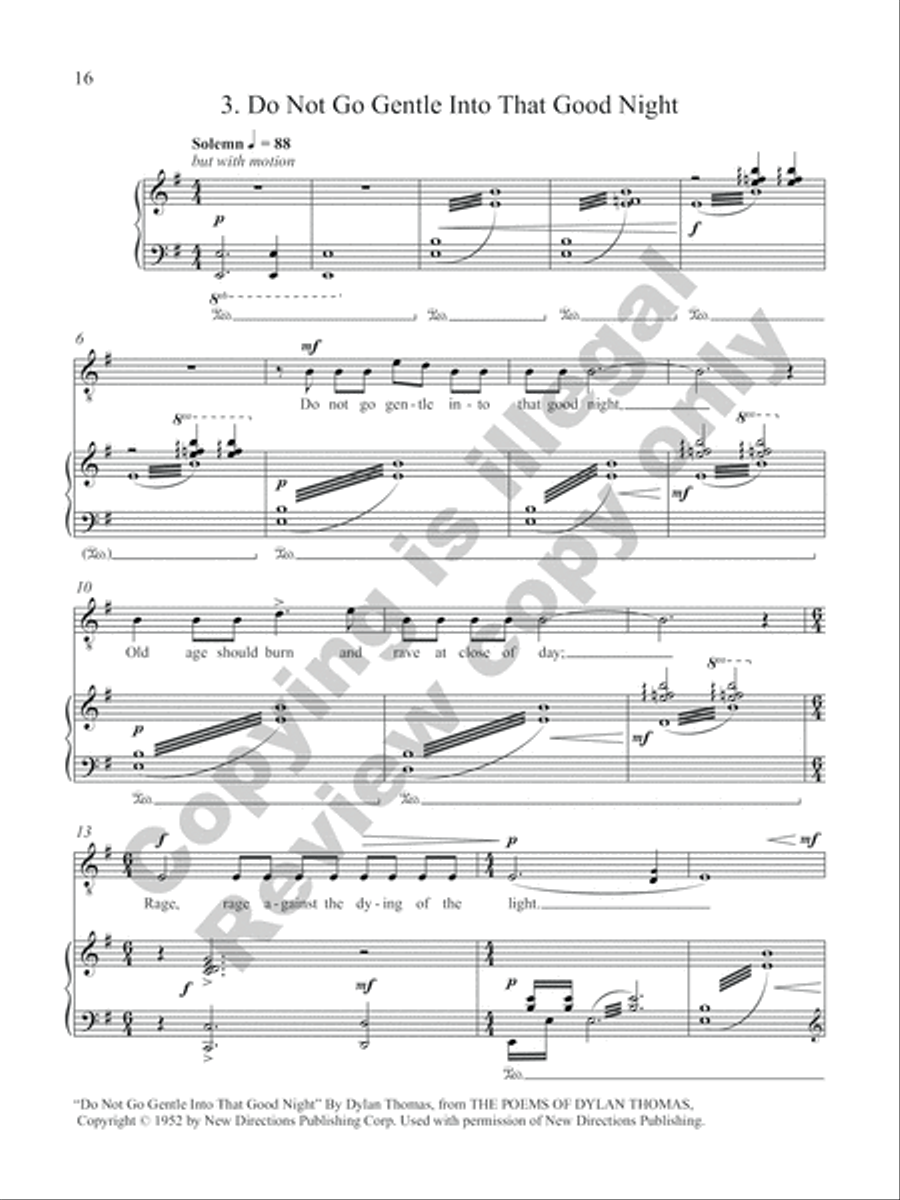
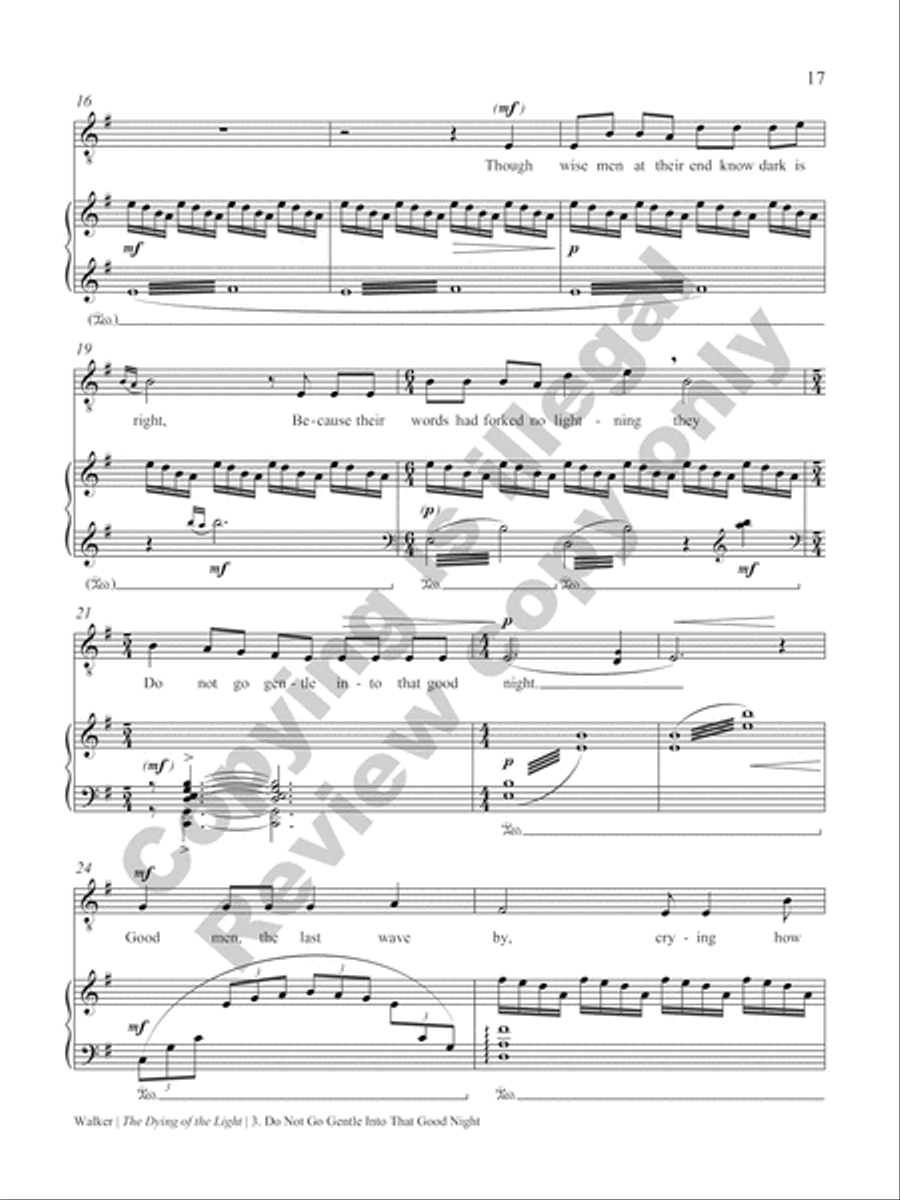
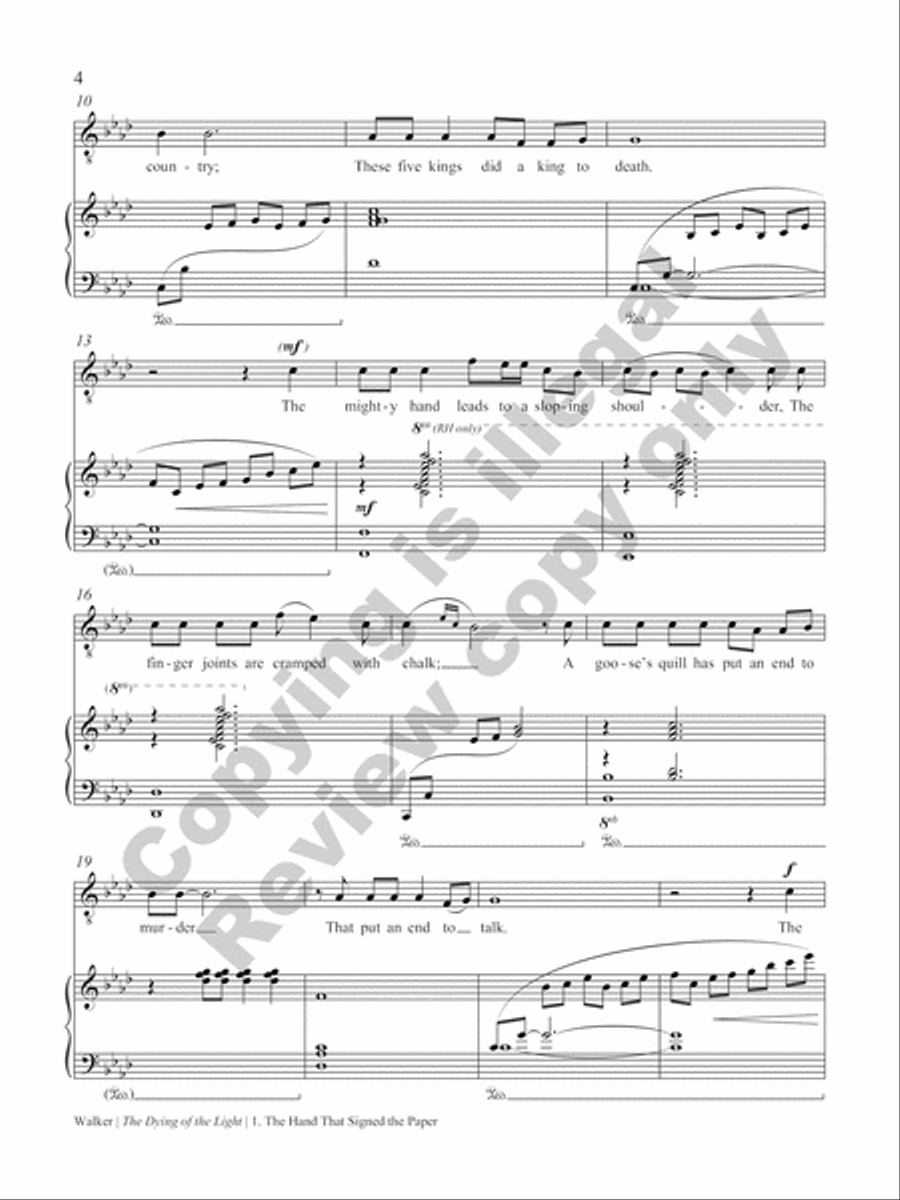
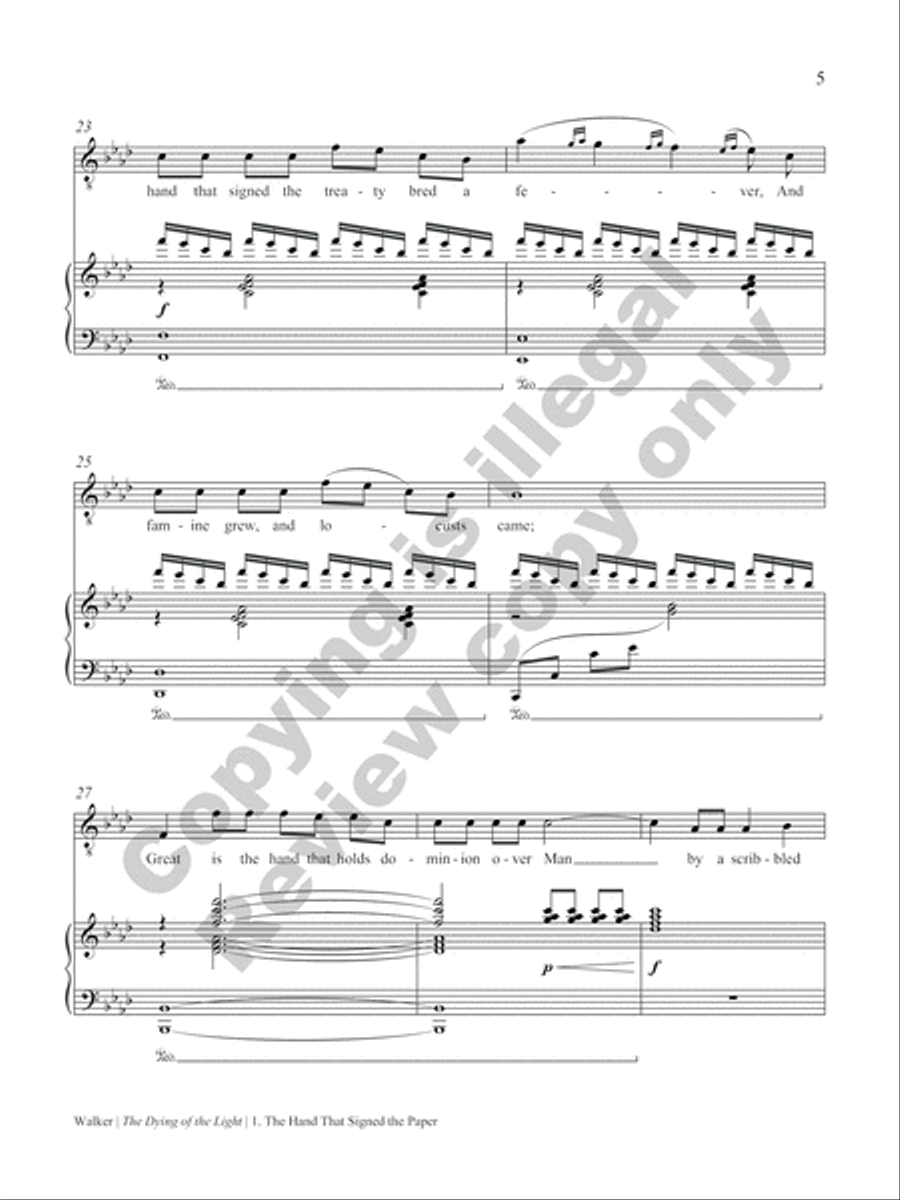
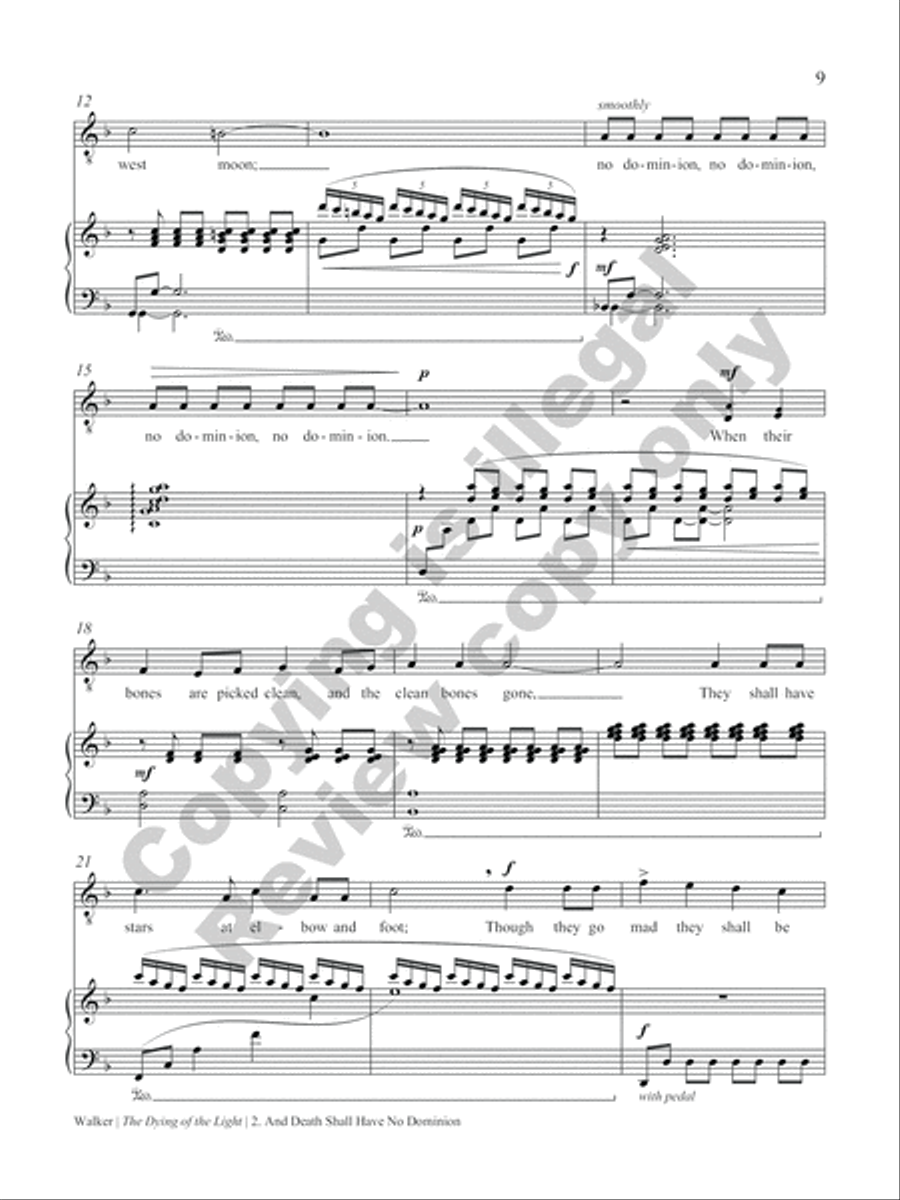
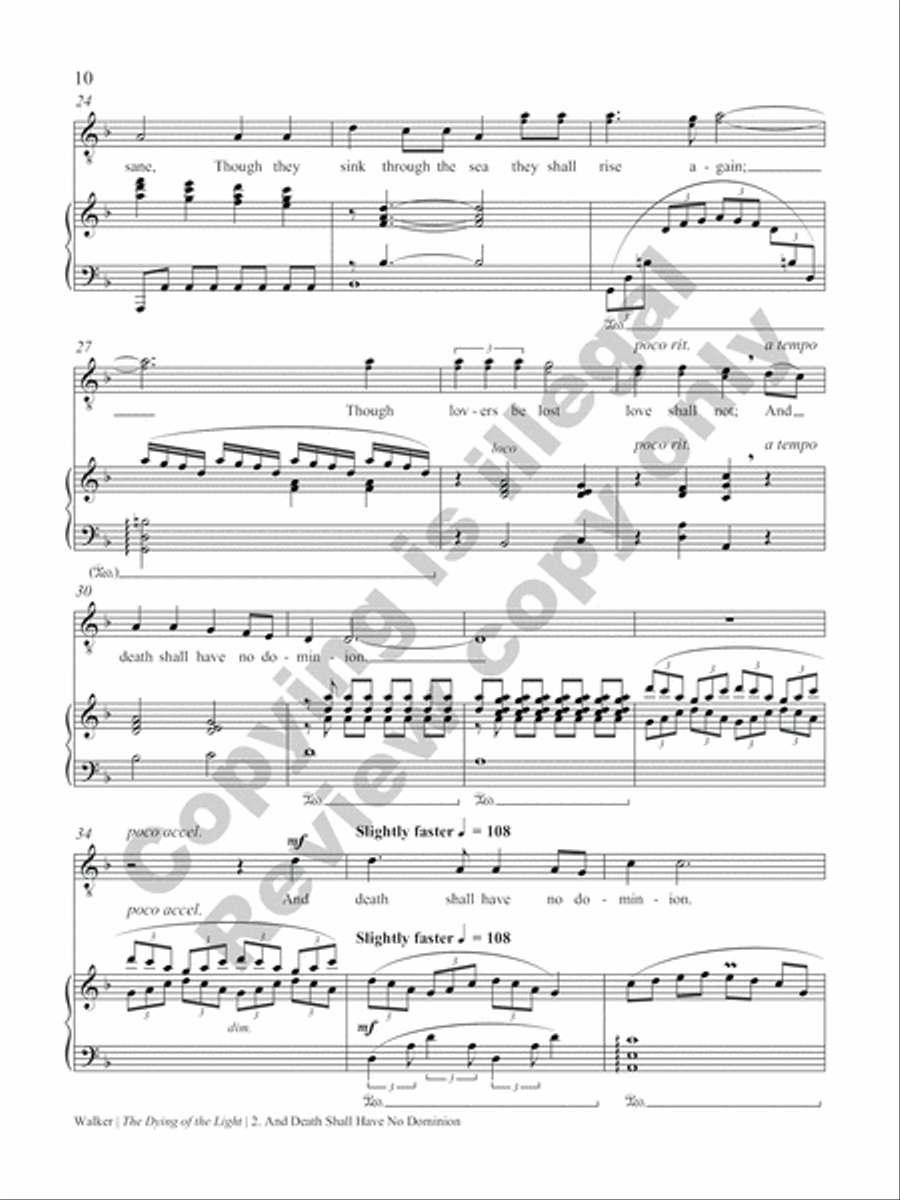
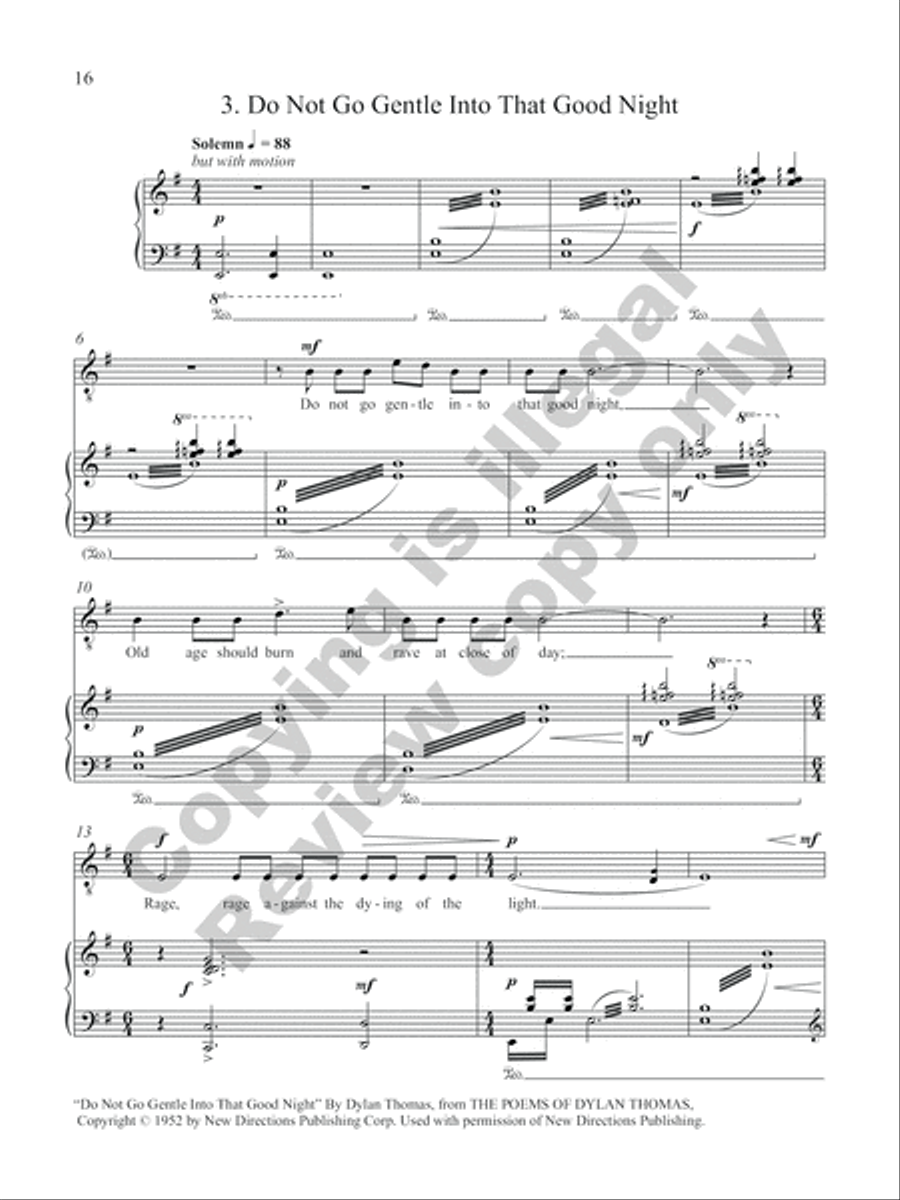
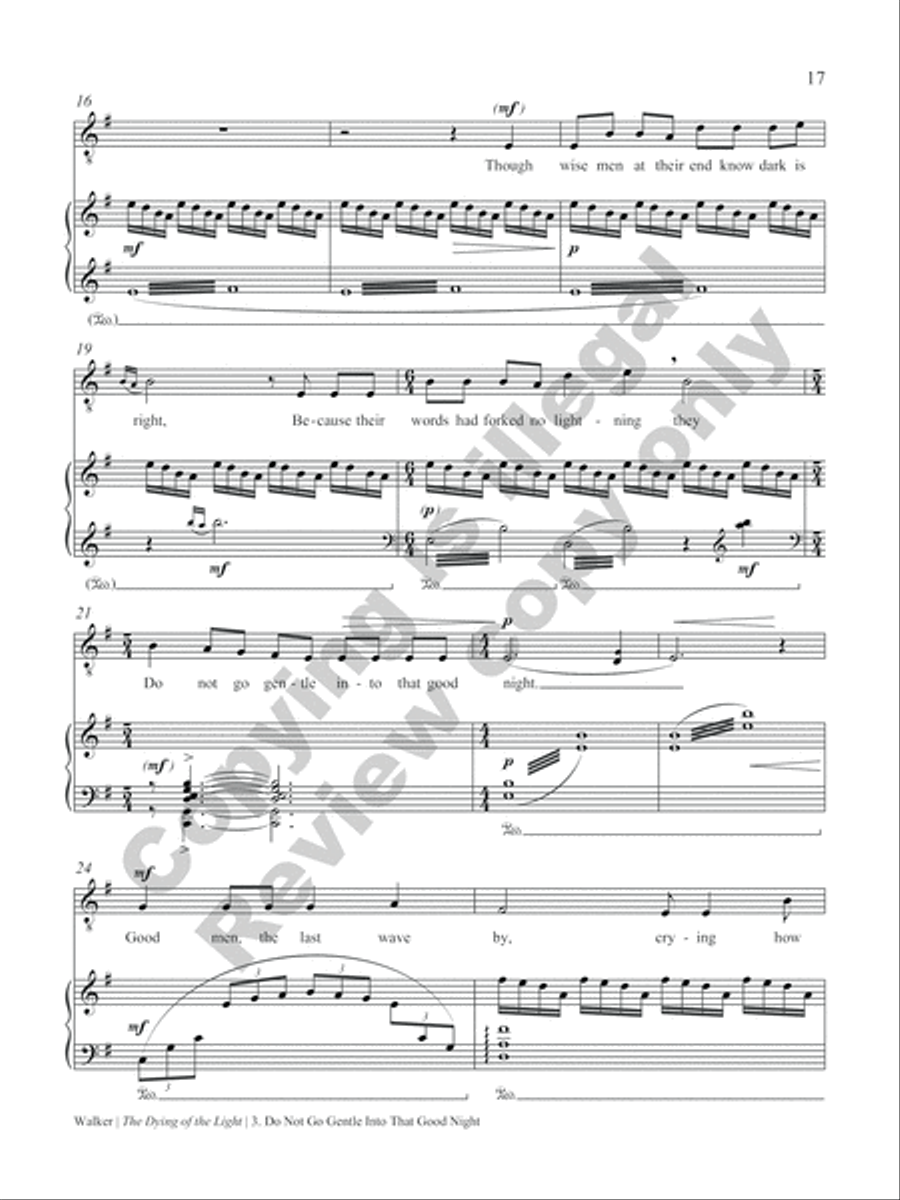
The Hand that Signed the Paper speaks of the often cruel and deadly power of a signed document- a document of taxation, of treaty or of counting casualties. The five fingers mark the dead, but do not soothe. “Hands have no tears to flow.” And Death Shall Have No Dominion expresses the triumph of the human spirit over death. “Though lovers be lost love shall not.” Do Not Go Gentle into that Good Night represents the fight against death. “Rage, rage against the dying of the light.”
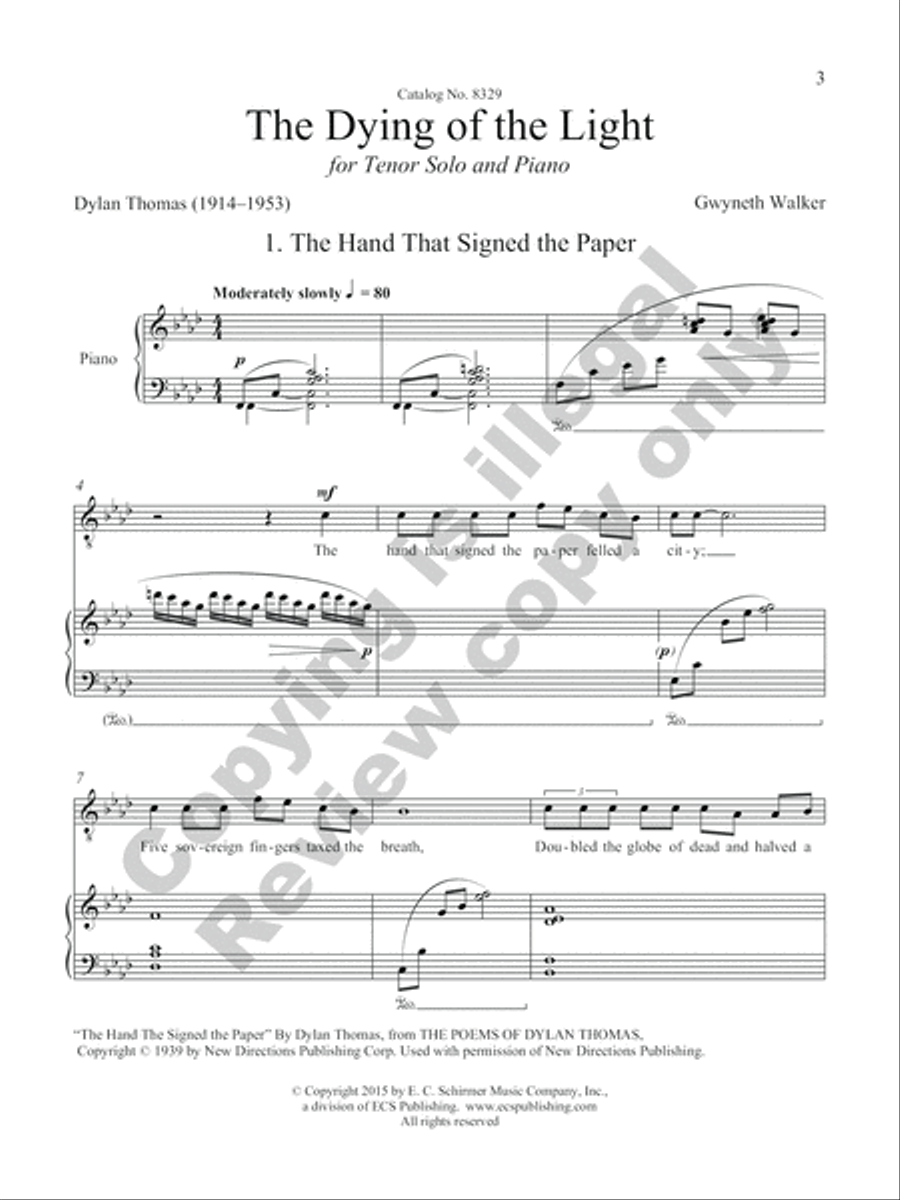
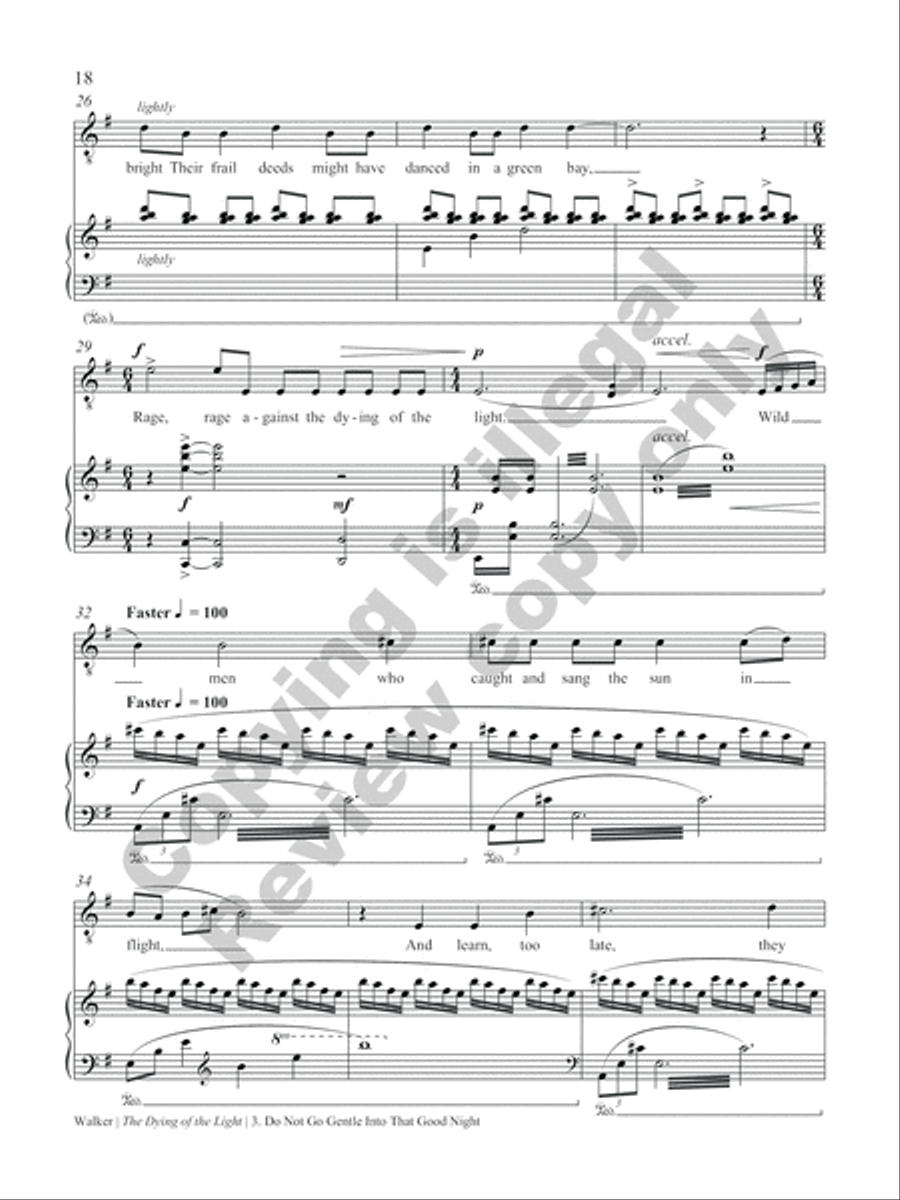
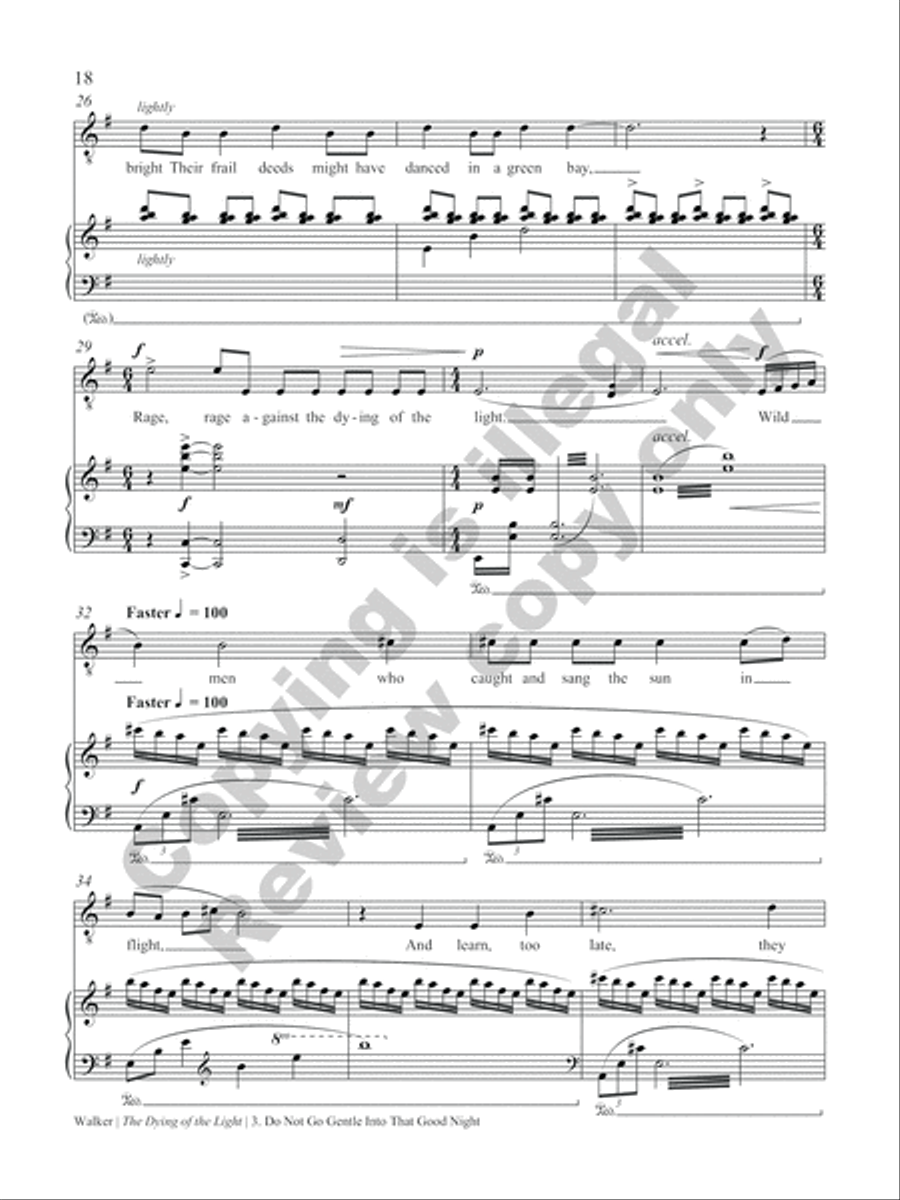
The musical expression of these poems places the voice in the low (dark) range. Tempi are slow, and minor keys are prevalent. Only occasionally are major tonalities presented. These passages combine with particularly uplifting phrases such as “Though they sink through the sea, they shall rise again” and “Wild men, who caught and sang the sun in flight…”
Near the end of the last song, the poet addresses his deceased father: “And you, my father, there on the sad height...” The voice stays on a constant pitch while the harmony lifts beneath (to the heights), in the Lydian (raised) mode. [One might hear the voice as “perched atop” the rising chords.] This is one of the most personal lines of Dylan Thomas' poetry. As the poet speaks to his father, the climax of the song comes with the rising phrases of “Rage, rage against the dying of the light.” The final chords are dissonant, marked “with determination and triumph.” Duration: 10:10.
Tenor voice solo with string quartet or piano (Violin I and II, Viola, and Cello) - Early Intermediate
SKU: EC.8329
Composed by Gwyneth W. Walker. Vocal Solo. Secular, 21st century. Score. Duration 10 minutes, 10 seconds. E.C. Schirmer Publishing #8329. Published by E.C. Schirmer Publishing (EC.8329).
ISBN 600313483295. UPC: 600313483295. English.
The poetry of Dylan Thomas (1914–1953) is characteristically Welsh and dark. Death is a common topic in his writings. Yet despite the somber imagery, there is often a strength and resilience. The journey of death is described, but not taken. Death is the adversary, not the ruler.
The Hand that Signed the Paper speaks of the often cruel and deadly power of a signed document- a document of taxation, of treaty or of counting casualties. The five fingers mark the dead, but do not soothe. “Hands have no tears to flow.” And Death Shall Have No Dominion expresses the triumph of the human spirit over death. “Though lovers be lost love shall not.” Do Not Go Gentle into that Good Night represents the fight against death. “Rage, rage against the dying of the light.”
The musical expression of these poems places the voice in the low (dark) range. Tempi are slow, and minor keys are prevalent. Only occasionally are major tonalities presented. These passages combine with particularly uplifting phrases such as “Though they sink through the sea, they shall rise again” and “Wild men, who caught and sang the sun in flight…”
Near the end of the last song, the poet addresses his deceased father: “And you, my father, there on the sad height...” The voice stays on a constant pitch while the harmony lifts beneath (to the heights), in the Lydian (raised) mode. [One might hear the voice as “perched atop” the rising chords.] This is one of the most personal lines of Dylan Thomas' poetry. As the poet speaks to his father, the climax of the song comes with the rising phrases of “Rage, rage against the dying of the light.” The final chords are dissonant, marked “with determination and triumph.” Duration: 10:10.
Preview: The Dying of the Light: Musical Settings of the Poetry of Dylan Thomas
Tell a friend (or remind yourself) about this product. We'll instantly send an email containing product info and a link to it. You may also enter a personal message.
We do not use or store email addresses from this form for any other purpose than sending your share email.
After purchase, you can download your MP3 from your Sheet Music Plus Digital Library - no software installation is necessary! You can also listen to your MP3 at any time in your Digital Library.
Learn about Smart Music
After purchase, you can download your Smart Music from your Sheet Music Plus Digital Library - no software installation is necessary! You can also download at any time in your Digital Library.
Learn about Digital Video
After purchase you can download your video from your Digital Library. Your video is in XX format and is playable on most pre-installed video players.