



Ships to you
Ships to you
SKU: CF.BL1045
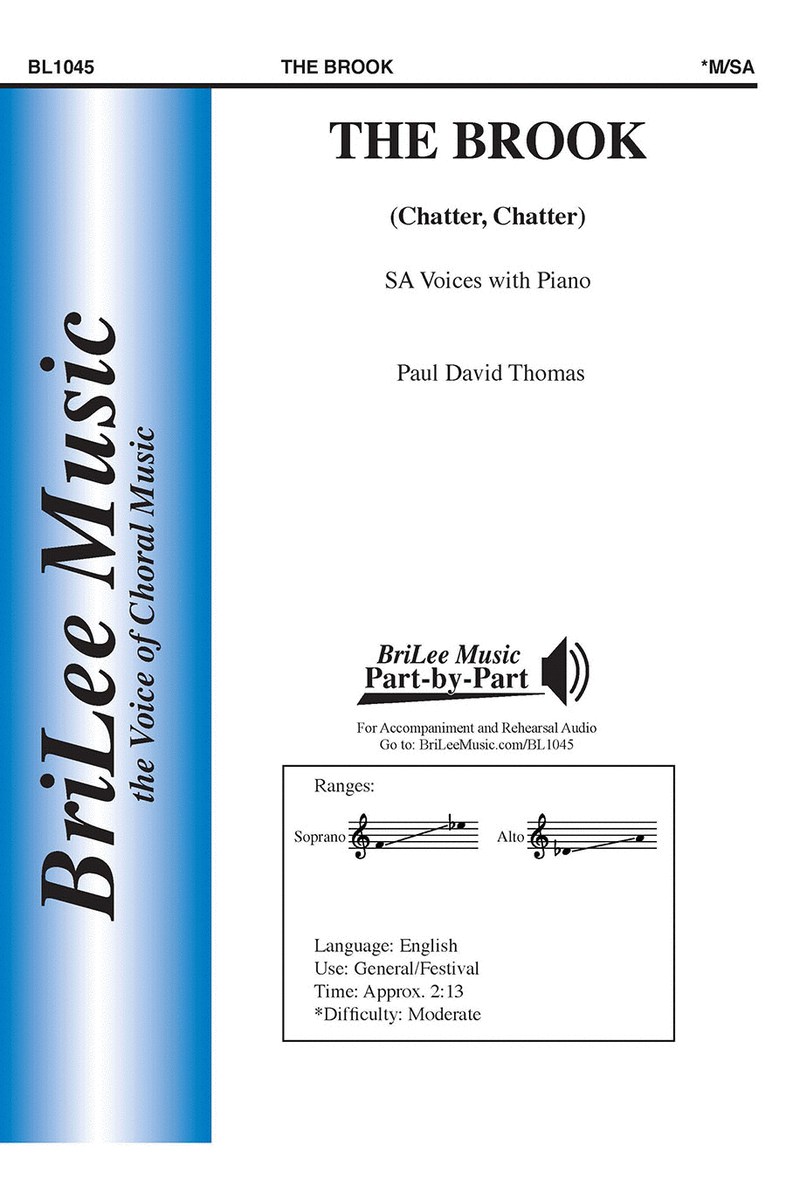
Chatter, Chatter. Composed by Paul David Thomas. Octavo. Octavo. 12 pages. Duration 0:02:13. BriLee Music #BL1045. Published by BriLee Music (CF.BL1045).UPC: 680160911561. 6.875 x 10.5 inches. Key: F major. English. Alfred, Lord Tennyson (1809-1892).
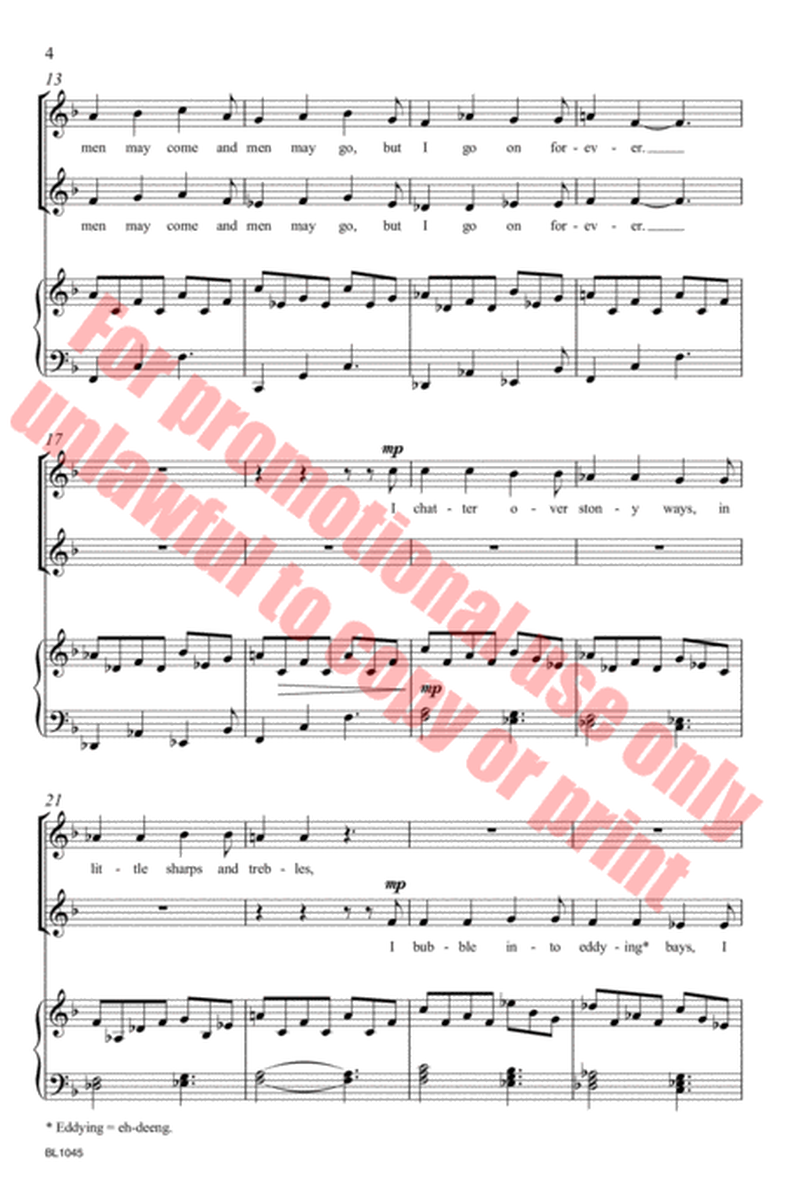
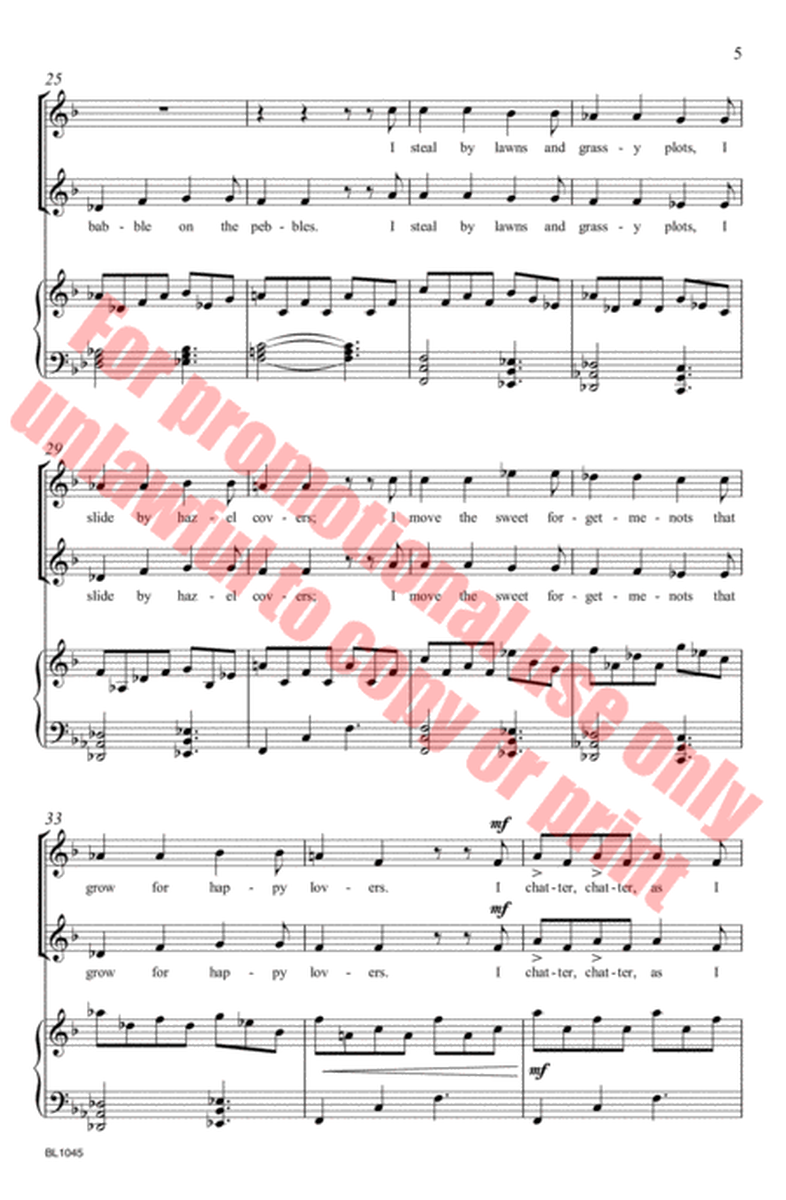
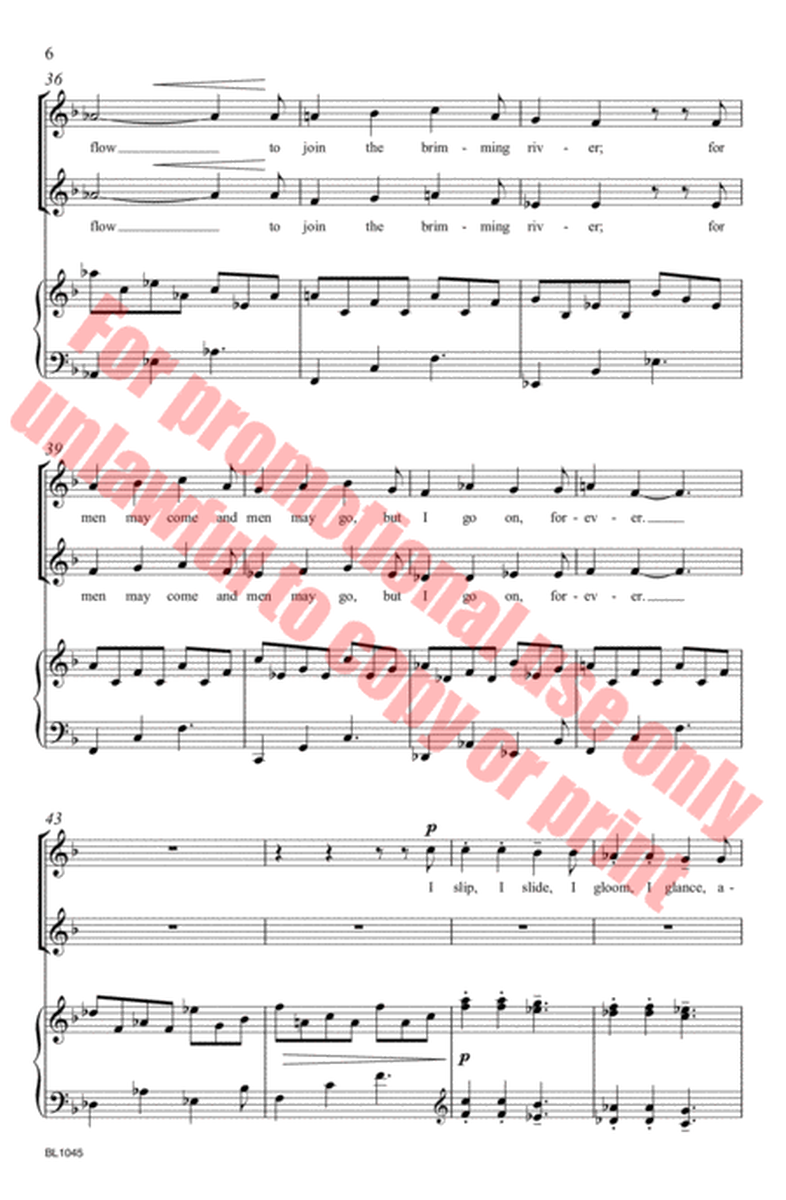
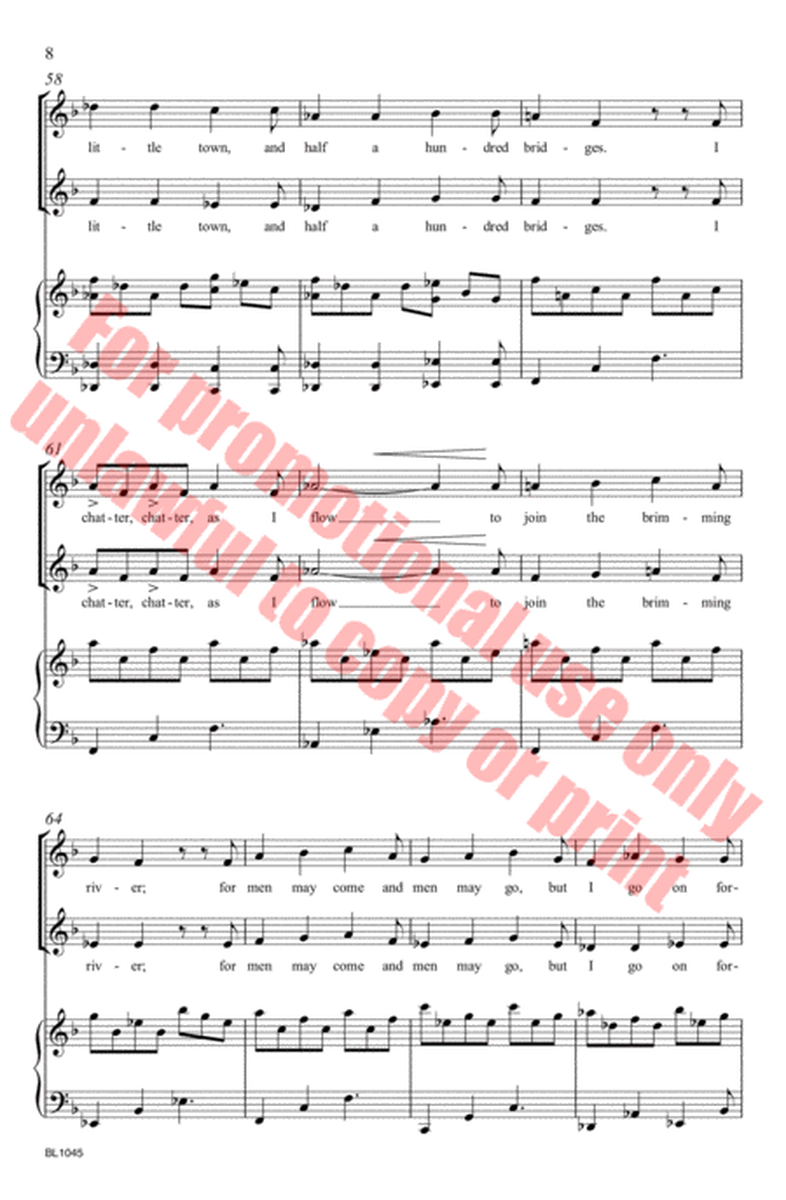
This piece sets excerpts from Alfred Lord Tennysons poem The Brook. The poem depicts the sight and sounds along the ever-moving brook, using as its refrain for men may come and men may go, but I go on forever. The feel of a chattering brook is captured by the perpetual motion of the piano part and the use of the asymmetric meter of 7/8. The meter should be counted 2+2+3 (1-2, 1-2, 1-2-3) with a strong accent on the downbeat. Feel free to use a schwa (unstressed syllable) at the end of the word chatter. The overall feel of 7/8 creates a sense of forward momentum as the downbeat always seems to arrive a moment too early. Despite this effect, the piece should never sound hurried or frantic. The choir should pay special attention to the different articulations and style markings throughout the piece. Even at forte, the overall sound should retain a brisk and light quality that never becomes too heavy.
This piece sets excerpts from Alfred Lord Tennysonas poem The Brook. The poem depicts the sight and sounds along the ever-moving brook, using as its refrain afor men may come and men may go, but I go on forever.a The feel of a chattering brook is captured by the perpetual motion of the piano part and the use of the asymmetric meter of 7/8. The meter should be counted 2+2+3 (1-2, 1-2, 1-2-3) with a strong accent on the downbeat. Feel free to use a schwa (unstressed syllable) at the end of the word achattera. The overall feel of 7/8 creates a sense of forward momentum as the downbeat always seems to arrive a moment too early. Despite this effect, the piece should never sound hurried or frantic. The choir should pay special attention to the different articulations and style markings throughout the piece. Even at forte, the overall sound should retain a brisk and light quality that never becomes too heavy.
This piece sets excerpts from Alfred Lord Tennysonas poem The Brook. The poem depicts the sight and sounds along the ever-moving brook, using as its refrain afor men may come and men may go, but I go on forever.a The feel of a chattering brook is captured by the perpetual motion of the piano part and the use of the asymmetric meter of 7/8. The meter should be counted 2+2+3 (1-2, 1-2, 1-2-3) with a strong accent on the downbeat. Feel free to use a "schwa" (unstressed syllable) at the end of the word achattera. The overall feel of 7/8 creates a sense of forward momentum as the downbeat always seems to arrive a moment too early. Despite this effect, the piece should never sound hurried or frantic. The choir should pay special attention to the different articulations and style markings throughout the piece. Even at forte, the overall sound should retain a brisk and light quality that never becomes too heavy.
This piece sets excerpts from Alfred Lord Tennyson's poem The Brook. The poem depicts the sight and sounds along the ever-moving brook, using as its refrain "for men may come and men may go, but I go on forever." The feel of a chattering brook is captured by the perpetual motion of the piano part and the use of the asymmetric meter of 7/8. The meter should be counted 2+2+3 (1-2, 1-2, 1-2-3) with a strong accent on the downbeat. Feel free to use a "schwa" (unstressed syllable) at the end of the word "chatter". The overall feel of 7/8 creates a sense of forward momentum as the downbeat always seems to arrive a moment too early. Despite this effect, the piece should never sound hurried or frantic. The choir should pay special attention to the different articulations and style markings throughout the piece. Even at forte, the overall sound should retain a brisk and light quality that never becomes too heavy.
This piece sets excerpts from Alfred Lord Tennyson's poem The Brook. The poem depicts the sight and sounds along the ever-moving brook, using as its refrain "for men may come and men may go, but I go on forever." The feel of a chattering brook is captured by the perpetual motion of the piano part and the use of the asymmetric meter of 7/8. The meter should be counted 2+2+3 (1-2, 1-2, 1-2-3) with a strong accent on the downbeat. Feel free to use a "schwa" (unstressed syllable) at the end of the word "chatter". The overall feel of 7/8 creates a sense of forward momentum as the downbeat always seems to arrive a moment too early. Despite this effect, the piece should never sound hurried or frantic. The choir should pay special attention to the different articulations and style markings throughout the piece. Even at forte, the overall sound should retain a brisk and light quality that never becomes too heavy.
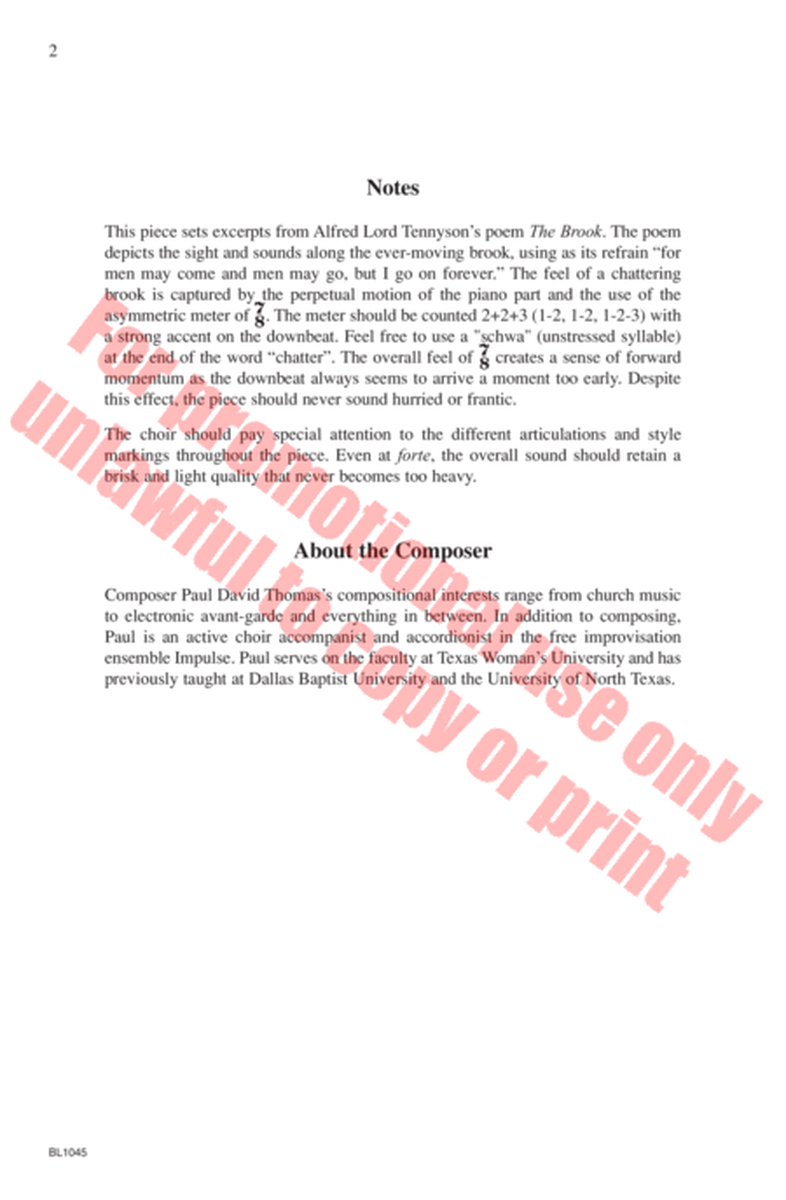
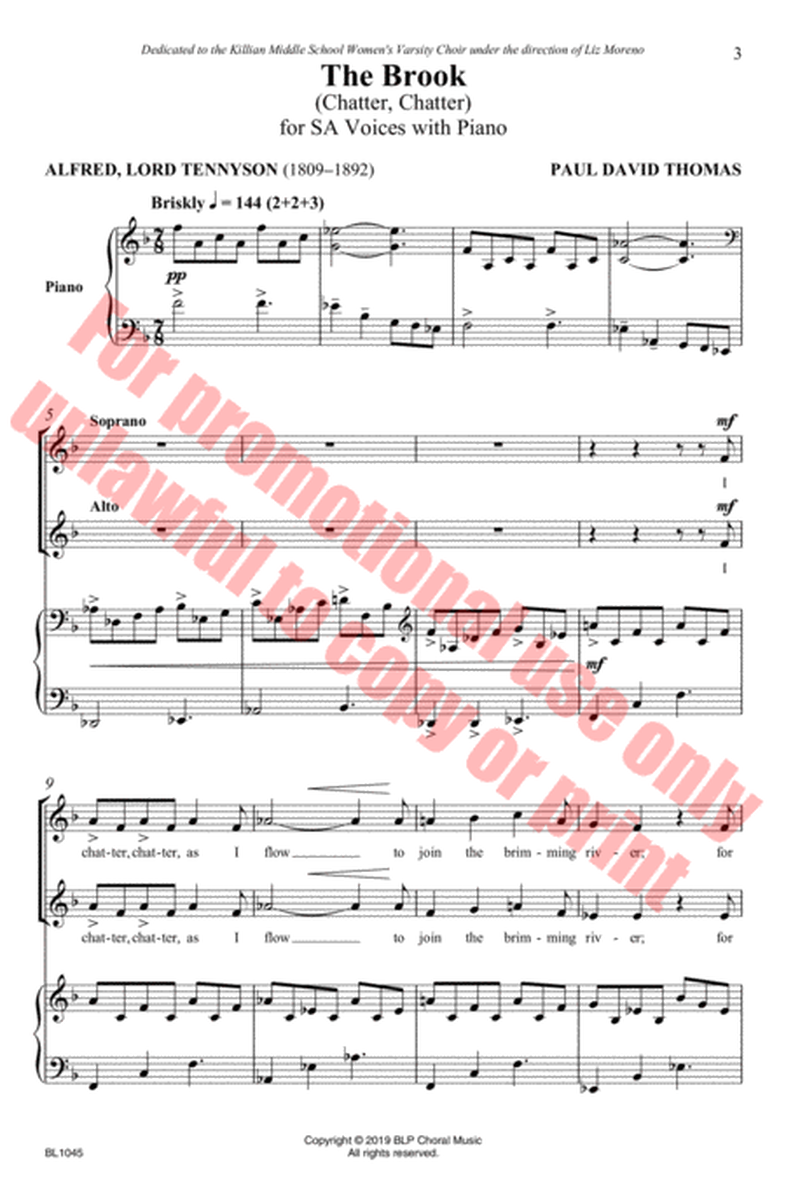
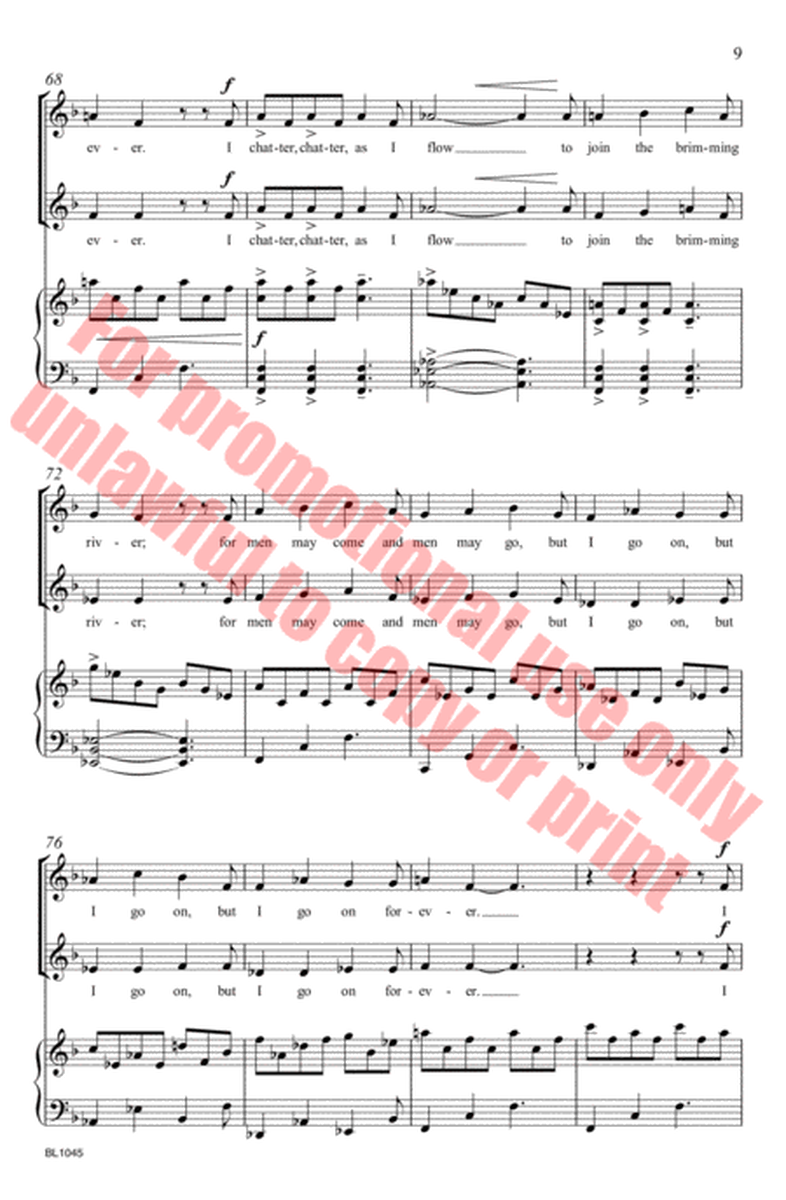
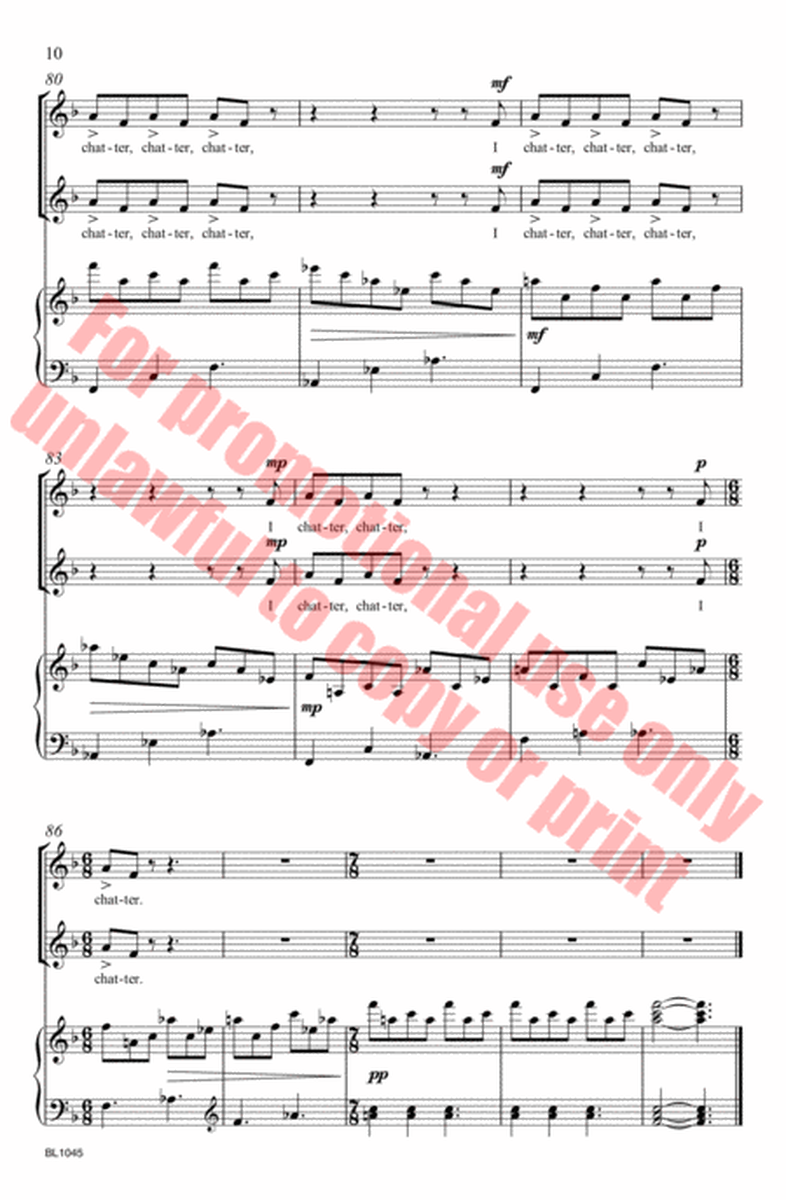
This piece sets excerpts from Alfred Lord Tennyson’s poem The Brook. The poem depicts the sight and sounds along the ever-moving brook, using as its refrain “for men may come and men may go, but I go on forever.” The feel of a chattering brook is captured by the perpetual motion of the piano part and the use of the asymmetric meter of 7/8. The meter should be counted 2+2+3 (1-2, 1-2, 1-2-3) with a strong accent on the downbeat. Feel free to use a "schwa" (unstressed syllable) at the end of the word “chatter”. The overall feel of 7/8 creates a sense of forward momentum as the downbeat always seems to arrive a moment too early. Despite this effect, the piece should never sound hurried or frantic.The choir should pay special attention to the different articulations and style markings throughout the piece. Even at forte, the overall sound should retain a brisk and light quality that never becomes too heavy.
See Similar Sheet Music and Digital Downloads