Details
- Ensembles:
- Concert Band
- Genres:
- Patriotic 4th of July
- Publishers:
- Alfred Music Belwin Music
- Series:
- Belwin Young Band Series
- UPC:
- 038081356181
- Format:
- Score
- Item types:
- Physical
- Level:
- Grade 2
- Musical forms:
- March
- Artist:
- Jerry Brubaker
- Arrangers:
- Jerry Brubaker
- Usages:
- School and Community
- Number of Pages:
- 20
- Shipping Weight:
- 0.19 pounds
Concert Band - Grade 2
SKU: AP.30774S
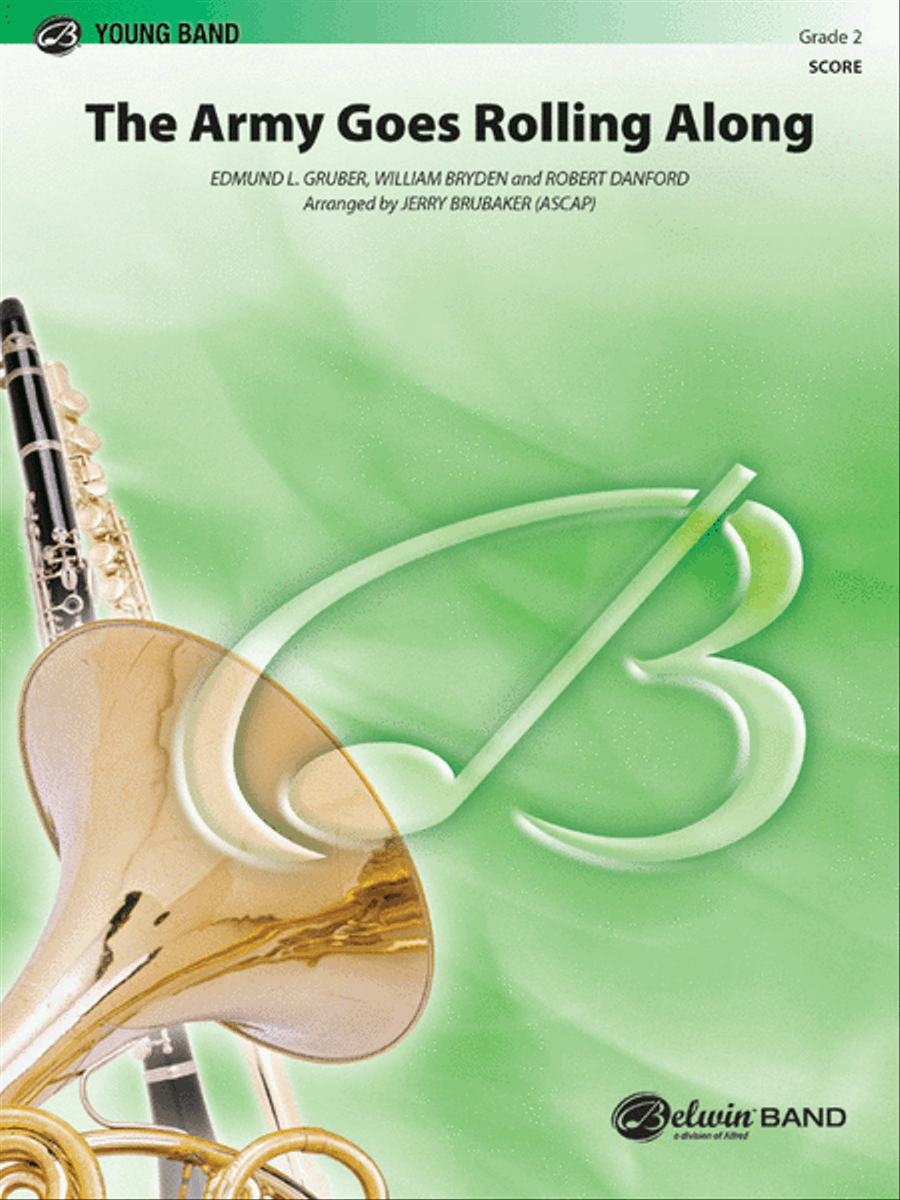
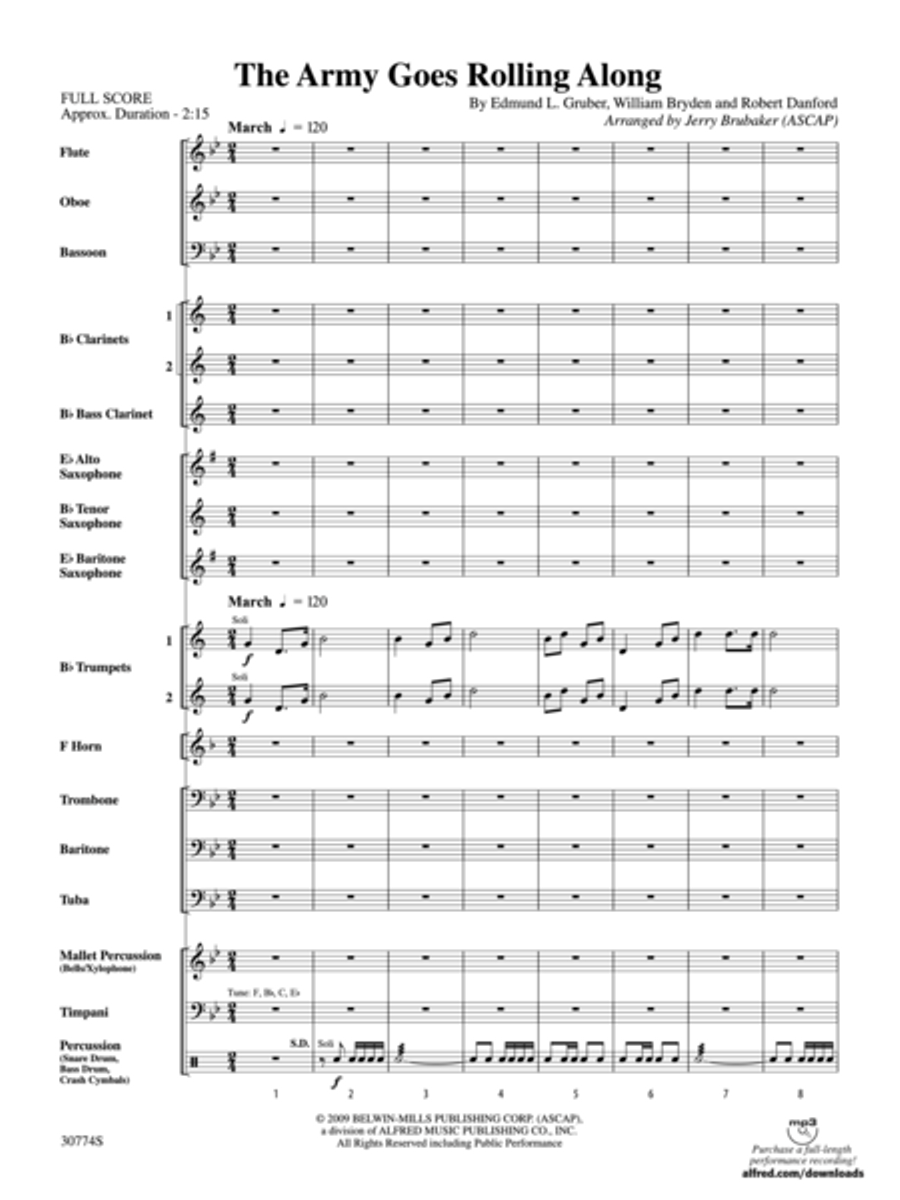
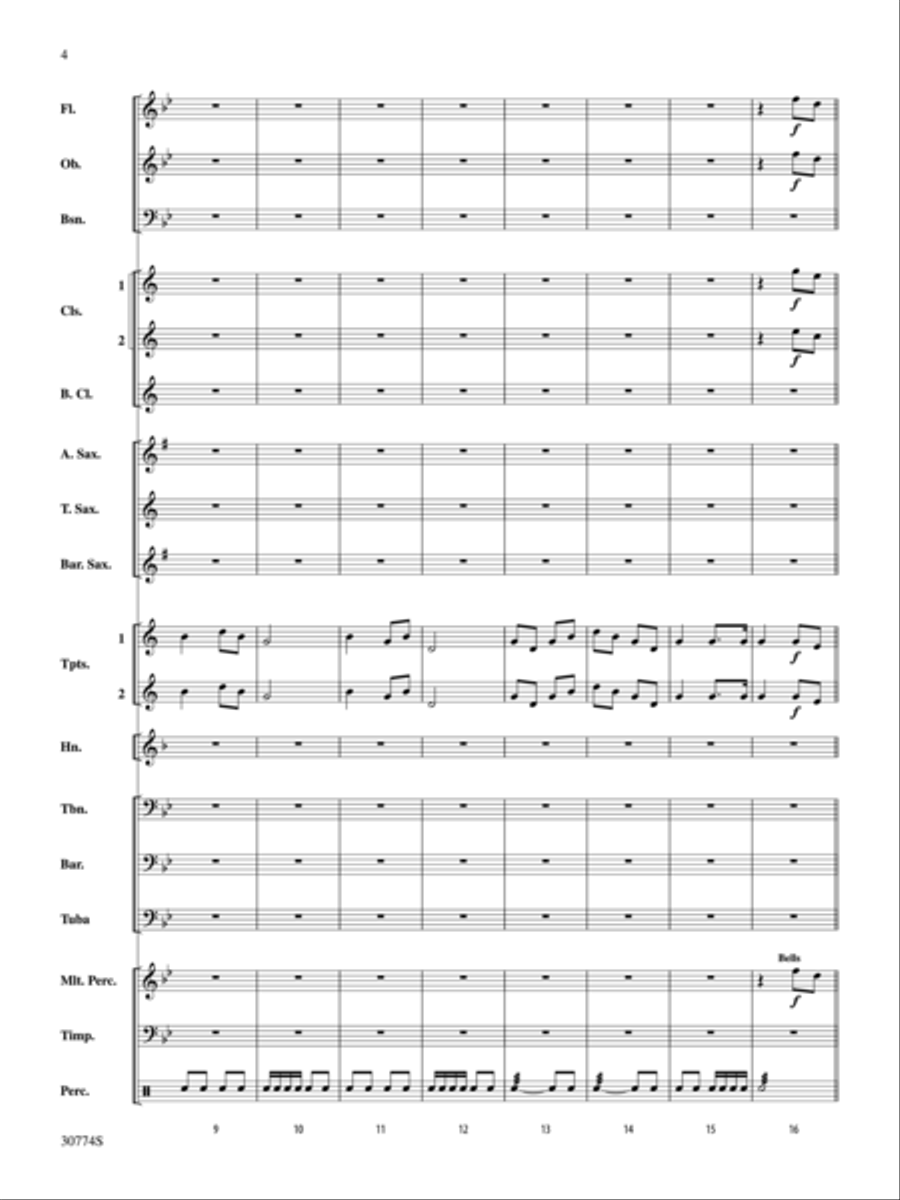
Composed by Edmund L. Gruber, Robert Danford, and William Bryden. Arranged by Jerry Brubaker. Concert Band; Performance Music Ensemble; Single Titles. Belwin Young Band. Form: March. 4th of July; Patriotic; Summer. Score. 20 pages. Belwin Music #00-30774S. Published by Belwin Music (AP.30774S).UPC: 038081356181. English.
Announcing the second in a series of Armed Forces service songs for Young Band by Jerry Brubaker! The Army Goes Rolling Along is the official song of the United States Army and is typically called The Army Song. The song is based on the Caisson Song written by field artillery First Lieutenant (later Brigadier General) Edmund L. Gruber, Lieutenant William Bryden, and Lieutenant (later Major General) Robert Danford while stationed at Fort Stotsenburg in the Philippines in March 1908. The tune quickly became popular in field artillery units. This exciting march is further embellished by the call of the bugle.
- More by this Composer:
- Jerry Brubaker Jerry Brubaker B-Flat Clarinet Jerry Brubaker Alto Saxophone Jerry Brubaker B-Flat Trumpet
- Series:
- Belwin Young Band Series
- Artists:
- Jerry Brubaker
- Ensemble:
- Concert Band
- Publisher:
- Alfred Music Belwin Music