22009042
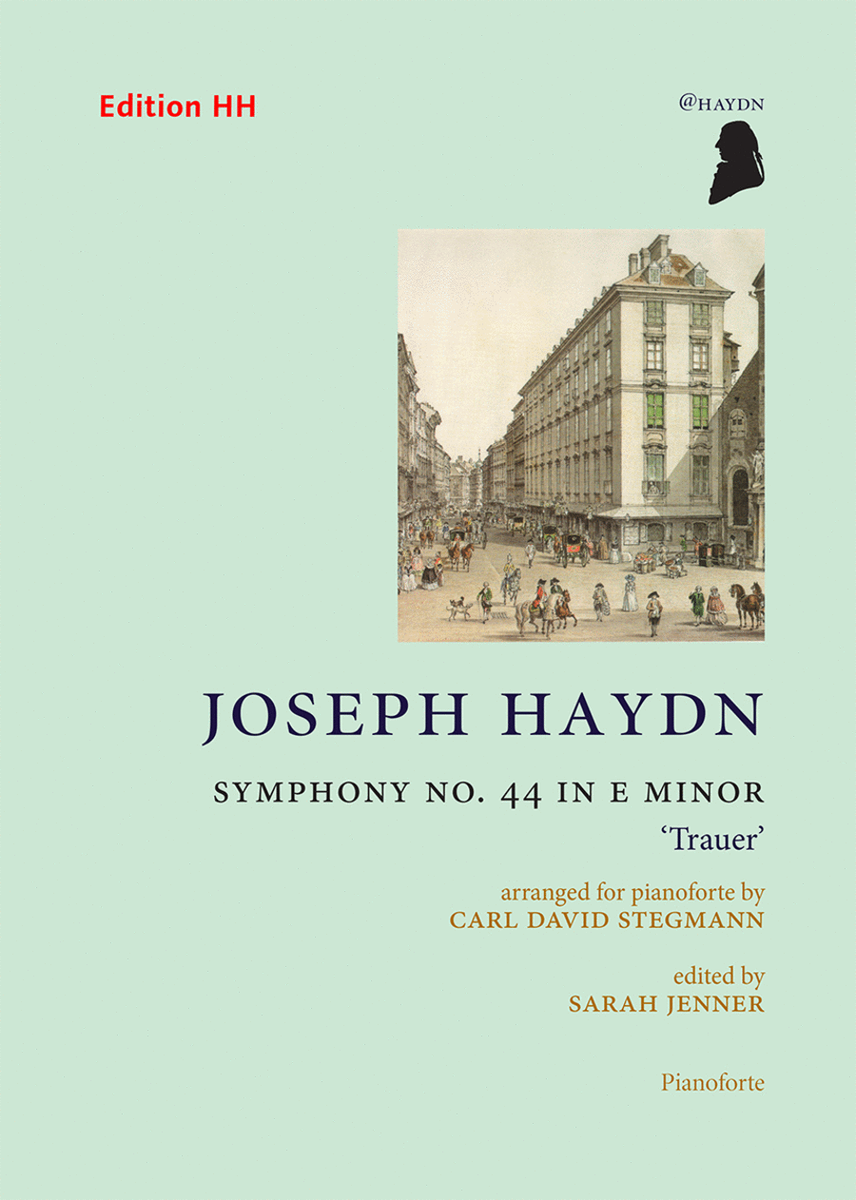
Symphony No. 44 (Trauer)
22009042
22009042
22009042
Copyright Material for Preview Only - Sheet Music Plus
Piano solo
SKU: HH.HH508-SOL
Composed by Franz Joseph Haydn. Edited by Sarah Jenner. Arranged by C.D. Stegmann. Classical. Playing score. Duration c.24:00. Edition HH Music Publishers #HH508-SOL. Published by Edition HH Music Publishers (HH.HH508-SOL).
ISBN 9790708185185. 8.27 x 11.69 inches.
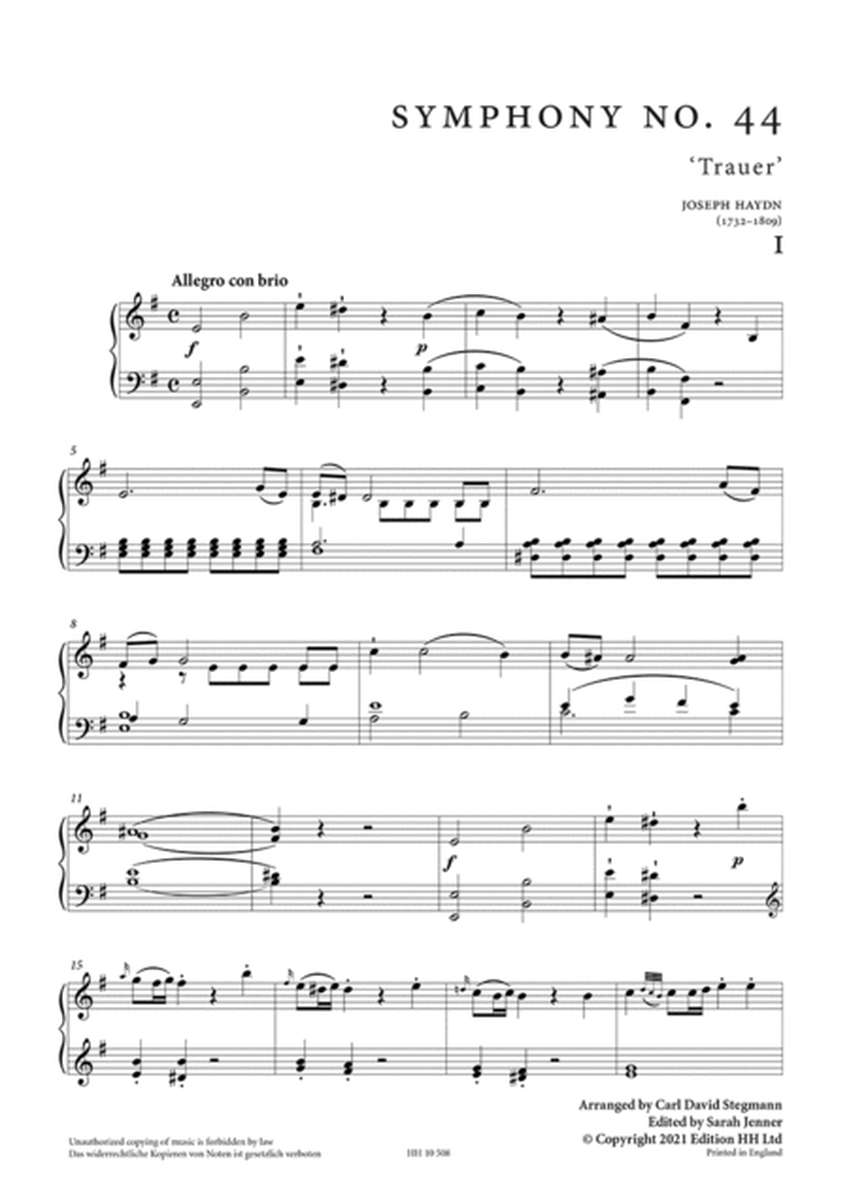
Symphony No. 44 is one of a number of Haydn’s middle period works often regarded as representing the so-called Sturm und Drang (‘Storm and Stress’) style of melodramatic realism taken over from contemporary German literary and dramatic models. The symphony is monotonal – each movement being in the same key, with contrast provided by excursions into the tonic major. Contrapuntal writing pervades the whole work; the second movement, unusually, is a minuet and is a strict double canon at one bar’s interval (‘Canone in Diapason’ is Haydn’s term) which itself is contrasted by the lyrical Trio section in the tonic major. The third movement, an Adagio in the tonic major, prompted the symphony’s long-adopted soubriquet, ‘Trauer’ (‘Mourning’) as it was said to have been requested by the composer himself to be played at his own funeral.2 The monothematic contrapuntal Finale reverts to the tense emotional level of the opening Allegro.
Piano solo
SKU: HH.HH508-SOL
Composed by Franz Joseph Haydn. Edited by Sarah Jenner. Arranged by C.D. Stegmann. Classical. Playing score. Duration c.24:00. Edition HH Music Publishers #HH508-SOL. Published by Edition HH Music Publishers (HH.HH508-SOL).
ISBN 9790708185185. 8.27 x 11.69 inches.
Symphony No. 44 is one of a number of Haydn’s middle period works often regarded as representing the so-called Sturm und Drang (‘Storm and Stress’) style of melodramatic realism taken over from contemporary German literary and dramatic models. The symphony is monotonal – each movement being in the same key, with contrast provided by excursions into the tonic major. Contrapuntal writing pervades the whole work; the second movement, unusually, is a minuet and is a strict double canon at one bar’s interval (‘Canone in Diapason’ is Haydn’s term) which itself is contrasted by the lyrical Trio section in the tonic major. The third movement, an Adagio in the tonic major, prompted the symphony’s long-adopted soubriquet, ‘Trauer’ (‘Mourning’) as it was said to have been requested by the composer himself to be played at his own funeral.2 The monothematic contrapuntal Finale reverts to the tense emotional level of the opening Allegro.
Tell a friend (or remind yourself) about this product. We'll instantly send an email containing product info and a link to it. You may also enter a personal message.
We do not use or store email addresses from this form for any other purpose than sending your share email.
Read our Privacy Policy.
After purchase, you can download your MP3 from your Sheet Music Plus Digital Library - no software installation is necessary! You can also listen to your MP3 at any time in your Digital Library.
After purchase, you can download your Smart Music from your Sheet Music Plus Digital Library - no software installation is necessary! You can also download at any time in your Digital Library.
After purchase you can download your video from your Digital Library. Your video is in XX format and is playable on most pre-installed video players.