Details
- Ensembles:
- String Orchestra
- Genres:
- Classical Period
- Composers:
- Wolfgang Amadeus Mozart
- Publishers:
- Alfred Music Belwin Music
- Series:
- Belwin Concert String Orchestra
- UPC:
- 038081456256
- Format:
- Score and Parts
- Item types:
- Physical
- Level:
- Grade 3
- Musical forms:
- Symphony
- Artist:
- Wolfgang Amadeus Mozart
- Usages:
- School and Community
- Number of Pages:
- 124
- Shipping Weight:
- 1.31 pounds
Orchestra - Grade 3
SKU: AP.40440
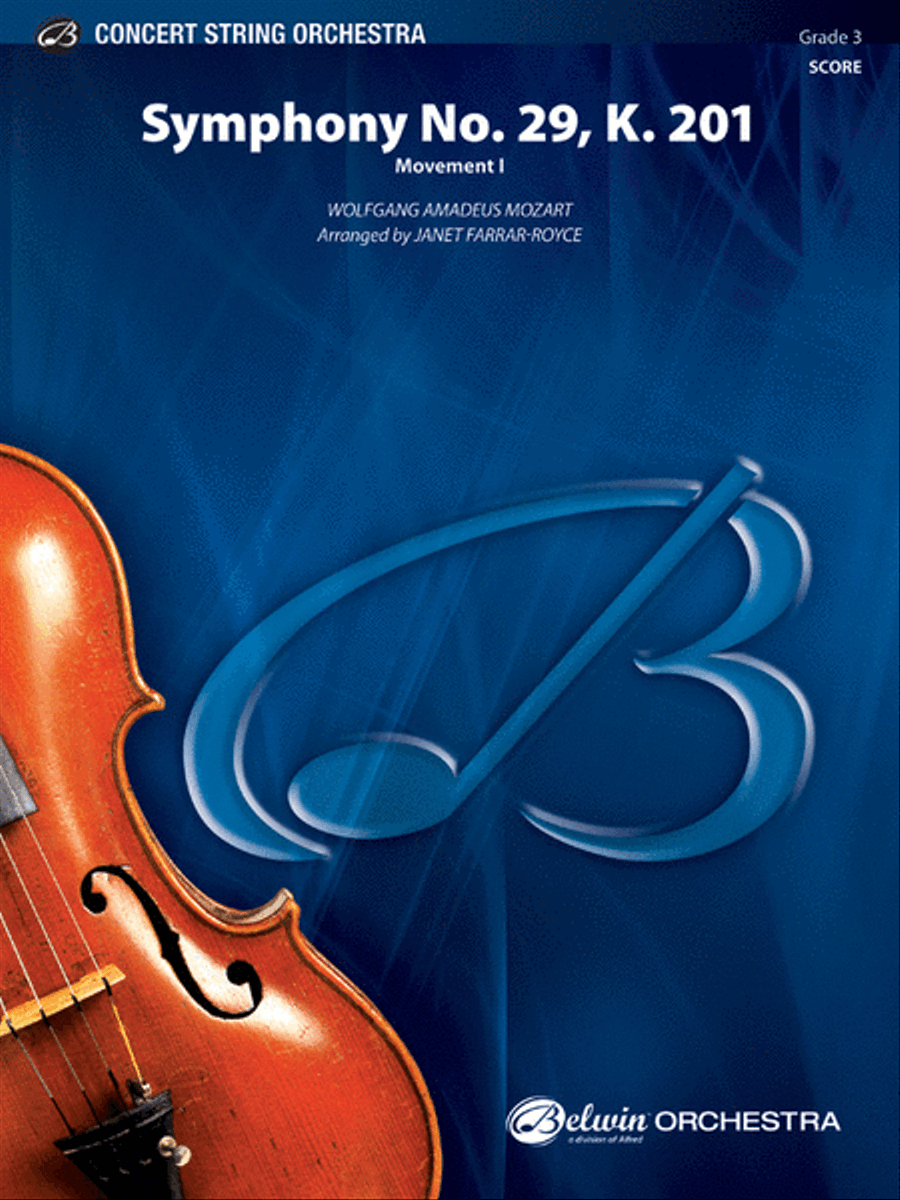
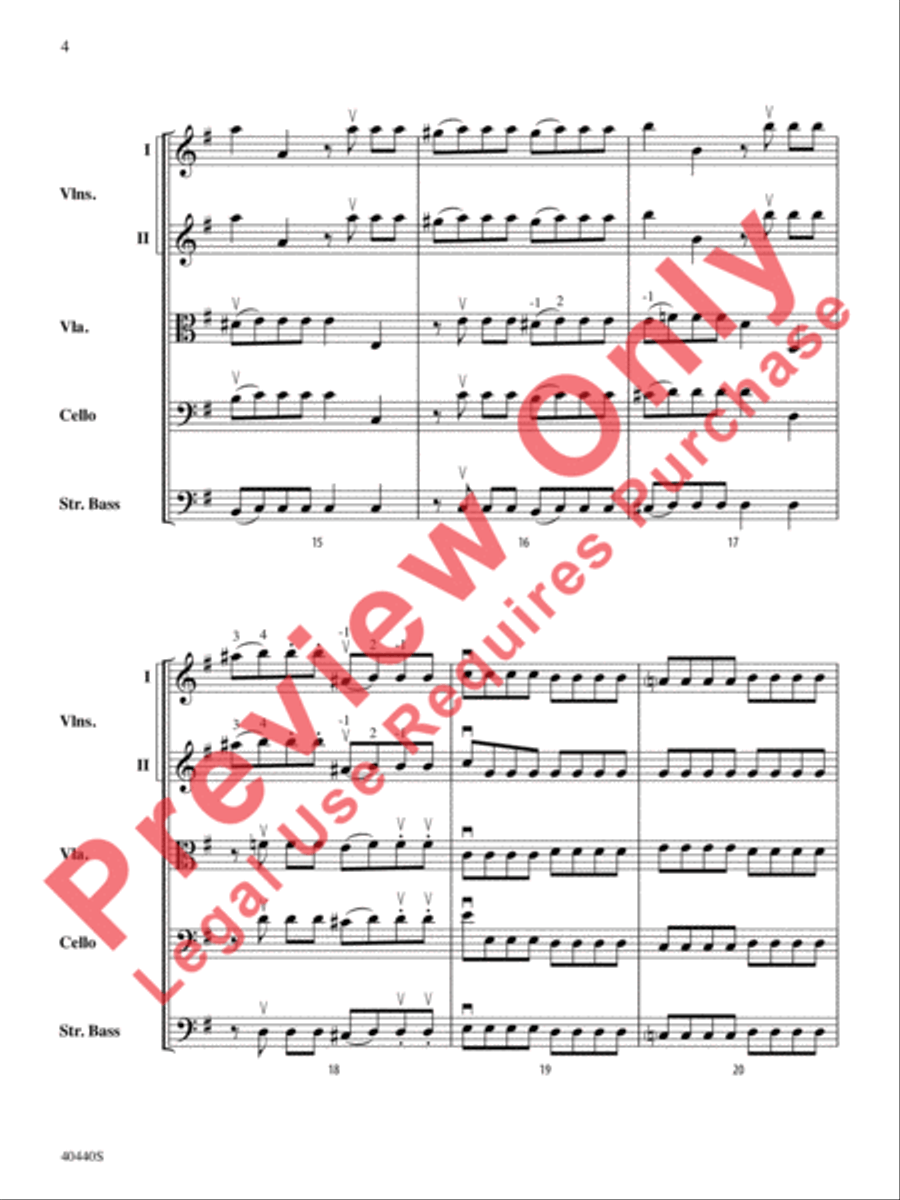
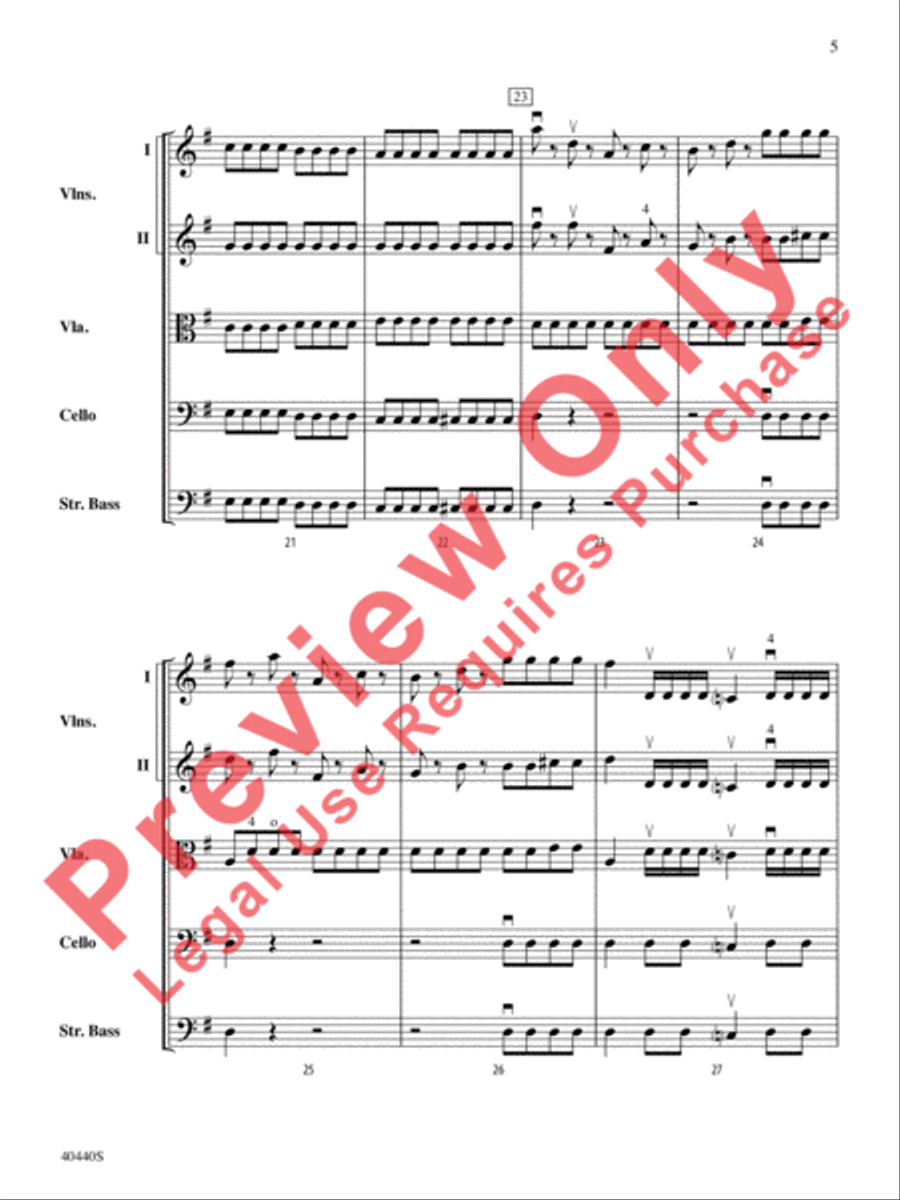
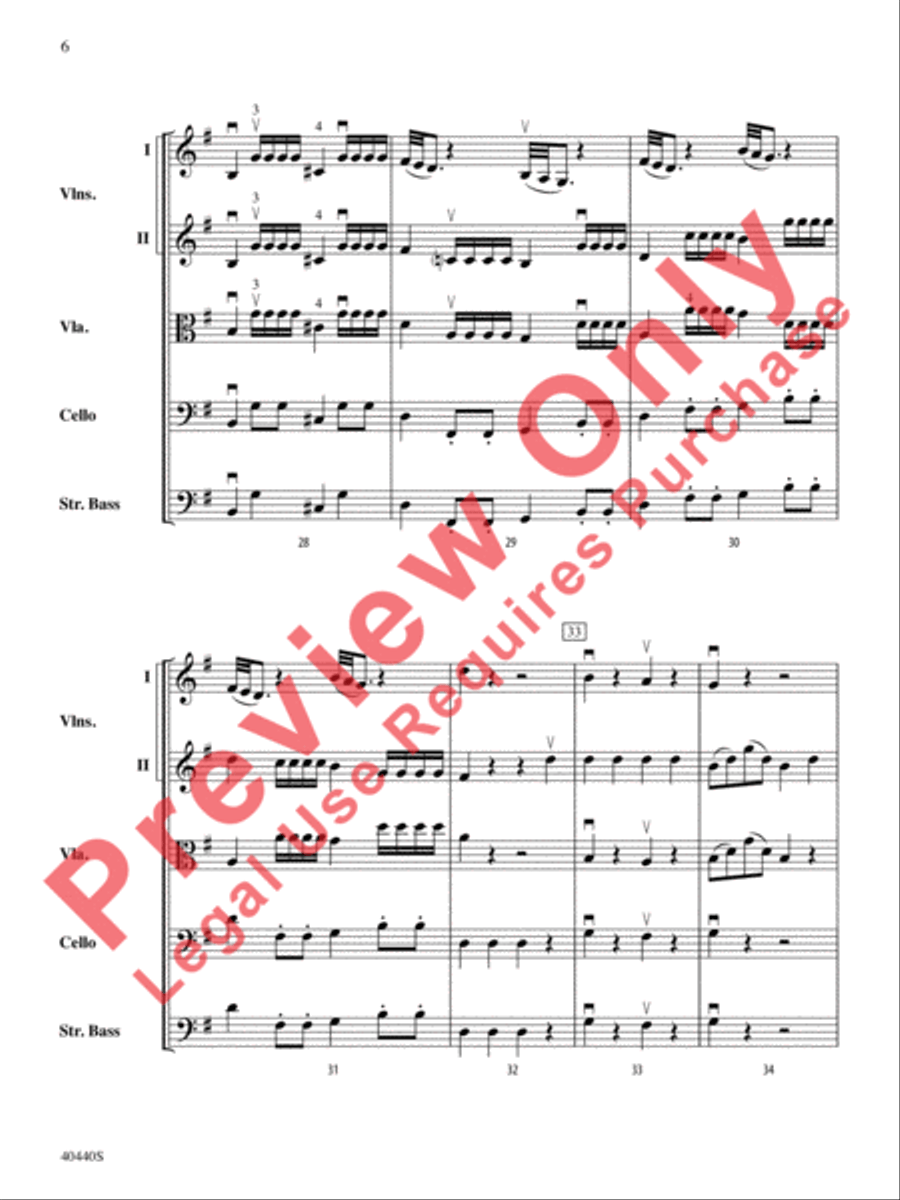
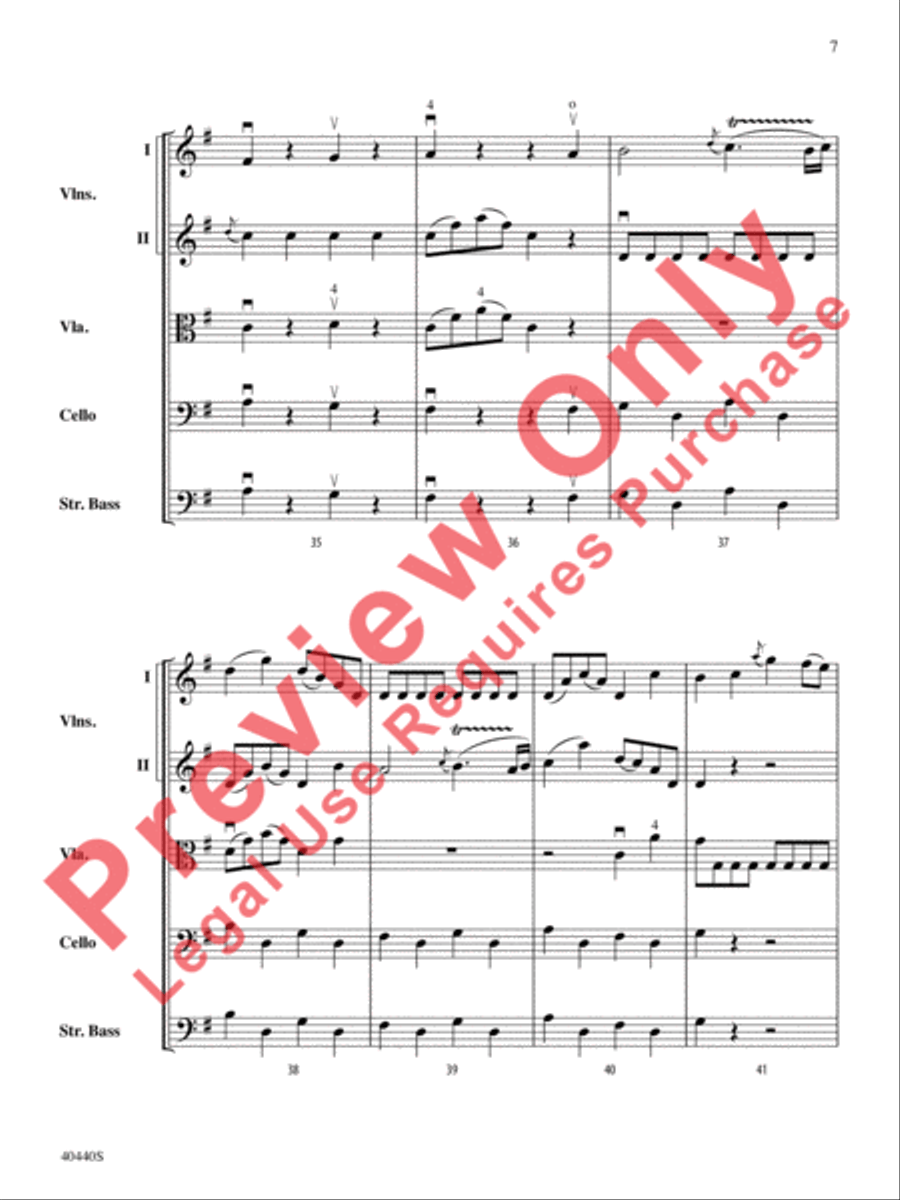
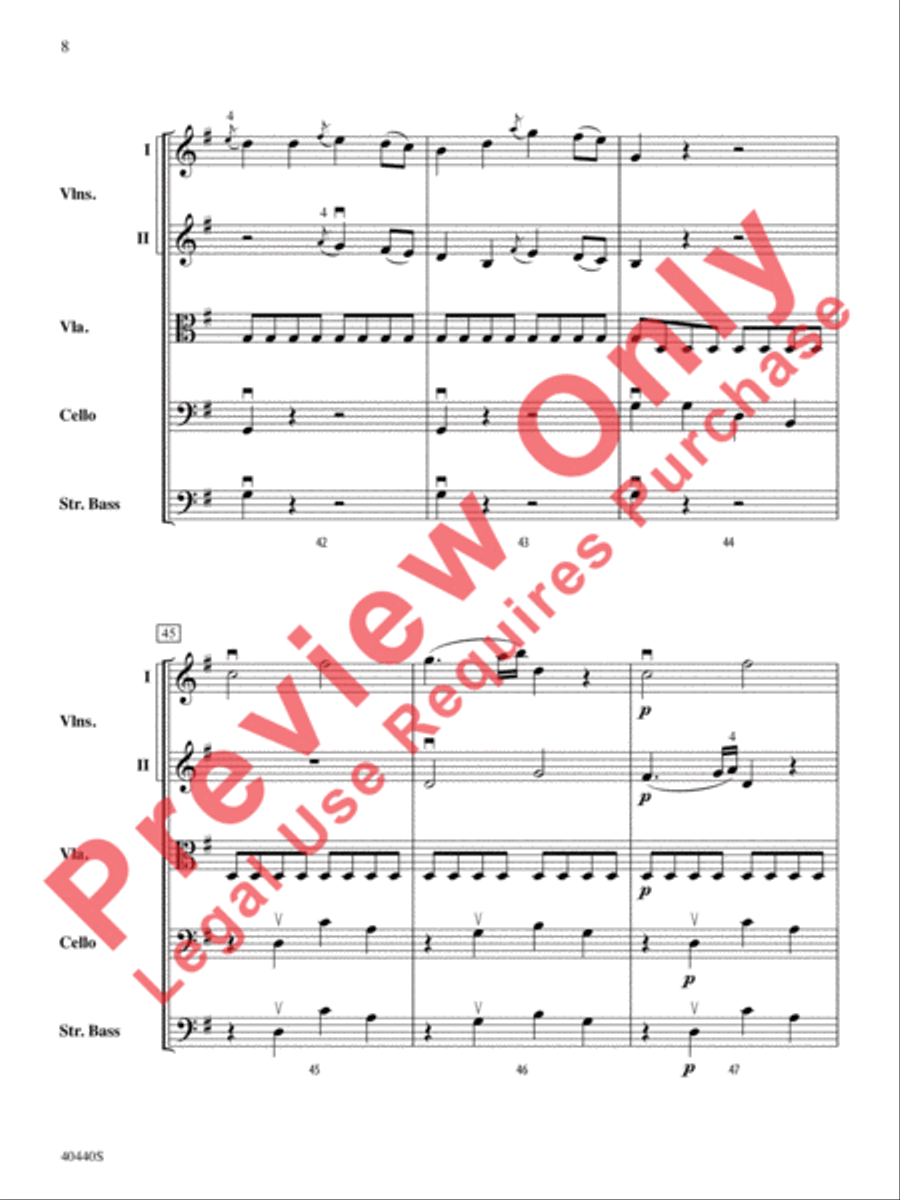
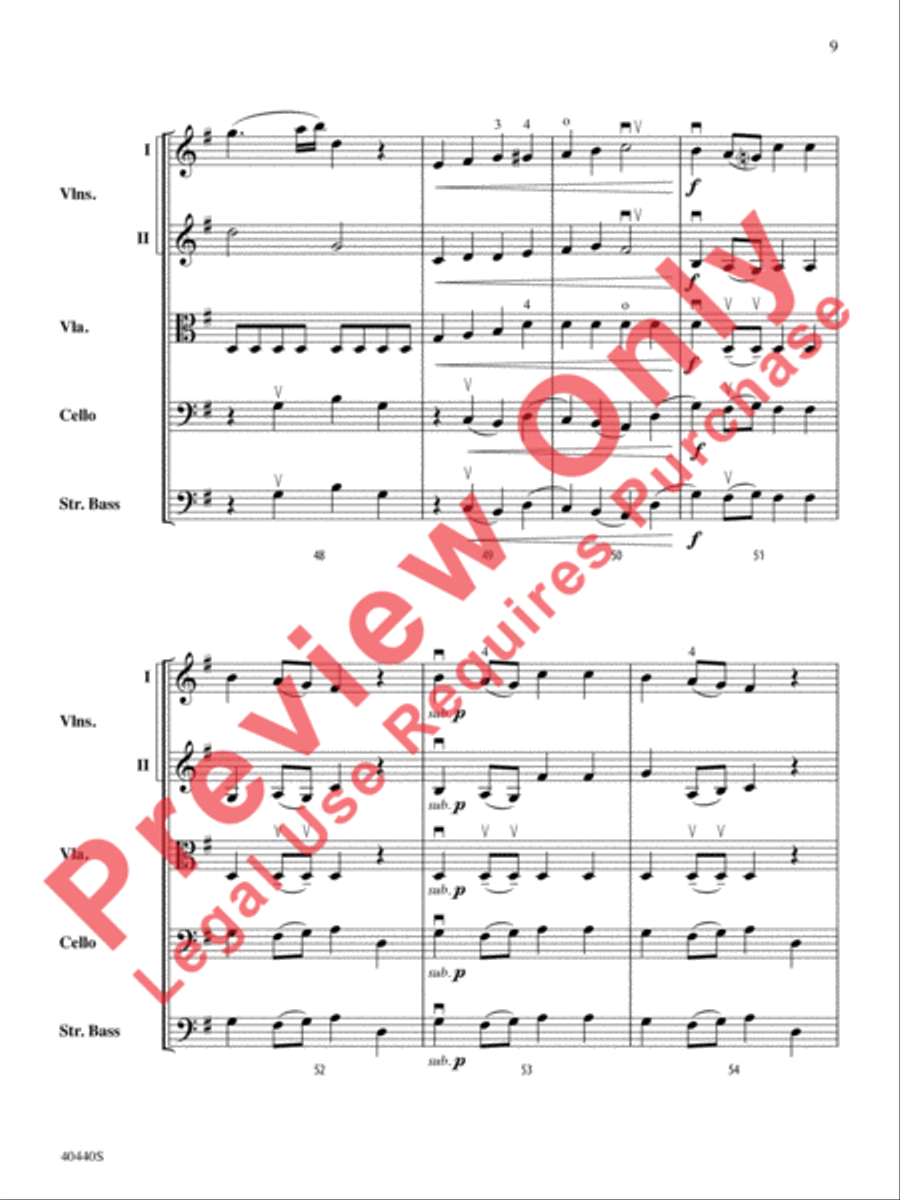
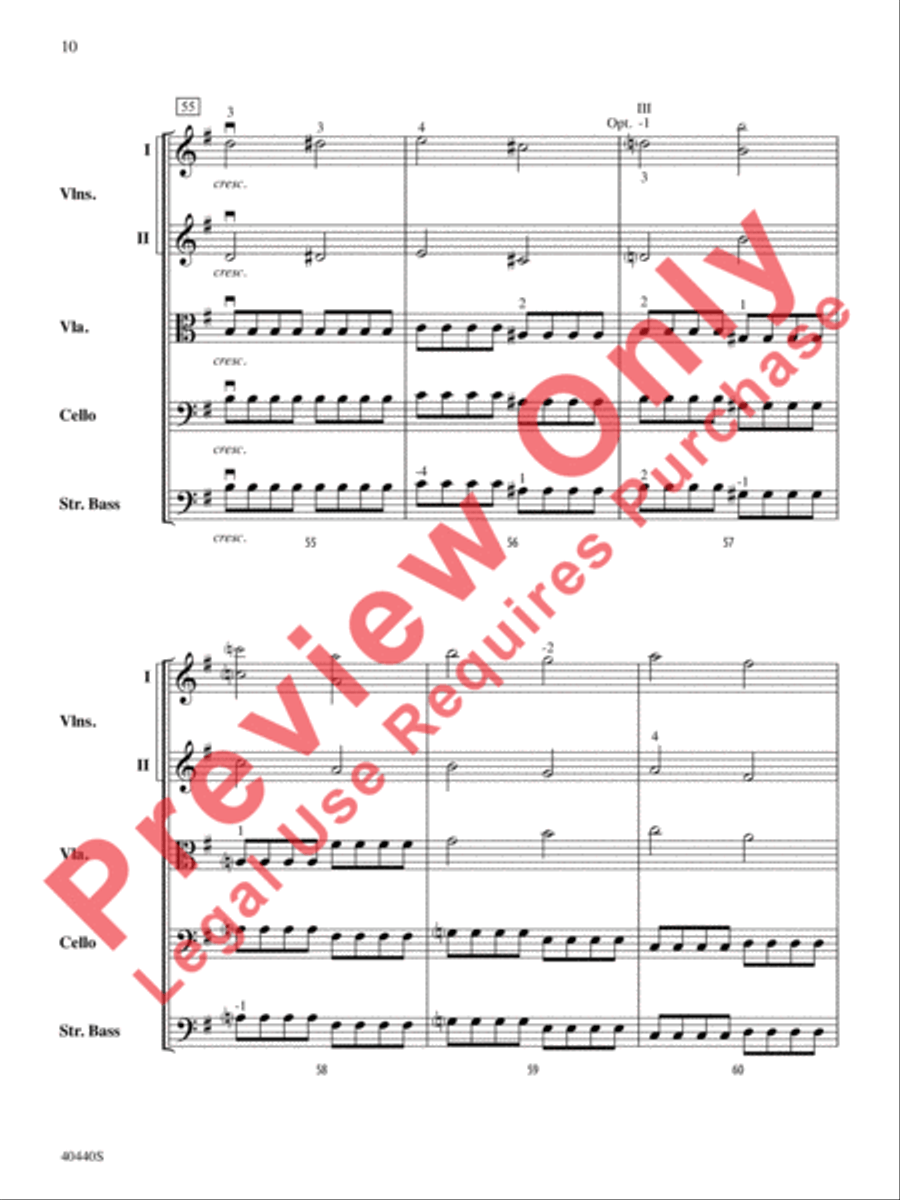
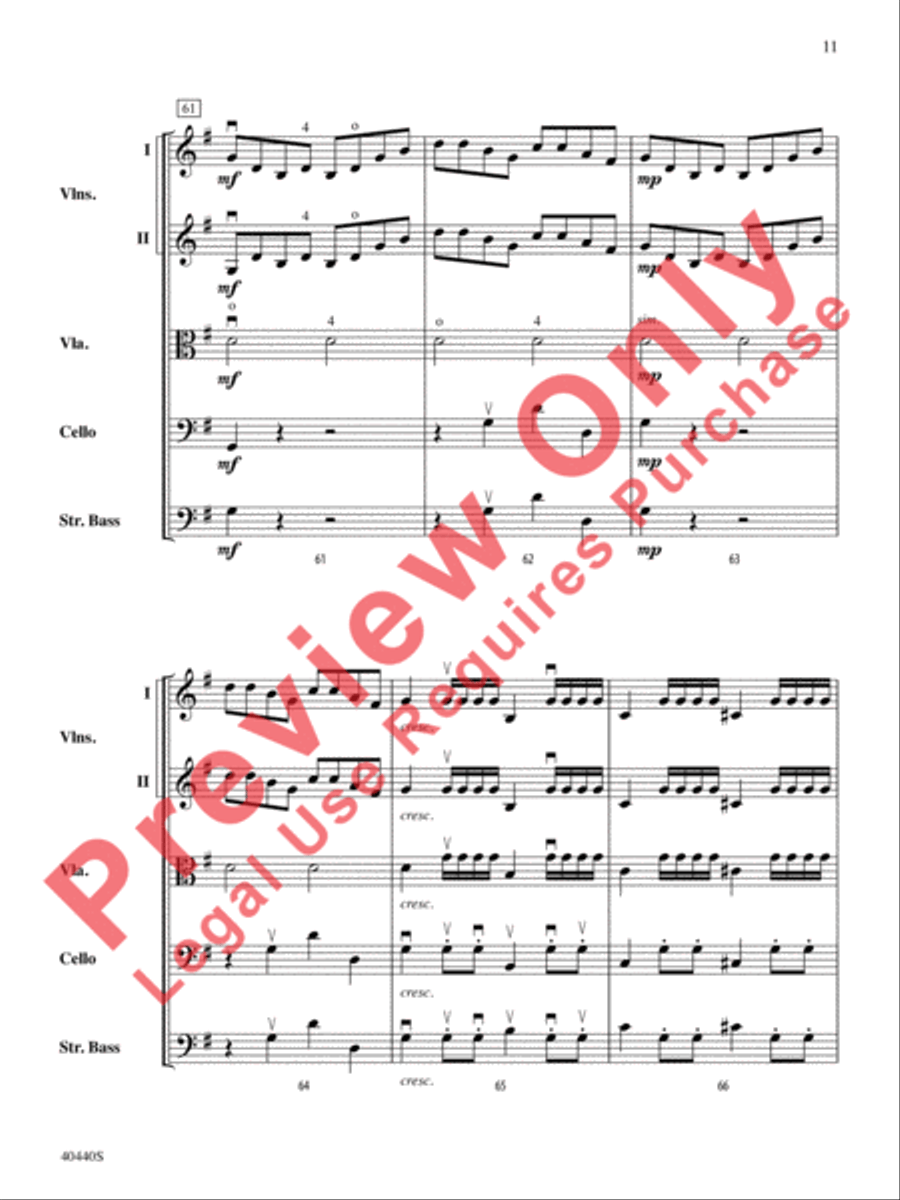
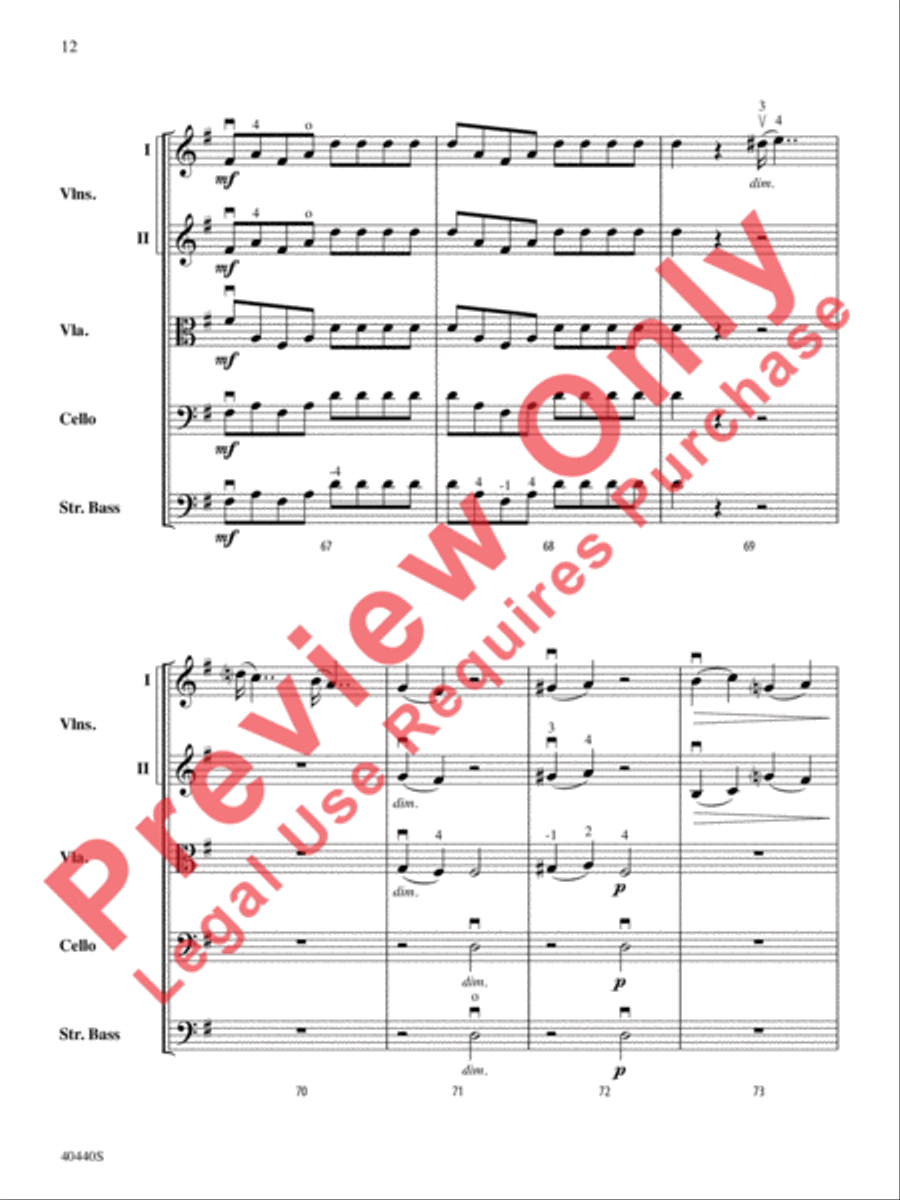
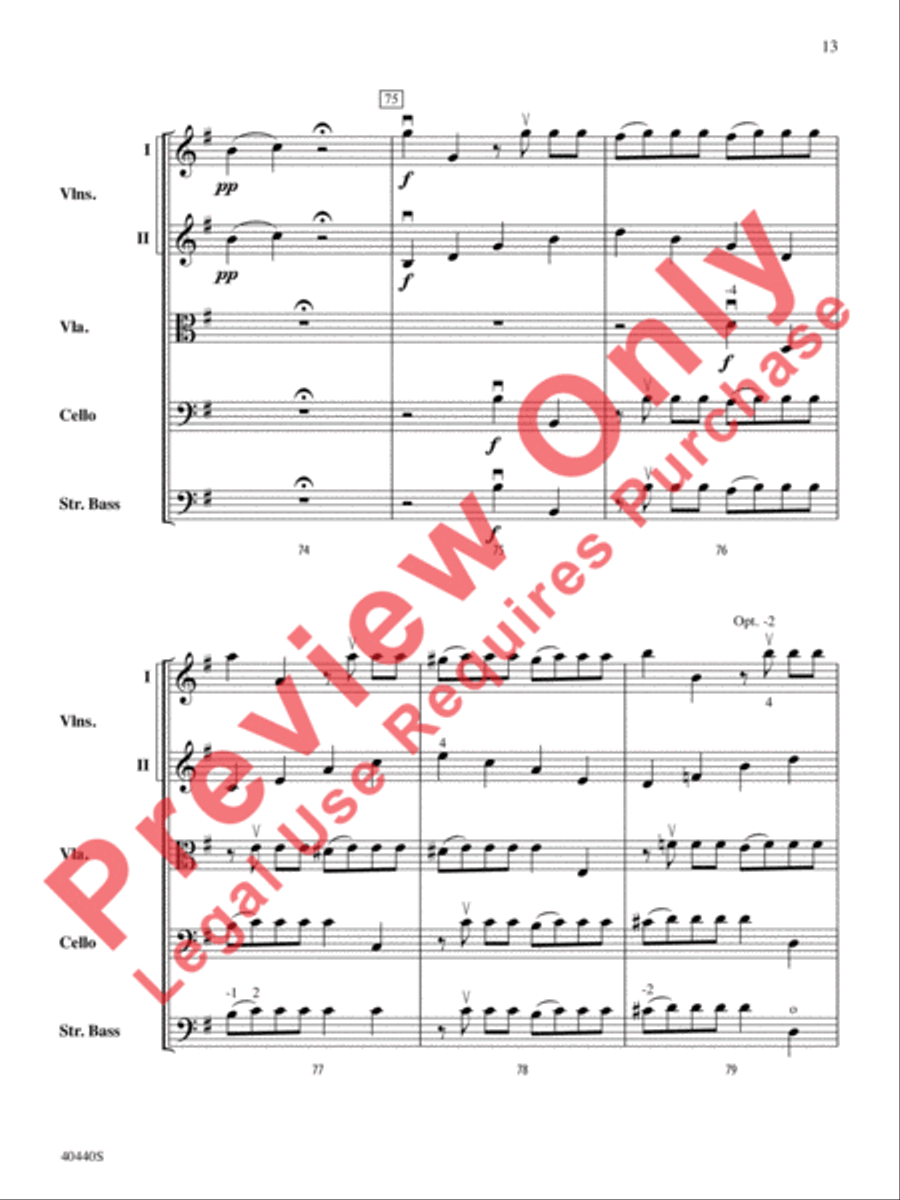
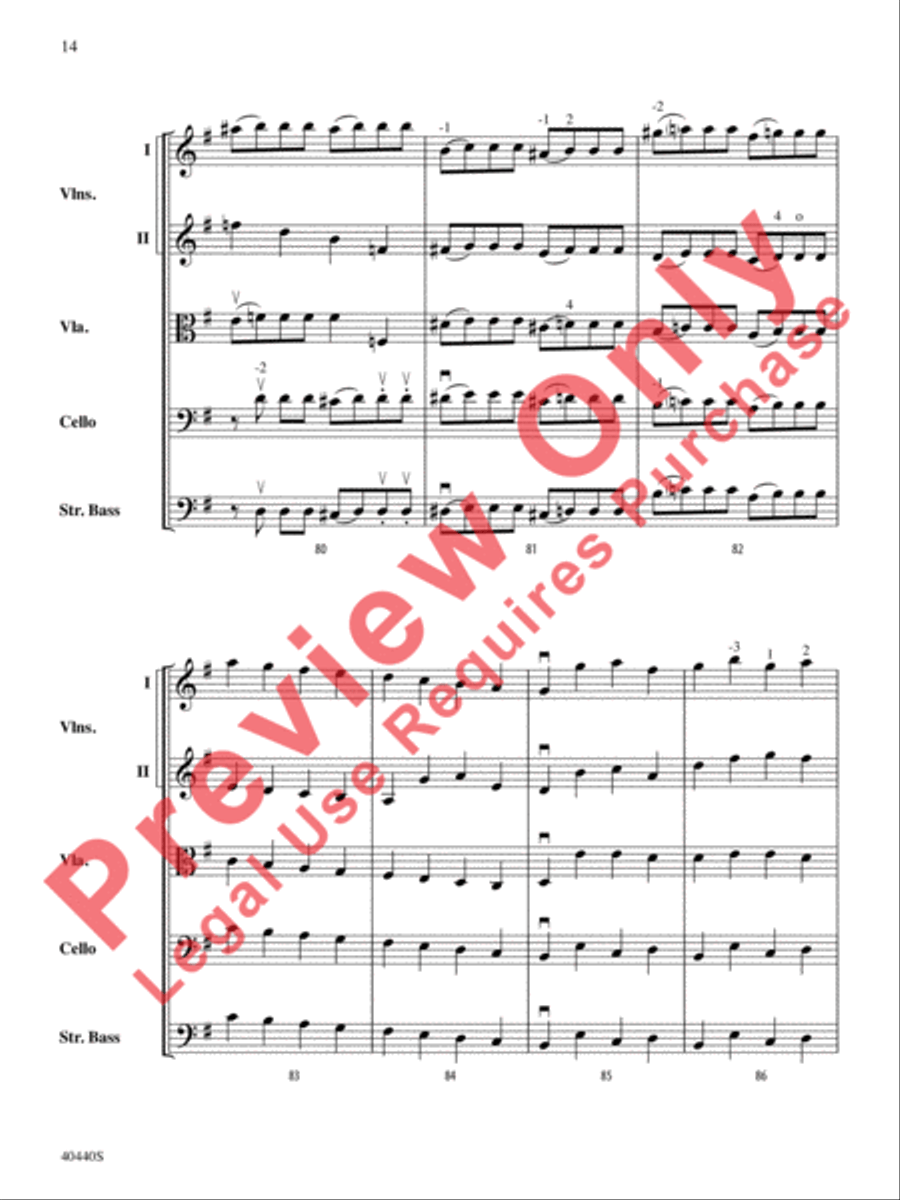
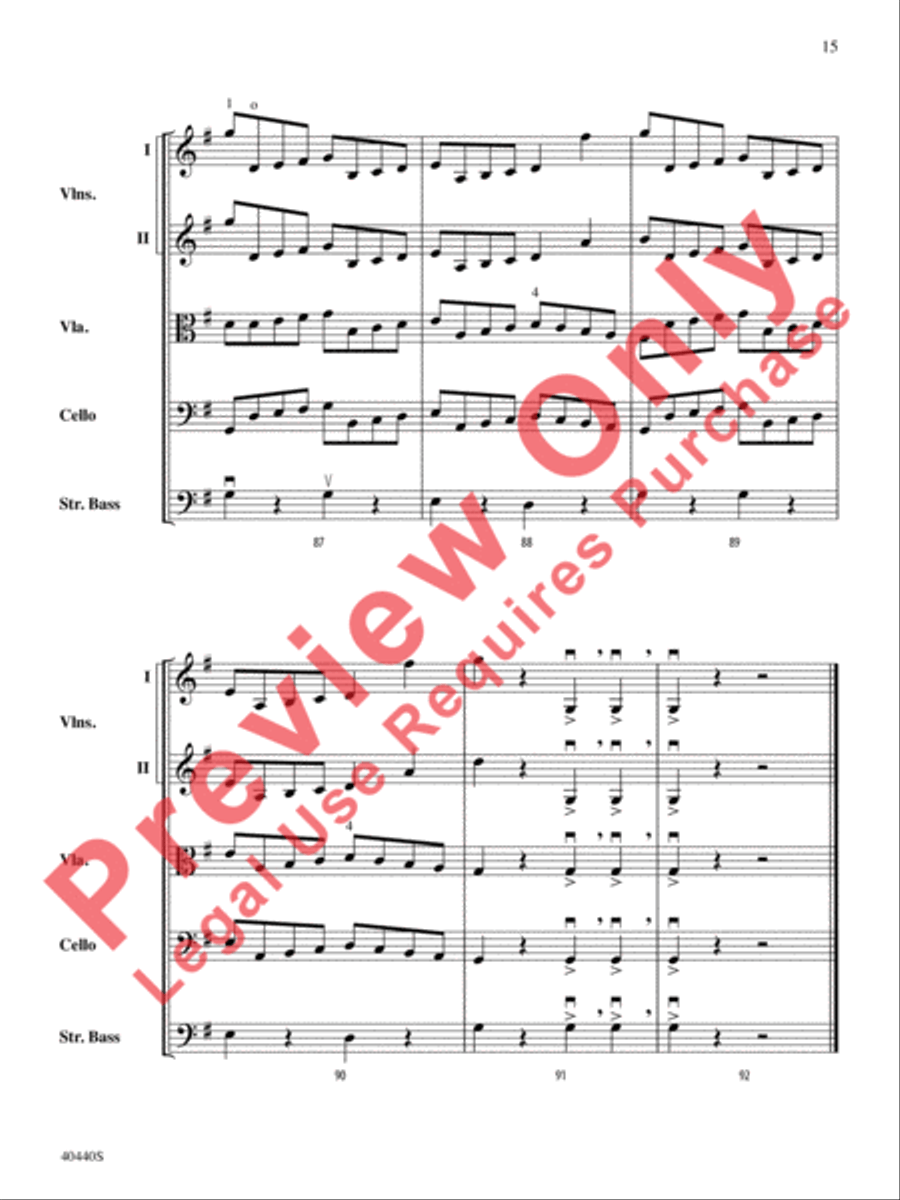
Movement 1. Composed by Wolfgang Amadeus Mozart. Arranged by Janet Farrar-Royce. MakeMusic Cloud; Masterworks; Performance Music Ensemble; Single Titles; String Orchestra. Belwin Concert String Orchestra. Form: Transcription. Classical; Masterwork Arrangement. Score and Part(s). 124 pages. Belwin Music #00-40440. Published by Belwin Music (AP.40440).UPC: 038081456256. English.
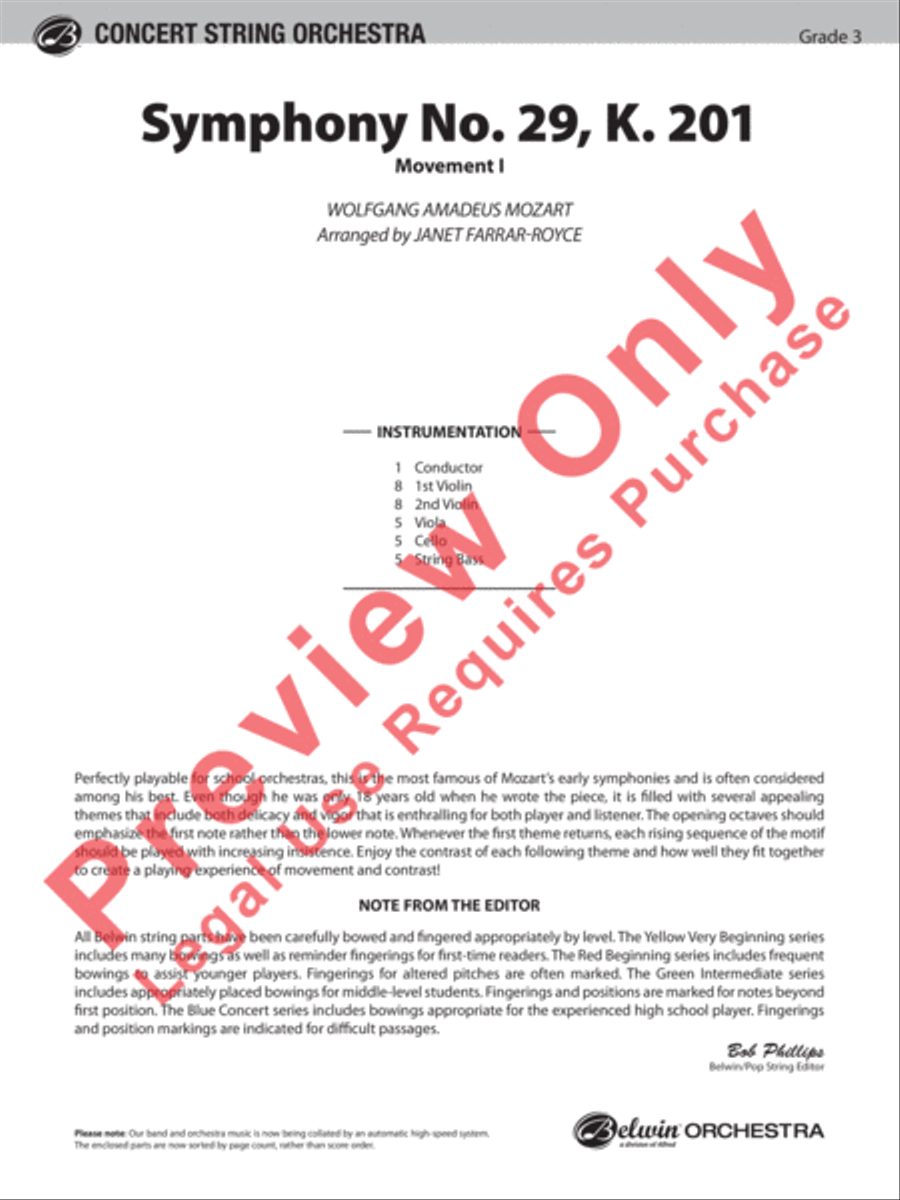
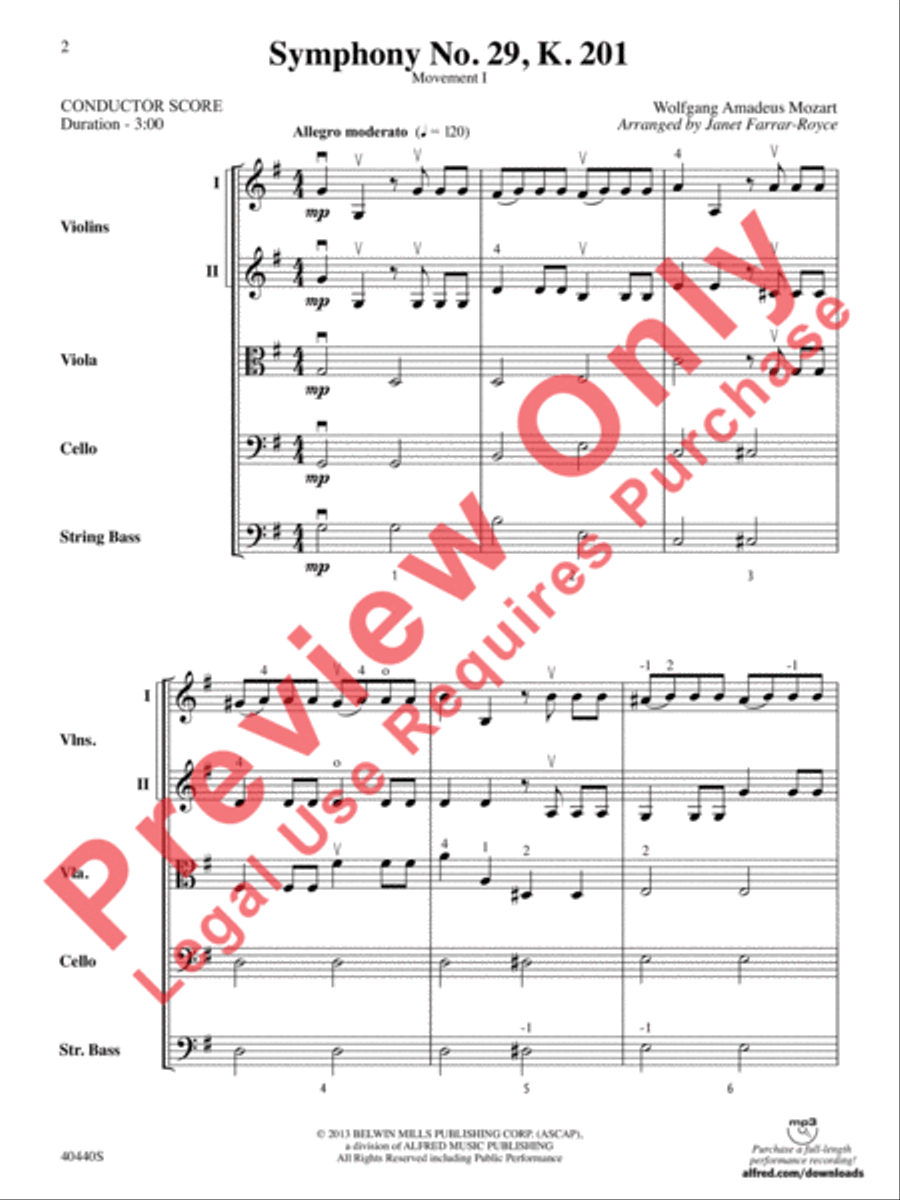
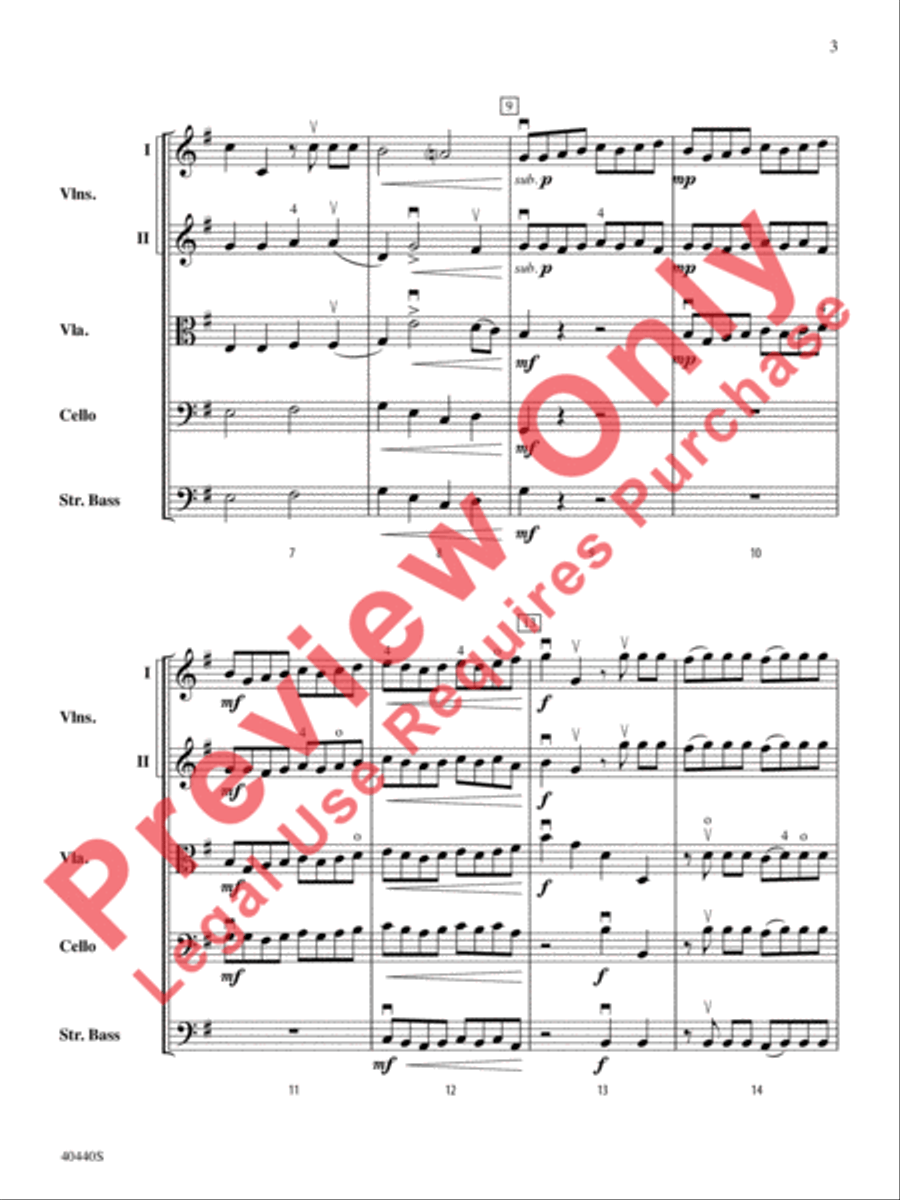
Perfectly playable for school orchestras, this is the most famous of Mozart's early symphonies and often considered among his best. Even though he was only 18 years old when he wrote the piece, it is filled with several appealing themes that include both delicacy and vigor that is enthralling for both player and listener. The opening octaves should emphasize the first note rather than the lower note. Whenever the first theme returns, each rising sequence of the motif should be played with increasing insistence. Enjoy the contrast of each following theme and how well they fit together to create a playing experience of movement and contrast! This title is available in MakeMusic Cloud.
- More by this Composer:
- Wolfgang Amadeus Mozart Wolfgang Amadeus Mozart Piano Wolfgang Amadeus Mozart Piano Accompaniment Wolfgang Amadeus Mozart Violin
- Series:
- Belwin Concert String Orchestra
- Artists:
- Wolfgang Amadeus Mozart
- Ensemble:
- String Orchestra
- Publisher:
- Alfred Music Belwin Music