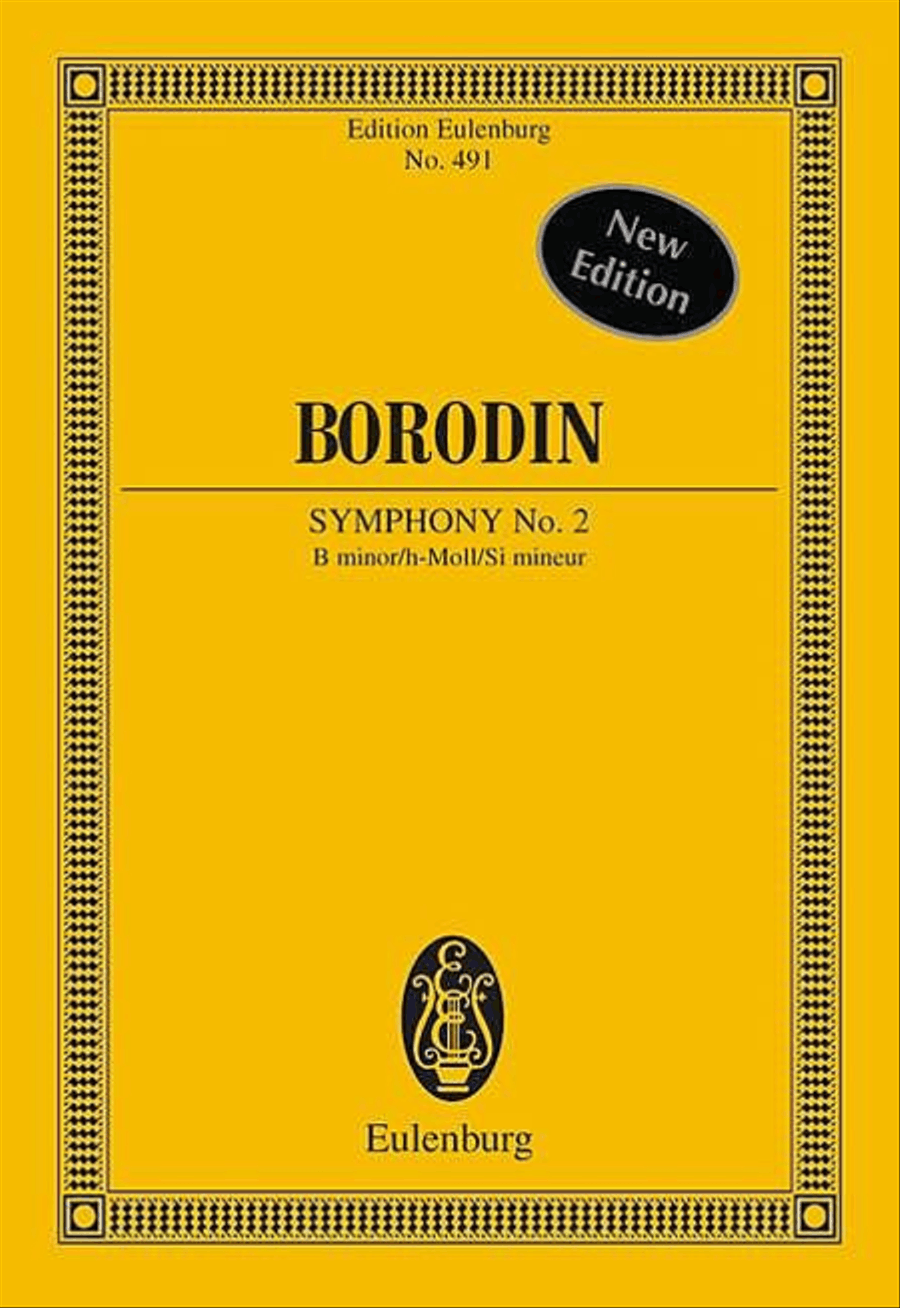
Details
- Ensembles:
- Orchestra
- Genres:
- Romantic Period
- Composers:
- Alexander Borodin
- Publishers:
- Eulenburg Edition
- UPC:
- 841886014787
- ISBN:
- 9783795766597
- Format:
- Study Score
- Item types:
- Physical
- Musical forms:
- Symphony
- Artist:
- Alexander Borodin
- Usages:
- School and Community
- Size:
- 6.25x9.0x0.356 inches
- Number of Pages:
- 184
- Shipping Weight:
- 0.83 pounds
SKU: HL.49009963
Study Score. Composed by Alexander Borodin. This edition: Paperback/Soft Cover. Sheet music. Edition Schott. Classical. Study Score. 184 pages. Eulenburg Edition #ETP491. Published by Eulenburg Edition (HL.49009963).ISBN 9783795766597. UPC: 841886014787. 6.25x9.0x0.356 inches.
It took Borodin almost five years to write his first symphony, and the composition of 'Symphony No. 2' was to take just as much time. One should not forget, however, that music was mainly a leisure activity for the professor of organic chemistry in St. Petersburg.His work on 'Prince Igor' begun after the world premiere of Symphony No. 1 finished in favour of the second symphony, but part of the musical material found its way into the new composition, and even the extant programme testifies to the critical analysis of the music theatre: the gathering of Russian warriors in the first movement, the Old Slavonic bard in the andante, and the party scene to the sounds of the gusli in the finale.
Preface/Vorwort
I. Allegro
II. Scherzo. Prestissimo-Allegretto
III. Andante
IV. Finale. Allegro
- More by this Composer:
- Alexander Borodin Alexander Borodin Cello Alexander Borodin Piano Alexander Borodin Piano Accompaniment
- Artists:
- Alexander Borodin
- Ensemble:
- Orchestra
- Publisher:
- Eulenburg Edition