Details
- Ensembles:
- Saxophone Quintet Woodwind Quintet Woodwind Ensemble
- Genres:
- Baroque Period
- Publishers:
- James Pybus
- Series:
- ArrangeMe
- Format:
- Score and Parts
- Item types:
- Digital
- Level:
- Late Intermediate
- Musical forms:
- Symphony
- Usages:
- School and Community
- Number of Pages:
- 45
SKU: A0.764655
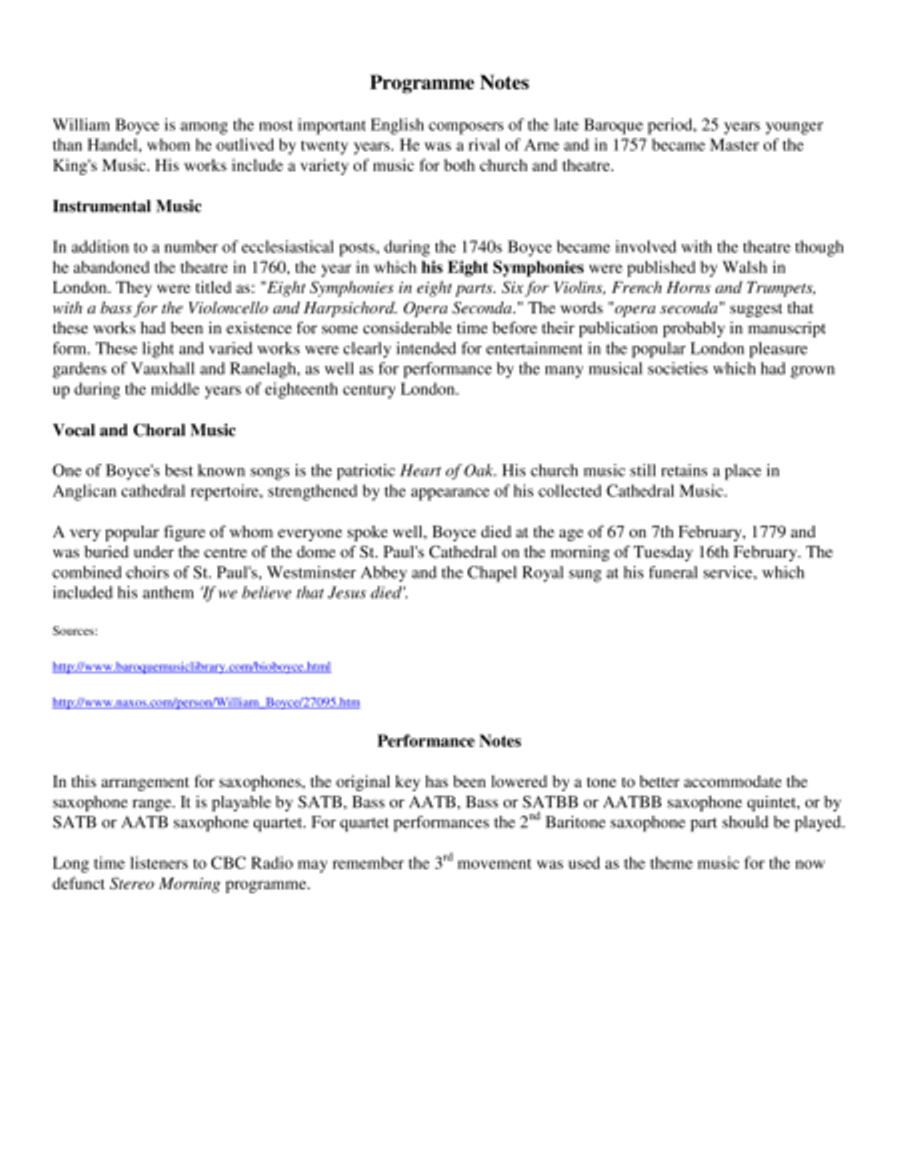
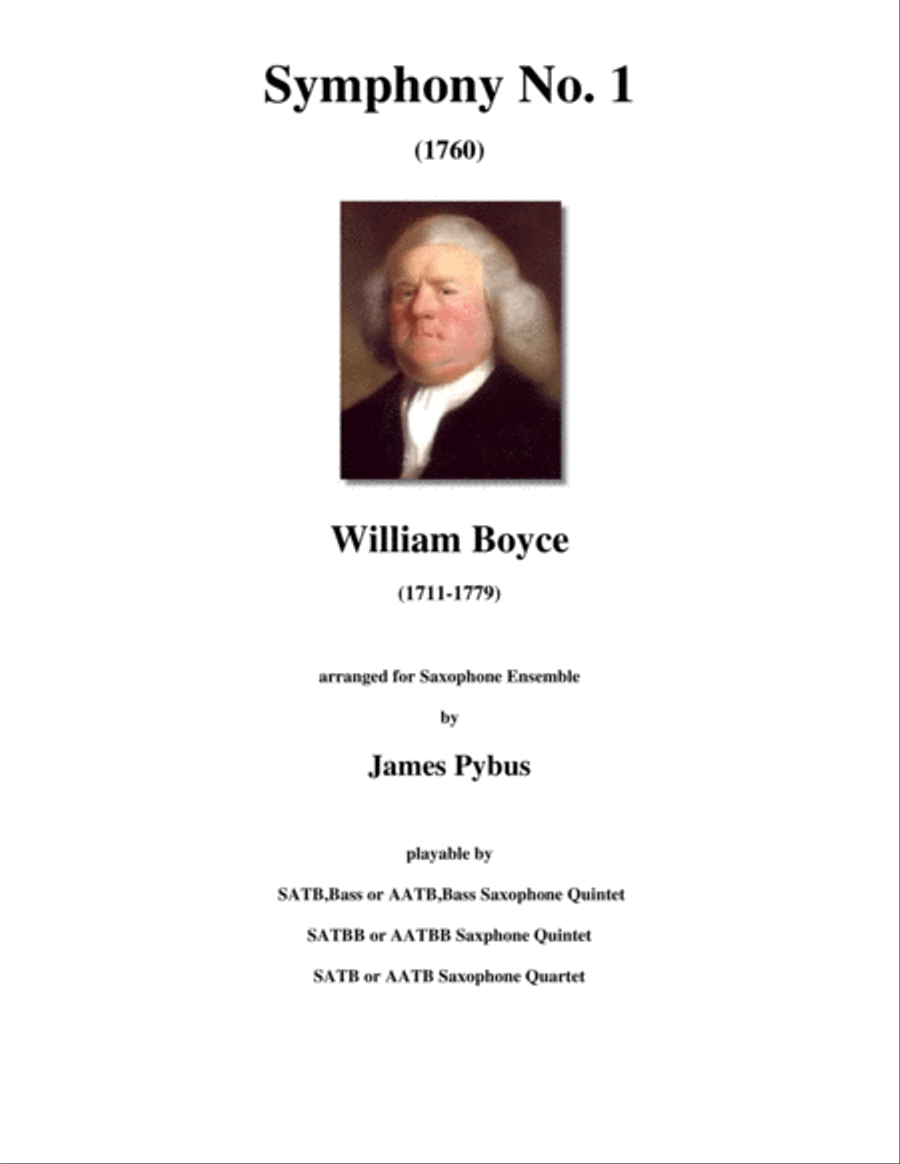
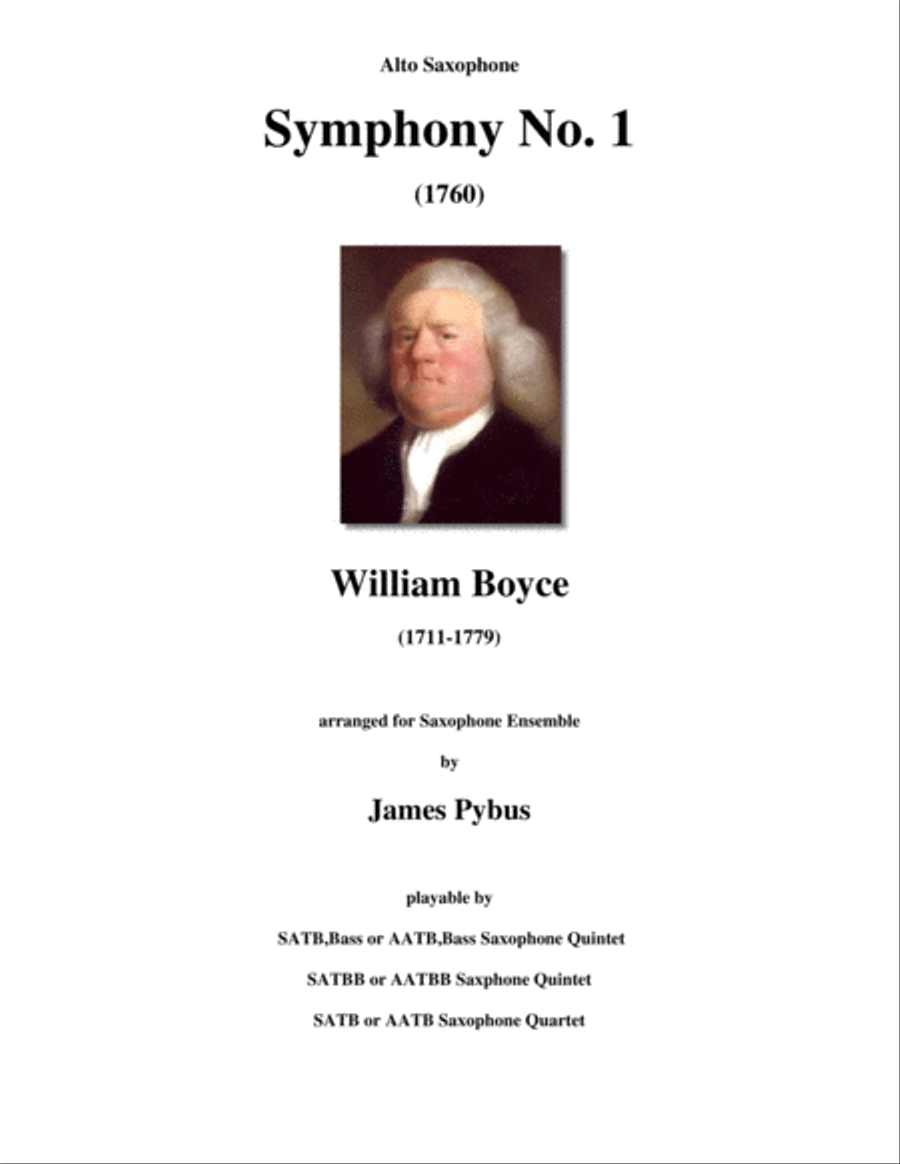
Composed by William Boyce (1711-1779). Arranged by James Pybus. Baroque. 45 pages. James Pybus #36735. Published by James Pybus (A0.764655).William Boyce is among the most important English composers of the late Baroque period, 25 years younger than Handel, whom he outlived by twenty years. He was a rival of Arne and in 1757 became Master of the King's Music. His works include a variety of music for both church and theatre. In addition to a number of ecclesiastical posts, during the 1740s Boyce became involved with the theatre, though he abandoned the theatre in 1760, the year in which his Eight Symphonies were published by Walsh in London. They were titled: "Eight Symphonies in eight parts. Six for Violins, French Horns and Trumpets, with a bass for the Violoncello and Harpsichord. Opera Seconda." These light and varied works were intended for entertainment in the popular London pleasure gardens of Vauxhall and Ranelagh, as well as for performance by the many musical societies which had grown up during the middle years of eighteenth-century London. In this arrangement for saxophones written in 1987 and revised in 2013 of Symphony No. 1, the original key has been lowered by a tone to better accommodate the saxophone range. It is playable by SATB, Bass Saxophone or AATB, Bass Saxophone, or SATBB or AATBB saxophone quintet, or by SATB or AATB saxophone quartet. For quartet performances, the 2nd Baritone saxophone part should be played. Long-time listeners of CBC Radio may remember the 3rd movement was used as the theme music for the now-defunct Stereo Morning programme. Duration 6:20 Contact me at [email protected].
About ArrangeMe
This product was created by a member of ArrangeMe, Hal Leonard's self-publishing community for independent composers, arrangers, and songwriters. Discover unique arrangements of popular titles and original compositions from diverse creators. The length, difficulty, and pricing are determined by the arranger or composer.
About Digital Downloads
Digital Downloads let you instantly access sheet music on your computer, tablet, or mobile device. Print your sheet music anywhere, anytime, or play it straight from your device—no internet connection is required after download.
Each Digital Download includes a watermark with your name, purchase date, and the number of copies purchased. You may only print or use the number of copies purchased. Redistribution or unauthorized printing is prohibited.
- ArrangeMe:
- James Pybus
- Series:
- ArrangeMe
- Instrument:
- Woodwinds Saxophone Tenor Saxophone Woodwinds Saxophone Soprano Saxophone Woodwinds Saxophone Baritone Saxophone Woodwinds Saxophone Alto Saxophone Woodwinds Saxophone Bass Saxophone
- Publisher:
- James Pybus