Details
- Instrument:
- Violin
- Ensembles:
- String Methods
- Composers:
- Dr. Shinichi Suzuki
- Publishers:
- Alfred Music
- Series:
- Suzuki Method
- UPC:
- 654979196310
- ISBN:
- 9780757900617
- Item types:
- Physical
- Instructionals:
- Suzuki Method
- Level:
- Beginning
- Musical forms:
- Minuet
- Artist:
- Dr. Shinichi Suzuki
- Usages:
- School and Community
- Size:
- 9x12 inches
- Number of Pages:
- 48
- Shipping Weight:
- 0.5 pounds
SKU: AP.0144S
Volume 1. Violin Part. Composed by Dr. Shinichi Suzuki. This edition: International. Method/Instruction; String - Violin (Suzuki); Suzuki. Suzuki Method. Instructional and Method. Instructional book. With standard notation, fingerings, instructional text, illustrations and photos. 48 pages. Alfred Music #00-0144S. Published by Alfred Music (AP.0144S).ISBN 9780757900617. UPC: 654979196310. 9x12 inches. English.
Revised edition features: New engravings in a 9" x 12" format New editing of pieces, including bowings and fingerings 16 additional pages Additional exercises, some from Dr. Suzuki, plus additional insight and suggestions for teachers Glossary of terms in English, French, German and Spanish Musical notation guide Fingerboard position New photos Revised CD (search for product # AP.28261 for book w/CD) features new recordings by Bill Preucil, Jr and piano accompaniments recorded without the violin part.
About Suzuki Method
The Suzuki Method is based on the principle that all children possess ability and that this ability can be developed and enhanced through a nurturing environment. All children learn to speak their own language with relative ease and if the same natural learning process is applied in teaching other skills, these can be acquired as successfully. Suzuki referred to the process as the Mother Tongue Method and to the whole system of pedagogy as Talent Education. The important elements of the Suzuki approach to instrumental teaching include the following:an early start (aged 3-4 is normal in most countries); the importance of listening to music; learning to play before learning to read; -the involvement of the parent; a nurturing and positive learning environment; a high standard of teaching by trained teachers; the importance of producing a good sound in a balanced and natural way; core repertoire, used by Suzuki students across the world; social interaction with other children. Suzuki students from all over the world can communicate through the language of music.
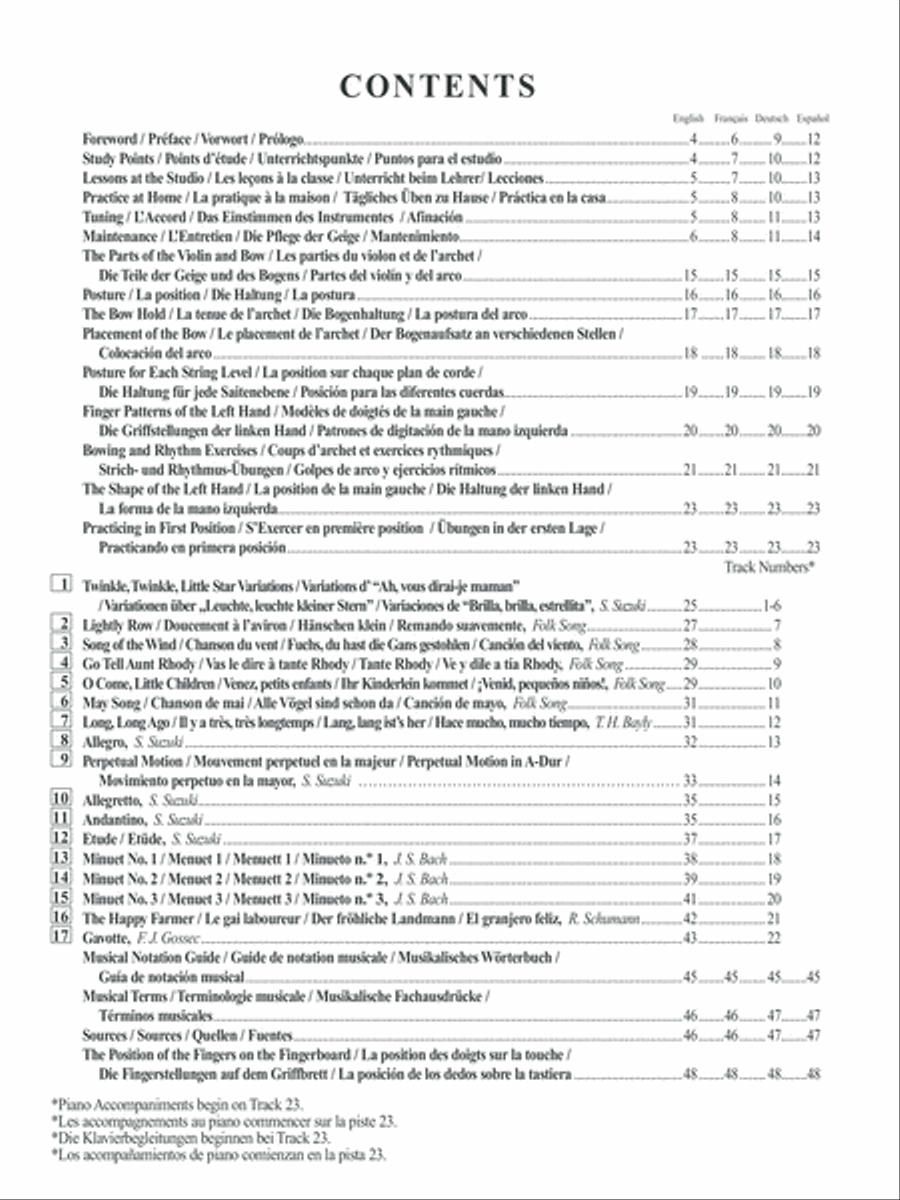
Foreword
Study Points
Lessons at the Studio
Practice at Home
Tuning
Maintenance
The Parts of the Violin and Bow
Posture
The Bow Hold
Placement of the Bow
Posture for the Different Strings
Finger Patterns of the Left Hand
Bowing and Rhythm Exercises
The Shape of the Left Hand
Practicing in First Position
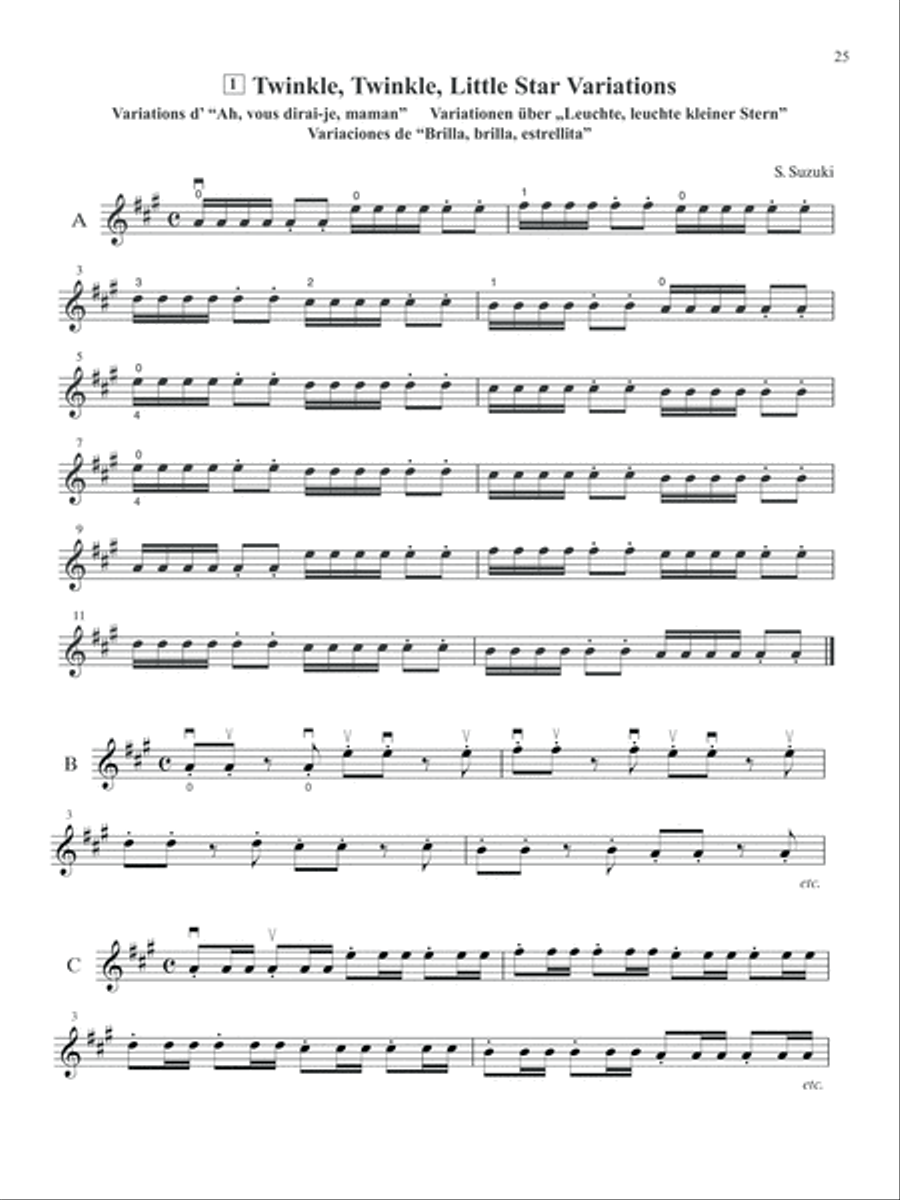
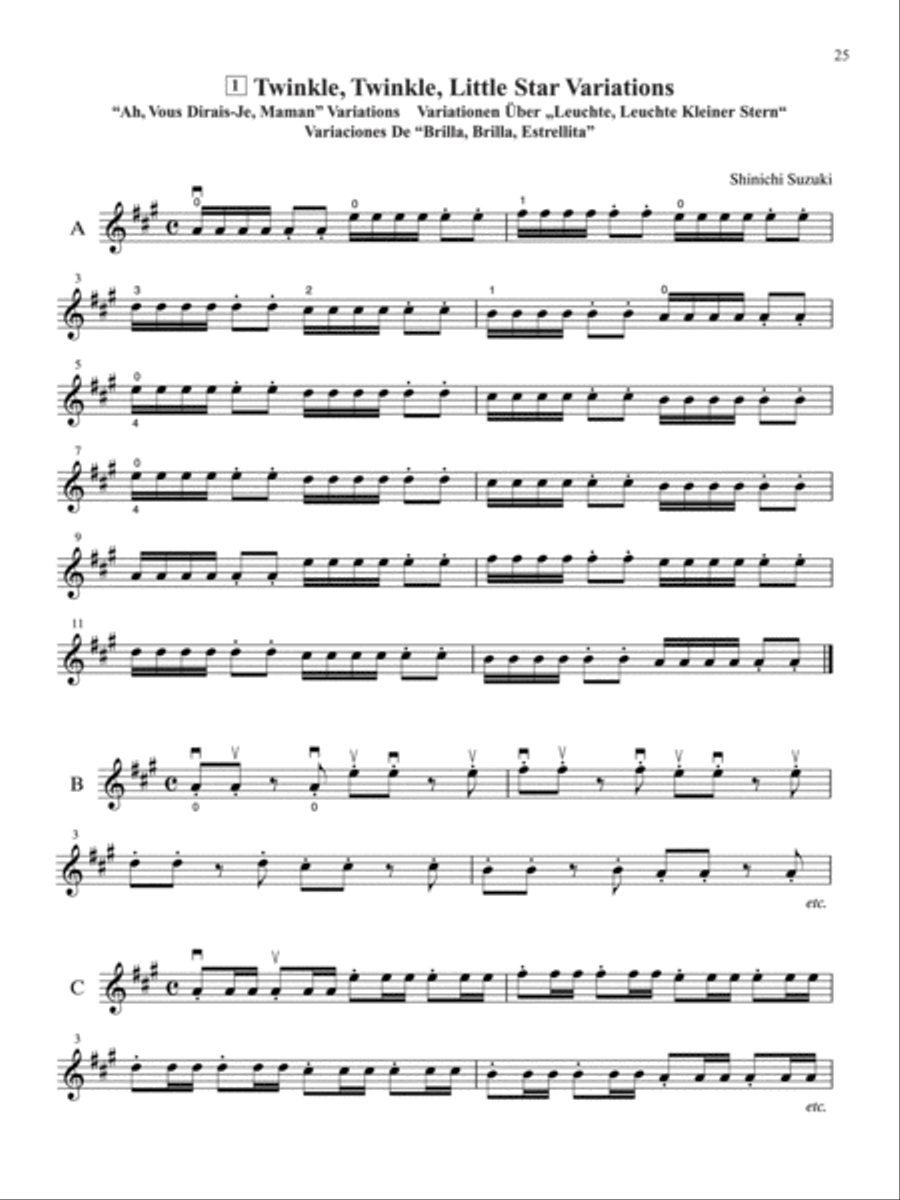
Twinkle, Twinkle, Little Star Variations
Lightly Row
Song Of The Wind
Go Tell Aunt Rhody
O Come, Little Children
May Song
Long, Long Ago
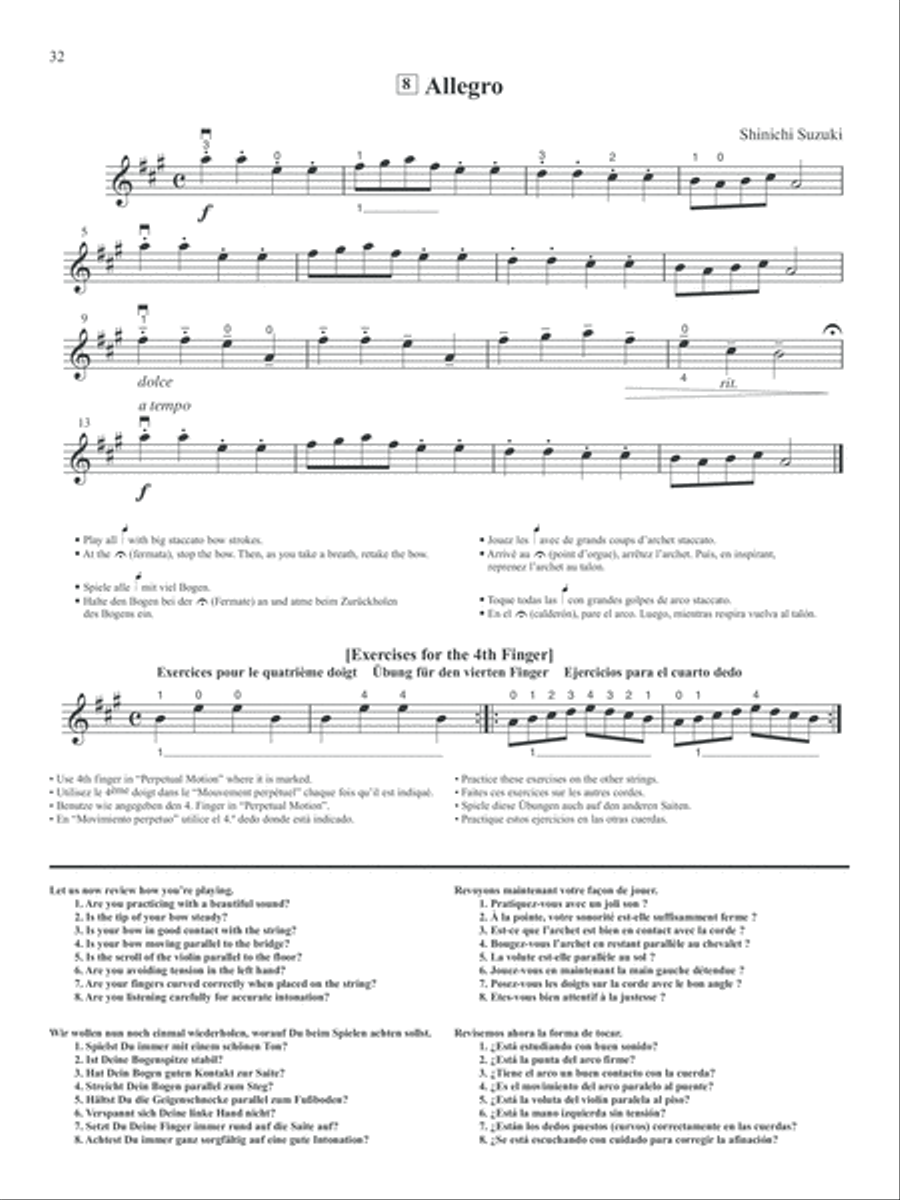
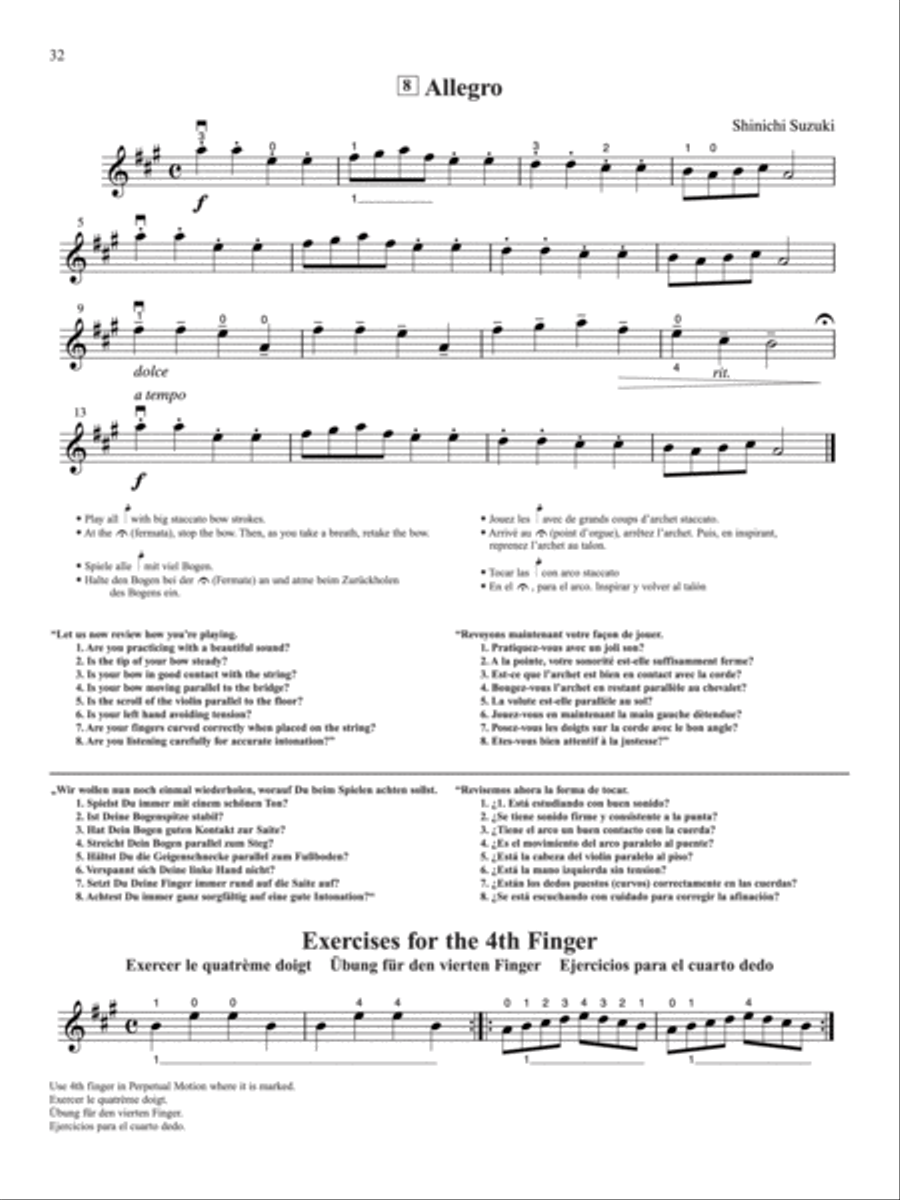
Allegro
Perpetual Motion
Allegretto
Andantino
Etude
Minuet 1
Minuet 2
Minuet 3
The Happy Farmer
Gavotte
Musical Notation Guide
Musical Terms
The Position of the Fingers on the Fingerboard
- More by this Composer:
- Dr. Shinichi Suzuki Dr. Shinichi Suzuki Cello Dr. Shinichi Suzuki Violin Dr. Shinichi Suzuki Piano Solo
- Series:
- Suzuki Method
- Artists:
- Dr. Shinichi Suzuki
- Ensemble:
- String Methods
- Publisher:
- Alfred Music
Ratings + Reviews
5 Rating
6 reviews
Julia
Dec 6, 2013
I have to say, I agree with the other reviewers. I started Suzuki violin when I was almost seven. This is my tenth year playing. I, like everyone, have gone through rough spots, where mom and child argued about practicing, dad said he was wasting his money, and it seemed like a sentence to 10 years of D.S. without coda. But I stuck with it, and I had my book 7 graduation recital this afternoon! The most important thing about keeping it up is making the decision to not quit no matter what. I had a really hard time in book 3: the majority of songs in the 3rd book are dances, so they have a ton of repeats (and, as such, last for an eternity), so it wasn't a lot of fun to practice. And kid no practice, mom not happy. But my mom decided that I was going to stick with it and now, about six years later, I have some beginner students of my own and play in a community orchestra. If you are considering Suzuki method, please don't hesitate. It's not easy, sometimes hard, but so so worth it.
Anonymous
Jan 25, 2013
Thank you very much.
Nbwalton
Feb 28, 2012
Like some of the features in the revised edition, but not the addition of the fourth finger so early on. Still, I cannot imagine using another method for beginning string players!
Anonymous
Jan 19, 2012
The book is very helpful to both child and adult beginners of the violin. The songs to be learned are interspersed with short lessons and exercises that reinforce proper technique, and the markings to facilitate note reading are wonderful. I highly recommend this book to anyone wanting to learn violin!
Anonymous
Nov 24, 2011
I so enjoy playing all of the duets from this book. The harmonies are beautiful and the level is not too difficult. It does go into 3rd position a little, but it can be played quite easily.Highly recommended!
Suzuki P.
Jan 31, 2010
As the other reviewer says, this book is designed for the very beginning student of Suzuki method violin. A child can start as young as 3, obviously doesn't know how to read yet. This book is reference for the parent, while the child happily learns by ear and by practicing measures at home under parent's guidance, then larger parts then entire pieces. Perfect book for what it is designed to do.