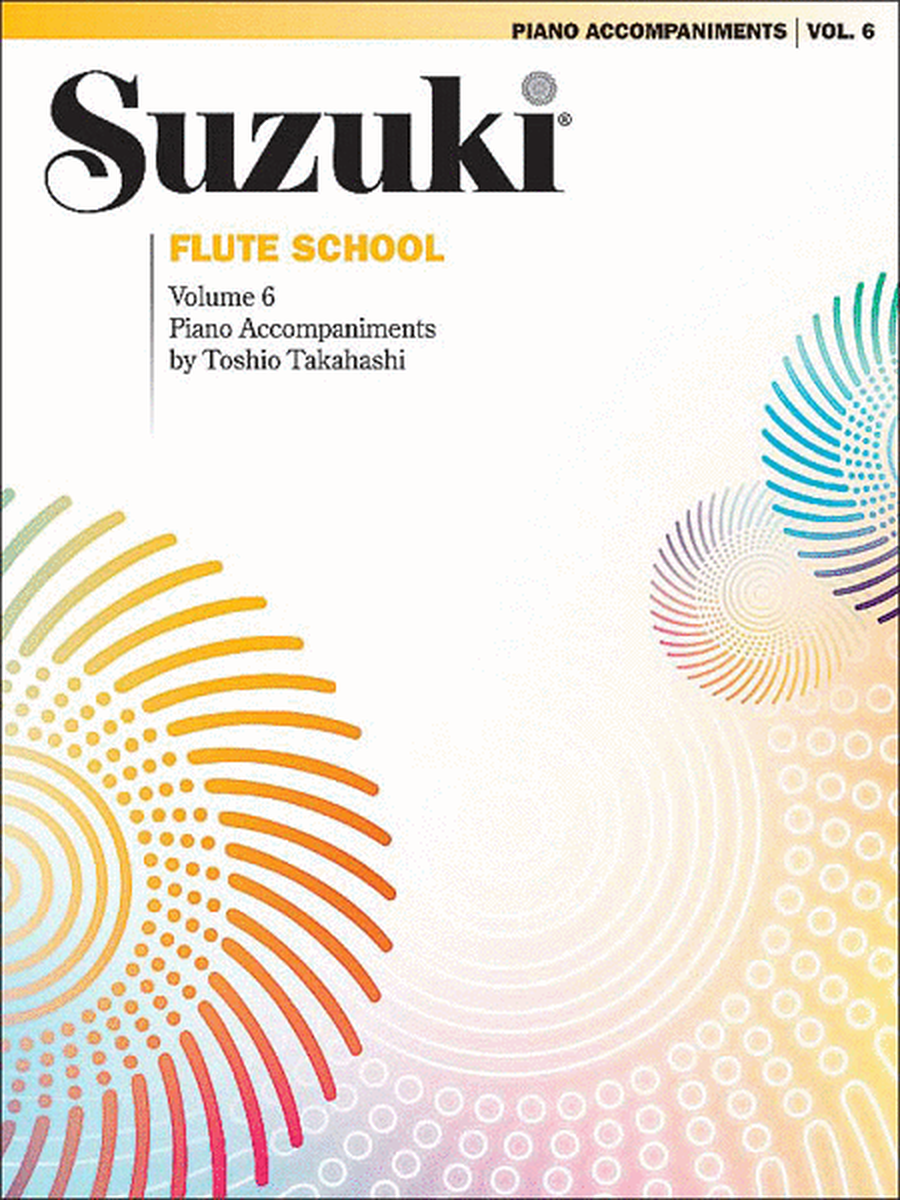
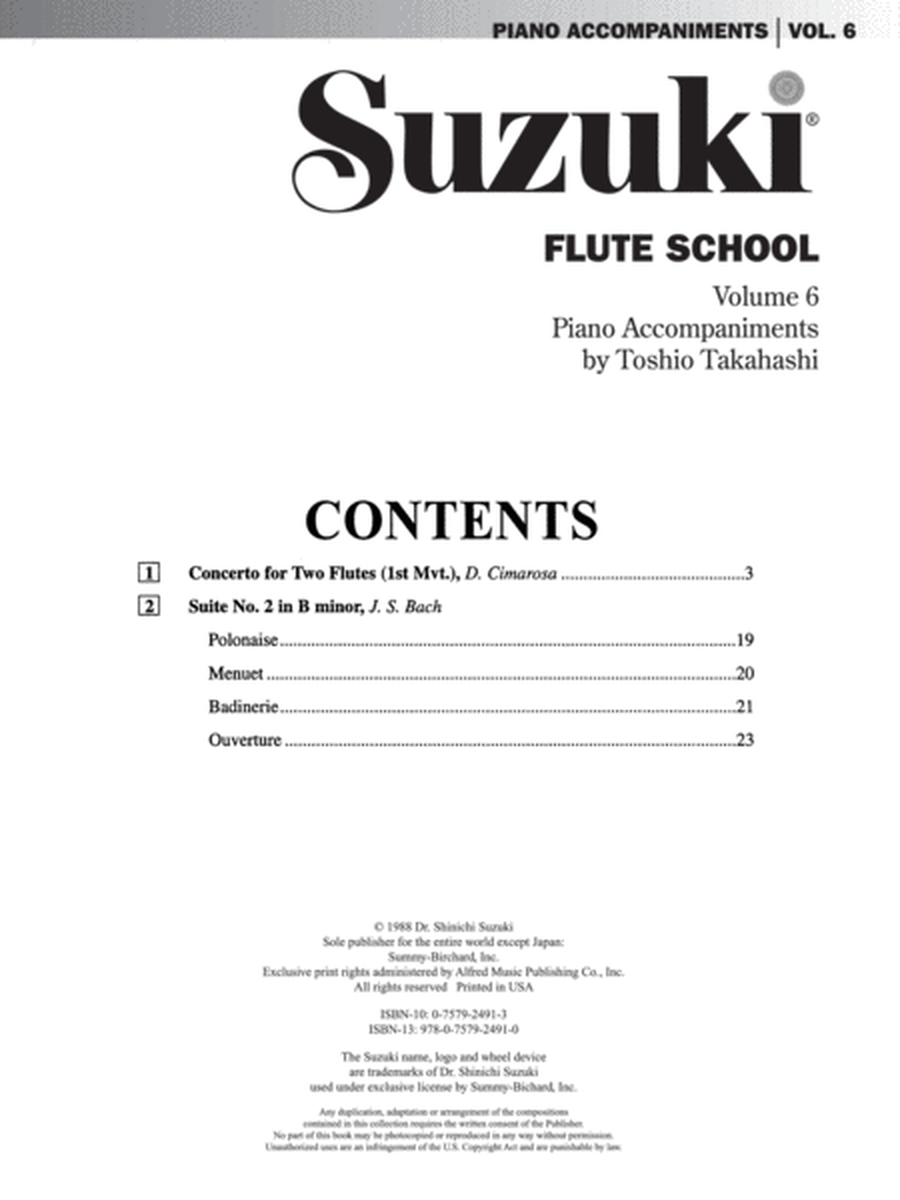
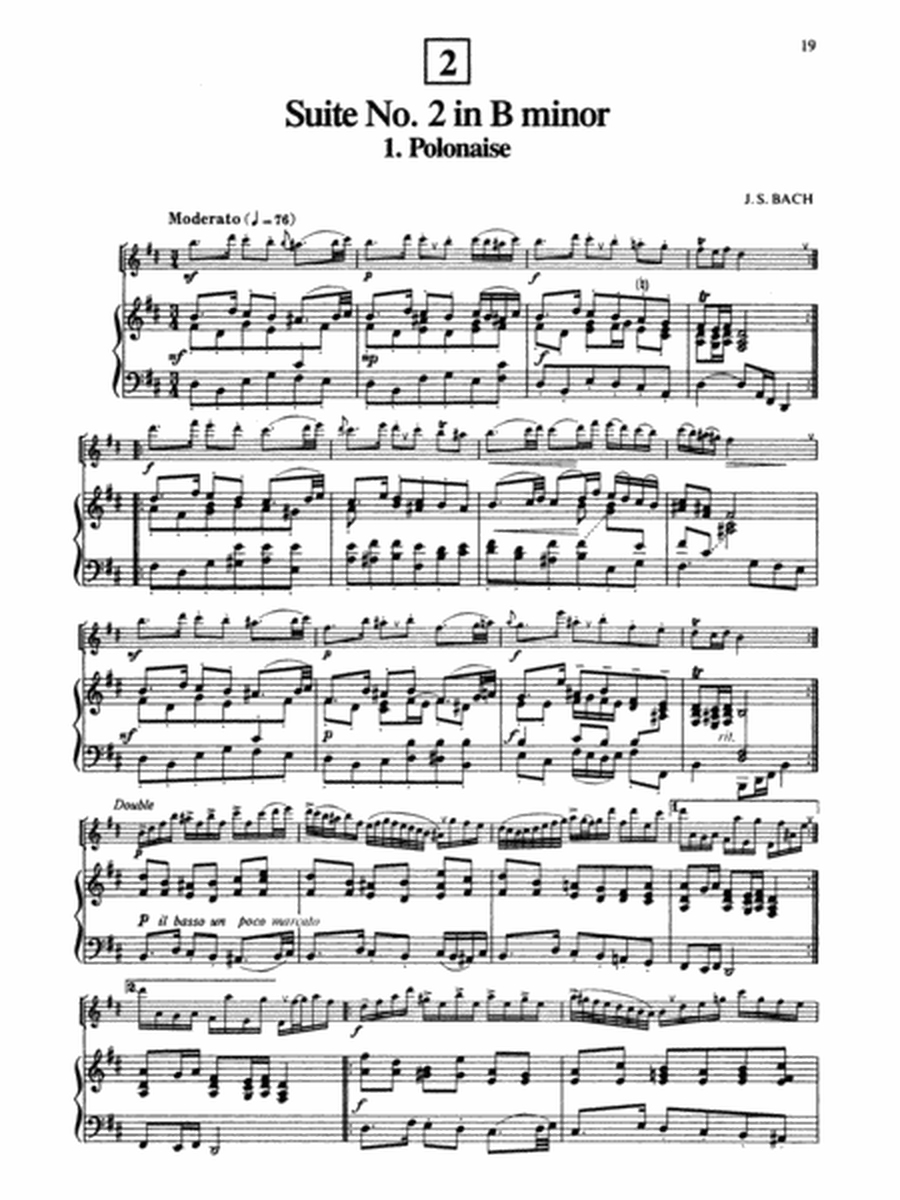
Volume 6. Piano Accompaniment. This edition: International. Method/Instruction; Suzuki; Woodwind - Flute (Suzuki). Suzuki Flute School. Book. 32 pages. Alfred Music #00-0382S. Published by Alfred Music (AP.0382S).
ISBN 9780757924910. UPC: 654979195641. English.
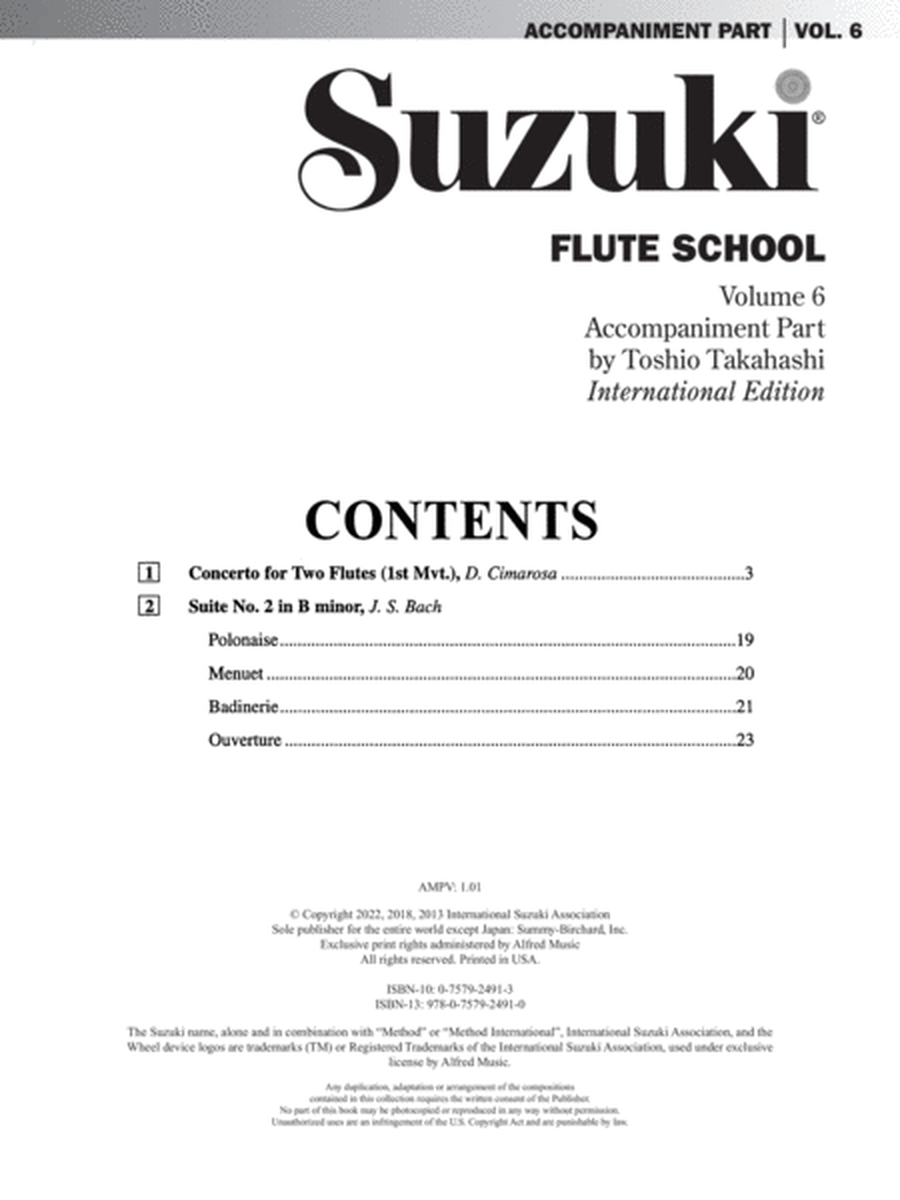
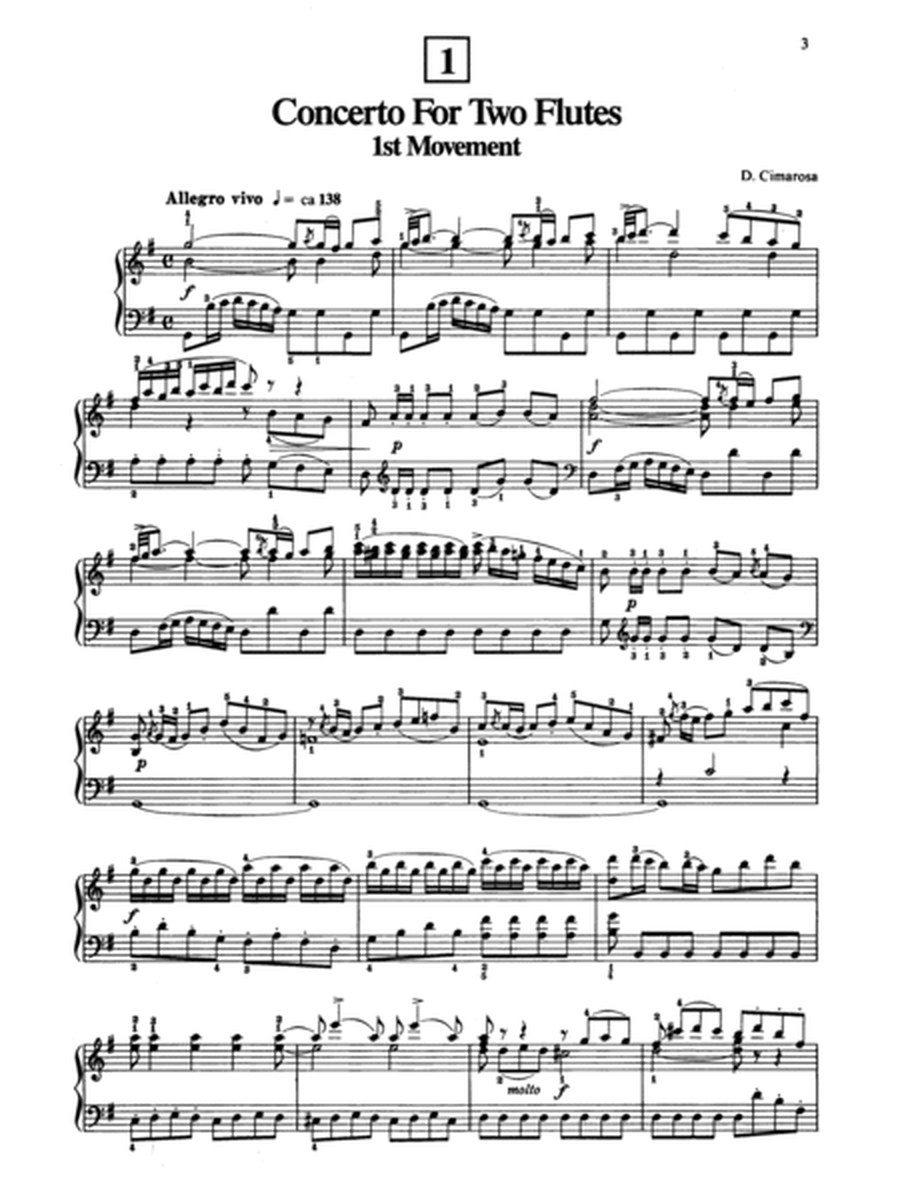
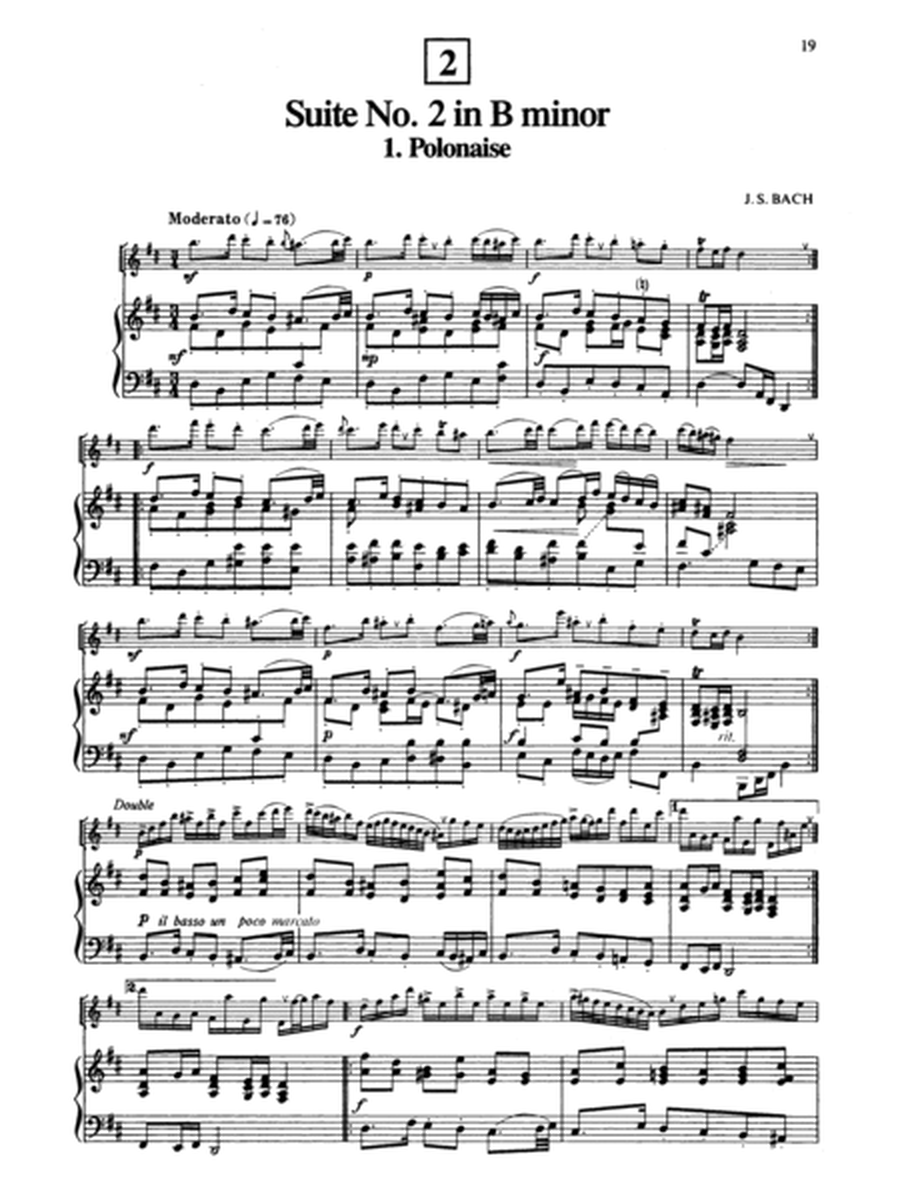
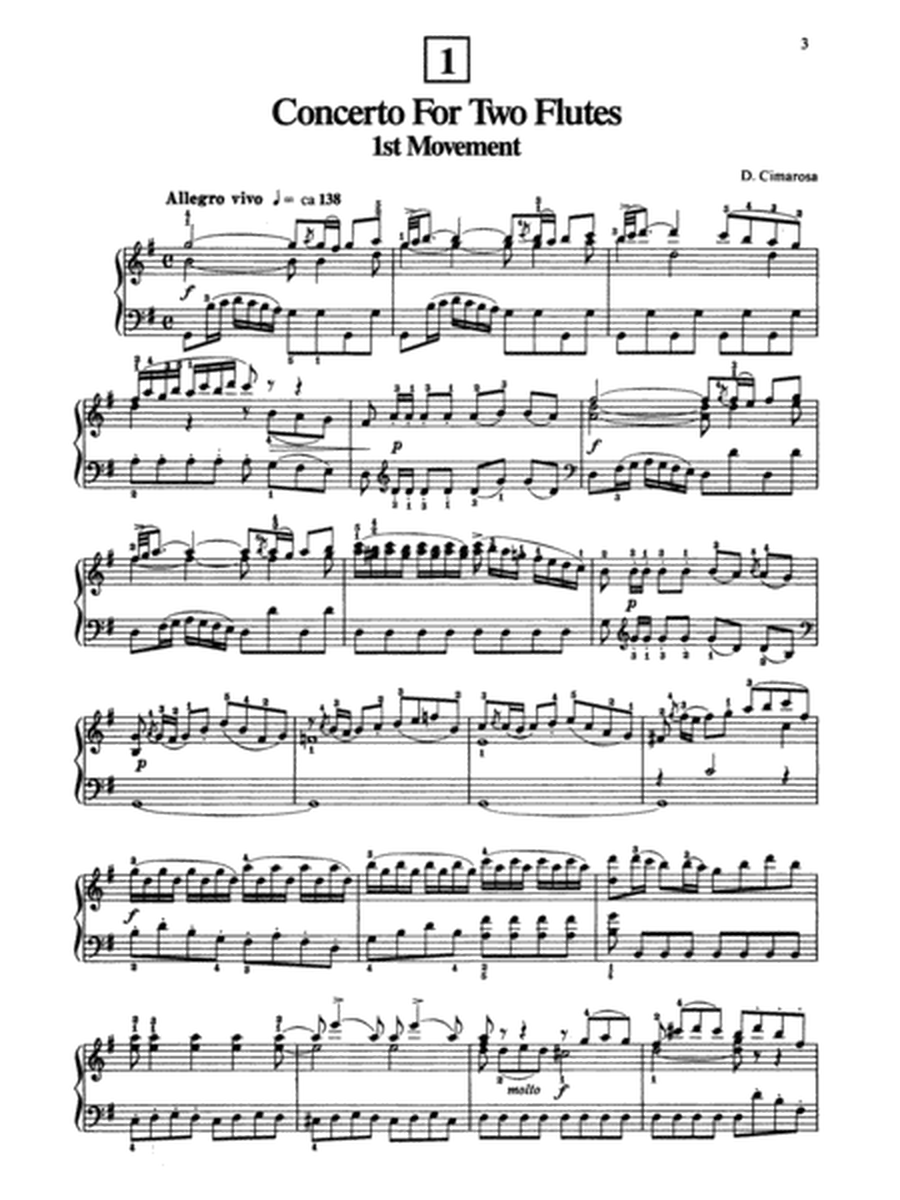
Titles: Concerto for Two Flutes in G Major (1st Movement) (Cimarosa) * Suite No. 2 in B Minor from Orchestra Suite in B Minor for Flute and Strings, BWV 1067 (Polonaise, Menuet, Badinerie, Ouverture) (Bach).
About Suzuki Method
The Suzuki Method is based on the principle that all children possess ability and that this ability can be developed and enhanced through a nurturing environment. All children learn to speak their own language with relative ease and if the same natural learning process is applied in teaching other skills, these can be acquired as successfully. Suzuki referred to the process as the Mother Tongue Method and to the whole system of pedagogy as Talent Education. The important elements of the Suzuki approach to instrumental teaching include the following:an early start (aged 3-4 is normal in most countries); the importance of listening to music; learning to play before learning to read; -the involvement of the parent; a nurturing and positive learning environment; a high standard of teaching by trained teachers; the importance of producing a good sound in a balanced and natural way; core repertoire, used by Suzuki students across the world; social interaction with other children. Suzuki students from all over the world can communicate through the language of music.
Volume 6. Piano Accompaniment. This edition: International. Method/Instruction; Suzuki; Woodwind - Flute (Suzuki). Suzuki Flute School. Book. 32 pages. Alfred Music #00-0382S. Published by Alfred Music (AP.0382S).
ISBN 9780757924910. UPC: 654979195641. English.
Titles: Concerto for Two Flutes in G Major (1st Movement) (Cimarosa) * Suite No. 2 in B Minor from Orchestra Suite in B Minor for Flute and Strings, BWV 1067 (Polonaise, Menuet, Badinerie, Ouverture) (Bach).
About Suzuki Method
The Suzuki Method is based on the principle that all children possess ability and that this ability can be developed and enhanced through a nurturing environment. All children learn to speak their own language with relative ease and if the same natural learning process is applied in teaching other skills, these can be acquired as successfully. Suzuki referred to the process as the Mother Tongue Method and to the whole system of pedagogy as Talent Education. The important elements of the Suzuki approach to instrumental teaching include the following:an early start (aged 3-4 is normal in most countries); the importance of listening to music; learning to play before learning to read; -the involvement of the parent; a nurturing and positive learning environment; a high standard of teaching by trained teachers; the importance of producing a good sound in a balanced and natural way; core repertoire, used by Suzuki students across the world; social interaction with other children. Suzuki students from all over the world can communicate through the language of music.
Suzuki Flute School Piano Accomp Vol 6
Preview: Suzuki Flute School, Volume 6
Tell A Friend
Tell a friend (or remind yourself) about this product. We'll instantly send an email containing product info and a link to it. You may also enter a personal message.
We do not use or store email addresses from this form for any other purpose than sending your share email.
After purchase, you can download your MP3 from your Sheet Music Plus Digital Library - no software installation is necessary! You can also listen to your MP3 at any time in your Digital Library.
Learn about Smart Music
After purchase, you can download your Smart Music from your Sheet Music Plus Digital Library - no software installation is necessary! You can also download at any time in your Digital Library.
Learn about Digital Video
After purchase you can download your video from your Digital Library. Your video is in XX format and is playable on most pre-installed video players.