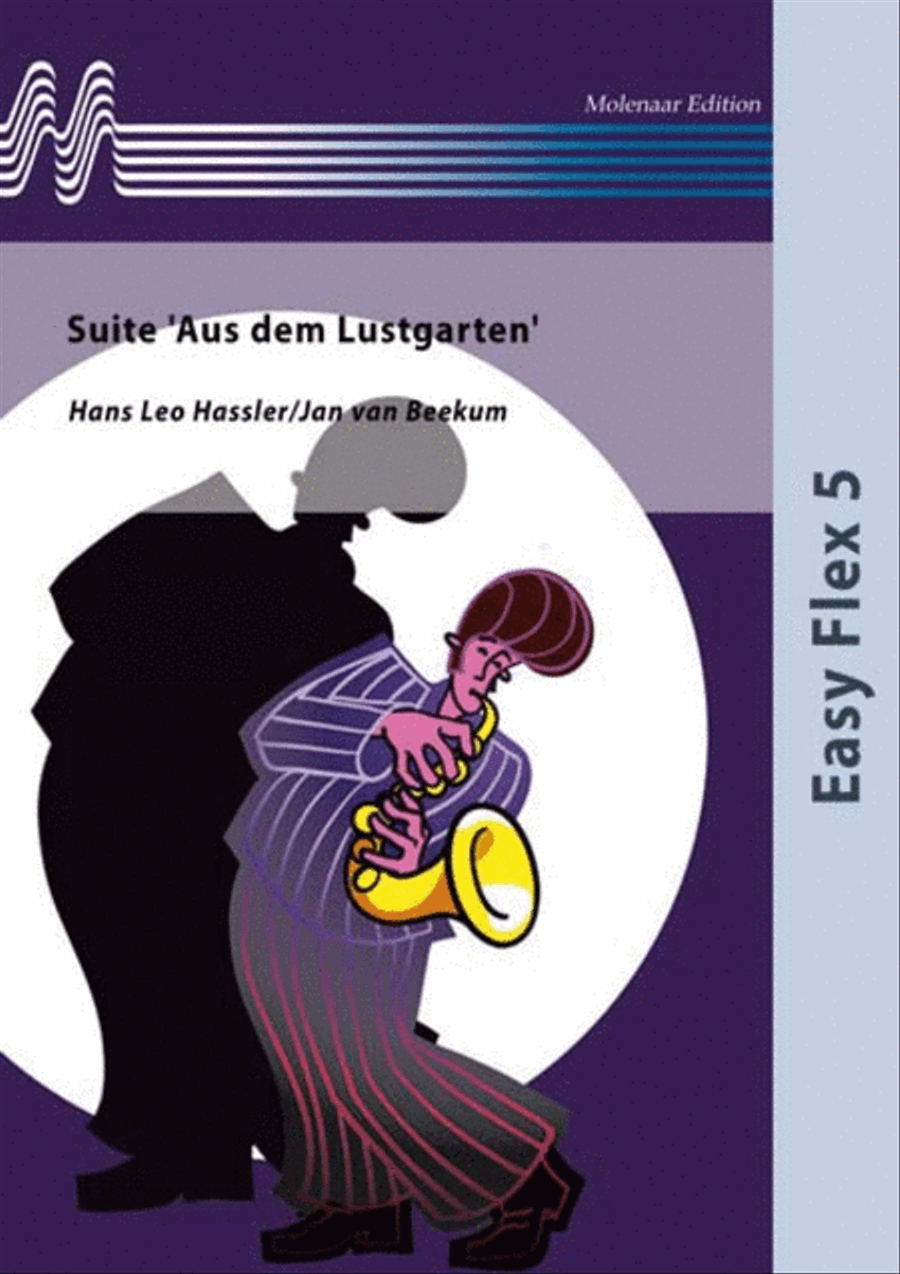
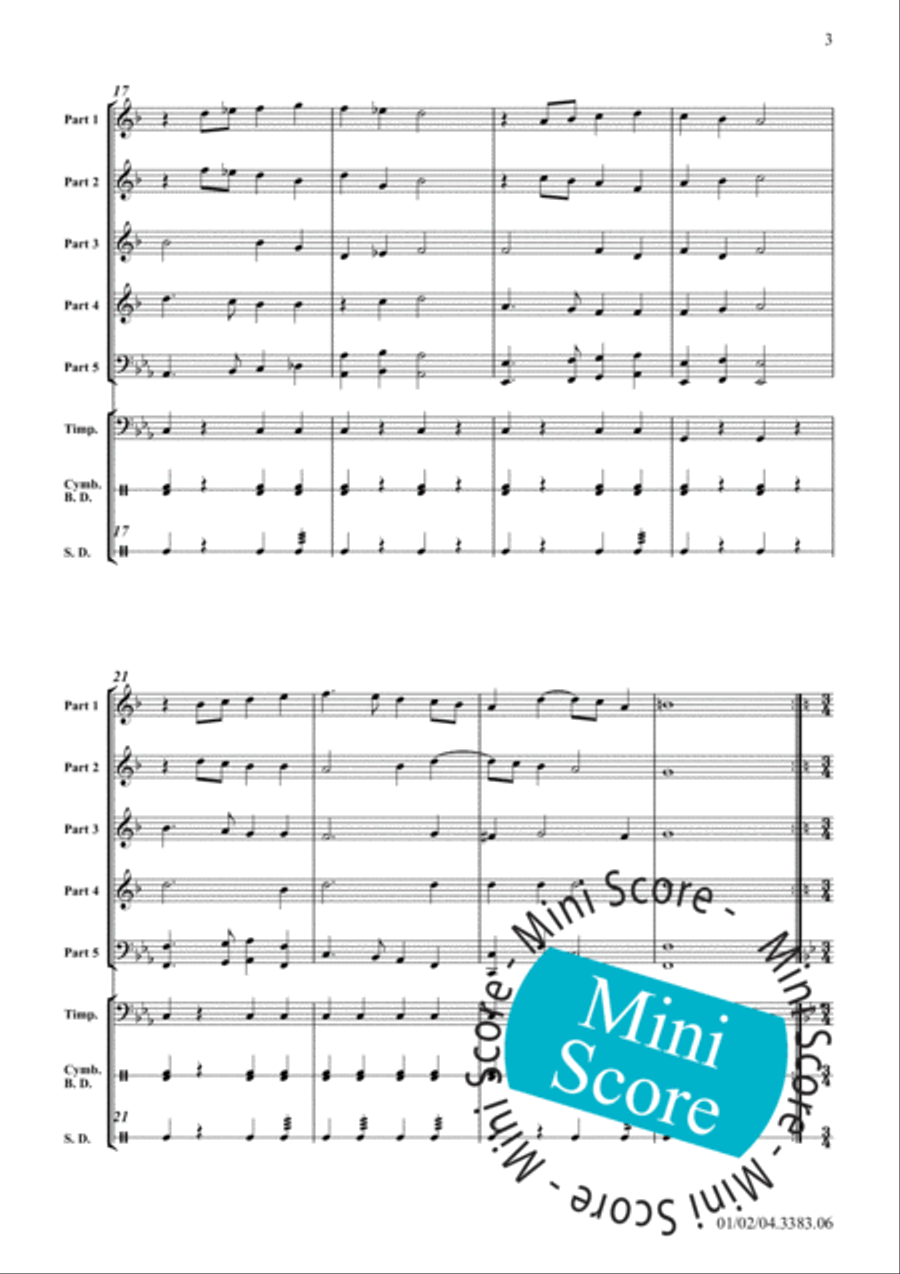
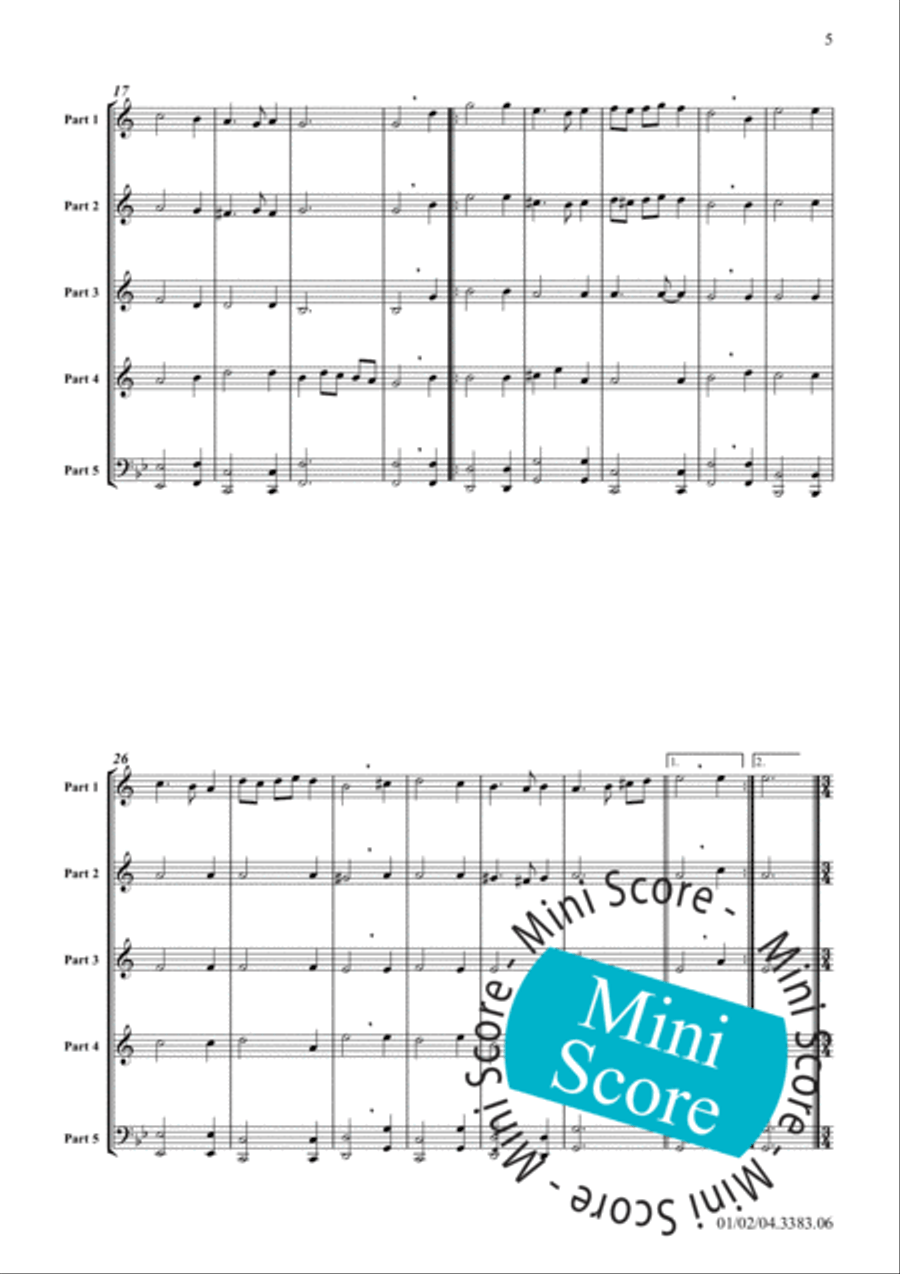

Composed by Hans Leo Hassler. Arranged by Jan van Beekum. Easy band. Full set. Duration 4.5 minutes. Molenaar Edition #013383060. Published by Molenaar Edition (ML.013383060).
Deze suite werd aan het eind van de 16e eeuw (Renaissance) geschreven door de Duitse componist Hans Leo Hassler. Hassler was leerling van de bekende componist Gabrieli die hoofdzakelijk voor koperensembles schreef. Dit verklaart waarom Hassler, ondanks zijn relatief kleine oeuvre, veel werken voor vergelijkbare bezetting componeerde. Jan van Beekum instrumenteerde de muziek, die zo karakteristiek is voor deze tijd, voor 5-stemmige flexibele bezetting en slagwerk.
German composer Hans Leo Hassler composed this suite at the end of the 16th century. Hassler was a student of the famous composer Gabrieli who mainly wrote for brass ensembles. This is the reason why Hassler, while only composing a relatively smaller amount of work, composed mainly for the same type of ensemble. This arrangement from Jan van Beekum is characteristic of it’s time and is for a 5 voice, flexible setting and percussion.
Cette suite était écrite à la fin du 16ième siècle (Renaissance) par le compositeur Allemand Hans Leo Hassler. Hassler était un élève du compositeur bien-connu Gabrieli qui écrivait principalement pour ensembles de cuivres. Ceci explique pourquoi Hassler, malgré son œuvre relativement petit, a écrit beaucoup pour des formations similaires. Jan van Beekum a fait l’instrumentation de la musique, qui est tellement caractéristique pour cette époque, pour formation flexible à 5 voix et percussion.
Diese Suite schrieb der Deutsche Hans Leo Hassler gegen Ende des 16. Jahrhunderts. Hassler war Schüler des Venezianers Gabrieli, der hauptsächlich für Blechbläser komponierte. Dies erklärt, warum Hassler ungeachtet seines kleinen Oeuvres so viel für ähnliche Besetzungen schrieb. Jan van Beekum instrumentierte die für ihre Entstehungszeit so charakteristische Musik für variable 5-stimmige Besetzung und Schlagwerk.
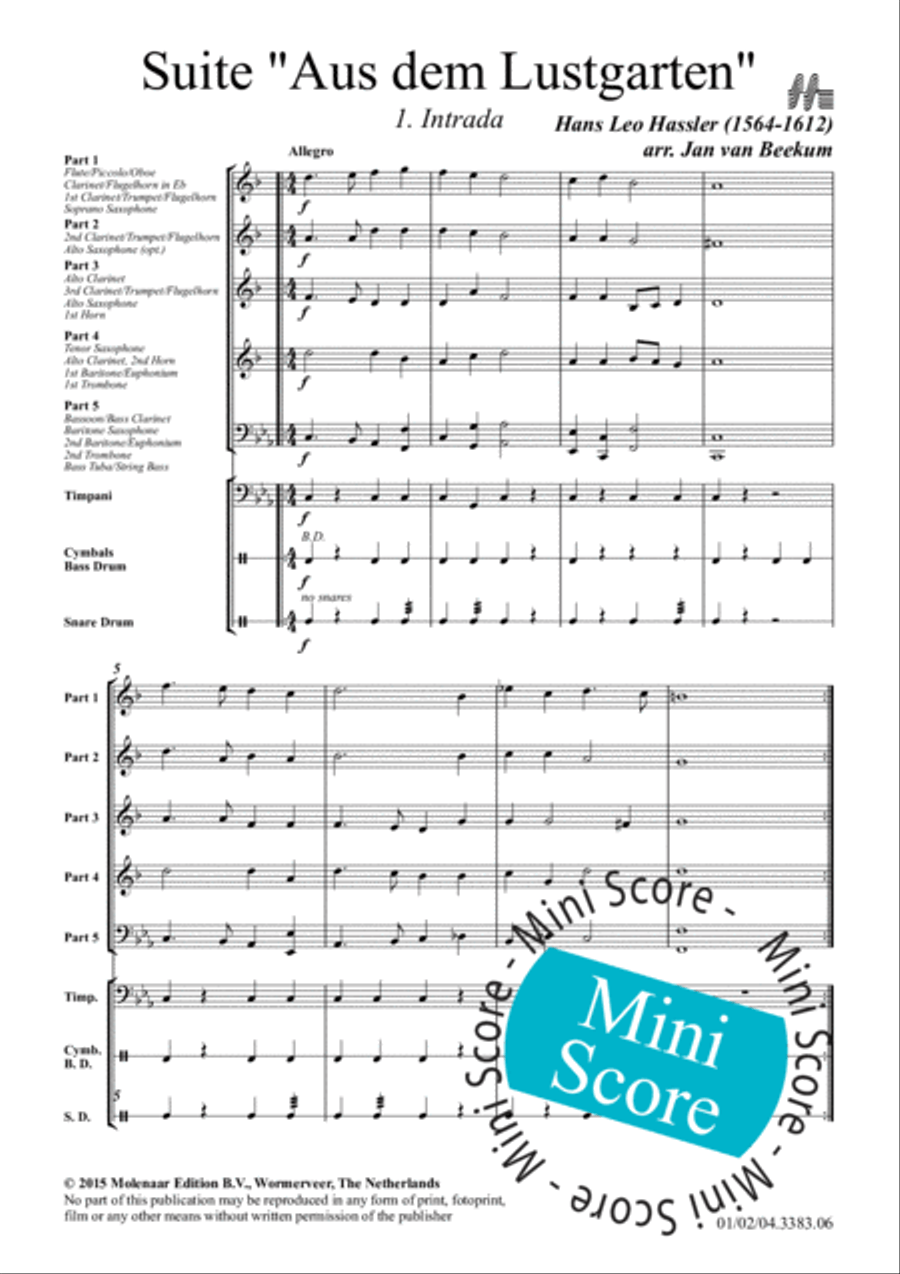
Instrumentation 0 Full Score A3 1 Full Score 3 Piccolo + Flute 1 Oboe 2 Clarinet I 1 Soprano Saxophone 2 Alto Saxophone 2 Tuba C 1 Percussion I 1 Percussion II 1 Timpani 4 Part 1 in Bb 2 Part 1 in Eb 4 Part 2 in Bb 4 Part 3 in Bb (TC) 3 Part 3 in Eb (TC) 2 Part 3 in F 3 Part 4 in Bb (TC) 3 Part 4 in C (BC) 3 Part 4 in Eb (TC) 3 Part 4 in Bb (BC) 2 Part 4 in F 3 Part 5 in Bb (BC) 3 Part 5 in Bb (TC) 3 Part 5 in C (BC) 2 Part 5 in Eb (TC) 2 Part 5 in Eb, (BC).
Composed by Hans Leo Hassler. Arranged by Jan van Beekum. Easy band. Full set. Duration 4.5 minutes. Molenaar Edition #013383060. Published by Molenaar Edition (ML.013383060).
Deze suite werd aan het eind van de 16e eeuw (Renaissance) geschreven door de Duitse componist Hans Leo Hassler. Hassler was leerling van de bekende componist Gabrieli die hoofdzakelijk voor koperensembles schreef. Dit verklaart waarom Hassler, ondanks zijn relatief kleine oeuvre, veel werken voor vergelijkbare bezetting componeerde. Jan van Beekum instrumenteerde de muziek, die zo karakteristiek is voor deze tijd, voor 5-stemmige flexibele bezetting en slagwerk.
German composer Hans Leo Hassler composed this suite at the end of the 16th century. Hassler was a student of the famous composer Gabrieli who mainly wrote for brass ensembles. This is the reason why Hassler, while only composing a relatively smaller amount of work, composed mainly for the same type of ensemble. This arrangement from Jan van Beekum is characteristic of it’s time and is for a 5 voice, flexible setting and percussion.
Cette suite était écrite à la fin du 16ième siècle (Renaissance) par le compositeur Allemand Hans Leo Hassler. Hassler était un élève du compositeur bien-connu Gabrieli qui écrivait principalement pour ensembles de cuivres. Ceci explique pourquoi Hassler, malgré son œuvre relativement petit, a écrit beaucoup pour des formations similaires. Jan van Beekum a fait l’instrumentation de la musique, qui est tellement caractéristique pour cette époque, pour formation flexible à 5 voix et percussion.
Diese Suite schrieb der Deutsche Hans Leo Hassler gegen Ende des 16. Jahrhunderts. Hassler war Schüler des Venezianers Gabrieli, der hauptsächlich für Blechbläser komponierte. Dies erklärt, warum Hassler ungeachtet seines kleinen Oeuvres so viel für ähnliche Besetzungen schrieb. Jan van Beekum instrumentierte die für ihre Entstehungszeit so charakteristische Musik für variable 5-stimmige Besetzung und Schlagwerk.
Instrumentation 0 Full Score A3 1 Full Score 3 Piccolo + Flute 1 Oboe 2 Clarinet I 1 Soprano Saxophone 2 Alto Saxophone 2 Tuba C 1 Percussion I 1 Percussion II 1 Timpani 4 Part 1 in Bb 2 Part 1 in Eb 4 Part 2 in Bb 4 Part 3 in Bb (TC) 3 Part 3 in Eb (TC) 2 Part 3 in F 3 Part 4 in Bb (TC) 3 Part 4 in C (BC) 3 Part 4 in Eb (TC) 3 Part 4 in Bb (BC) 2 Part 4 in F 3 Part 5 in Bb (BC) 3 Part 5 in Bb (TC) 3 Part 5 in C (BC) 2 Part 5 in Eb (TC) 2 Part 5 in Eb, (BC).
Tell a friend (or remind yourself) about this product. We'll instantly send an email containing product info and a link to it. You may also enter a personal message.
We do not use or store email addresses from this form for any other purpose than sending your share email.
After purchase, you can download your MP3 from your Sheet Music Plus Digital Library - no software installation is necessary! You can also listen to your MP3 at any time in your Digital Library.
Learn about Smart Music
After purchase, you can download your Smart Music from your Sheet Music Plus Digital Library - no software installation is necessary! You can also download at any time in your Digital Library.
Learn about Digital Video
After purchase you can download your video from your Digital Library. Your video is in XX format and is playable on most pre-installed video players.