Details
- Ensembles:
- String Quartet
- Genres:
- Classical
- Publishers:
- G. Henle
- Series:
- Henle Study Scores Henle Urtext
- UPC:
- 196288141884
- Format:
- Study Score Collection / Songbook
- Item types:
- Physical
- Usages:
- School and Community
- Size:
- 9.5x7.0x0.183 inches
- Number of Pages:
- 54
- Shipping Weight:
- 0.36 pounds
SKU: HL.51487422
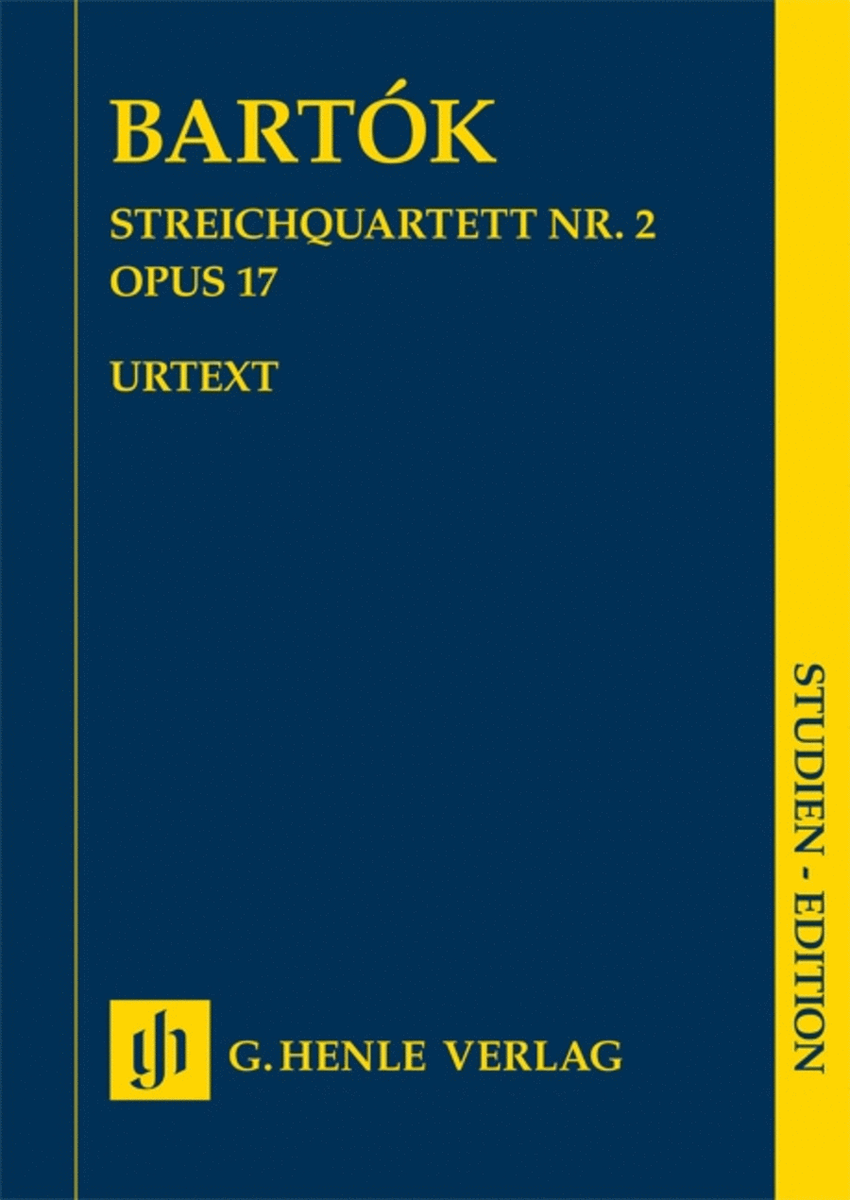
Study Score. Composed by Bela Bartó and k. Edited by Lá, Somfai, and szló. Henle Study Scores. Classical. Softcover. 54 pages. G. Henle #HN7422. Published by G. Henle (HL.51487422).UPC: 196288141884. 9.5x7.0x0.183 inches.
Bartók's Second String Quartet was composed – with several long interruptions – between 1915 and 1918, after he had spent several years almost solely devoted to collecting folk music. The melody and rhythms of the riotous middle movement “Allegro, molto capriccioso” provide impressive testimony of how his research trips had taken him as far as North Africa. The first edition of this quartet, published in Vienna in 1920, contains a conspicuous number of errors that were only partially corrected in a later revision undertaken by Bartók. As late as the 1940s he noted changes in his personal copy of the score that have never previously appeared inprint. These late changes by Bartók are taken into account in this definitive edition of the string quartets supervised by Bartók scholar László Somfai, with problematic passages in the sources carefully documented. It is the first-ever Urtext edition of this work.
About Henle Urtext
What I can expect from Henle Urtext editions:
- error-free, reliable musical texts based on meticulous musicological research - fingerings and bowings by famous artists and pedagogues
- preface in 3 languages with information on the genesis and history of the work
- Critical Commentary in 1 – 3 languages with a description and evaluation of the sources and explaining all source discrepancies and editorial decisions
- most beautiful music engraving
- page-turns, fold-out pages, and cues where you need them
- excellent print quality and binding
- largest Urtext catalogue world-wide
- longest Urtext experience (founded 1948 exclusively for "Urtext" editions)