Details
- Instrument:
- Piano Cello Solo
- Genres:
- Renaissance
- Publishers:
- Colin Kirkpatrick Publications
- Series:
- ArrangeMe
- Format:
- Score and Part
- Item types:
- Digital
- Level:
- Early Intermediate
- Usages:
- School and Community
- Number of Pages:
- 17
SKU: A0.847885
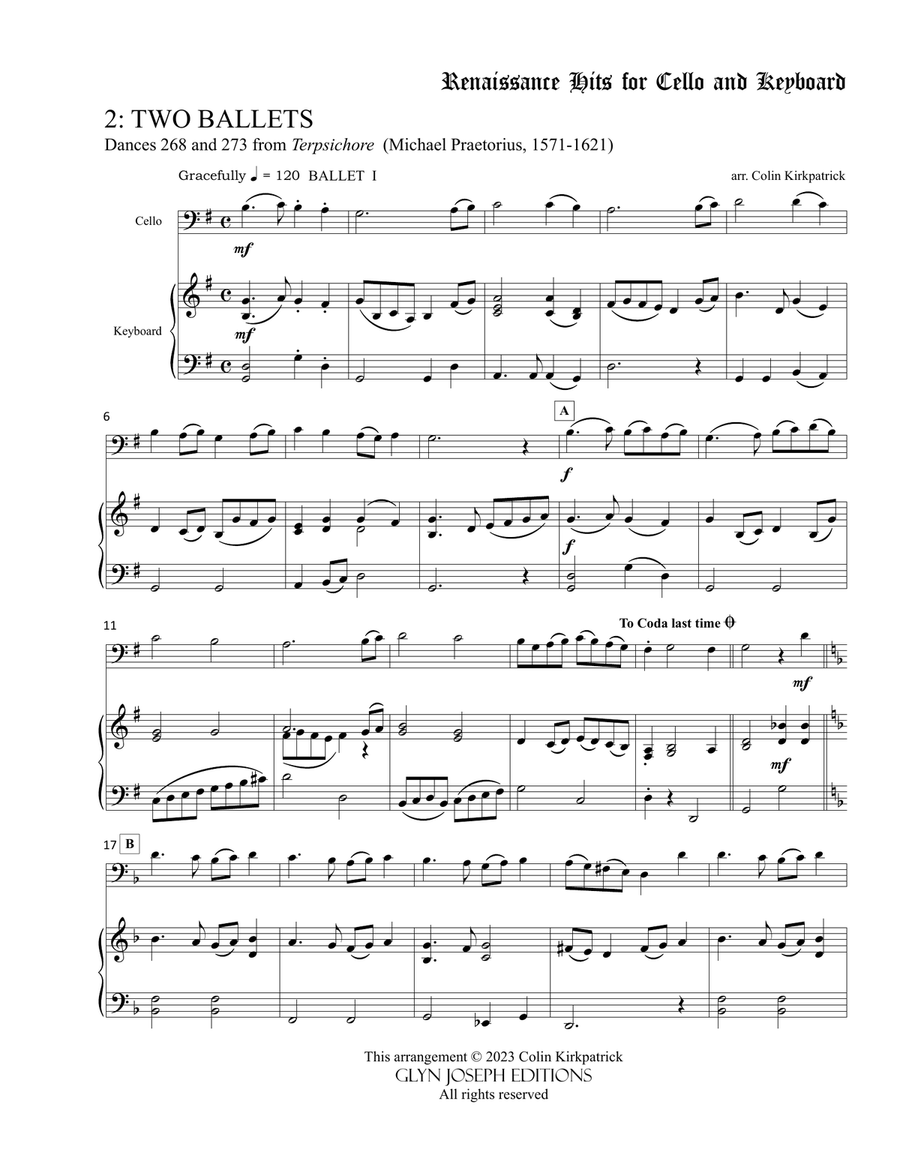
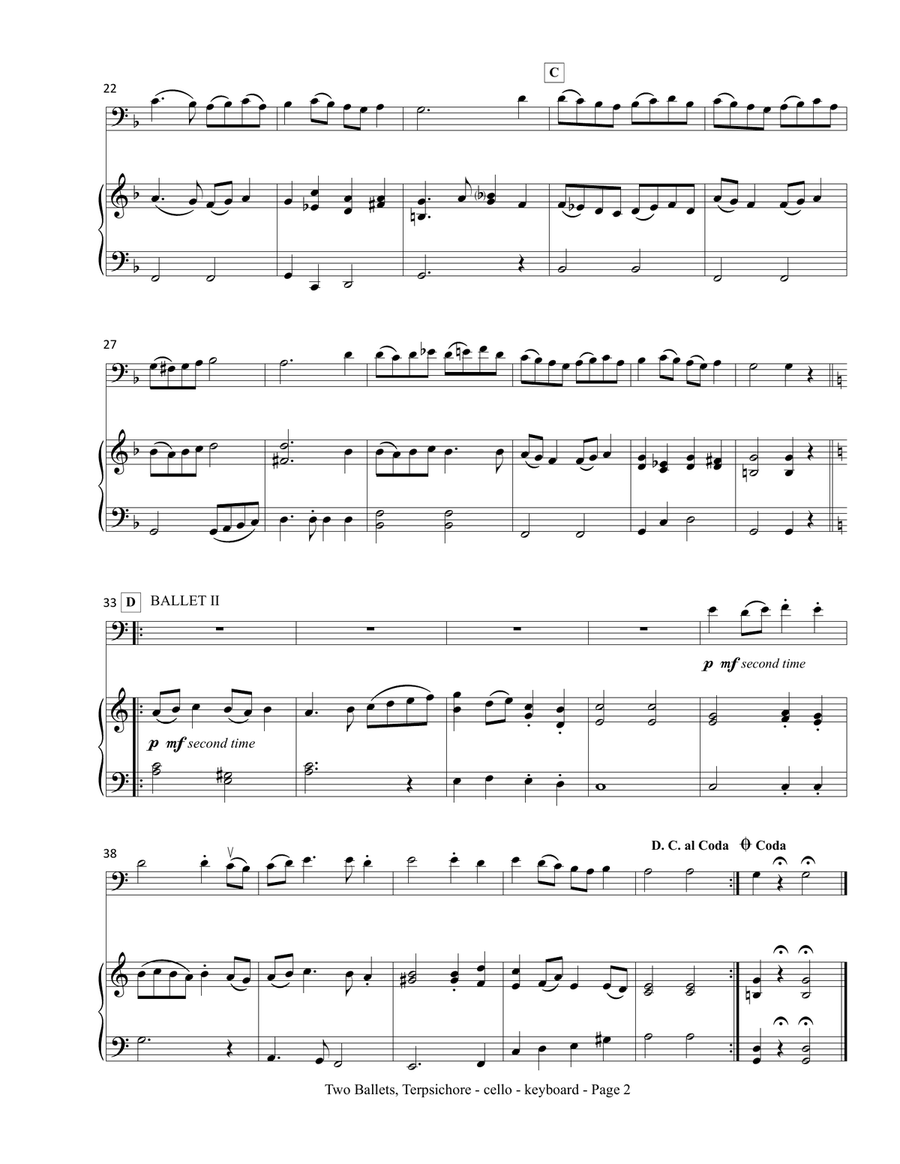
Composed by Michael Praetorius et al. Arranged by Colin Kirkpatrick. Renaissance. Score and part. 17 pages. Colin Kirkpatrick Publications #454579. Published by Colin Kirkpatrick Publications (A0.847885).These are eleven of the most well-known dances of the Renaissance (grouped in five movements) and are sure to be a welcome addition to the elementary cellist’s repertoire. Some of them can be played in first position and the highest note is the “E” above the bass clef. The cello part does not contain notes shorter than an eighth note (quaver).
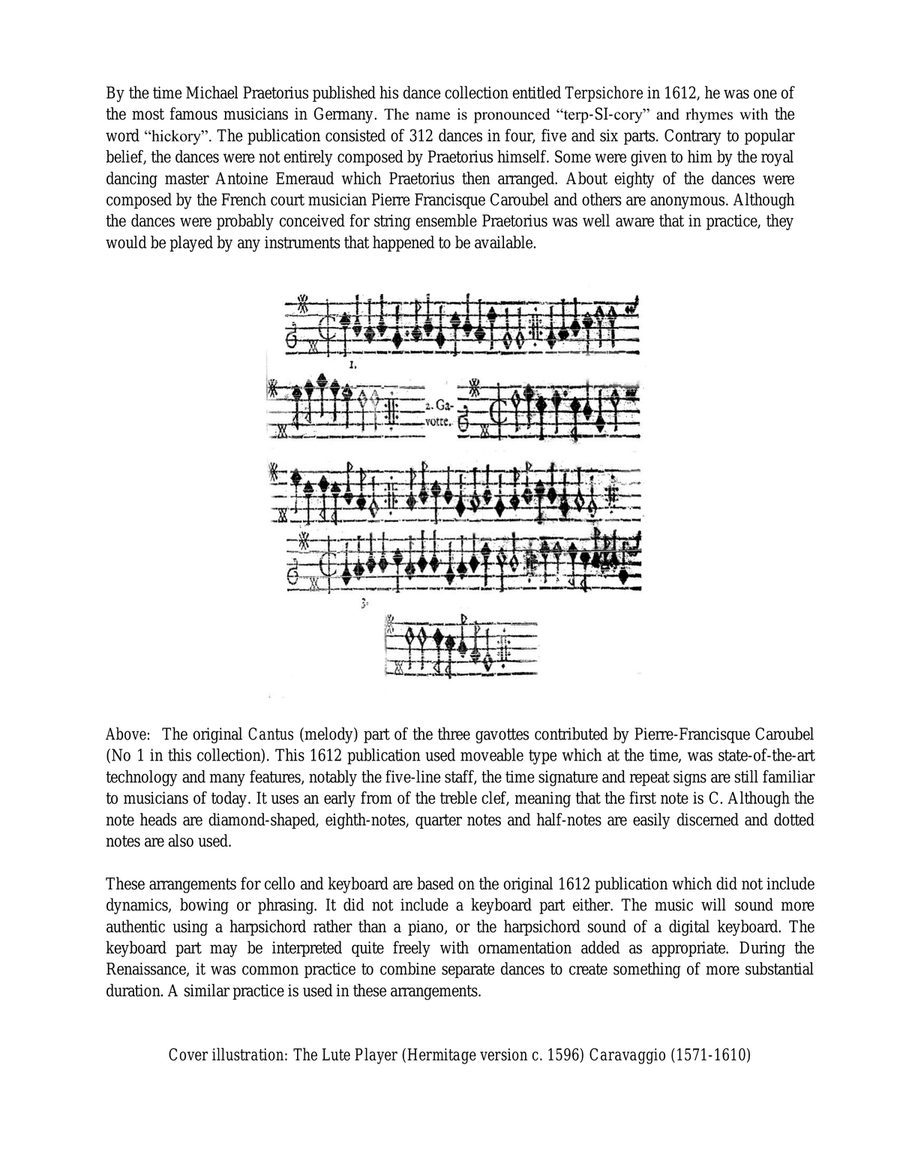
By the time Michael Praetorius published his dance collection entitled Terpsichore in 1612, he was one of the most famous musicians in Germany. The name is pronounced “terp-SI-cory” and rhymes with the word “hickory”. The original publication consisted of 312 dances in four, five and six parts. Although the dances were probably conceived for string ensemble Praetorius was well aware that in practice, they would be played by any instruments that happened to be available.
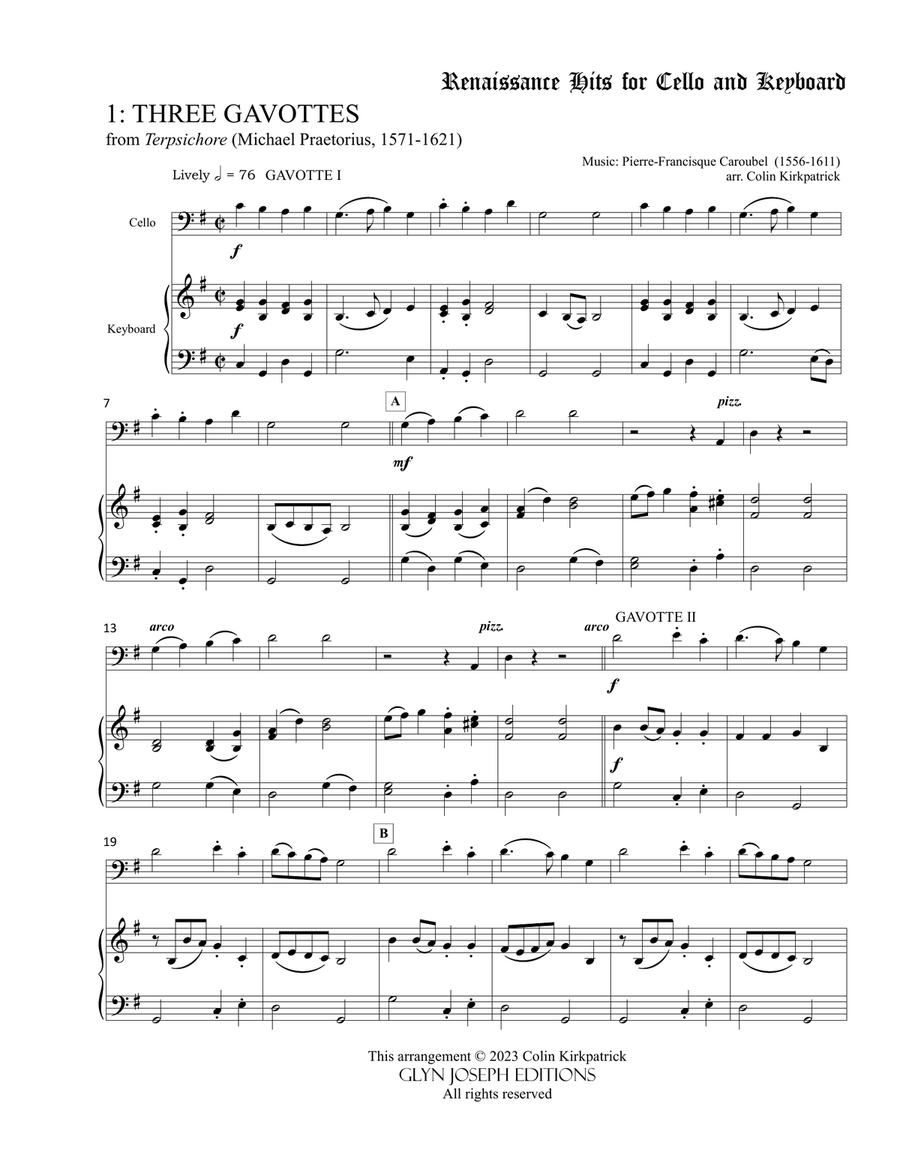
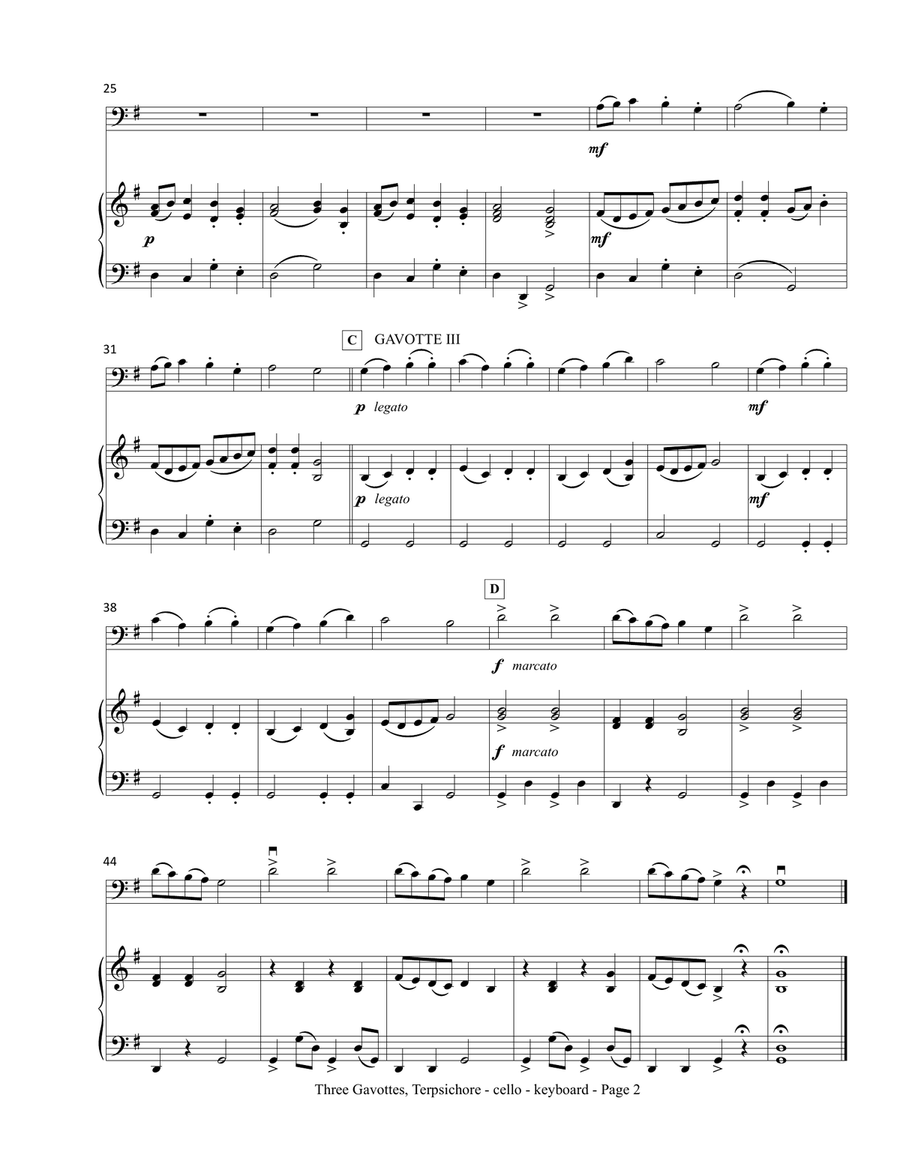
These arrangements for cello and keyboard contain some of the most popular and are based on the original 1612 publication. The music will sound more authentic using a harpsichord rather than a piano, or the harpsichord sound of a digital keyboard. The keyboard part may be interpreted quite freely with ornamentation added as appropriate. During the Renaissance, it was common practice to combine separate dances to create something of more substantial duration. A similar practice is used in these arrangements which are as follows: 1. Two Bourées; 2. Two Ballets; 3. Two Courantes; 4. Three Gavottes and 5. Two Voltas.
The audio sample contains (1) Two Bourées and (3) Two Courantes.
About ArrangeMe
This product was created by a member of ArrangeMe, Hal Leonard's self-publishing community for independent composers, arrangers, and songwriters. Discover unique arrangements of popular titles and original compositions from diverse creators. The length, difficulty, and pricing are determined by the arranger or composer.
About Digital Downloads
Digital Downloads let you instantly access sheet music on your computer, tablet, or mobile device. Print your sheet music anywhere, anytime, or play it straight from your device—no internet connection is required after download.
Each Digital Download includes a watermark with your name, purchase date, and the number of copies purchased. You may only print or use the number of copies purchased. Redistribution or unauthorized printing is prohibited.
- ArrangeMe:
- Colin Kirkpatrick Publications
- Series:
- ArrangeMe
- Instrument:
- Piano and Keyboard Piano Strings Cello Cello Solo
- Publisher:
- Colin Kirkpatrick Publications