Details
- Instrument:
- B-Flat Clarinet Bass Clarinet Snare Drum
- Ensembles:
- Concert Band
- Genres:
- Christmas Carols
- Publishers:
- Carl Fischer Music
- UPC:
- 680160916870
- ISBN:
- 9781491158272
- Format:
- Score
- Item types:
- Physical
- Usages:
- School and Community
- Number of Pages:
- 12
- Size:
- 9 x 12 inches
- Shipping Weight:
- 0.47 pounds
SKU: CF.BPS134F
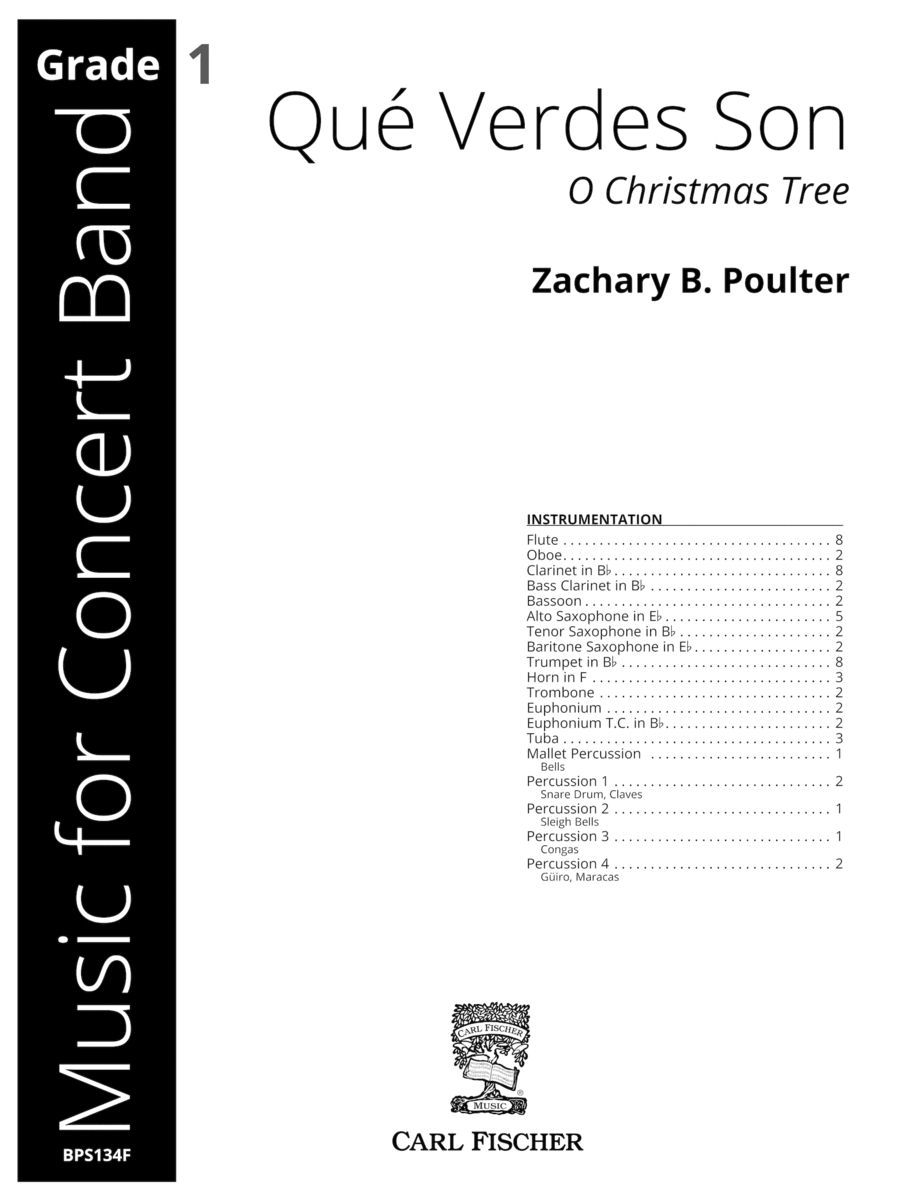
O Christmas Tree. Composed by Zachary B. Poulter. This edition: saddle-wire stitch. Sws. Bps. Full score. 12 pages. Carl Fischer Music #BPS134F. Published by Carl Fischer Music (CF.BPS134F).ISBN 9781491158272. UPC: 680160916870. 9 x 12 inches.
QuA(c) verdes son is the Spanish-language version of O Tannenbaum (O Christmas Tree). Although the Christmas carol is sung in many languages, the translated lyrics are rarely a close copy of the original German text. Instead, each version finds unique ways to explore the beauty and meaning of one of the holidayas most beloved symbols: the Christmas tree. In QuA(c) verdes son, the beautiful lights, fresh aroma, and especially the lovely color of the tree are celebrated. This arrangement of QuA(c) verdes son begins with simmering Latin percussion playing a groove based on a 3-2 son clave. Subdividing this in groups of eighth notes (123-123-1234-12-12-12) will help lock in the time. In the gA 1/4 iro part, the quarter notes should be "scraped" and the eighth notes tapped. The main melody begins at m. 5. Rather than needing to be overly loud, much of the energy comes from the silences between notes and from the contrast between accents and staccatos. The woodwind countermelody at m. 9 and m. 17 should be smooth and sweet, a further contrast to the punchy rhythms beneath it. The percussion section is featured at m. 26, with a gradual buildup of textures and rhythmic energy. At m. 38 the whole band is back in, driving toward the fun cha-cha-cha ending.
Que verdes son is the Spanish-language version of O Tannenbaum (O Christmas Tree). Although the Christmas carol is sung in many languages, the translated lyrics are rarely a close copy of the original German text. Instead, each version finds unique ways to explore the beauty and meaning of one of the holiday's most beloved symbols: the Christmas tree. In Que verdes son, the beautiful lights, fresh aroma, and especially the lovely color of the tree are celebrated. This arrangement of Que verdes son begins with simmering Latin percussion playing a groove based on a 3-2 son clave. Subdividing this in groups of eighth notes (123-123-1234-12-12-12) will help lock in the time. In the guiro part, the quarter notes should be "scraped" and the eighth notes tapped. The main melody begins at m. 5. Rather than needing to be overly loud, much of the energy comes from the silences between notes and from the contrast between accents and staccatos. The woodwind countermelody at m. 9 and m. 17 should be smooth and sweet, a further contrast to the punchy rhythms beneath it. The percussion section is featured at m. 26, with a gradual buildup of textures and rhythmic energy. At m. 38 the whole band is back in, driving toward the fun cha-cha-cha ending.
Qué verdes son is the Spanish-language version of O Tannenbaum (O Christmas Tree). Although the Christmas carol is sung in many languages, the translated lyrics are rarely a close copy of the original German text. Instead, each version finds unique ways to explore the beauty and meaning of one of the holiday’s most beloved symbols: the Christmas tree. In Qué verdes son, the beautiful lights, fresh aroma, and especially the lovely color of the tree are celebrated.This arrangement of Qué verdes son begins with simmering Latin percussion playing a groove based on a 3-2 son clave. Subdividing this in groups of eighth notes (123-123-1234-12-12-12) will help lock in the time. In the güiro part, the quarter notes should be "scraped" and the eighth notes tapped.The main melody begins at m. 5. Rather than needing to be overly loud, much of the energy comes from the silences between notes and from the contrast between accents and staccatos. The woodwind countermelody at m. 9 and m. 17 should be smooth and sweet, a further contrast to the punchy rhythms beneath it.The percussion section is featured at m. 26, with a gradual buildup of textures and rhythmic energy. At m. 38 the whole band is back in, driving toward the fun cha-cha-cha ending.
- Instrument:
- Woodwinds Clarinet B-Flat Clarinet Woodwinds Clarinet Bass Clarinet Percussion Drums Snare Drum
- Ensemble:
- Concert Band
- Publisher:
- Carl Fischer Music