Details
- Instrument:
- Choir Harmonium Piano Accompaniment Voice
- Ensembles:
- 4-Part SATB Mixed Choir
- Genres:
- Classical Period Romantic Period
- Composers:
- Gioachino Rossini
- Publishers:
- Baerenreiter Verlag
- ISBN:
- 9790006539550
- Format:
- Score Vocal Score
- Item types:
- Physical
- Musical forms:
- Mass
- Artist:
- Gioachino Rossini
- Usages:
- Mass
- Size:
- 12.2 x 9.57 inches
- Shipping Weight:
- 2.35 pounds
SKU: BA.BA10501
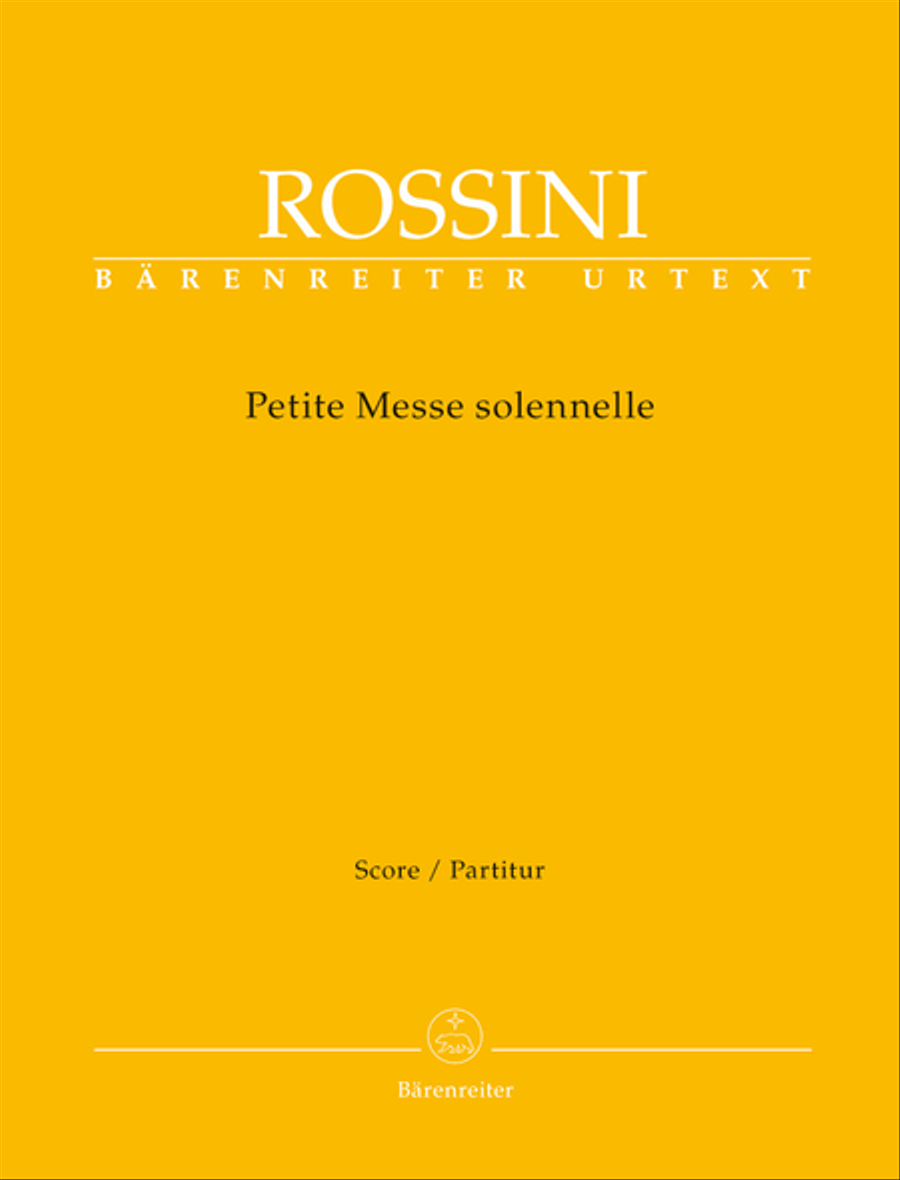
Composed by Gioachino Rossini. Edited by Patricia B. Brauner and Philip Gossett. This edition: urtext edition. Paperback. Works of Gioachino Rossini 3. Score. Baerenreiter Verlag #BA10501. Published by Baerenreiter Verlag (BA.BA10501).ISBN 9790006539550. 12.2 x 9.57 inches. Text Language: Latin. Preface: Patricia B. Brauner/Philip Gossett.
The “Petite Messe solennelle” is the finest work of Rossini’s late years. He composed it between 1863 and 1864 at the age of 71 as a commission for Countess Louise Pillet -Will for the consecration of her private chapel, where the work received its first performance in March 1864. Together with the “Stabat mater”, the mass is one of the composer’s mostimportant sacred works.
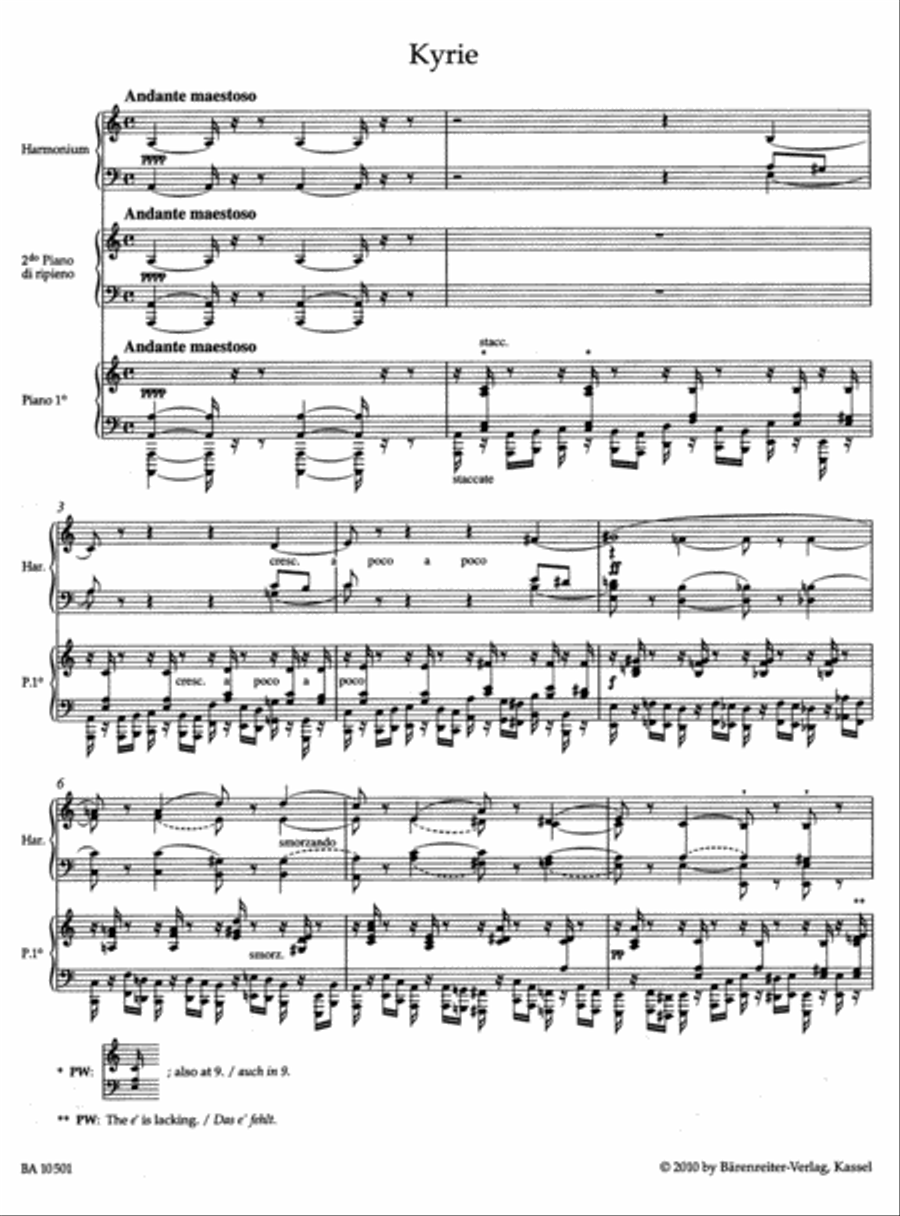
The unusual instrumentation with two pianos and harmonium is entirely in keeping with the Neapolitan keyboard tradition of the 18th century which was cultivated in France in Rossini’s day. It forms a distinct contrast to the style of large-scale sacred compositions as written by, for example, Liszt and Bruckner. Rossini explained that he wrote the later orchestral version of the work dating from 1867 out of concern that if he did not do this, other composers might orchestrate the mass too heavily in later arrangements.
About Barenreiter Urtext
What can I expect from a Barenreiter Urtext edition?
MUSICOLOGICALLY SOUND
- A reliable musical text based on all available sources
- A description of the sources
- Information on the genesis and history of the work
- Valuable notes on performance practice
- Includes an introduction with critical commentary explaining source discrepancies and editorial decisions
... AND PRACTICAL
- Page-turns, fold-out pages, and cues where you need them
- A well-presented layout and a user-friendly format
- Excellent print quality
- Superior paper and binding
- More by this Composer:
- Gioachino Rossini Gioachino Rossini Choir Gioachino Rossini Piano Accompaniment Gioachino Rossini Voice
- Instrument:
- Vocal Choir Piano and Keyboard Harmonium Piano and Keyboard Piano Accompaniment Vocal Voice
- Ensemble:
- 4-Part SATB Mixed Choir
- Publisher:
- Baerenreiter Verlag
Ratings + Reviews
5 Rating
1 review
D M.
Jun 27, 2012
Brenreiter's new urtext edition of Rossini's not so small nor solemn masterpiece is a revelation. A beautifully presented score is made even more wonderful by the critical and editorial commentary which accompanies it. Well worth buying!