Details
- Instrument:
- Flute
- Ensembles:
- Flute Duet Woodwind Duet
- Genres:
- Baroque Period
- Composers:
- Johann Pachelbel
- Publishers:
- Cascia Talbert
- Series:
- ArrangeMe
- Format:
- Score
- Item types:
- Digital
- Level:
- Intermediate
- Artist:
- Johann Pachelbel
- Usages:
- School and Community
- Number of Pages:
- 7
SKU: A0.1398817
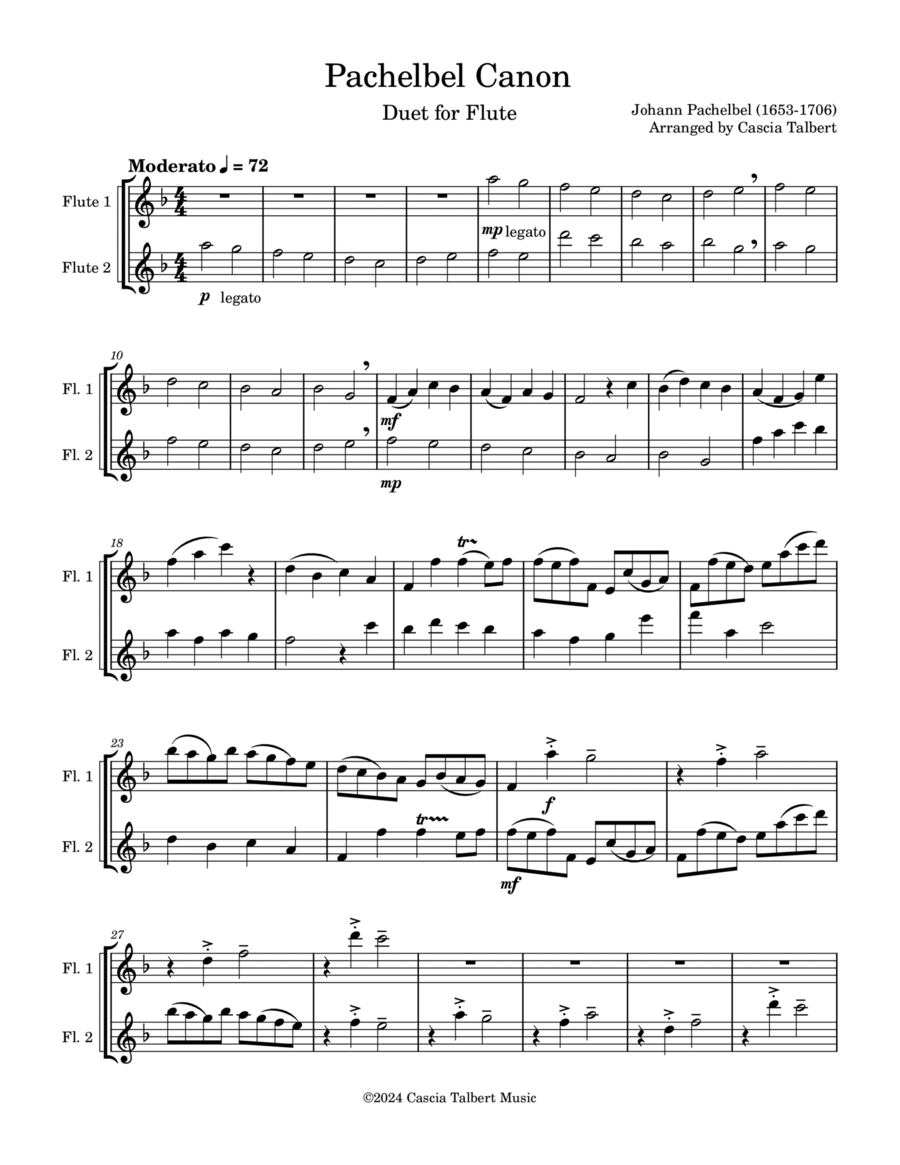
By Cascia Talbert. Composed by Johann Pachelbel. Arranged by Cascia Talbert. Classical. Score. 7 pages. Cascia Talbert #982092. Published by Cascia Talbert (A0.1398817).Pachelbel's Canon (also known as the Canon in D, P 37) is an accompanied canon by the German Baroque composer Johann Pachelbel. The canon was originally scored for three violins and basso continuo and paired with a gigue, known as Canon and Gigue for 3 violins and basso continuo. Both movements are in the key of D major. Although a true canon at the unison in three parts, it also has elements of a chaconne. Neither the date nor the circumstances of its composition are known (suggested dates range from 1680 to 1706), and the oldest surviving manuscript copy of the piece dates from 1838 to 1842.[1]
Like his other works, Pachelbel's Canon went out of style, and remained in obscurity for centuries. A 1968 arrangement and recording of it by the Jean-François Paillard chamber orchestra gained popularity over the next decade, and in the 1970s the piece began to be recorded by many ensembles; by the early 1980s its presence as background music was deemed inescapable.[2] From the 1970s onward, elements of the piece, especially its chord progression, were used in a variety of pop songs. Since the 1980s, it has also found increasingly common use in weddings and funeral ceremonies in the Western world.
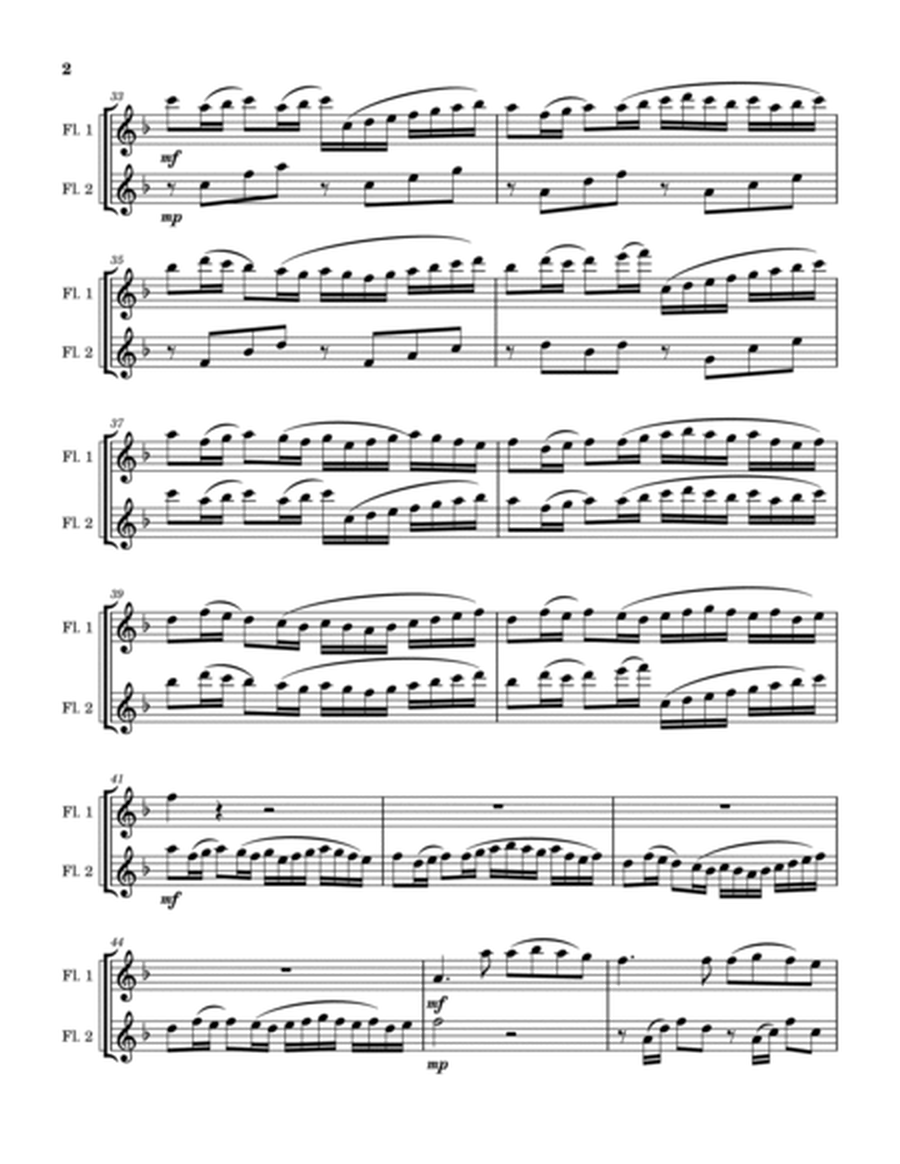
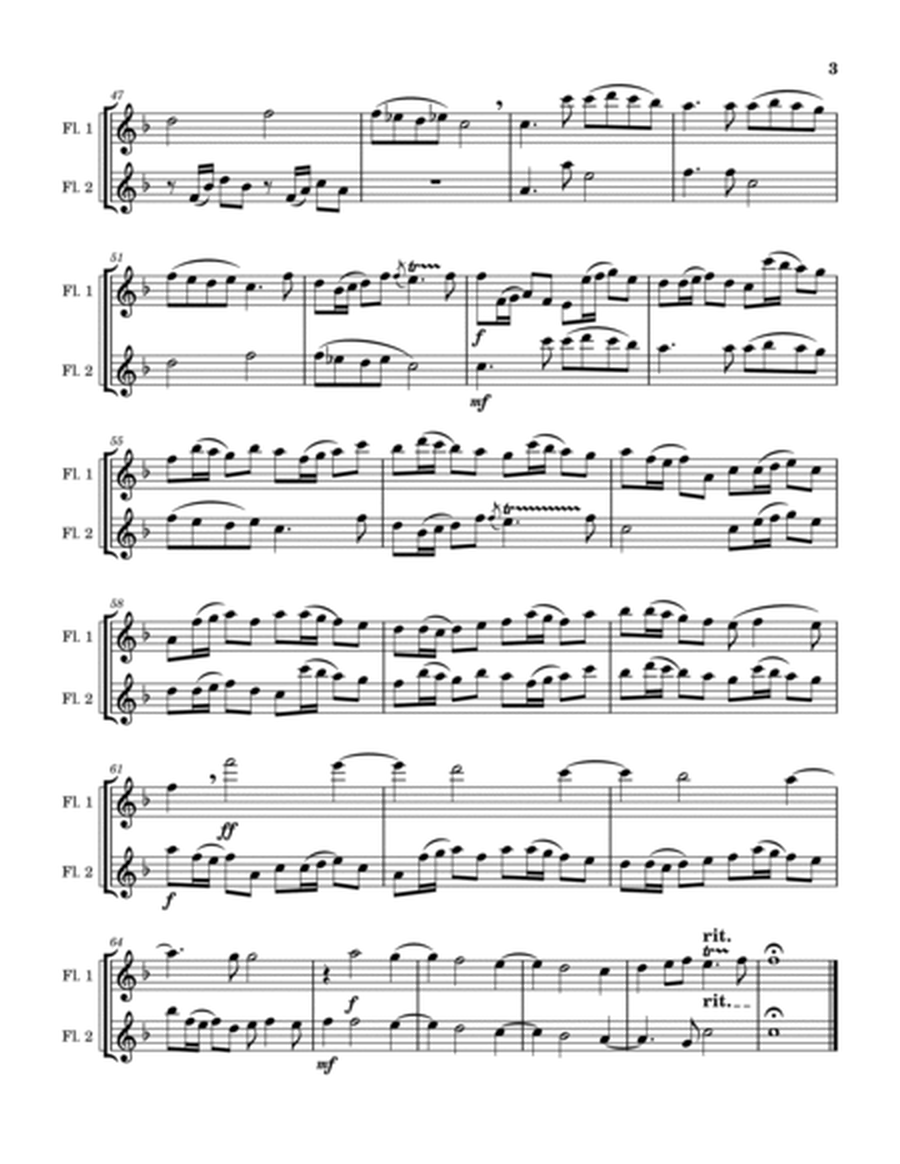
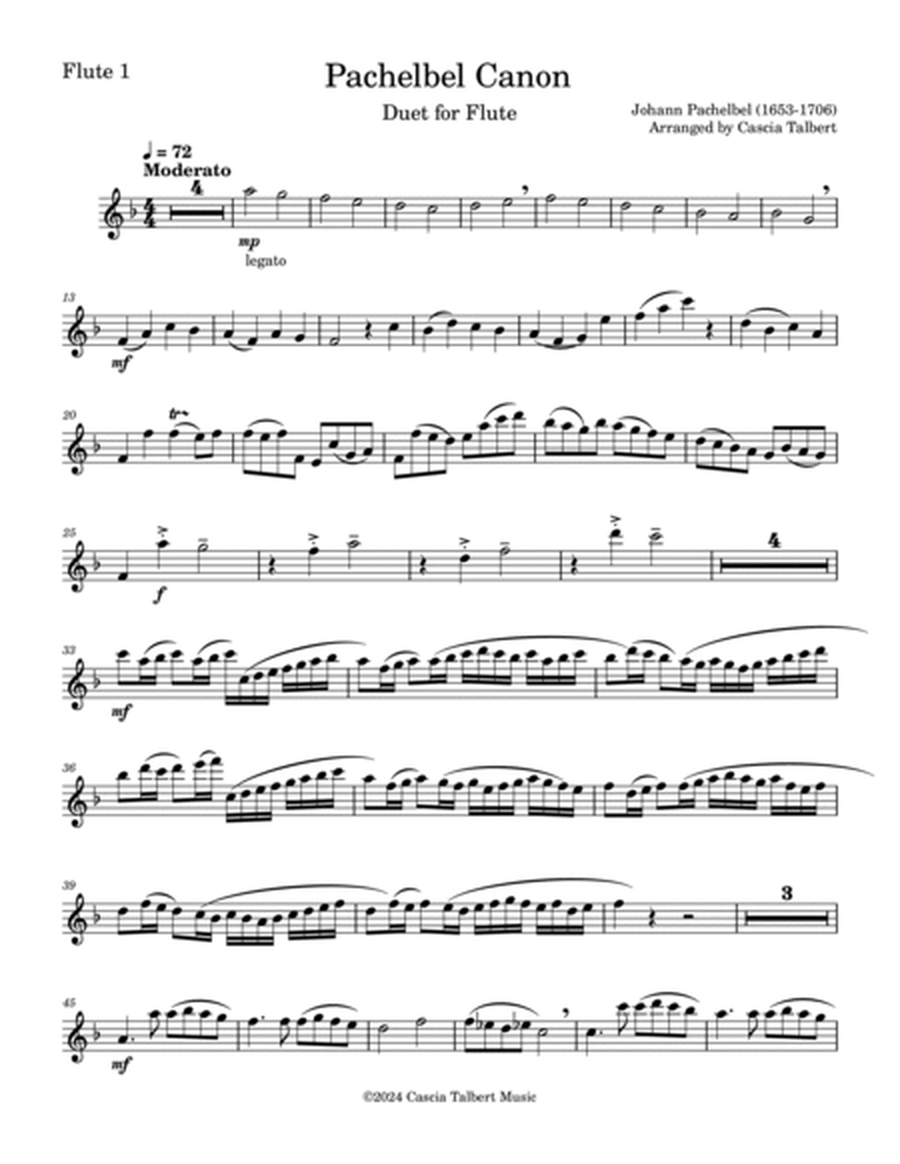
This arrangement is for two flutes (duet).
About ArrangeMe
This product was created by a member of ArrangeMe, Hal Leonard's self-publishing community for independent composers, arrangers, and songwriters. Discover unique arrangements of popular titles and original compositions from diverse creators. The length, difficulty, and pricing are determined by the arranger or composer.
About Digital Downloads
Digital Downloads let you instantly access sheet music on your computer, tablet, or mobile device. Print your sheet music anywhere, anytime, or play it straight from your device—no internet connection is required after download.
Each Digital Download includes a watermark with your name, purchase date, and the number of copies purchased. You may only print or use the number of copies purchased. Redistribution or unauthorized printing is prohibited.
- More by this Composer:
- Johann Pachelbel Johann Pachelbel Piano Johann Pachelbel Piano Accompaniment Johann Pachelbel Violin
- ArrangeMe:
- Cascia Talbert
- Series:
- ArrangeMe
- Artists:
- Johann Pachelbel
- Ensemble:
- Flute Duet Woodwind Duet
- Publisher:
- Cascia Talbert