Details
- Instrument:
- Choir Piano Accompaniment Voice
- Ensembles:
- 3-Part
- Genres:
- Christian
- Composers:
- Mark Burrows
- Publishers:
- BriLee Music
- UPC:
- 672405012034
- Format:
- Octavo
- Item types:
- Physical
- Artist:
- Mark Burrows
- Usages:
- School and Community
- Main Key:
- F major,G major
- Number of Pages:
- 12
- Size:
- 6.875 x 10.5 inches
- Shipping Weight:
- 1.44 pounds
SKU: CF.BL1294
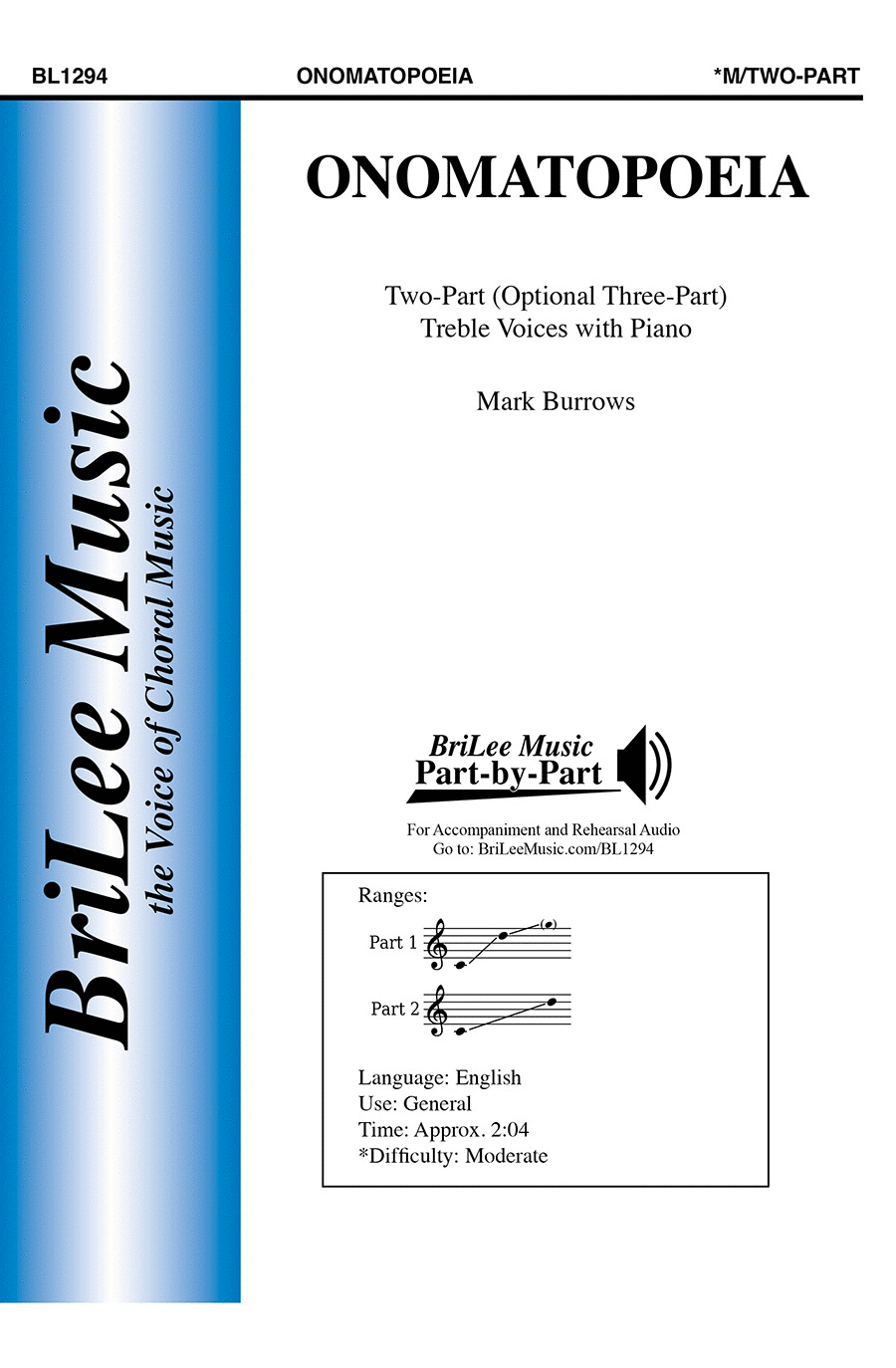
Composed by Mark Burrows. Octavo. Octavo. 12 pages. Duration 0:02:04. BriLee Music #BL1294. Published by BriLee Music (CF.BL1294).UPC: 672405012034. 6.875 x 10.5 inches. Key: F major,g major. English. Original.
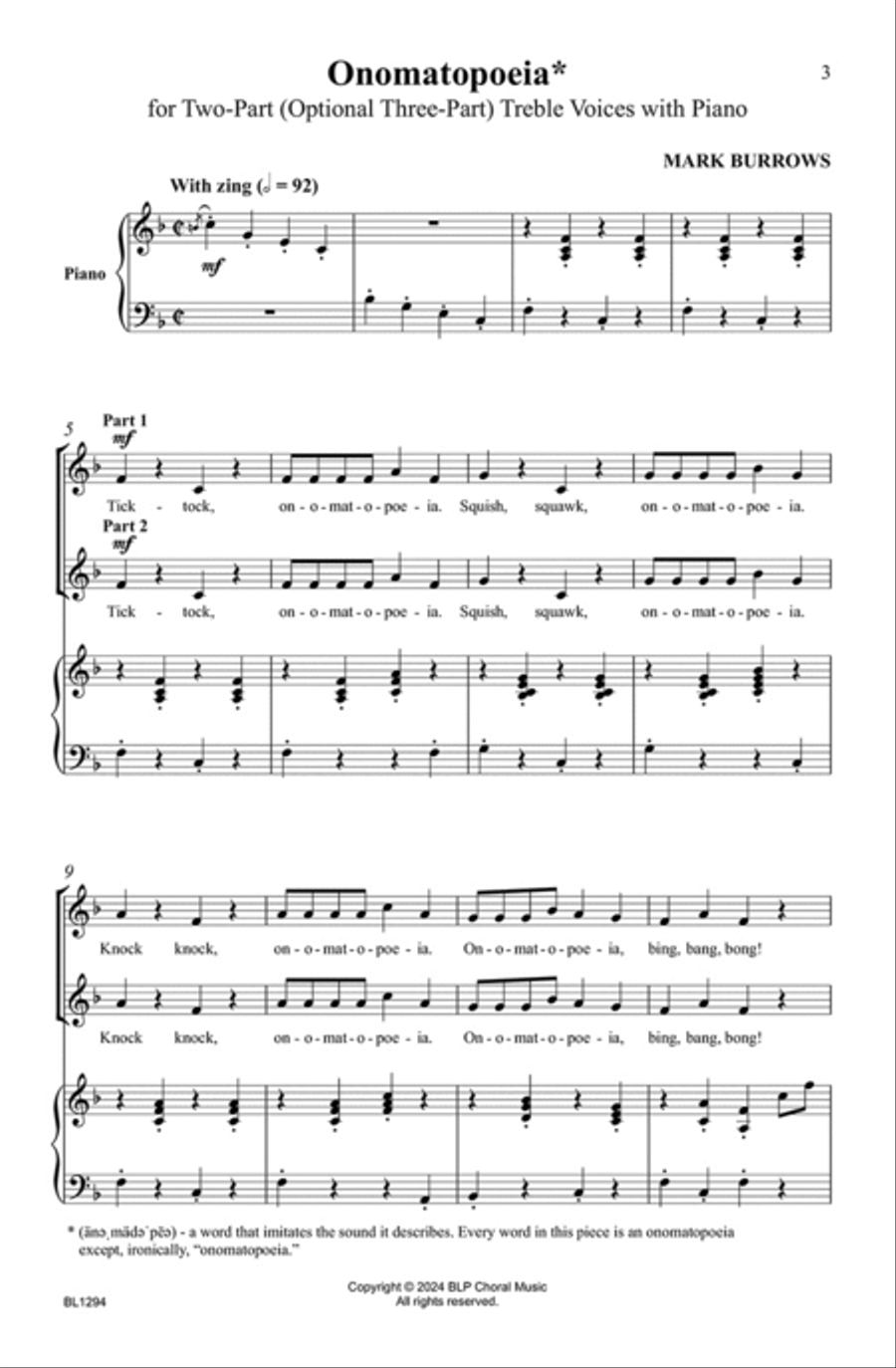
I had SO much fun writing this piece, and that’s because onomatopoeias are fun. An onomatopoeia is a word, like “beep” or “rumble”, that imitates the sound it describes. And this piece is packed with onomatopoeias. In fact, the only word in the entire song that isn’t an onomatopoeia is, ironically, “onomatopoeia.”The best way to bring out the musicality of this piece is by leaning into the natural music of the words themselves.Don’t simply sing the word “squish.” Make it squishy.“Giggle” should sound giggly. “Grumble” should sound grumbly.You get the idea.Be mindful of the beginning of the three-part round in m. 47. As you progressively get louder, going from whisper to cackle, make sure to keep the tempo steady. Let the growing excitement come from the dynamics and from the sounds of the words.And newsflash: This is not a Bach motet. Should you sing it with a well-supported, healthy sound? Of course! But for goodness’ sake, please have fun!~Mark.
- More by this Composer:
- Mark Burrows Mark Burrows Choir Mark Burrows Piano Accompaniment Mark Burrows Voice
- Instrument:
- Vocal Choir Piano and Keyboard Piano Accompaniment Vocal Voice
- Artists:
- Mark Burrows
- Ensemble:
- 3-Part
- Publisher:
- BriLee Music