Details
- Instrument:
- Choir
- Ensembles:
- 4-Part SATB A Cappella Mixed Choir
- Composers:
- Rihards Dubra
- Publishers:
- Alliance Music Publications
- Format:
- Octavo
- Item types:
- Physical
- Artist:
- Rihards Dubra
- Usages:
- School and Community
- Shipping Weight:
- 0.79 pounds
SKU: AN.AMP-0551
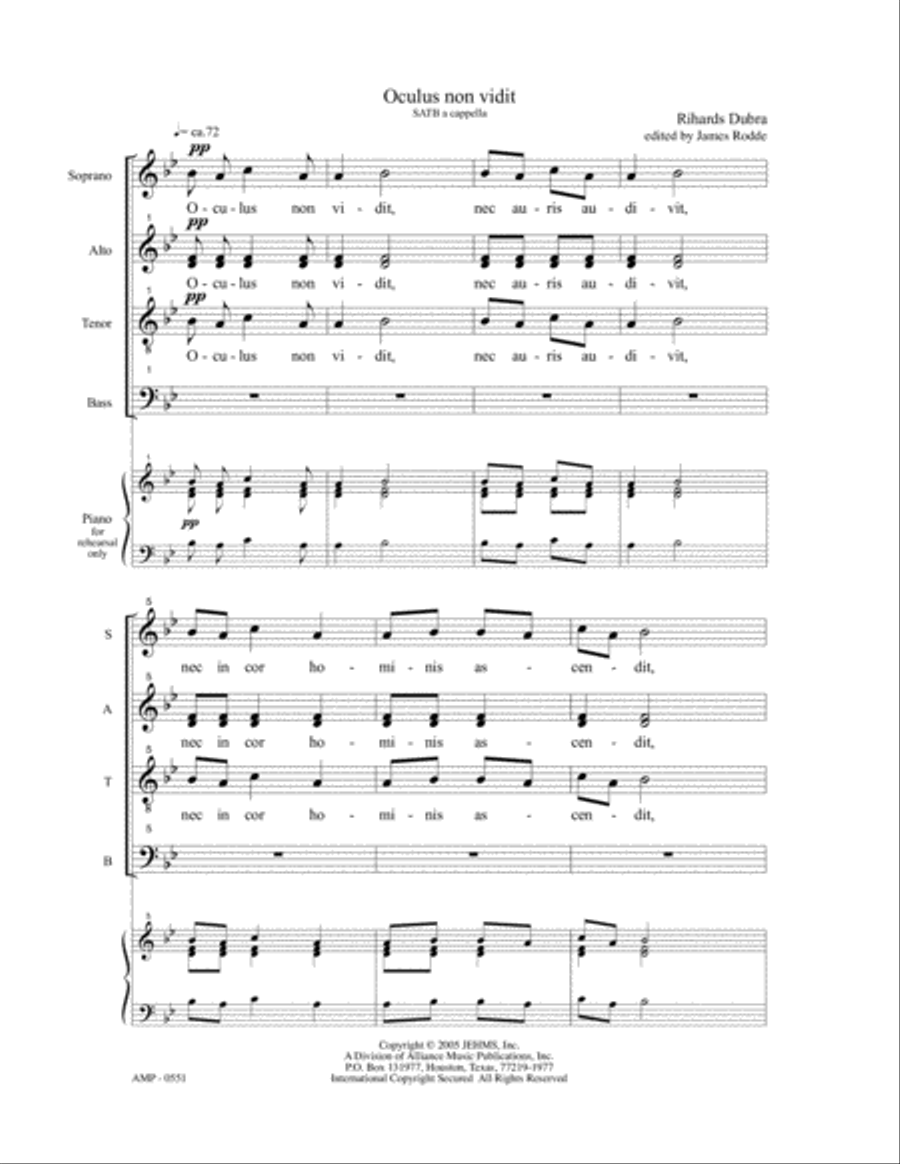
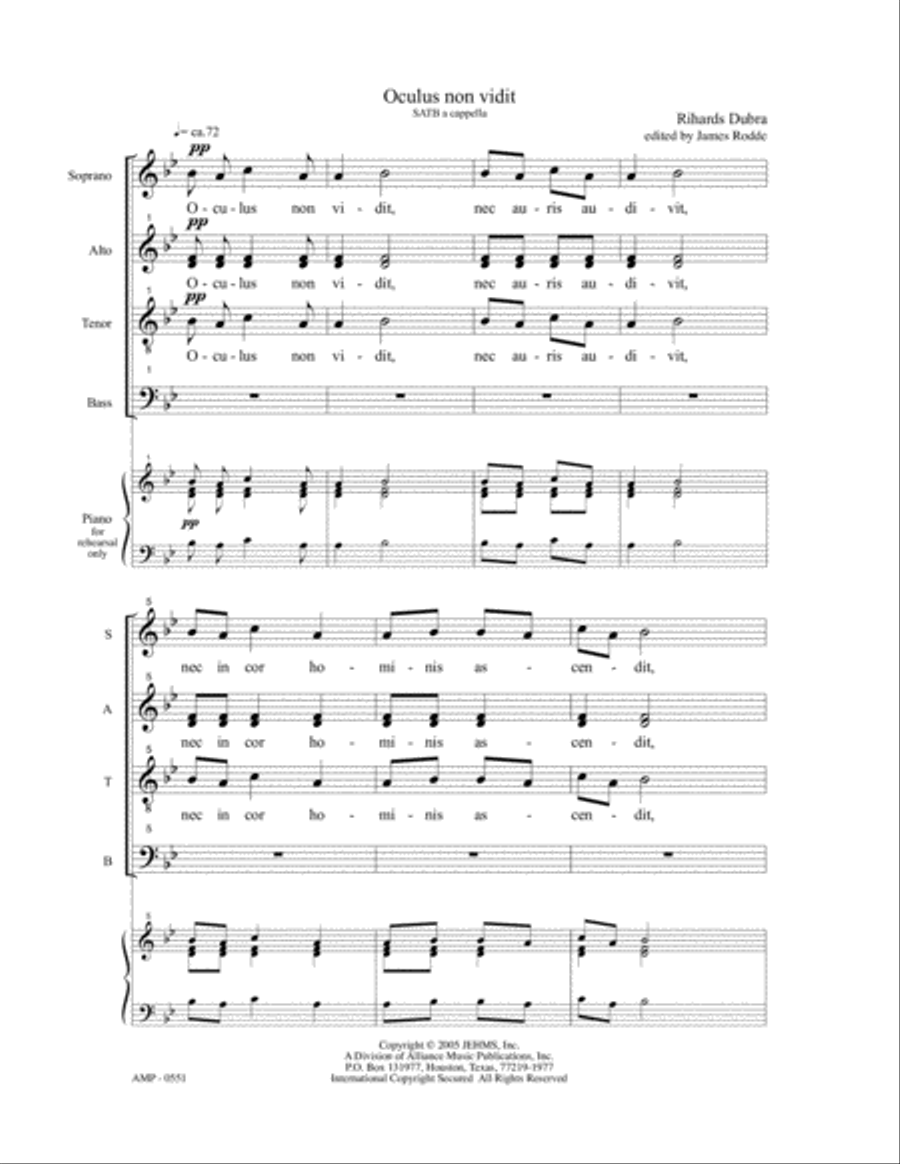
Composed by Rihards Dubra. Edited by James Rodde. Octavo. Alliance Music Publications #AMP 0551. Published by Alliance Music Publications (AN.AMP-0551).Dubra/Rodde.
Rihards Dubra was born in 1964 and studied music theory and composition at the Emils Darzins Music College and the Latvian Music Academy with Juris Karlsons. In 1997 he completed his musical education in LMA with a Masters degree in composition. For several years, he was an organist at Mater Dolorosa Catholic Church in Riga. He is one of the founders and leaders of the group Schola Cantorum Riga. He also works as a music theory and composition teacher at Jurmala Music College.
Oculus non vidit was composed in 1993.
EDITOR'S COMMENTS
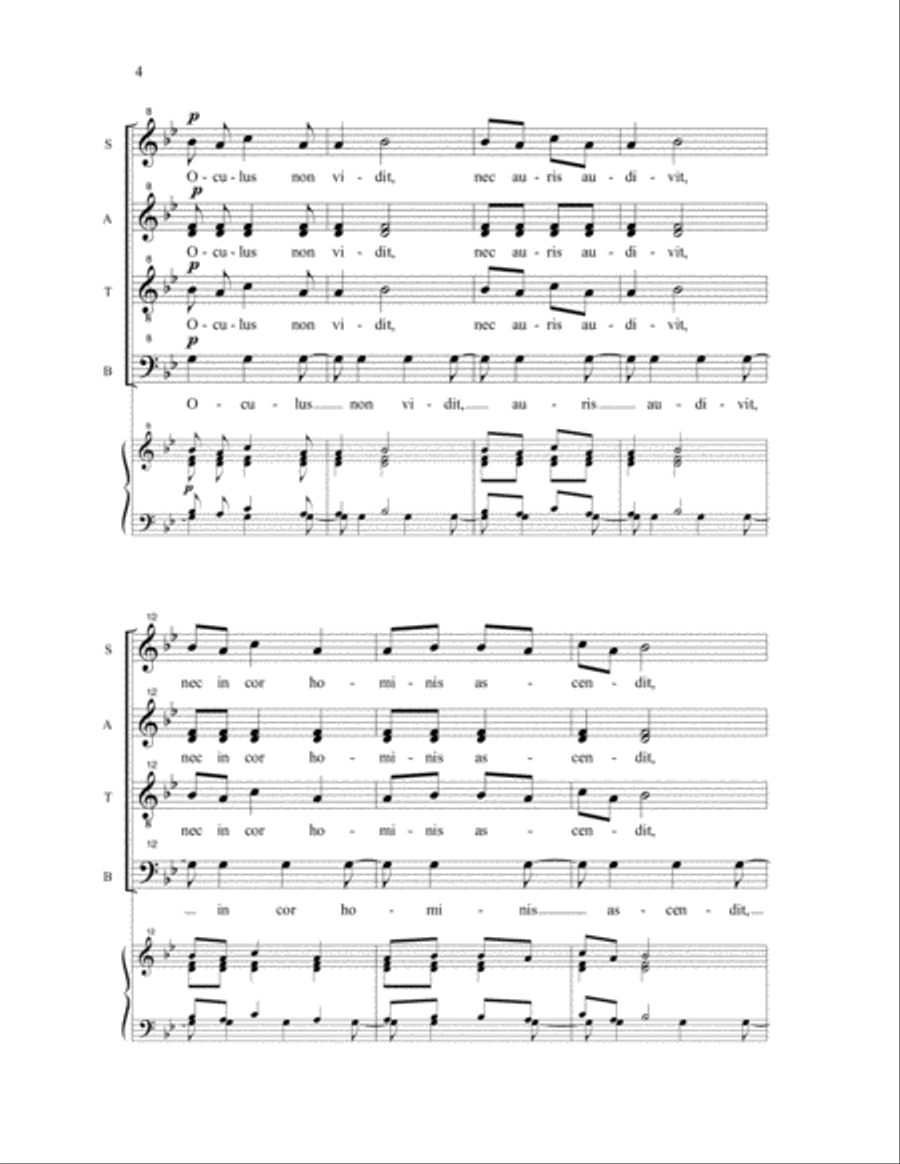
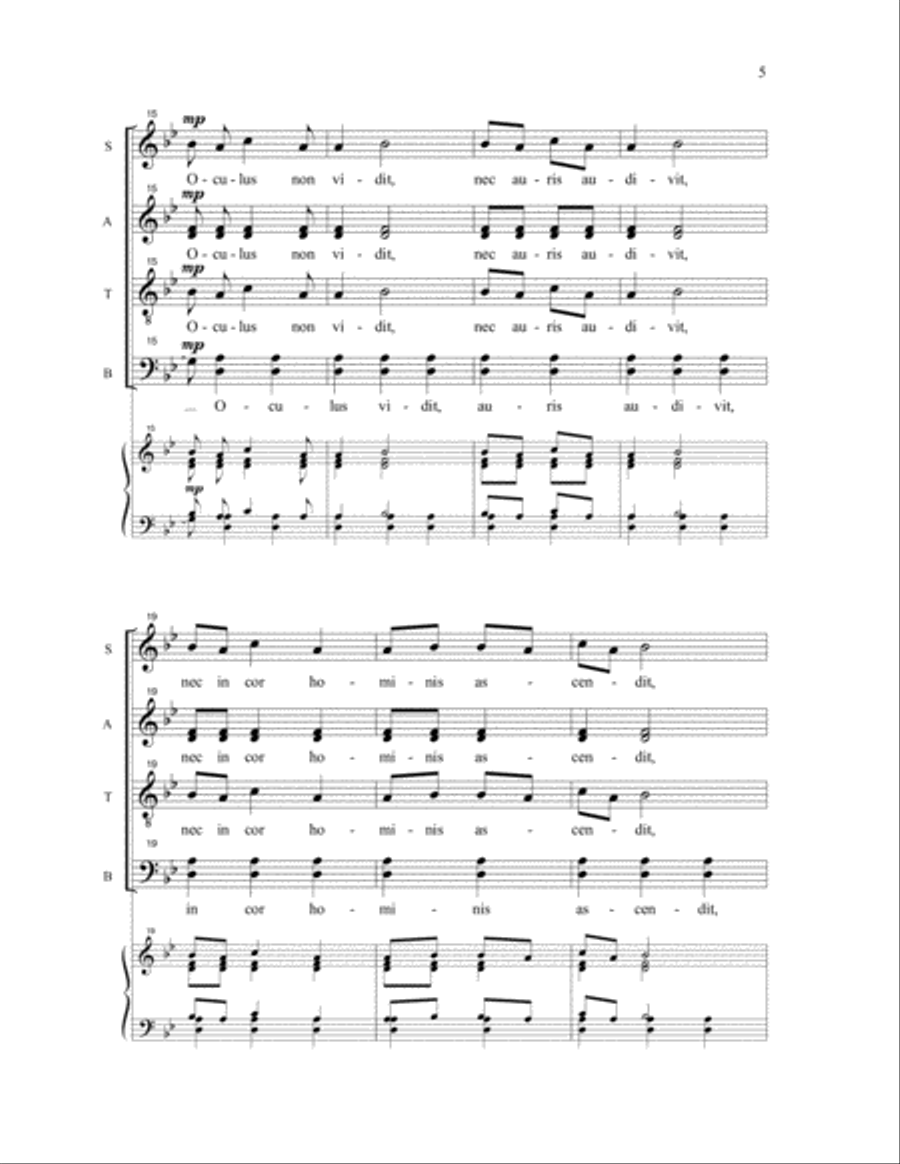
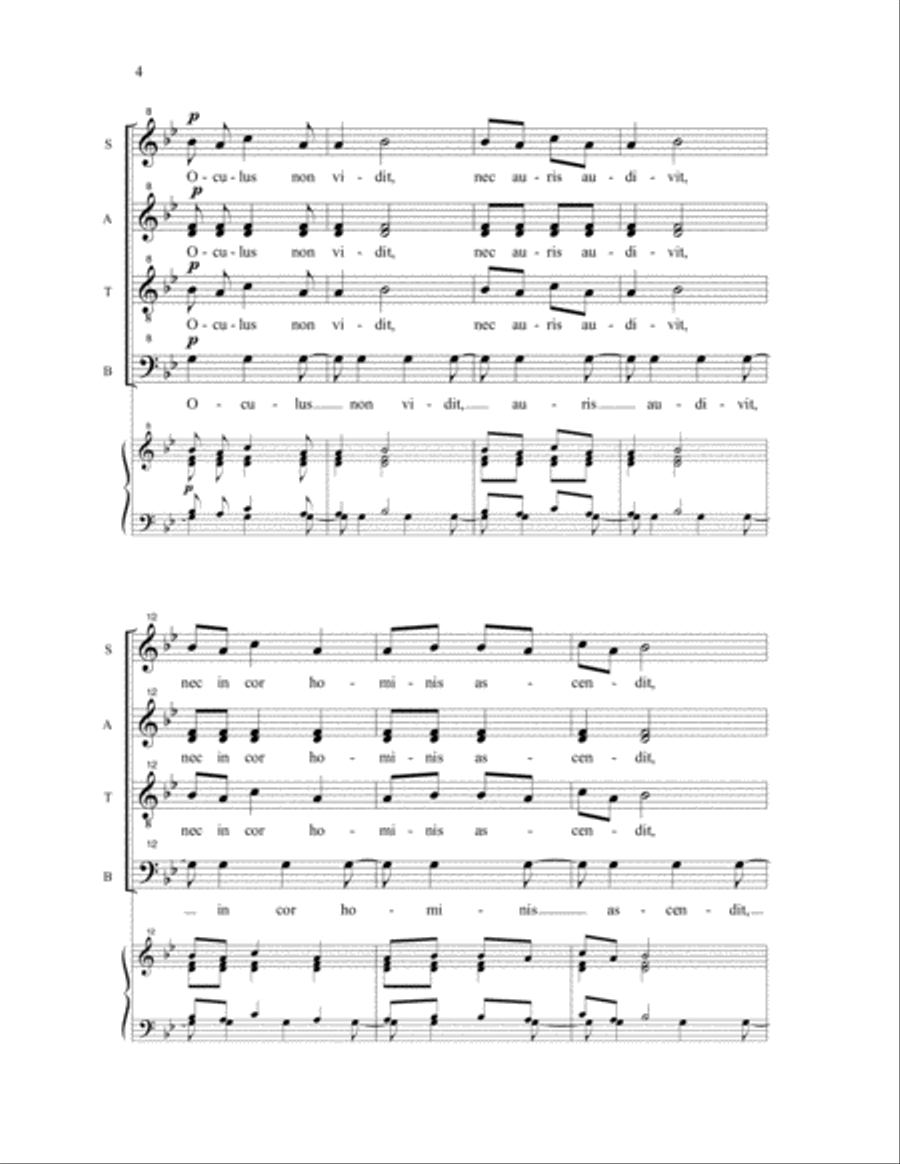
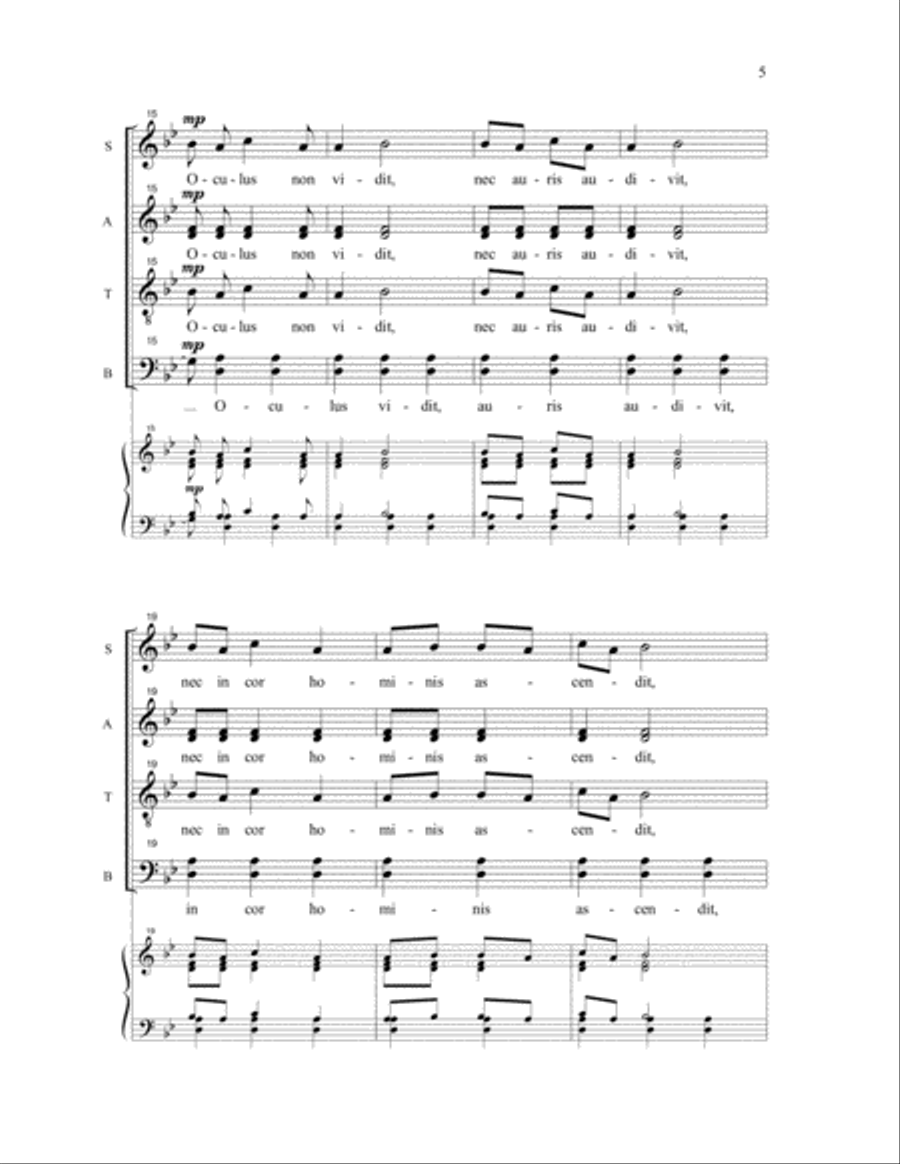
In the original manuscript, Dubra provides only two breath marks, in measures 38 and 42. In my first conducting of Oculus non vidit, the choir sang it quite sustained, breathing as an ensemble only where indicated with the following exceptions: at the end of measures 24, 28, 32, and 35. The basses also took breaths after each illum in measures 51-70. As a general rule, we supplied a slight crescendo on any pitch longer than a quarter note.
In the final measure the sopranos, altos, and tenors are to freely sing their three designated pitches at their own individual pace.
- More by this Composer:
- Rihards Dubra Rihards Dubra English Horn Rihards Dubra Choir Rihards Dubra Voice
- Artists:
- Rihards Dubra
- Ensemble:
- 4-Part SATB A Cappella Mixed Choir
- Publisher:
- Alliance Music Publications