Details
- Genres:
- Classical Period Romantic Period
- Composers:
- Franz Schubert
- Publishers:
- G. Henle
- Series:
- Henle Urtext
- UPC:
- 888680044213
- ISBN:
- 9790201805627
- EAN:
- 9790201805627
- Format:
- Set of Parts
- Item types:
- Physical
- Artist:
- Franz Schubert
- Usages:
- School and Community
- Size:
- 12.25x9.5x0.48 inches
- Number of Pages:
- 158
- Shipping Weight:
- 1.71 pounds
SKU: HL.51480562
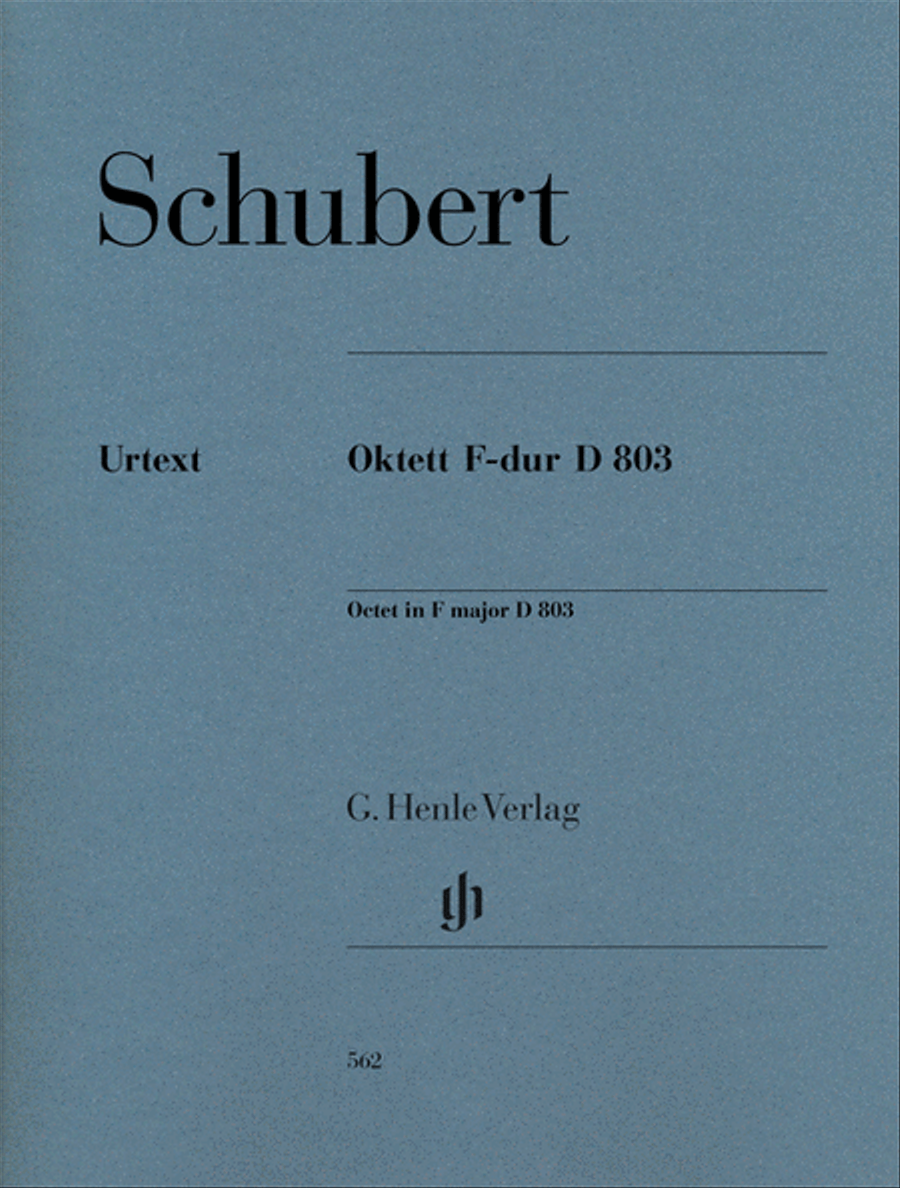
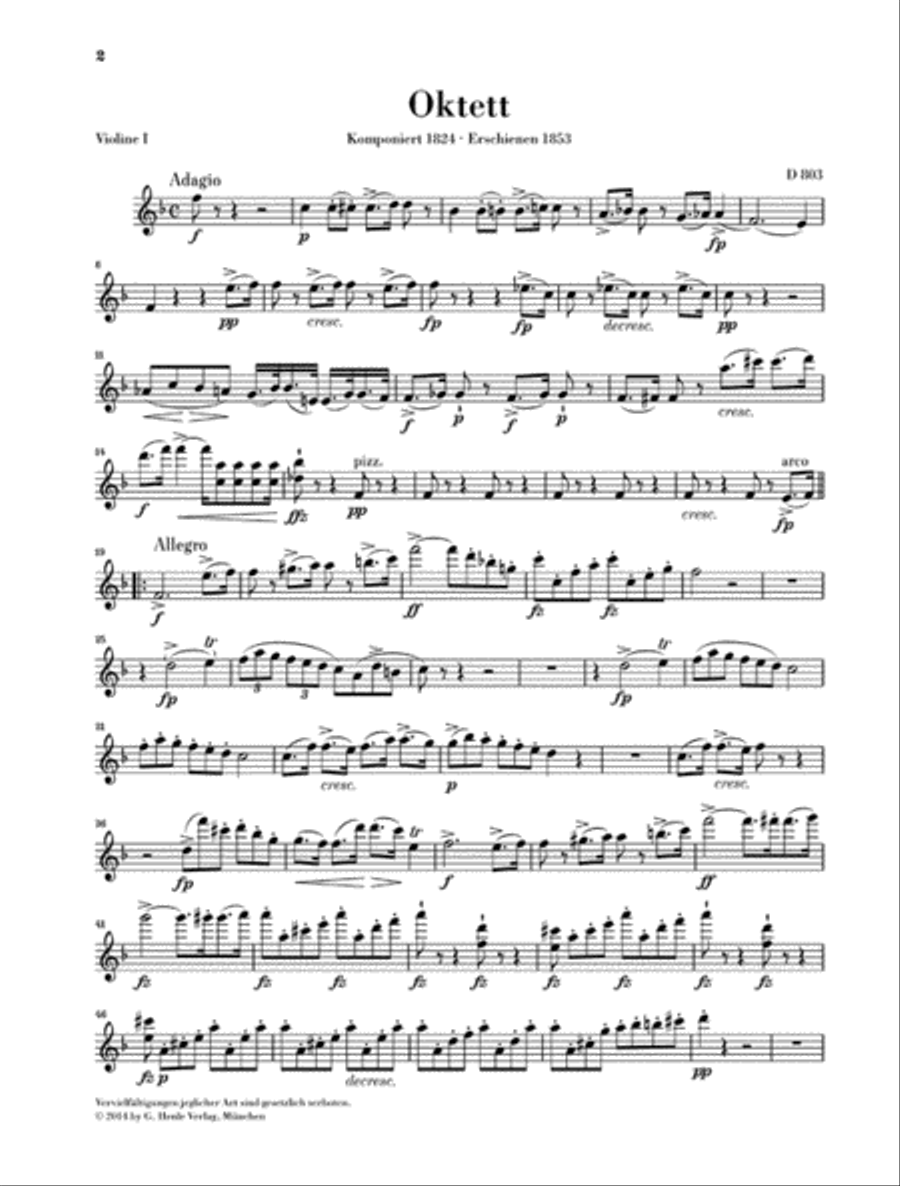
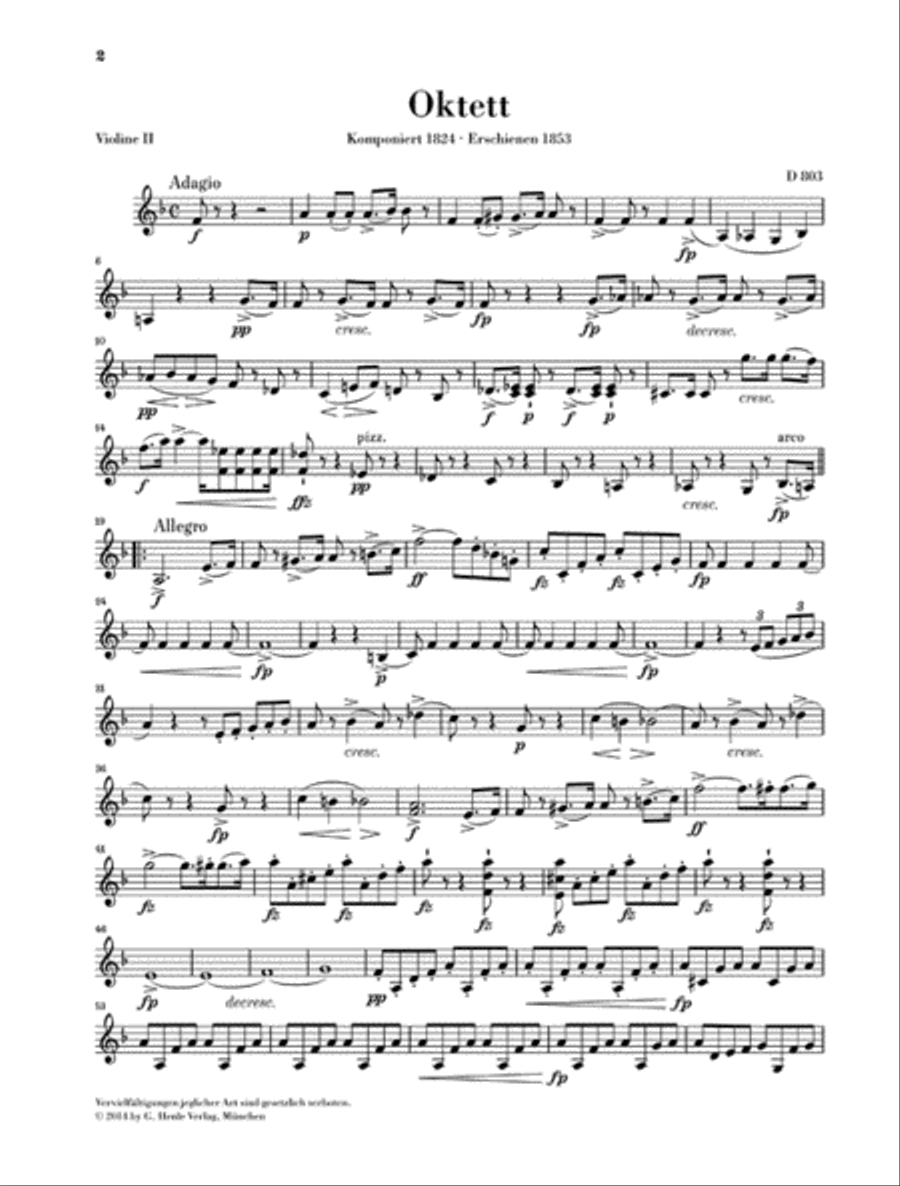
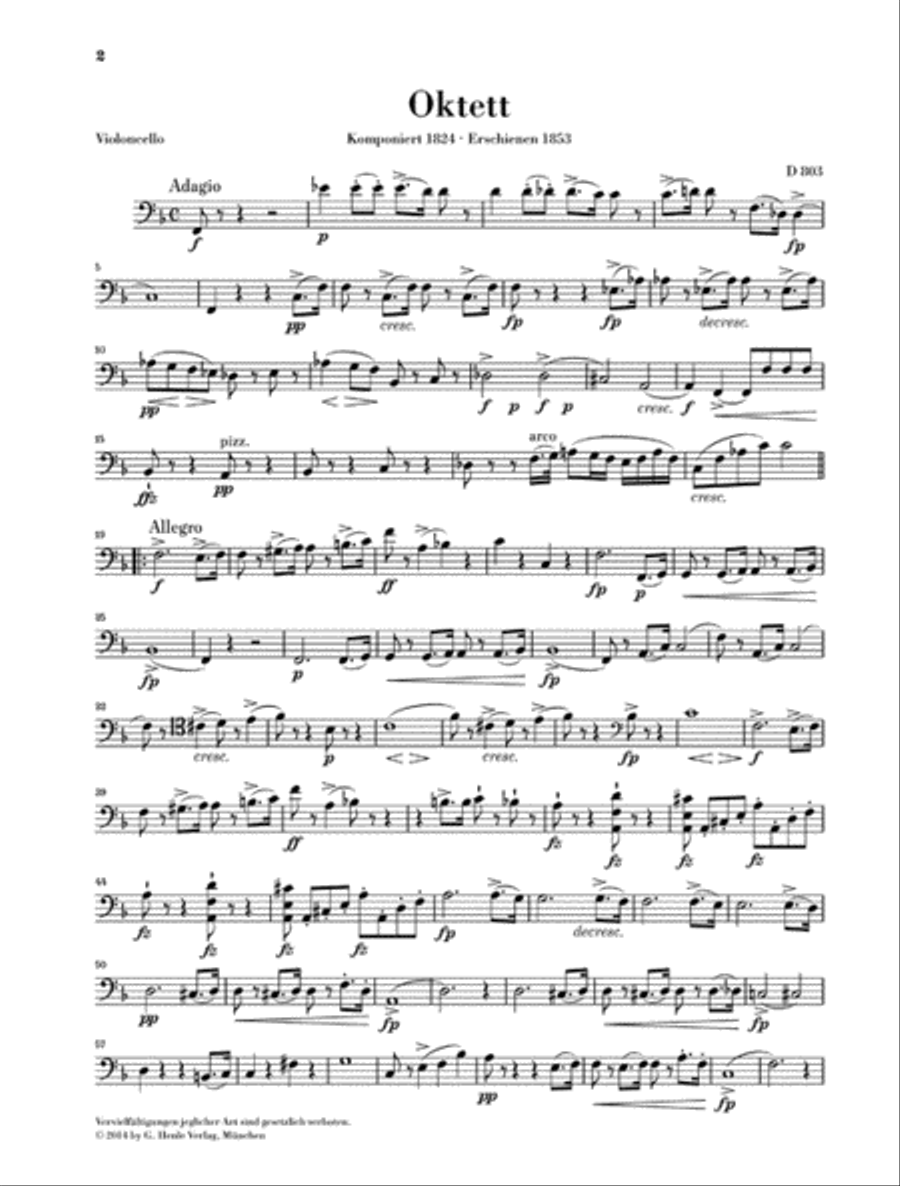
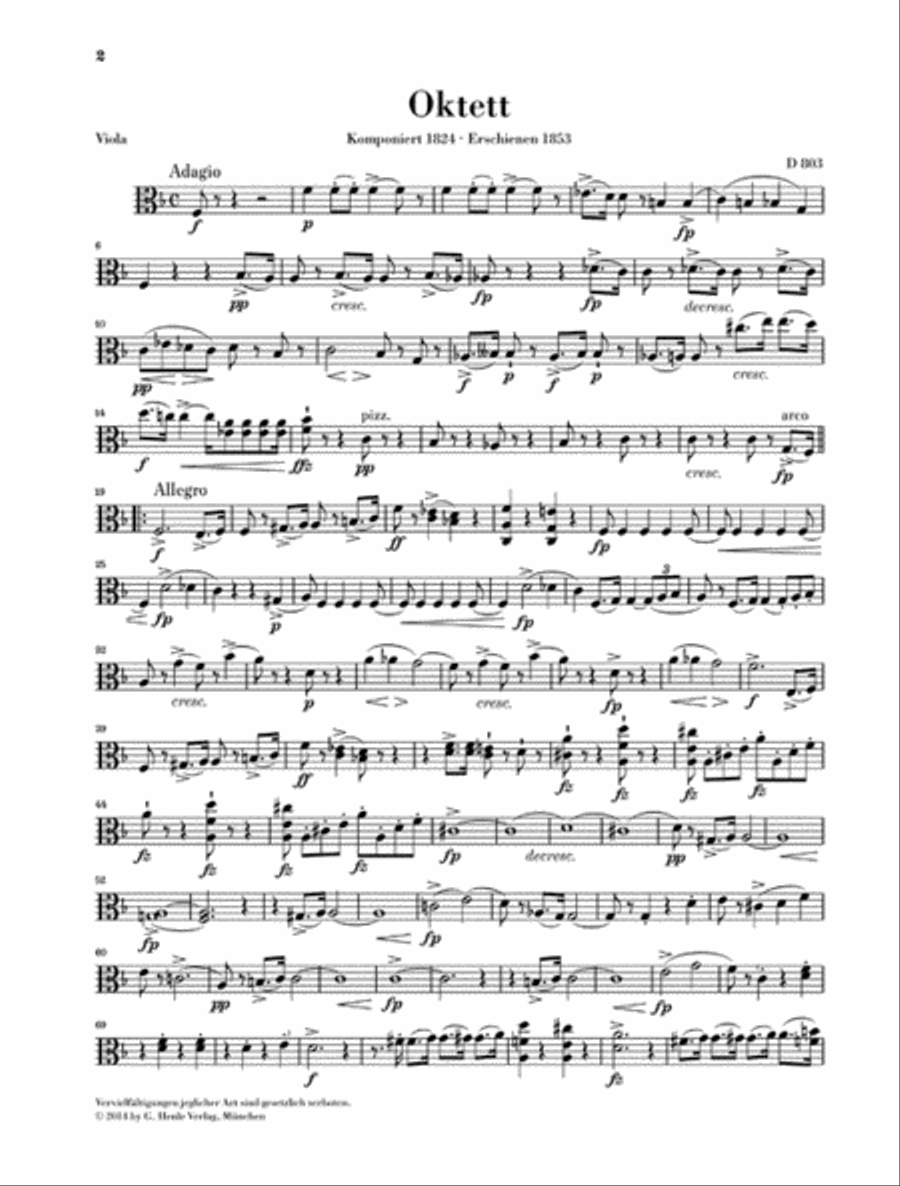
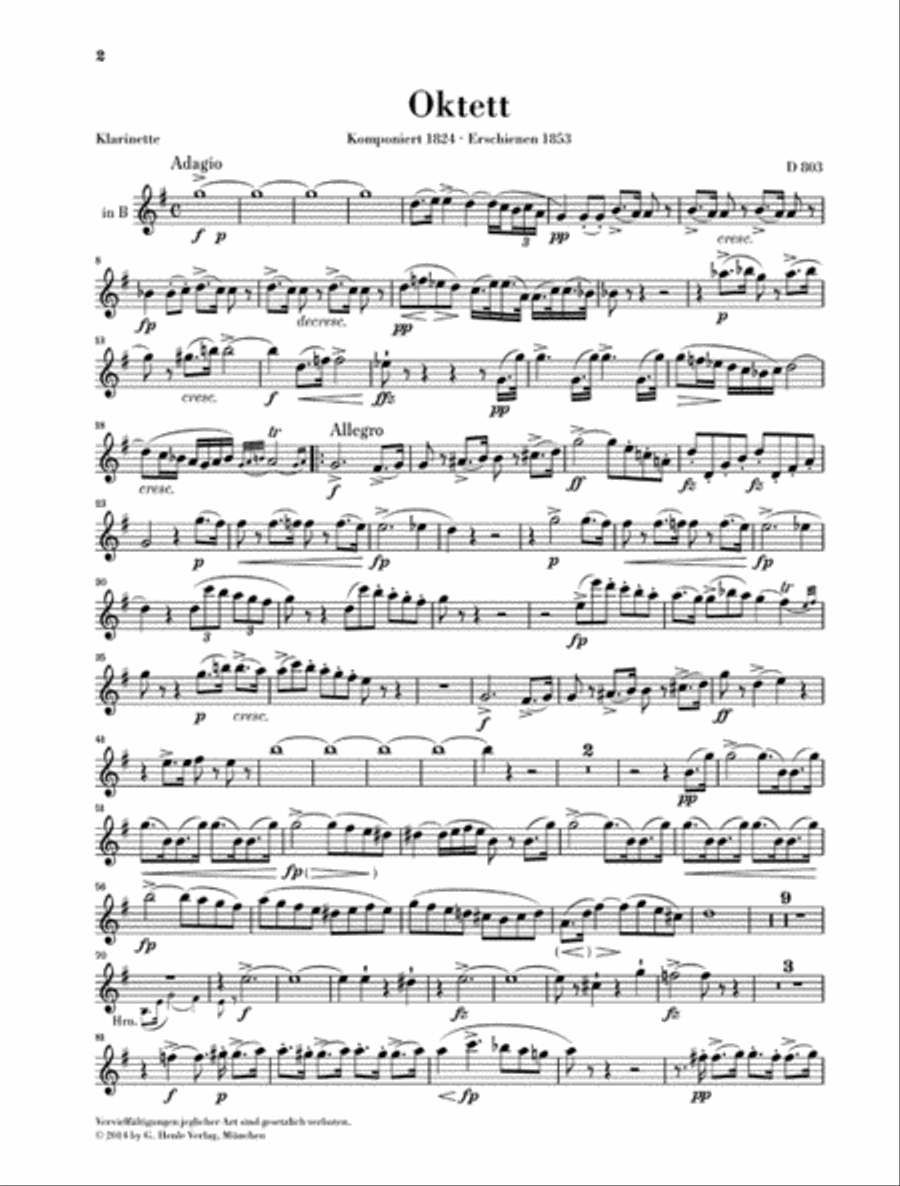
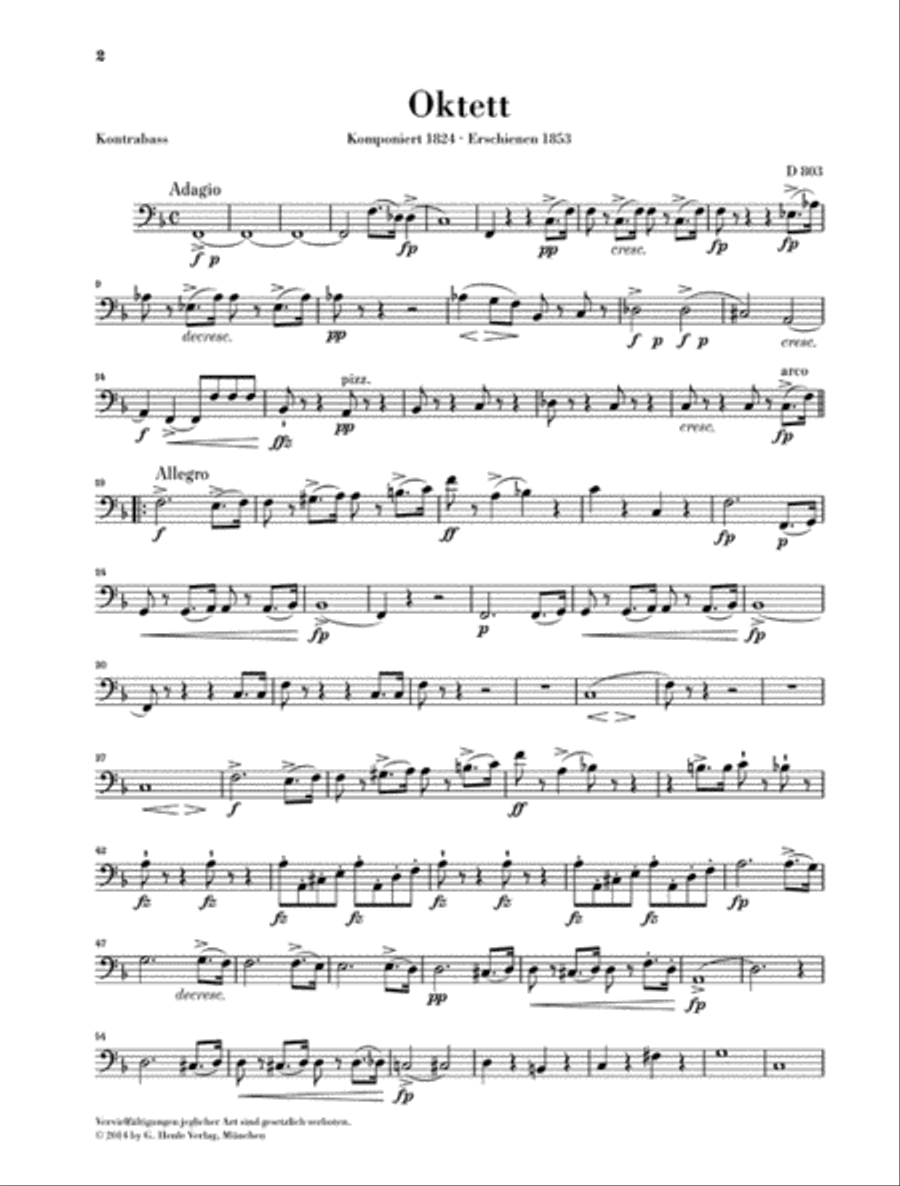
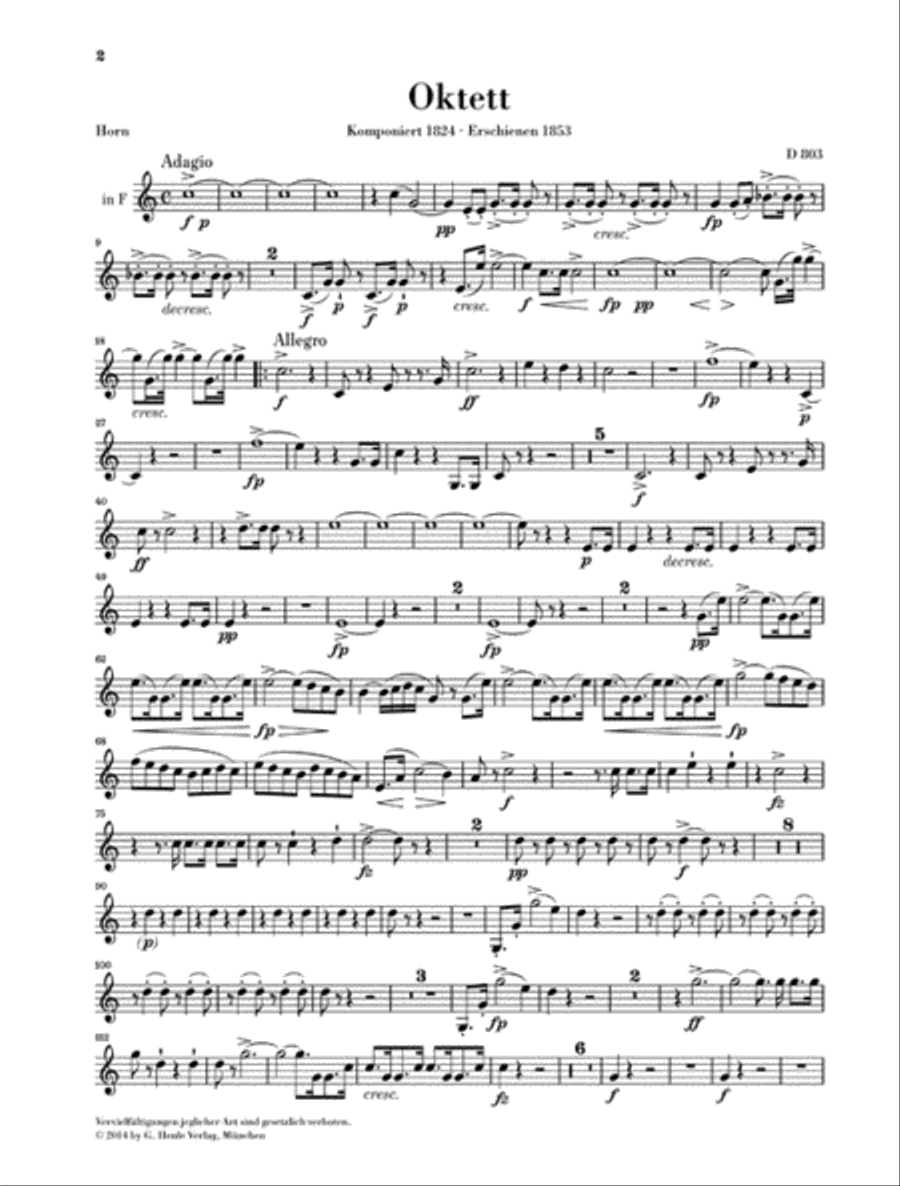
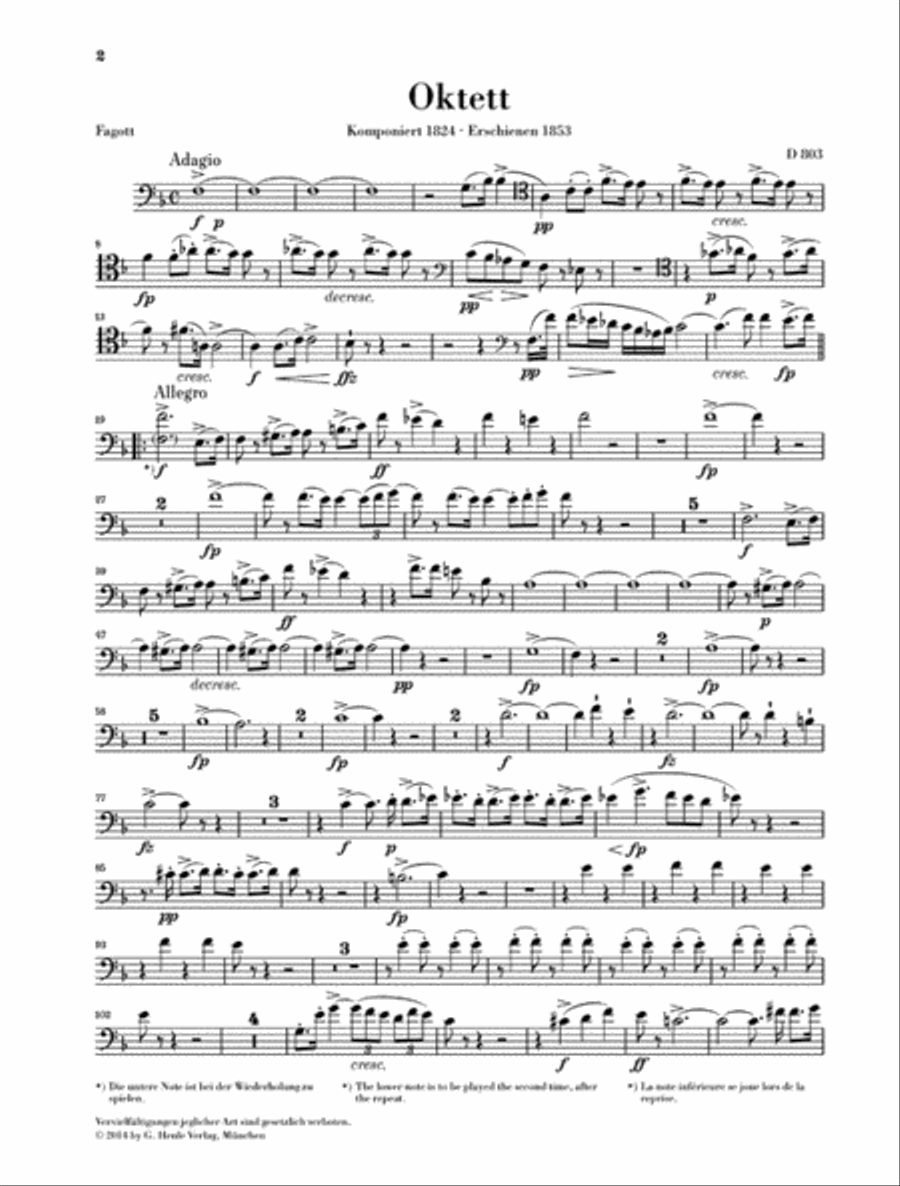
Composed by Franz Schubert. Edited by Peter Jost. Sheet Music. Paperbound. Henle Music Folios. Classical. Paperbound. 158 pages. G. Henle #HN562. Published by G. Henle (HL.51480562).ISBN 9790201805627. UPC: 888680044213. 12.25x9.5x0.48 inches.
The model for this composition was Beethoven's Septet op. 20, whose Divertimento character and six-part layout were adopted by Schubert, although he merely expanded the instrumentation by adding a second violin. In a letter he numbered his octet amongst the chamber music works with which he desired to blaze a “path to the great symphony.” It can no longer be ascertained whether the composition was commissioned by Count Ferdinand Troyer, who had a musical salon in Vienna and played the clarinet. We only know that Schubert composed the work at the beginning of 1824, taking only a few weeks to do so and that it was shortly performed at Troyer's afterwards. Today it is one of the most popular larger chamber music works.
About Henle Urtext
What I can expect from Henle Urtext editions:
- error-free, reliable musical texts based on meticulous musicological research - fingerings and bowings by famous artists and pedagogues
- preface in 3 languages with information on the genesis and history of the work
- Critical Commentary in 1 – 3 languages with a description and evaluation of the sources and explaining all source discrepancies and editorial decisions
- most beautiful music engraving
- page-turns, fold-out pages, and cues where you need them
- excellent print quality and binding
- largest Urtext catalogue world-wide
- longest Urtext experience (founded 1948 exclusively for "Urtext" editions)
- More by this Composer:
- Franz Schubert Franz Schubert Piano Accompaniment Franz Schubert Voice Franz Schubert Piano, Vocal
- Series:
- Henle Urtext
- Artists:
- Franz Schubert Peter Jost
- Publisher:
- G. Henle