Details
- Instrument:
- Choir Piano Accompaniment Tenor Voice Soprano Voice Bass Voice Voice Solo
- Ensembles:
- 4-Part SATB Mixed Choir
- Genres:
- Baroque Period
- Composers:
- George Frideric Handel
- Publishers:
- Baerenreiter Verlag
- ISBN:
- 9790006532452
- Format:
- Vocal Score
- Item types:
- Physical
- Artist:
- George Frideric Handel
- Arrangers:
- Andreas Kohs
- Usages:
- Praise
- Size:
- 10.63 x 7.48 inches
- Shipping Weight:
- 0.48 pounds
SKU: BA.BA04291-90
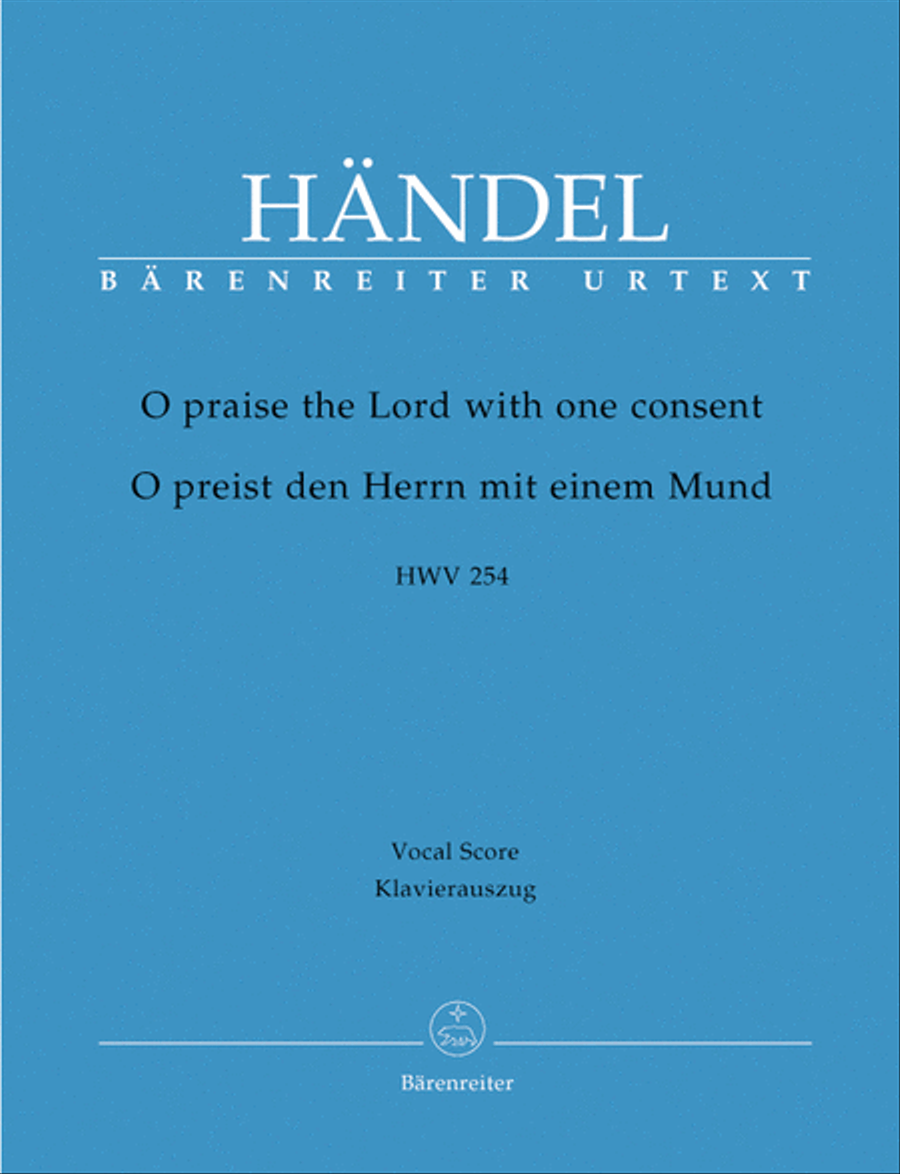
Composed by George Frideric Handel. Edited by Gerald Hendrie. Arranged by Andreas Kohs. This edition: urtext edition. Stapled. Barenreiter Urtext. Vocal Score. HWV 254. Baerenreiter Verlag #BA04291-90. Published by Baerenreiter Verlag (BA.BA04291-90).ISBN 9790006532452. 10.63 x 7.48 inches. Text Language: German, English.
Handel's three anthems (My song shall be alway HWV 252, O come let us sing HWV 253, O praise the Lord HWV 254) were composed in 1717 and 1718 for Cannons, a country estate near to London. They take their nickname, the"Chandos Anthems", from the owner of the estate, the First Duke of Chandos .
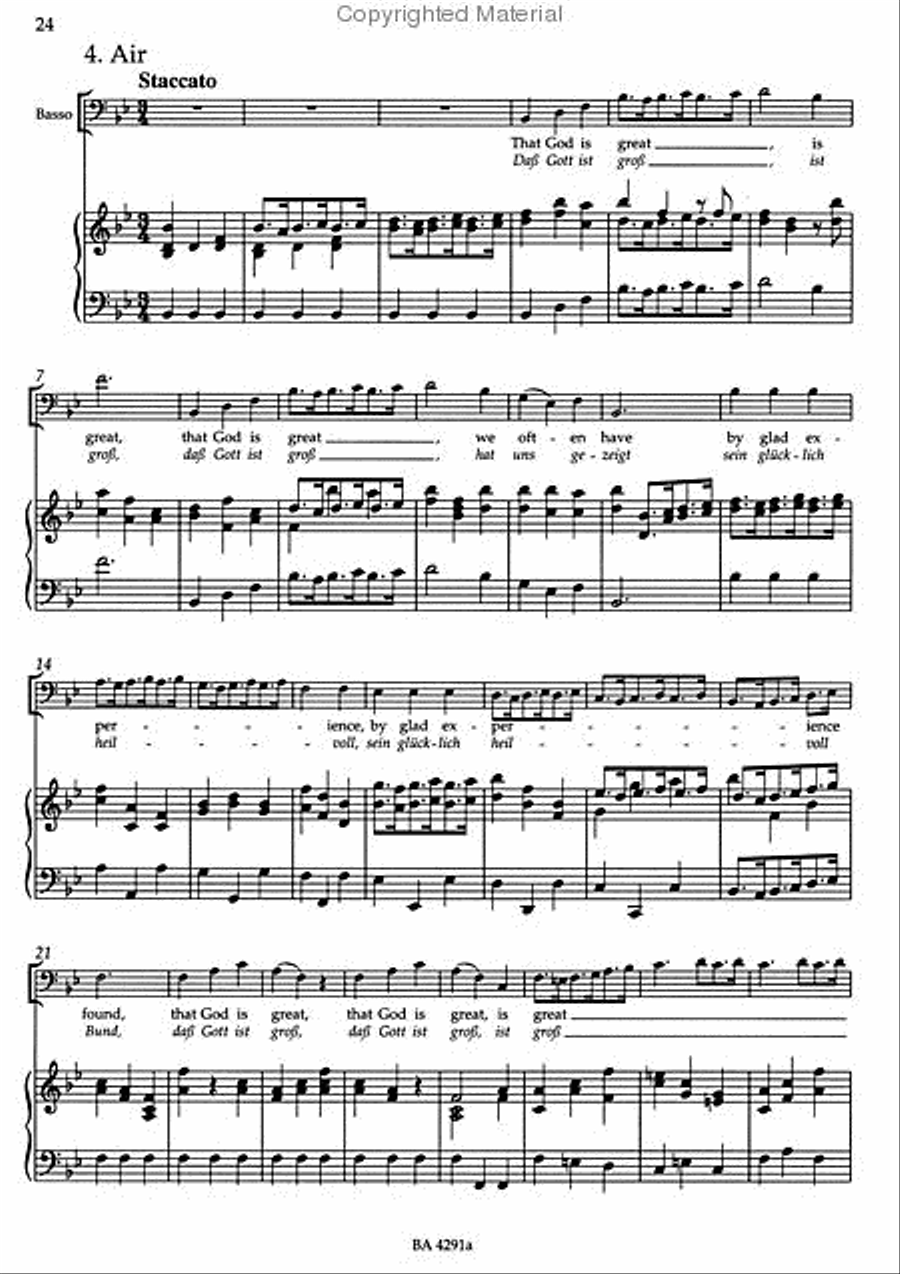
The three pieces are noteworthy for their festive character and their varied orchestral accompaniment. Handel borrows older material from his Italian period and his earlier works for the Chapel Royal in London - a standard procedure for this composer, who reused particularly successful pieces as starting points for his later works. The scoring for solo voices, chorus, oboe, strings, and continuo was tailored to the musical resources of the small country estate. Two additional recorders are needed for"O come let us sing unto the Lord".
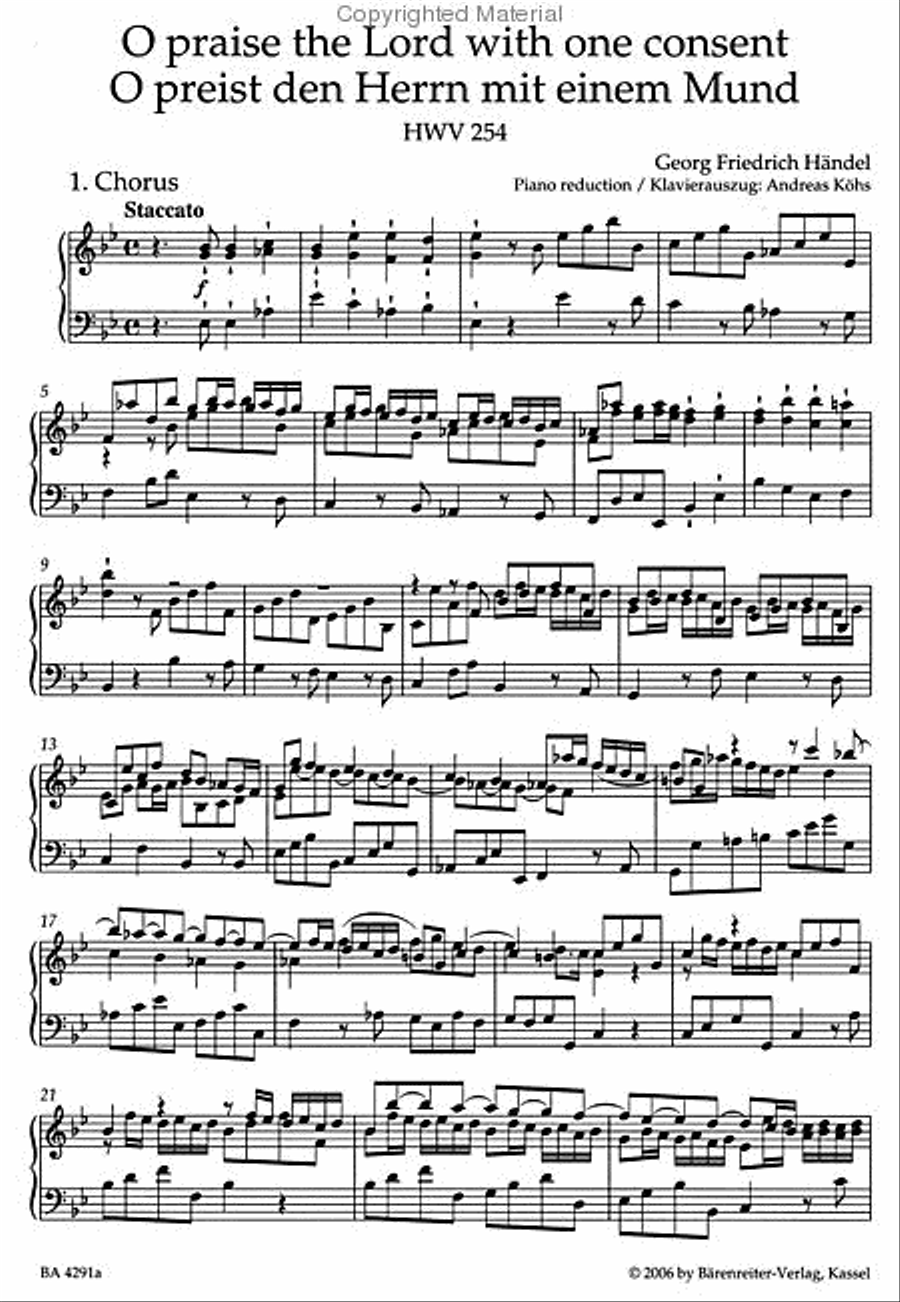
The anthems present the Urtext from the"Halle Handel Edition"and include uncomplicated and easy-to-play piano reductions. In addition to the original English words, the full scores and vocal scores also include a singing translation in German.
- More by this Composer:
- George Frideric Handel George Frideric Handel Choir George Frideric Handel Piano George Frideric Handel Piano Accompaniment
- Instrument:
- Vocal Choir Piano and Keyboard Piano Accompaniment Vocal Voice Tenor Voice Vocal Voice Soprano Voice Vocal Voice Bass Voice Vocal Voice Voice Solo
- Ensemble:
- 4-Part SATB Mixed Choir
- Publisher:
- Baerenreiter Verlag