Details
- Instrument:
- Choir Piano Accompaniment
- Ensembles:
- SSATB Mixed Choir
- Genres:
- Impressionism
- Composers:
- Claude Debussy
- Publishers:
- Carus Verlag
- ISBN:
- 9790007300944
- Format:
- Score
- Item types:
- Physical
- Artist:
- Claude Debussy
- Usages:
- School and Community
- Size:
- 8.27 x 11.69 inches
- Shipping Weight:
- 1.25 pounds
SKU: CA.928500
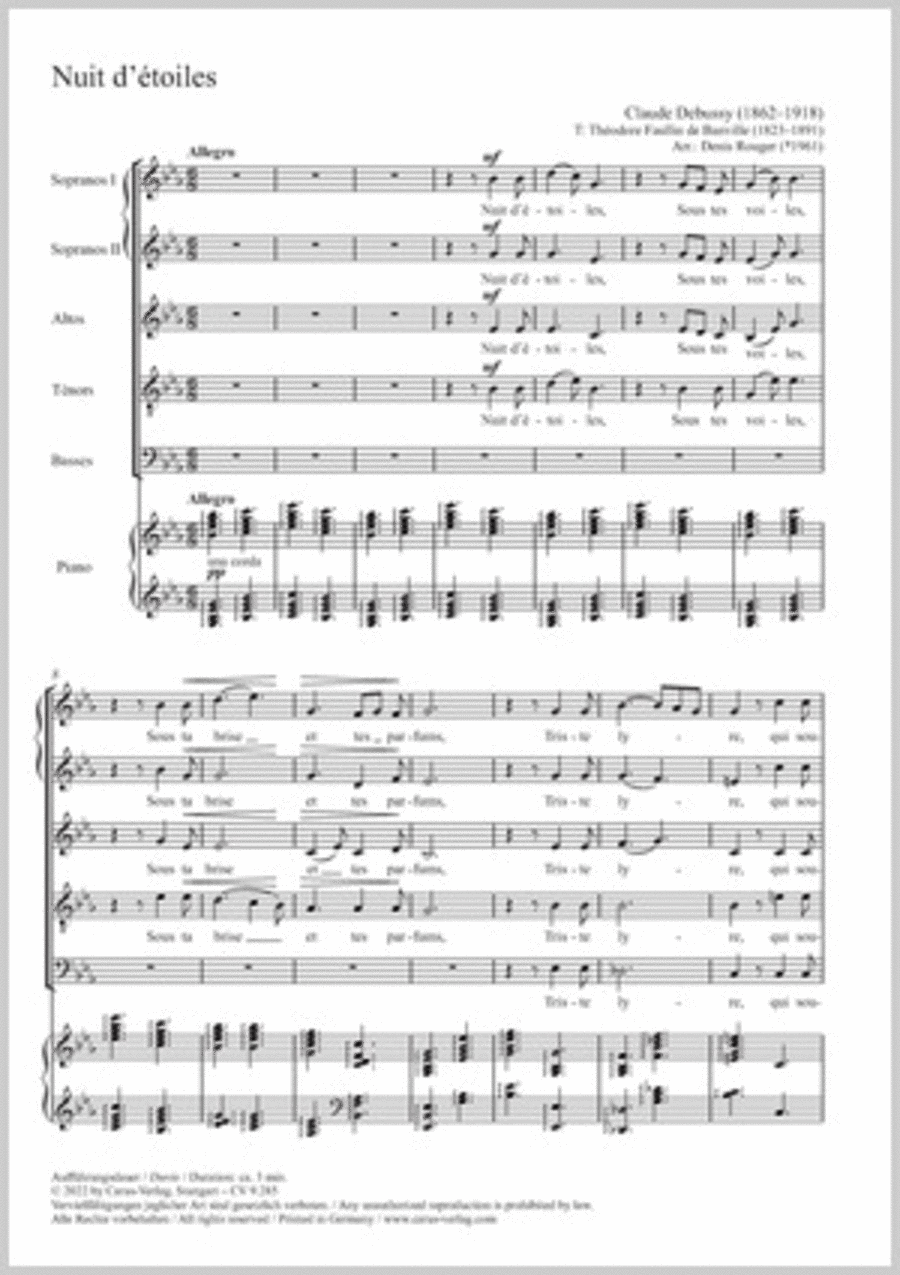
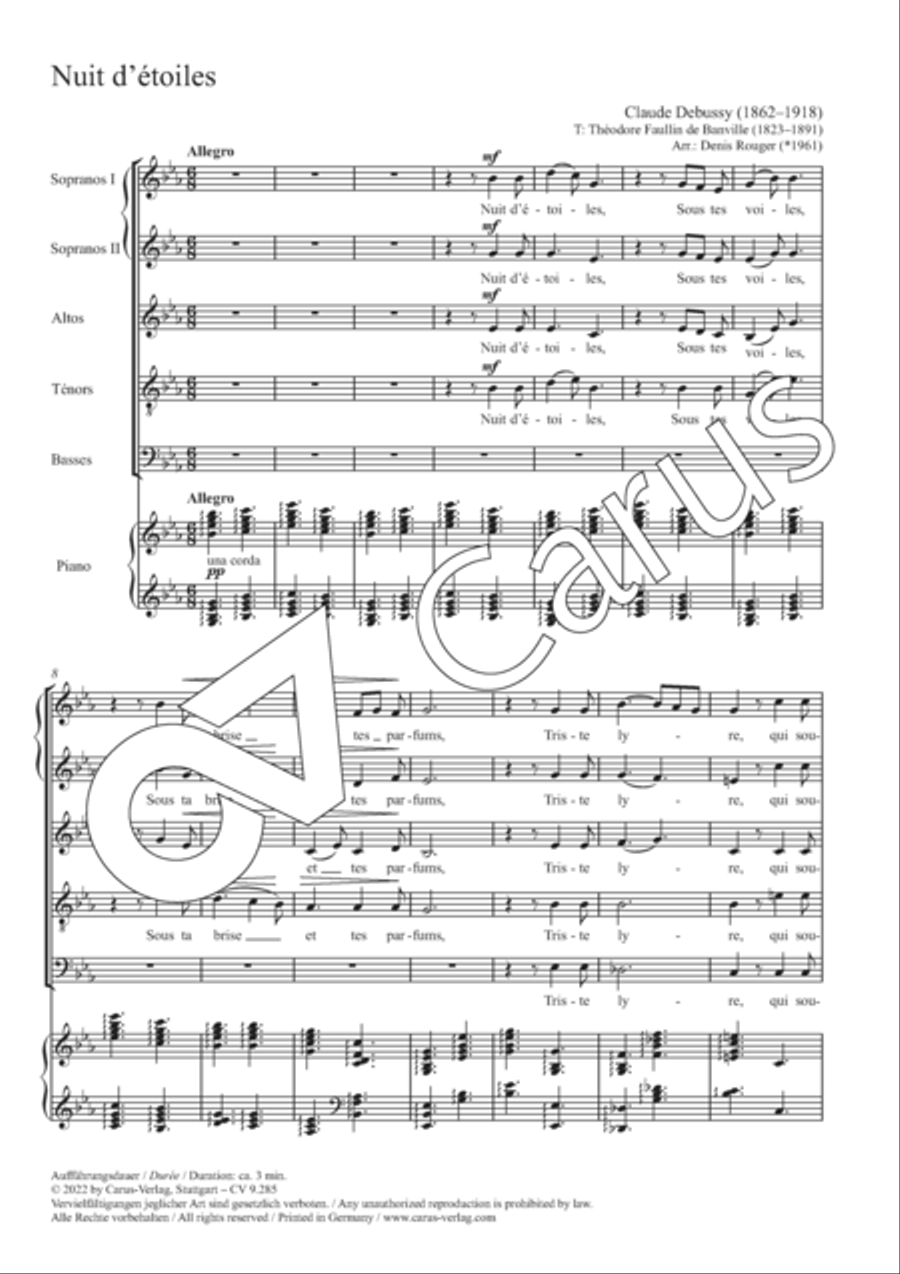
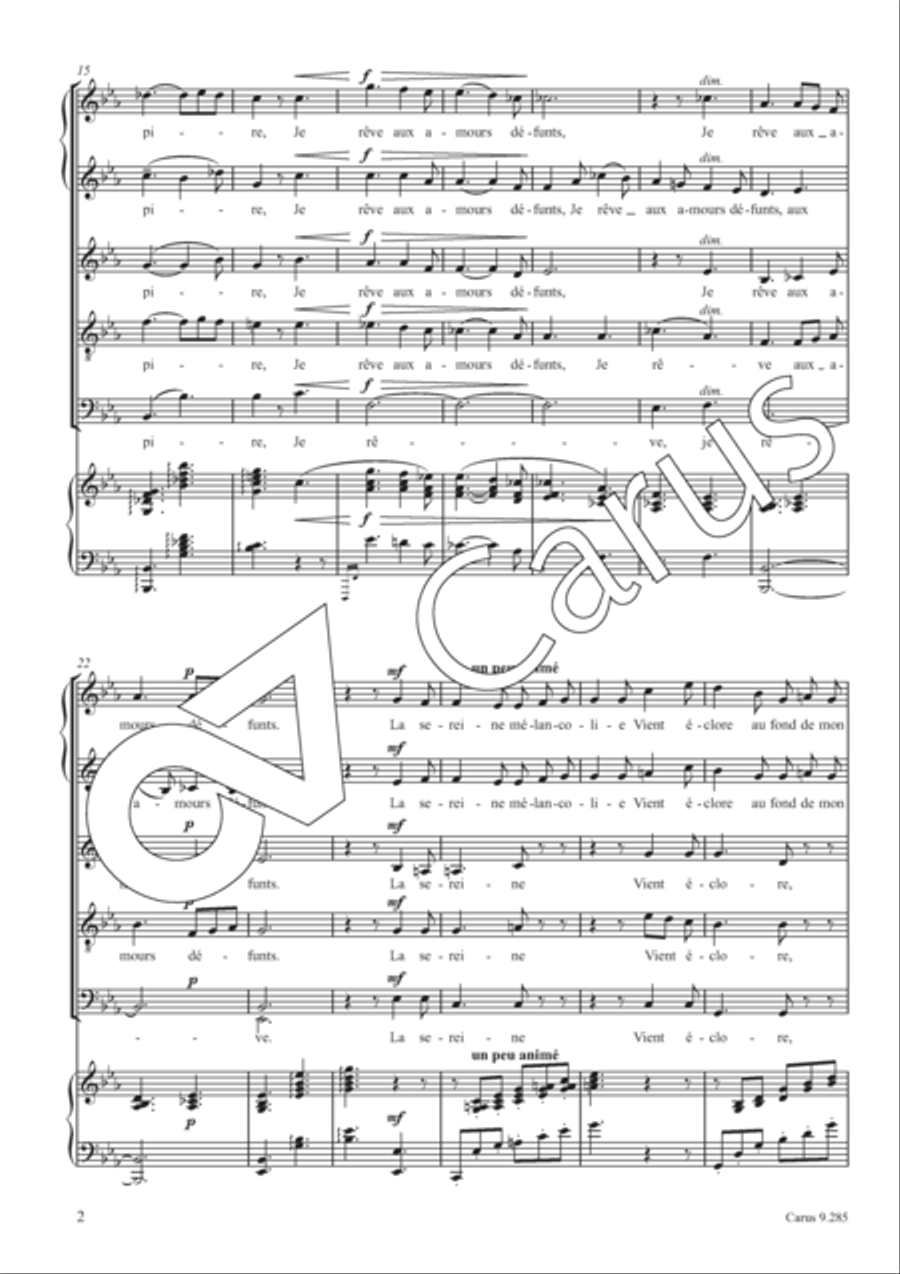
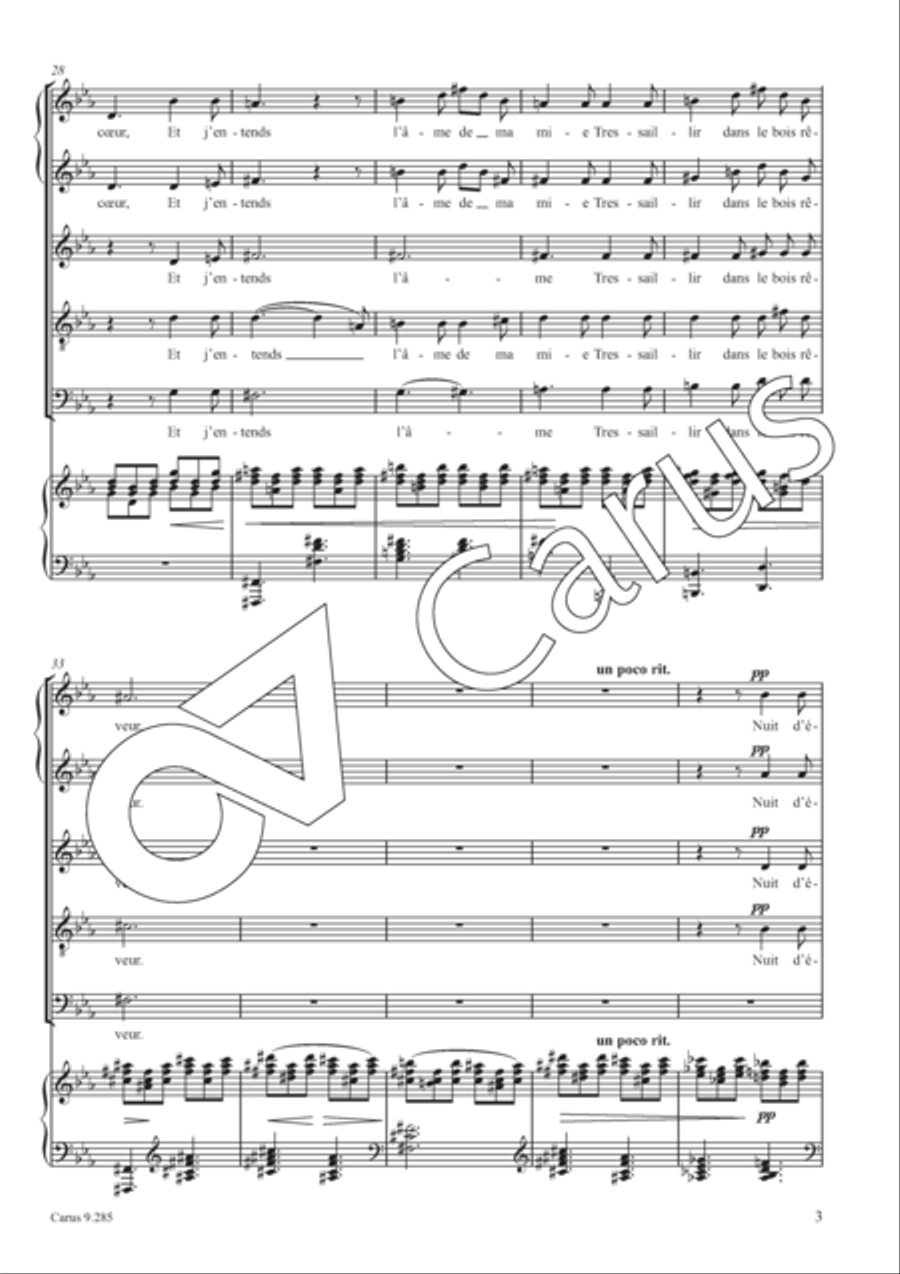
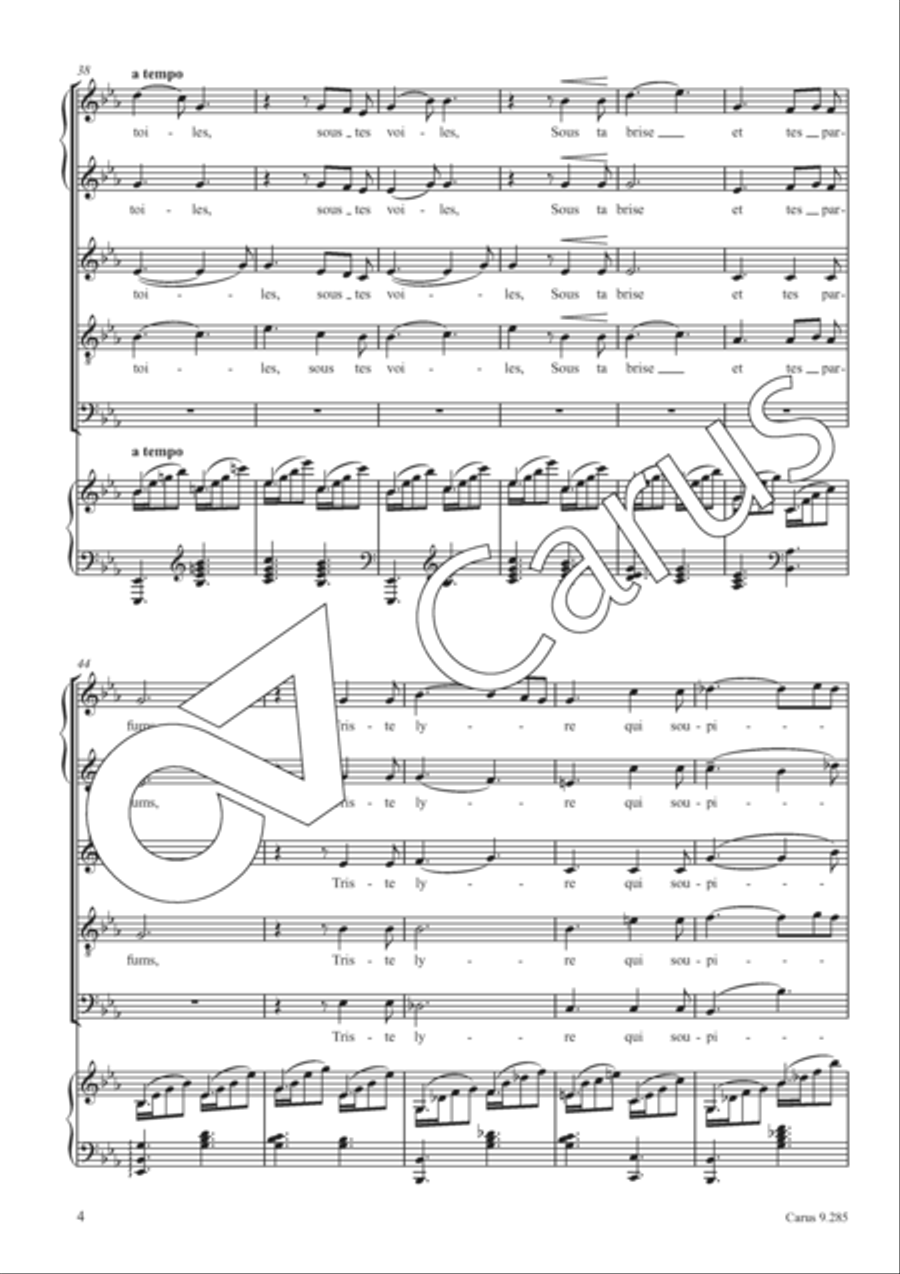
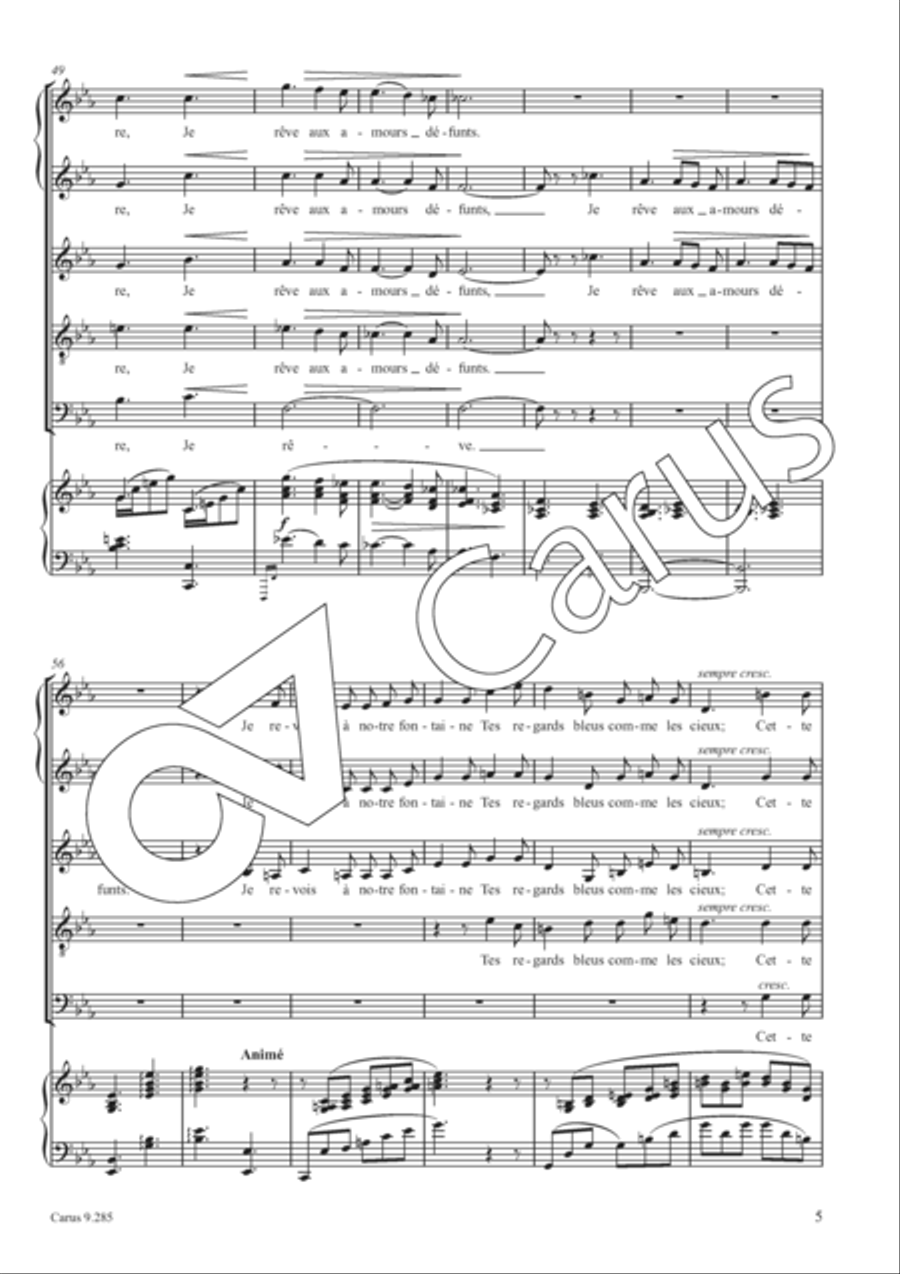
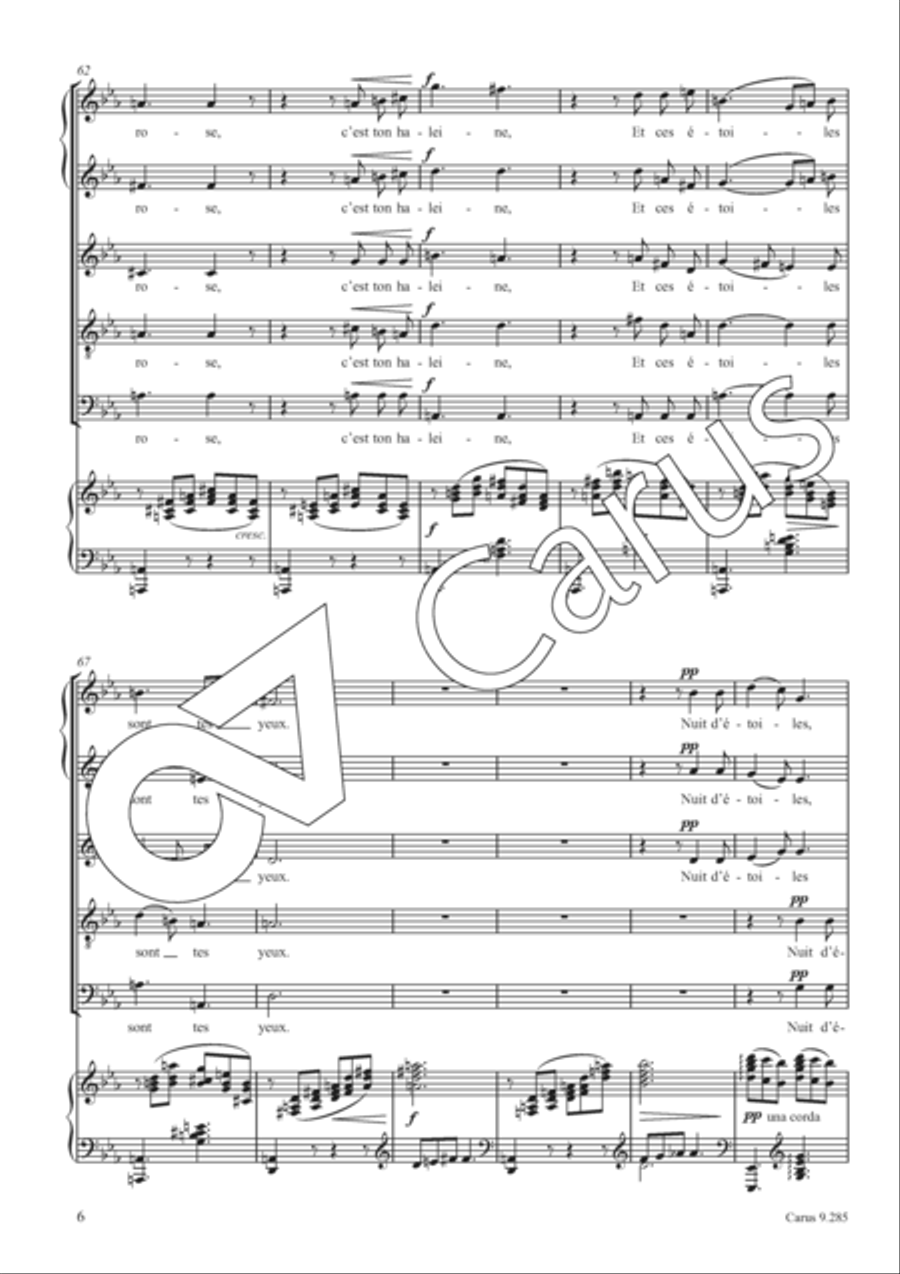
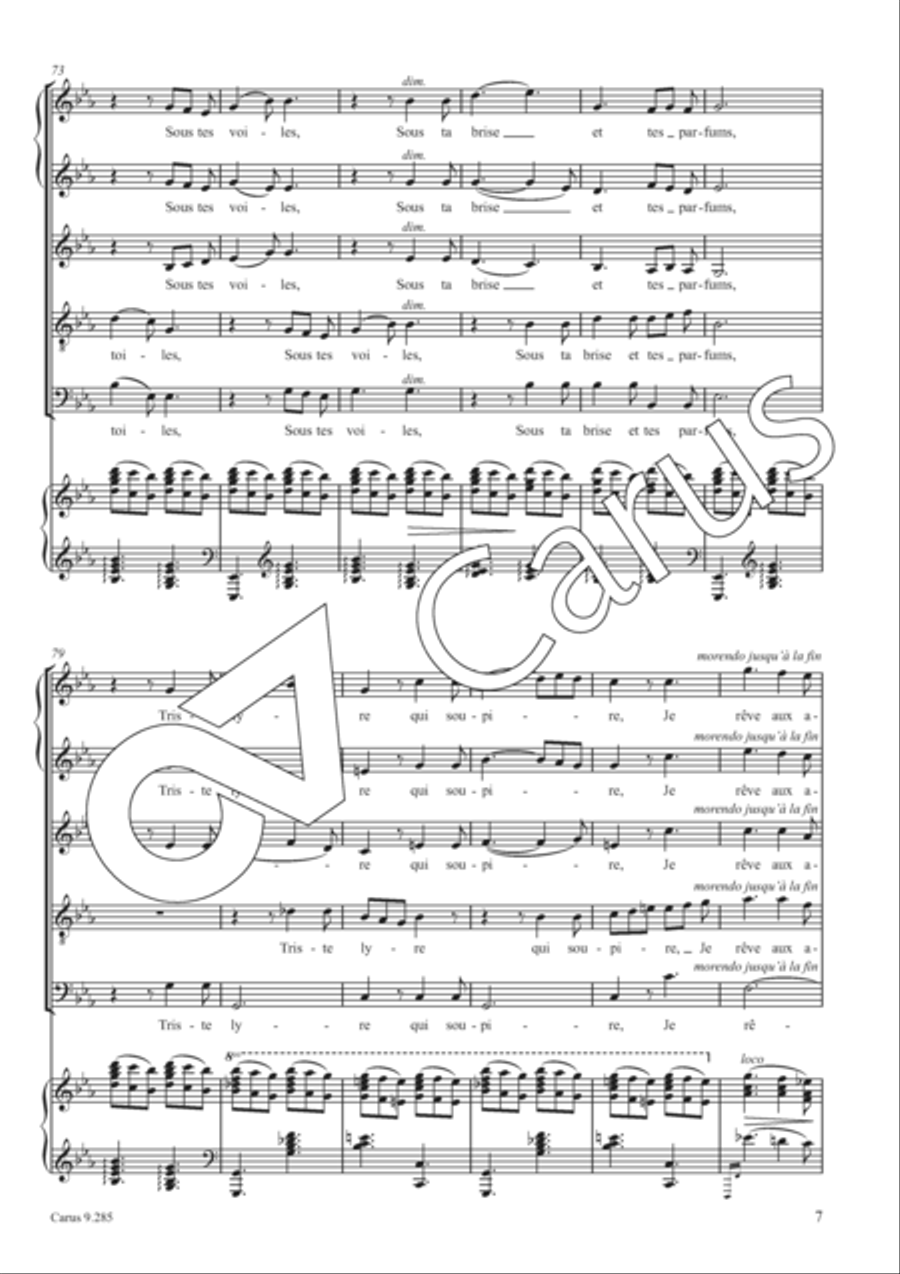
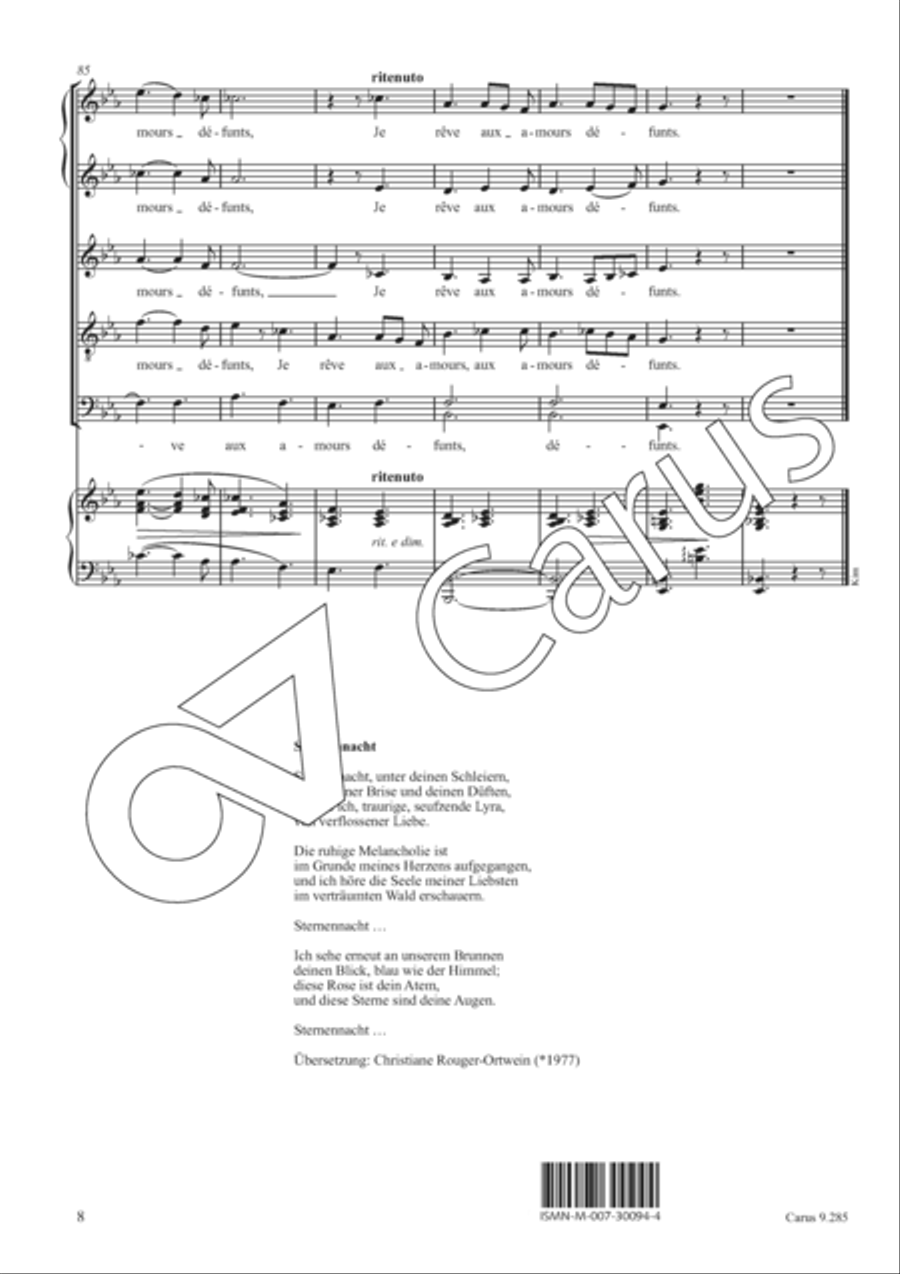
Arrangement by Denis Rouger. Composed by Claude Debussy. Arranged by Denis Rouger. Carus digital: Extra digital products. Bearbeitungen: Arrangements of Lieder for choir. Score. Duration 3 minutes. Carus Verlag #CV 09.285/00. Published by Carus Verlag (CA.928500).ISBN 9790007300944. 8.27 x 11.69 inches. French.
From the very first bars, shimmering piano arpeggios conjure up the vision of a starry night. Or are these the sounds of sad Lyra, the lyrical narrator of Théodore de Banville’s poem? In his composition, Claude Debussy only sets the first, second and fourth verses to music. Although the first stanza is repeated as a refrain, the entire piece is through-composed. In quiet melancholy, the memory of lost love shines forth: The stars are the eyes of the beloved.
This art song was originally composed not for chamber choir, but for solo voice and piano. Denis Rouger has carefully adapted it to suit the requirements and expressive possibilities offered by a larger ensemble, without losing any of the qualities of the original in the process. Each part in the choir has a melodic line drawn from the harmonic and rhythmic framework. In the process, the variety and refinement of the choral language combines with an enormous flexibility in form and expression, as French melodies or German art song demand from a soloist and pianist.
- More by this Composer:
- Claude Debussy Claude Debussy Piano Claude Debussy Piano Accompaniment Claude Debussy Piano Solo
- Instrument:
- Vocal Choir Piano and Keyboard Piano Accompaniment
- Artists:
- Claude Debussy
- Ensemble:
- SSATB Mixed Choir
- Publisher:
- Carus Verlag