
Ships to you
Ships to you
SKU: CF.FPS162
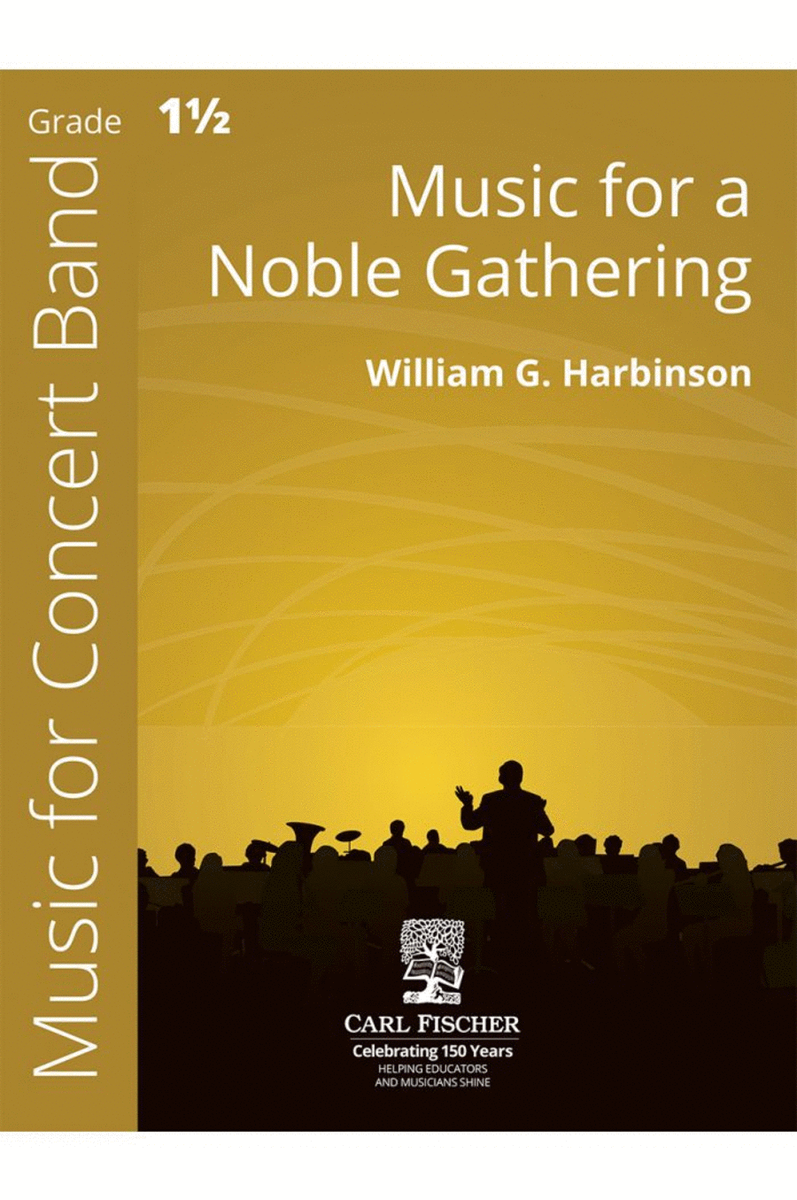
Composed by William Harbinson. Folio. Fps. Score and parts. 171 pages. Duration 0:04:15. Carl Fischer Music #FPS162. Published by Carl Fischer Music (CF.FPS162).ISBN 9781491161548. UPC: 680160920198. 9 x 12 inches.
Music for a Noble Gathering captures the pomp and dignity of a regal celebration. The composition opens with a percussion flourish to a fanfare. Perform this passage at a stately tempo with marked separation. A legato, lyrical theme appears (m. 17) that contrasts the opening passage. Emphasize the ritard and crescendo in m. 24 in preparation for the return of the opening theme (m. 25) that completes the A section. Although thematically related to the fanfare, the B section (m. 35) provides contrast in tempo, key, and style. Strive for a connected and sustained presentation with careful attention to the shaping of the phrases. Proper balance between the melody and countermelody at m. 45 is paramount. The climax in m. 53 quickly subsides but immediately rebuilds for a lively percussion feature. The restatement of the A section (m. 61) leads to a final climax (m. 91), a brief coda (m. 93) and a dynamic closure. William Harbinson is Professor Emeritus and former Dean of the Hayes School of Music at Appalachian State University. He has received nine J.W. Pepper Editors' Choice Awards that identify "the very best of the new music available." His compositions for band appear on contest/festival literature lists of several states and are performed worldwide. .
Music for a Noble Gathering captures the pomp and dignity of a regal celebration. The composition opens with a percussion flourish to a fanfare. Perform this passage at a stately tempo with marked separation. A legato, lyrical theme appears (m. 17) that contrasts the opening passage. Emphasize the ritard and crescendo in m. 24 in preparation for the return of the opening theme (m. 25) that completes the A section. Although thematically related to the fanfare, the B section (m. 35) provides contrast in tempo, key, and style. Strive for a connected and sustained presentation with careful attention to the shaping of the phrases. Proper balance between the melody and countermelody at m. 45 is paramount. The climax in m. 53 quickly subsides but immediately rebuilds for a lively percussion feature. The restatement of the A section (m. 61) leads to a final climax (m. 91), a brief coda (m. 93) and a dynamic closure.William Harbinson is Professor Emeritus and former Dean of the Hayes School of Music at Appalachian State University. He has received nine J.W. Pepper Editors’ Choice Awards that identify "the very best of the new music available." His compositions for band appear on contest/festival literature lists of several states and are performed worldwide. .
Music for a Noble Gathering captures the pomp and dignity of a regal celebration. The composition opens with a percussion flourish to a fanfare. Perform this passage at a stately tempo with marked separation. A legato, lyrical theme appears (m. 17) that contrasts the opening passage. Emphasize the ritard and crescendo in m. 24 in preparation for the return of the opening theme (m. 25) that completes the A section. Although thematically related to the fanfare, the B section (m. 35) provides contrast in tempo, key, and style. Strive for axa0 connected and sustained presentation with careful attention to the shaping of the phrases. Proper balance between the melody and countermelody at m. 45 is paramount.xa0 The climax in m. 53 quickly subsides but immediately rebuilds for a lively percussion feature. The restatement of the A section (m. 61) leads to a final climax (m. 91), a brief coda (m. 93) and a dynamic closure.William Harbinson is Professor Emeritus and former Dean of the Hayes School of Music at Appalachian State University. He has received nine J.W. Pepper Editors’ Choice Awards that identify "the very best of the new music available." His compositions for band appear on contest/festival literature lists of several states and are performed worldwide.
See Similar Sheet Music and Digital Downloads